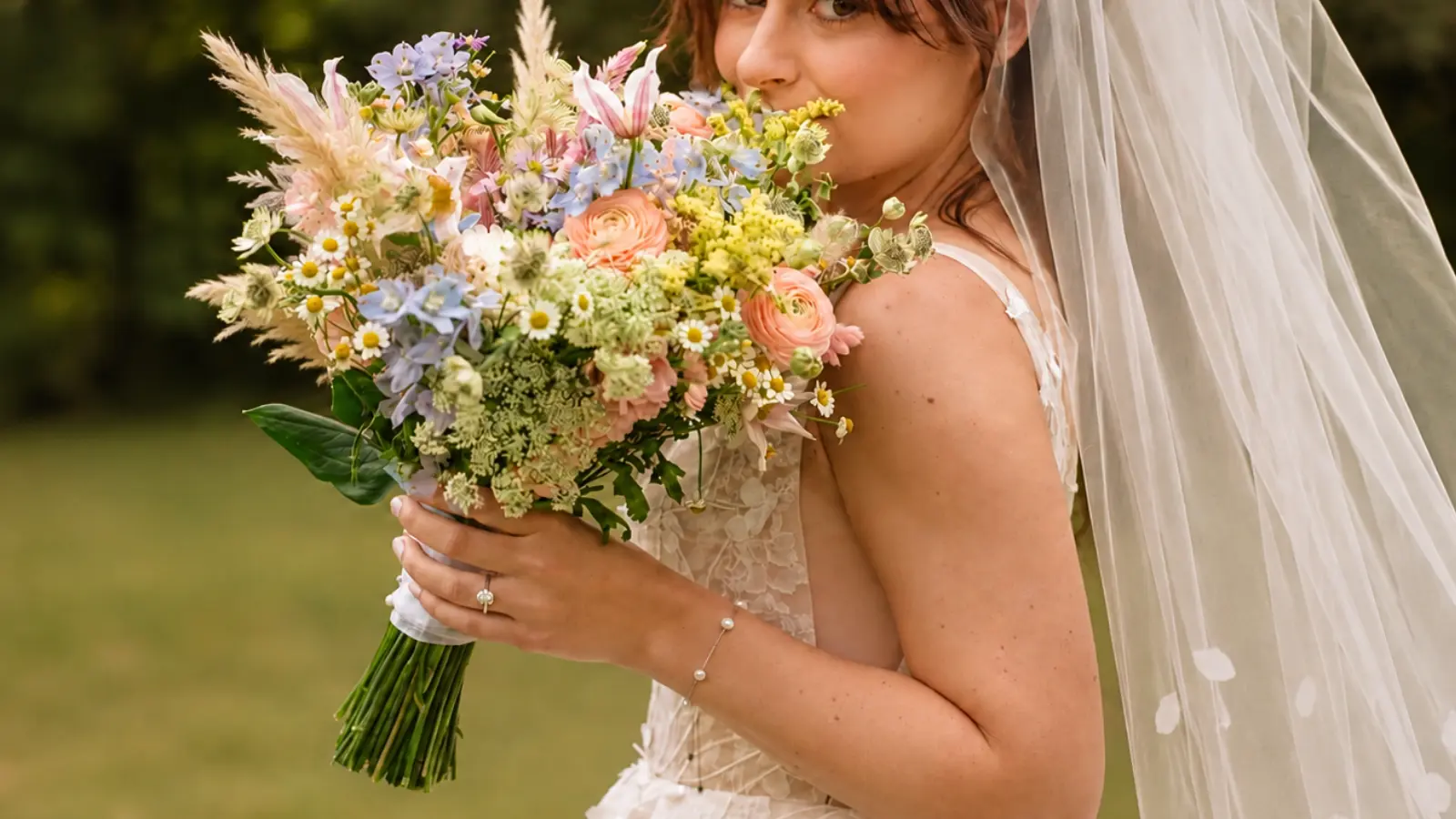
Boho wedding bouquets combine natural textures, flowing greenery, dried elements, and soft floral arrangements to create one of the most recognizable bridal styles. Whether you’re planning a desert celebration, a garden ceremony, a beach wedding, or a relaxed outdoor venue, a boho bouquet brings together movement, warmth, and effortless elegance without feeling overly structured.
Despite their relaxed appearance, the best boho bouquets are carefully composed. Pampas grass, dried flowers, wildflowers, eucalyptus, and fresh blooms each play a specific role, creating texture and balance while maintaining a cohesive palette. The goal isn’t to make the bouquet look messy—it’s to make it feel naturally beautiful and intentionally designed.
This guide explores boho design within the broader world of wedding bouquets, including pampas grass arrangements, dried flowers, wildflower inspiration, greenery choices, neutral palettes, and practical styling tips.
Boho Wedding Bouquet Ideas
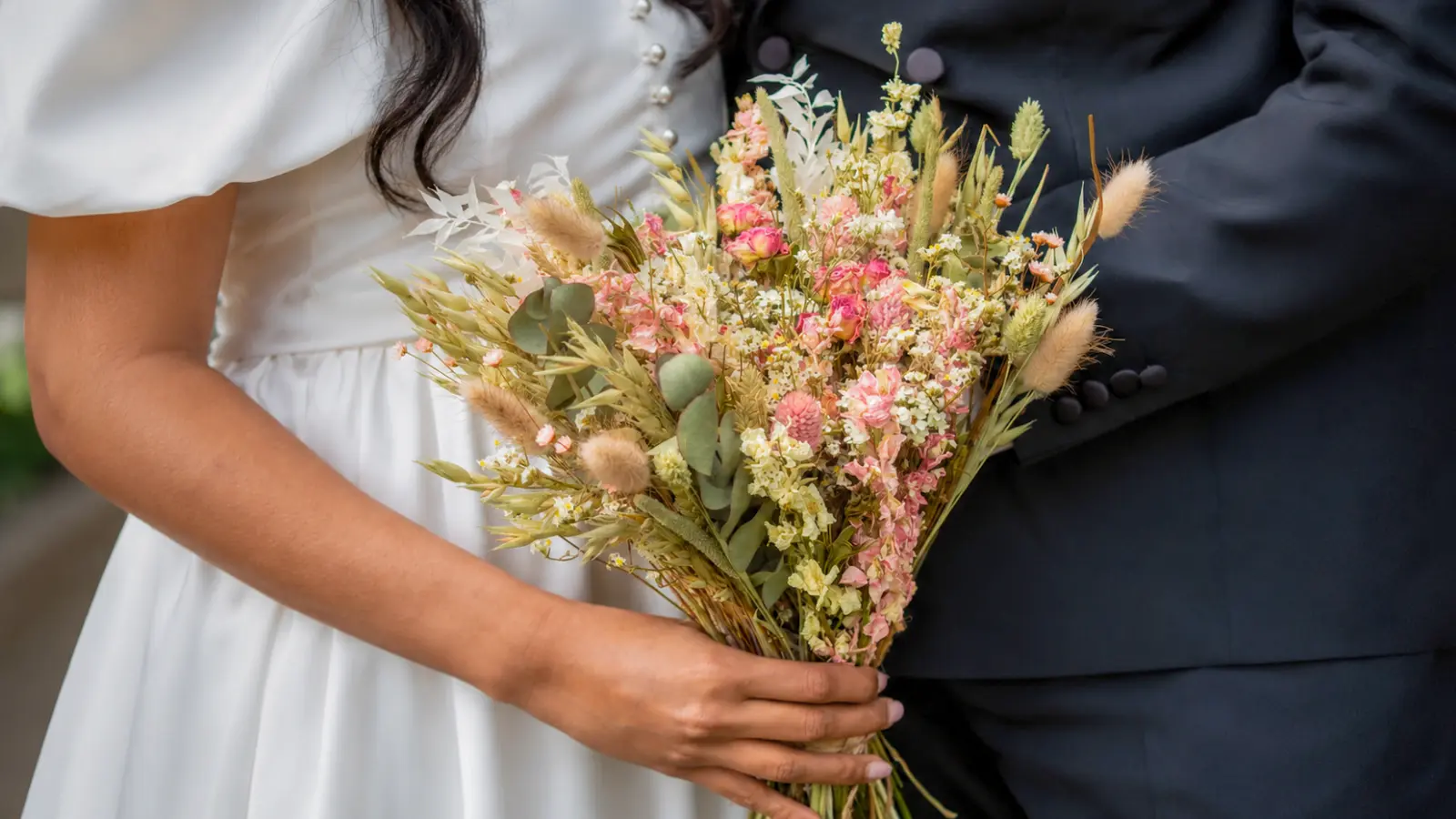
Boho as a bouquet aesthetic has more range than the Instagram version suggests. It spans everything from a fully dried arrangement built around neutral grasses and preserved foliage to a lush mixed bouquet with garden roses, trailing greenery, and one or two textural accents. What those designs share is an intentional informality: nothing looks stiff, nothing looks overly arranged, and the palette stays within a cohesive tonal story rather than pulling in every direction at once.
The approaches that hold up consistently across different ceremony settings and photography styles:
The neutral dried arrangement. Pampas grass plumes, bleached grasses, dried bunny tail, lunaria, and preserved eucalyptus gathered loosely and bound with a raw silk or linen ribbon. No fresh flowers, no color beyond warm cream and sage. Works especially well for fall and winter ceremonies and for brides who want a keepsake without preservation costs.
The mixed organic round. Garden roses or ranunculus in blush or ivory as the focal flower, with dried grasses, eucalyptus, and one or two sprigs of pampas woven through. The fresh flowers provide color and natural softness; the dried elements provide texture and structure. This reads as boho without committing fully to an all-dried palette.
The wildflower gather. Small-scale blooms — cosmos, anemones, scabiosa — at irregular heights, with fine grasses and foliage creating an undone silhouette. The construction is tighter than it looks; the looseness comes from the flower selection, not from skipping the spiral stem technique.
The foliage-forward design. One or two standout blooms — a garden rose, a protea — surrounded primarily by trailing eucalyptus, olive branch, or magnolia leaves. More greenery than flower, which creates an organic, almost-gathered quality that suits outdoor settings particularly well.
The cleanest test for any boho design: remove all the textural elements mentally and see if the underlying composition still works. If it does, the bouquet will hold together. If the pampas and dried grasses were doing all the visual work, the design needs a stronger foundation.
Pampas Grass Wedding Bouquets
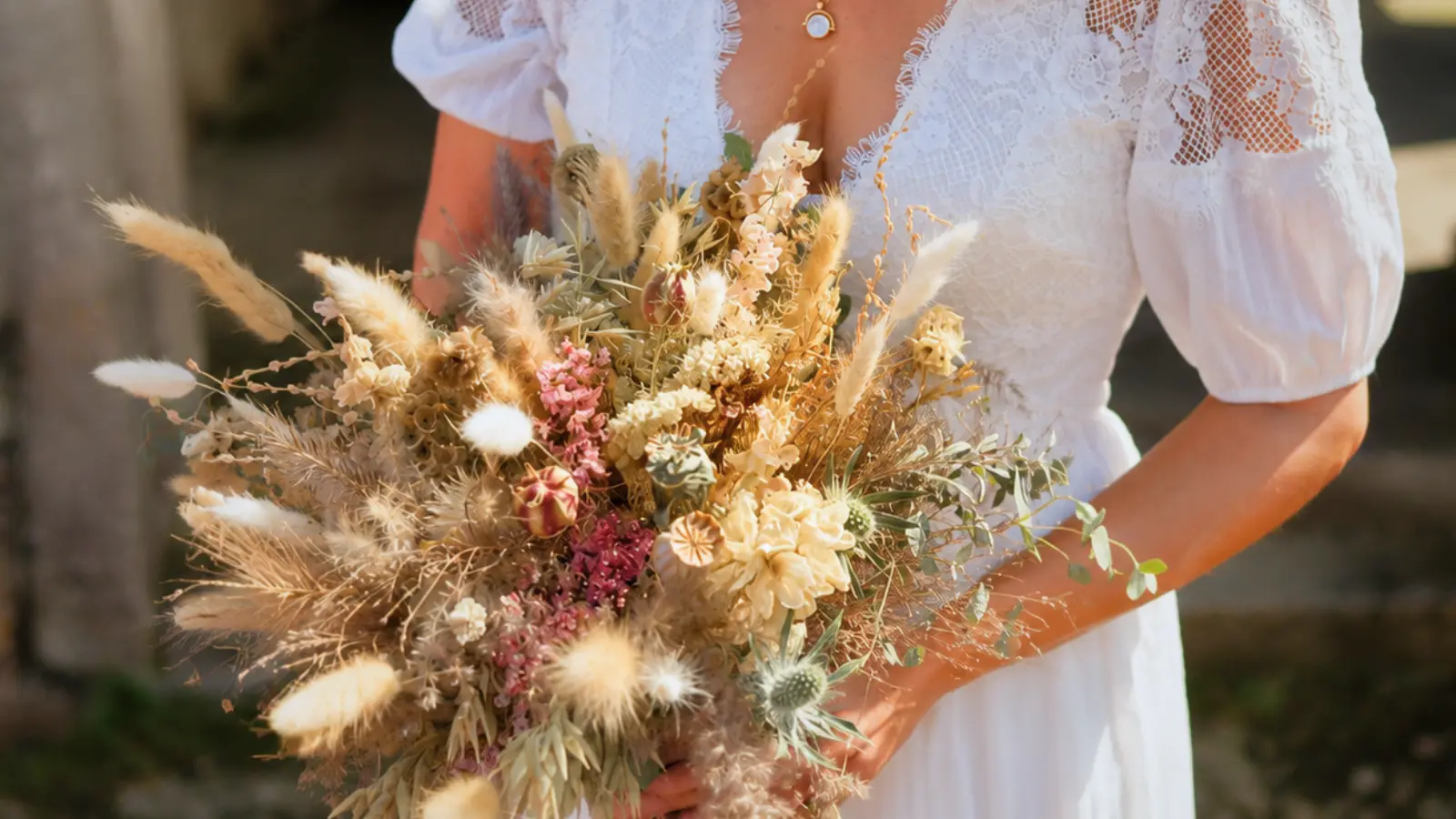
Pampas grass became the defining element of boho wedding florals for a reason: it adds a movement and feathery texture that almost nothing else does at its scale, it dries naturally and holds its shape all day without any care, and it reads clearly in photos even at distance. The problem isn’t pampas itself — it’s the proportion. A bouquet where pampas is the primary element ends up looking like a themed arrangement rather than a considered one.
There are two ways to use pampas grass well in a bridal bouquet:
As a textural accent. One or two small plumes — the kind that come from mini pampas rather than standard full-size varieties — woven through a mixed bouquet of garden roses, ranunculus, and eucalyptus. Used this way, pampas adds depth and a slightly wild quality without dominating the design. The bouquet reads as boho; the pampas is one of several reasons why, not the only one.
As part of a fully dried composition. When pampas shares the bouquet with other dried elements — bleached grasses, dried cotton, lunaria, preserved foliage — it becomes part of a cohesive textural story rather than a single statement element. The palette stays warm and neutral, the different textures create visual interest, and the result looks intentional rather than trend-dependent.
| Pampas Use | Best For | What to Pair It With |
|---|---|---|
| 1–2 mini plumes as accent | Mixed fresh + dried bouquets | Garden roses, ranunculus, eucalyptus |
| Full plumes in dried arrangement | All-dried boho bouquet | Bleached grasses, lunaria, dried cotton |
| Trailing variety | Larger, romantic boho silhouettes | Olive branch, dried seed pods, anemones |
One practical note: standard pampas plumes sold for home décor are often too large for a bridal bouquet — they’re designed to fill a floor vase, not a hand-held arrangement. Look specifically for mini pampas or cut individual smaller stems from a larger plume. The scale difference between décor pampas and bouquet pampas is more significant than it looks on a supplier website.
Dried Flower Boho Bouquets
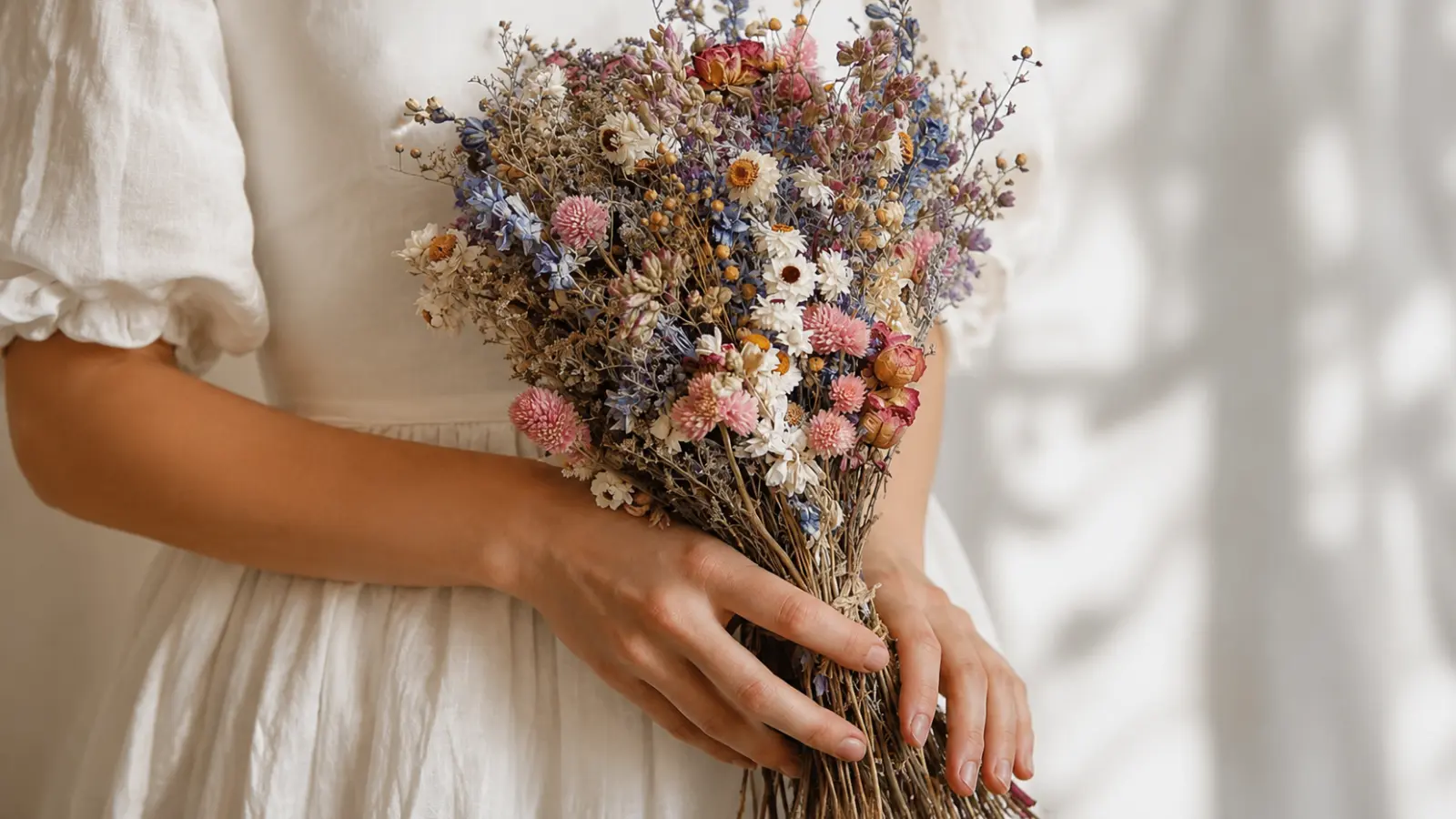
Beyond their distinctive style, dried flower wedding bouquets offer practical advantages that are especially useful in boho celebrations. Dried arrangements can be assembled weeks before the wedding without any timing pressure. They don’t wilt in heat, don’t need to be kept in water between the venue arrival and the ceremony, and they become a ready-made keepsake the moment the day is over. That durability becomes especially valuable in summer wedding bouquets, destination ceremonies, and celebrations where the flowers will spend considerable time outdoors.
The flowers and elements that build the best dried boho bouquets:
Pampas grass and dried grasses. The foundation of most dried boho designs. Bunny tail grass (lagurus), dried wheat, and bleached phalaris all add fine texture and movement. Use two or three grass varieties rather than one for more visual depth.
Lunaria (honesty plant). Translucent, silver-dollar-shaped seed pods that catch light in a way almost nothing else does. One of the most underused elements in dried bouquets — florists who work with it regularly consider it essential. Adds an ethereal quality without any color.
Dried cotton bolls. White, slightly irregular, and naturally textural. A few stems woven through a neutral dried arrangement add softness and an organic quality that dried grasses alone can’t provide.
Dried roses and strawflowers. If color is part of the dried design, dried garden roses in blush or deep burgundy hold their tone reasonably well, as do strawflowers in warm cream, rust, or pale pink. Both dry naturally with minimal preparation.
Preserved foliage. Glycerin-preserved eucalyptus and preserved olive branch stay pliable and green rather than brittle, which makes them easier to work into arrangements and more durable for a long day. Worth sourcing specifically rather than trying to air-dry fresh foliage at home.
The color range in a fully dried arrangement is narrower than in a fresh bouquet, which is both a constraint and an advantage. The palette almost defines itself: warm cream, ivory, pale sage, dusty blush, and occasional burgundy or rust accents. Working within that range rather than fighting it produces more cohesive results than trying to introduce bright or saturated colors that dried flowers can’t deliver naturally.
Boho Wildflower Bouquets
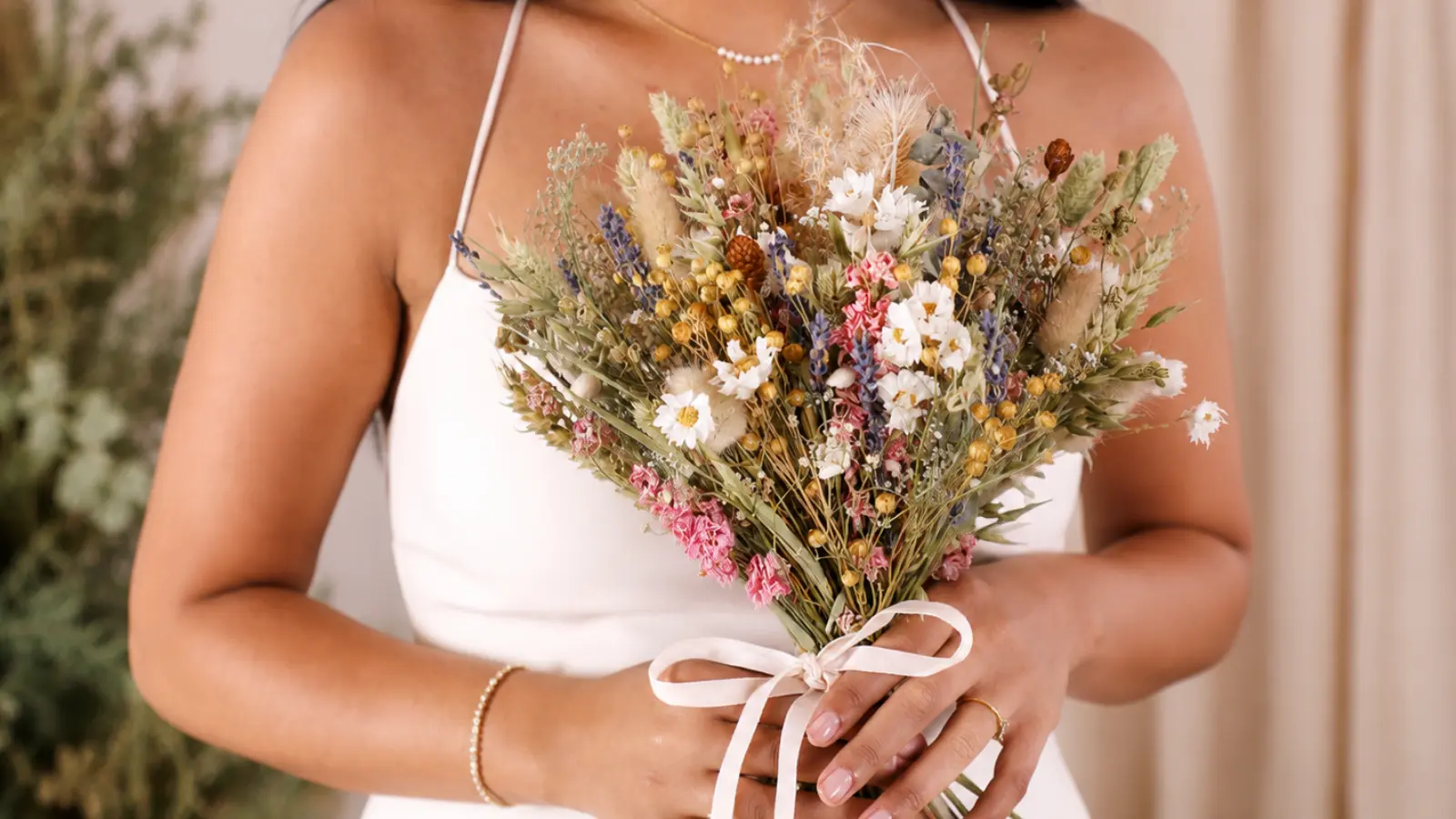
Within the broader style of wildflower wedding bouquets, a boho arrangement occupies a specific space between looking loose and remaining deliberately composed. The goal is a bouquet that looks gathered rather than arranged — stems at varying heights, a mix of small-scale blooms, fine foliage woven through — while still holding together as a composition when held at arm’s length. The looseness comes from flower selection and stem placement, making construction one of the most important decisions among bridal bouquet styles.
The flowers that earn their place in a boho wildflower design:
Cosmos. Daisy-like blooms in pink, white, and magenta on thin, naturally arching stems. They move the way wildflowers move, which no amount of arranging technique can replicate with more structured blooms. One of the best flowers for a bouquet that needs to look unconstructed.
Scabiosa (pincushion flower). Small, button-like blooms in lavender, white, and deep plum. The delicate texture reads as wildflower without being fragile, and the pale purple tones work in both neutral and deeper boho palettes.
Ranunculus. Layered petals in cream, blush, and pale peach. More refined than a true wildflower, but they hold their shape well outside of water, come in tones that fit every boho palette, and add a softness that cosmos and scabiosa alone don’t provide. The focal flower in most mixed wildflower boho designs.
Anemones. White petals and dark, graphic centers. A single-color accent that creates natural contrast within a neutral palette without introducing a new tone. Available primarily in fall and early spring.
Queen Anne’s lace. Flat clusters of tiny white flowers on branching stems. The classic filler for wildflower arrangements — adds airiness and a delicate, lacework quality that heavier flowers can’t replicate.
The construction detail that matters most: bind the stems tightly at the grip point, even when the bouquet above is intentionally loose. A wildflower bouquet where individual stems can shift during the ceremony looks unkempt rather than natural. Twine or unbleached cotton ribbon suits the aesthetic and holds the grip better than slippery satin in a looser arrangement.
Neutral Boho Bouquet Colors
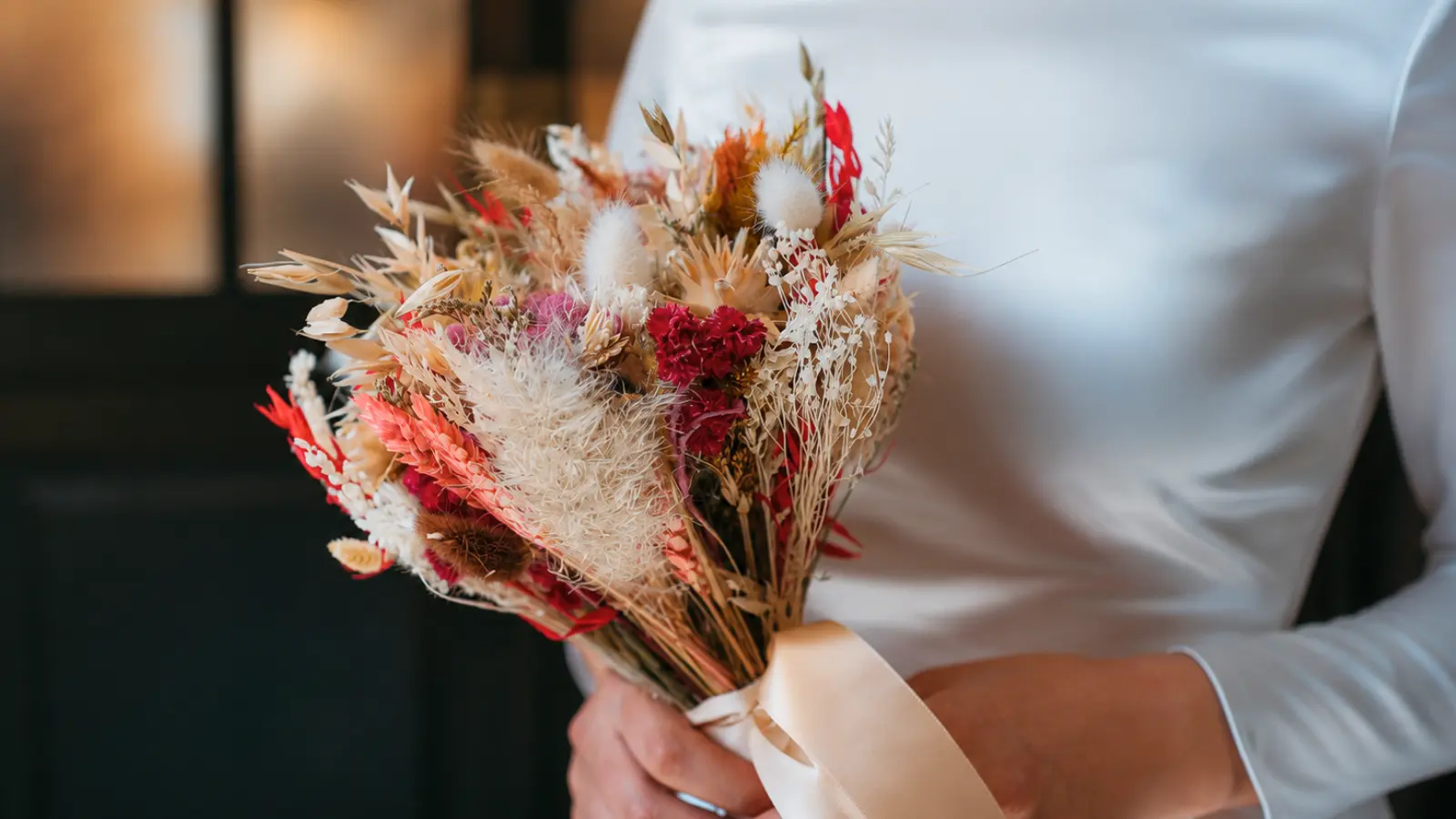
The neutral palette is where boho bouquet design is most at home — and where the most common mistakes happen. In boho designs, choosing wedding bouquet colors means creating a cohesive tonal range where texture and depth provide variation without one shade dominating. Getting that range right is what separates a boho bouquet that looks sophisticated from one that looks washed out.
The tonal directions that work most consistently:
Warm cream and ivory. The baseline neutral for most boho designs. Garden roses in warm white, dried grasses in pale gold, and pampas in natural cream all sit within this range without needing to be matched precisely. The slight variation between tones is what gives the palette depth.
Blush and dusty rose. The most versatile addition to a neutral boho palette. Ranunculus, garden roses, and dried strawflowers all come in blush tones that work in both fresh and dried arrangements. The key distinction: dusty, slightly muted blush reads as boho; bright, clear pink does not.
Dusty sage and eucalyptus green. Not a contrast color — a tonal extension of the neutral palette. Sage-green foliage, preserved eucalyptus, and dried fern all fall within a dusty green range that reads as part of the neutral story rather than as a separate color.
Terracotta and rust accents. A small number of stems in a warm, earthy orange-red — dried strawflowers, fall dahlias, or terracotta-toned roses — add depth and warmth to a predominantly ivory palette without shifting into a different color story. The proportion matters: these work as accents, not as co-equal palette elements.
| Tone | Best Flowers / Elements | Works Best In |
|---|---|---|
| Warm cream / ivory | Garden roses, dried grasses, pampas | Any season, all-dried or mixed |
| Dusty blush | Ranunculus, strawflowers, dried roses | Spring, fall, mixed bouquets |
| Dusty sage | Eucalyptus, preserved fern, dried herbs | Year-round as foliage base |
| Burgundy / deep plum | Anemones, deep dahlias, dried roses | Fall and winter, moody palettes |
| Terracotta / rust | Dried strawflowers, dahlias, late roses | Fall, as accent only |
One common mistake is combining the warm terracotta tones associated with orange wedding bouquets and cool neutrals such as pale lavender or dusty blue in equal proportions. Each group reads as cohesive on its own; together, they pull the bouquet in two directions. Pick one temperature and stay there.
Greenery in Boho Bouquets
Greenery does more compositional work in a boho bouquet than in almost any other style. Because the silhouette is loose, the foliage principles used in greenery wedding bouquets help define the shape, fill gaps, and prevent the arrangement from looking random. Choosing foliage deliberately — rather than accepting whatever the florist has available — changes the final result significantly.
Silver dollar eucalyptus. Round, dusty-sage leaves on arching stems. The most neutral and versatile foliage available for boho designs. It curves naturally, provides good coverage without bulk, and works in every palette from all-white to deep burgundy.
Seeded eucalyptus. Finer texture than silver dollar, with small seed clusters along the stems. Adds a more delicate, organic quality and fills space without the visual weight of larger-leaved varieties. One of the most useful foliage choices for wildflower-style bouquets.
Olive branch. Grey-green leaves on thin, slightly irregular stems. Adds a slightly more structured, Mediterranean quality to a boho design. Works particularly well in neutral palettes where the colour of silver dollar eucalyptus might feel too similar to the blooms.
Trailing ivy or jasmine vine. When the bouquet design calls for movement beyond what the stems alone create, a trailing vine element extends the silhouette in a way that reads as natural and unconstructed. Works best in larger, looser designs rather than compact nosegays.
Dried herbs. Rosemary, sage, and dried lavender function as both foliage and textural element. They add fragrance, an earthy quality, and fine texture that eucalyptus alone doesn’t provide. A practical choice for brides who want the bouquet to feel personal and slightly unexpected.
The foliage rule that applies specifically to boho designs: use one primary foliage and one accent, not three or four competing greens. Multiple foliage types without a clear hierarchy read as busy rather than lush. Choose the foliage that best fits the overall silhouette and palette, then add a secondary element only if there’s a clear reason for it.
How to Style a Boho Bridal Bouquet
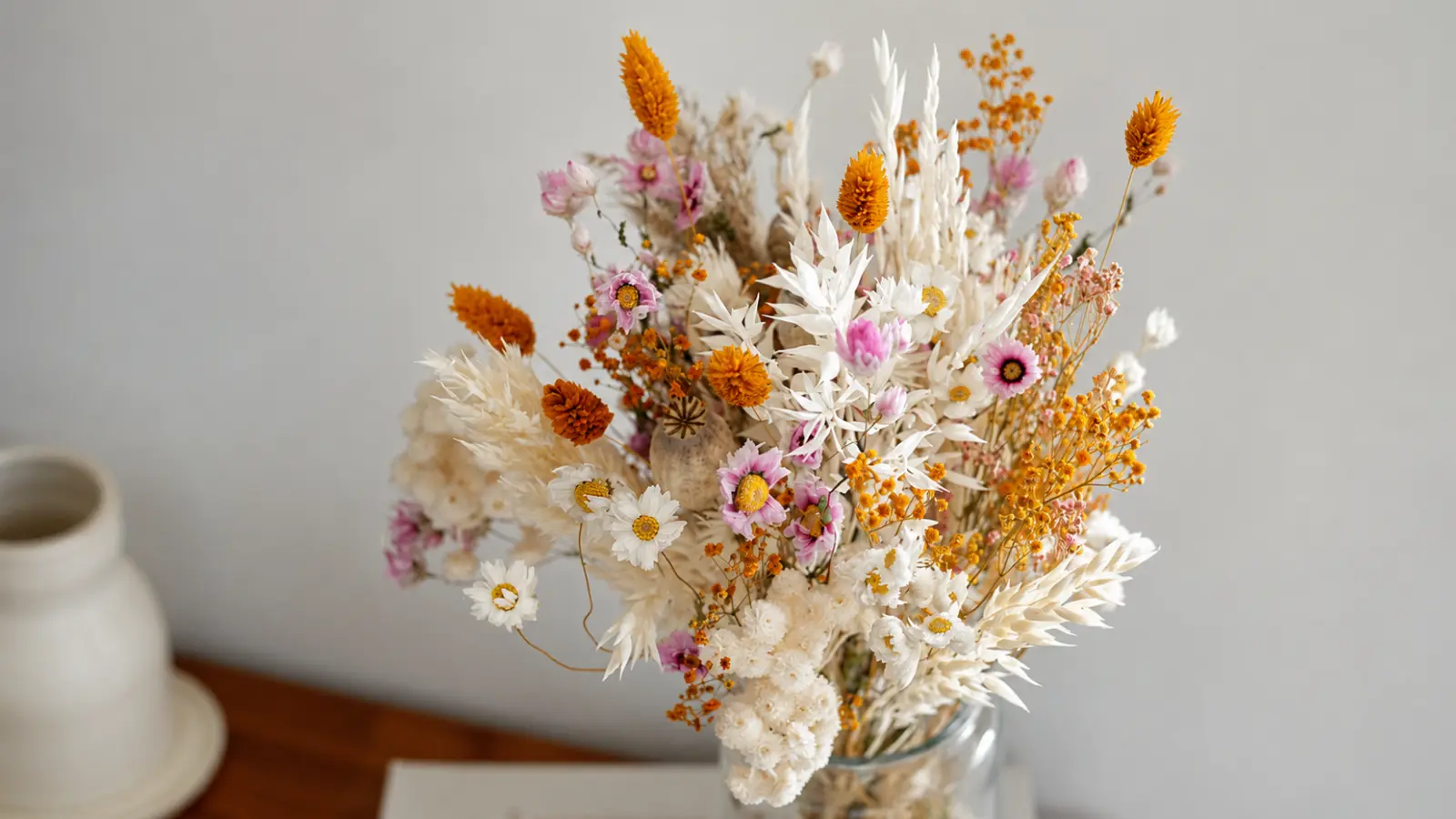
A boho bouquet works or doesn’t work partly based on what it’s carried with — the dress silhouette, the overall aesthetic of the ceremony, and the way it’s held all affect how it reads in person and in photographs. Getting the styling right isn’t complicated, but it requires a few deliberate decisions that are easy to skip when the focus is on the flowers themselves.
Match the bouquet to the dress, not just the aesthetic
Boho bouquets read differently against different dress silhouettes. A loose, flowing dress in a soft fabric — chiffon, silk charmeuse, crepe — provides a good backdrop for a larger, more textural bouquet because the dress itself has movement and softness. A more structured A-line or fitted lace gown works better with a smaller, more edited boho design: a compact wildflower round or a simple mixed nosegay rather than a full trailing arrangement.
The specific textures in the dress matter too. A heavily lace or embroidered bodice already carries significant visual weight. A boho bouquet with multiple textural elements — pampas, dried grasses, wildflowers, trailing eucalyptus — can fight with a complex dress rather than complementing it. When the dress is detailed, the bouquet benefits from restraint.
Handle wrap choices for boho designs
The ribbon or wrap material is part of the bouquet’s aesthetic argument, and it’s the detail most brides treat as an afterthought. For a boho design, the wrapping should reinforce the organic, unhurried quality of the flowers rather than introducing a formal element that conflicts with them.
Raw silk ribbon in a natural, undyed tone is the most versatile choice — it has enough texture to read as intentional without looking precious, and it works across every boho palette. Unbleached linen ribbon suits the more earthy, country-adjacent versions of the style. Natural twine, used with a visible knot rather than a bow, suits the most stripped-back, wildflower designs. Wide satin ribbon in a bright or saturated color is the one choice that consistently reads as wrong for this aesthetic — it introduces exactly the kind of polish that boho designs work to avoid.
How you hold it changes how it reads
A boho bouquet, particularly one with pampas or dried elements that extend above the blooms, reads best when held slightly lower than feels natural — at the top of the hip rather than at the waist. This keeps the full silhouette visible, shows the length of the stems, and allows any trailing foliage to hang naturally. Bouquets held too high in front of the body lose much of their textural depth in photographs because the camera sees only the front face of the arrangement rather than its full shape.
For wildflower designs held as a loose arm sheaf rather than a traditional round, the cradled position — stems resting in the bend of the elbow, blooms angled slightly outward — photographs better than the standard bouquet hold and suits the unconstructed character of the style.
Boho Wedding Bouquet Inspiration
Discover boho wedding bouquets featuring pampas grass, dried flowers, wildflowers, eucalyptus, neutral color palettes, flowing greenery, and timeless floral inspiration for free-spirited weddings.
Boho Is About Balance, Not Randomness
Boho wedding bouquets feel effortless because every element has been chosen with intention. Flowing greenery, dried textures, soft blooms, and natural movement work together to create arrangements that appear relaxed while remaining beautifully composed. The most successful boho bouquets don’t rely on trends—they rely on balance, proportion, and thoughtful flower selection.
Whether you choose a bouquet filled with fresh flowers, dried elements, or a combination of both, let the season, your venue, and your personal style guide the design. When texture, color, and movement work in harmony, a boho bouquet becomes far more than a trend—it becomes a timeless expression of natural beauty that will look just as elegant in your wedding photographs for years to come.
Frequently asked questions (FAQ)
What makes a wedding bouquet look truly boho?
A boho bouquet feels relaxed without looking accidental. It combines natural movement, layered textures, a restrained earthy palette, and thoughtfully placed dried or fresh elements. Instead of trying to include every trendy material, the strongest boho bouquets rely on one clear focal flower, complementary greenery, and subtle textural accents that create an effortless, editorial appearance.
What flowers work best in a boho wedding bouquet?
Garden roses, ranunculus, cosmos, scabiosa, anemones, Queen Anne’s lace, and dried elements such as pampas grass, bunny tail grass, lunaria, and preserved eucalyptus are among the best choices. Successful boho bouquets usually combine soft fresh flowers with carefully selected dried textures rather than relying heavily on either one alone.
Can you mix dried and fresh flowers in a boho bouquet?
Yes. In fact, many of the most successful boho bouquets combine both. Fresh flowers provide softness, color, and natural fullness, while dried elements add structure, movement, and long-lasting texture. The most balanced designs treat dried materials as accents that support the fresh flowers rather than competing with them.
Is pampas grass still in style for wedding bouquets?
Yes, but today’s boho bouquets use pampas much more selectively than earlier trends. One or two smaller plumes create texture and movement without overwhelming the arrangement. Oversized pampas-heavy bouquets often feel more trend-driven, while restrained use creates a timeless editorial look.
What colors work best for a boho wedding bouquet?
Warm ivory, cream, dusty blush, muted sage, terracotta, rust, soft beige, and earthy burgundy are among the strongest boho colors. These muted tones layer naturally with dried grasses and preserved foliage, creating depth without relying on bold color contrasts. Keeping the palette within one temperature helps the bouquet feel calm and cohesive.
What greenery works best in a boho bouquet?
Silver dollar eucalyptus, seeded eucalyptus, olive branches, trailing ivy, preserved fern, rosemary, sage, and other natural foliage all work beautifully in boho bouquets. Choosing one primary greenery with one supporting accent creates a more refined composition than mixing several different foliage types without a clear hierarchy.