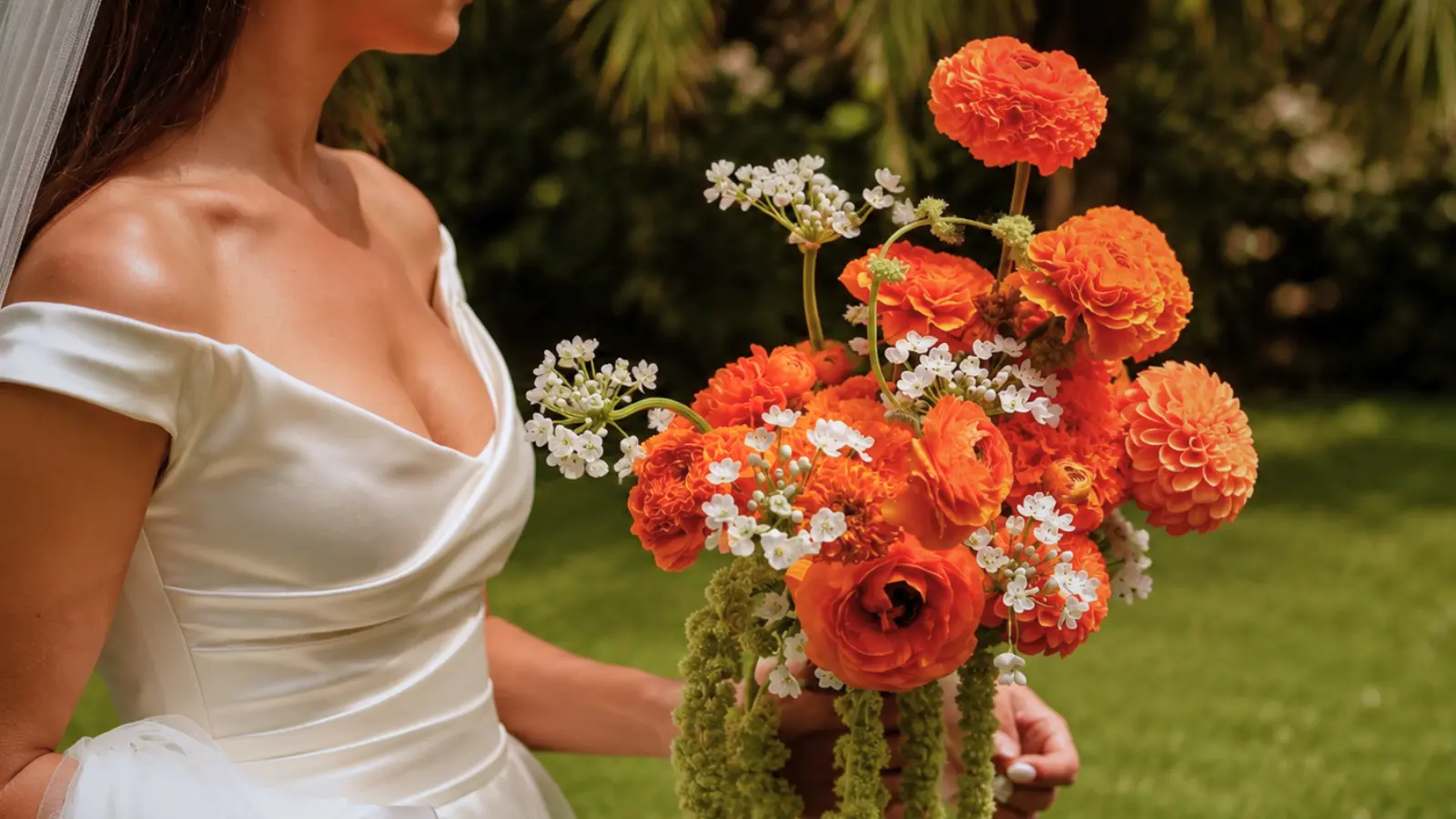
Orange wedding bouquets are one of the most versatile choices for brides, offering everything from soft coral and peach tones to rich burnt orange and earthy terracotta palettes. While all belong to the same color family, each shade creates a completely different atmosphere, making orange suitable for romantic spring weddings, elegant autumn celebrations, modern events, and outdoor garden ceremonies alike.
Many brides think of orange as a bold seasonal color, but the right combination of flowers, greenery, and complementary tones can make it feel refined, timeless, and unmistakably bridal. Understanding the difference between bright orange, burnt orange, terracotta, and coral is the key to choosing a bouquet that perfectly matches your wedding style.
This guide explores orange designs within the broader world of wedding bouquets, including the best flowers, color combinations, seasonal inspiration, styling tips, and practical advice for creating a bouquet that feels elegant, balanced, and beautifully intentional.
Orange Wedding Bouquet Ideas
The most useful starting point is understanding how different wedding bouquet colors within the orange family determine the flowers, pairings, and overall aesthetic of the arrangement. A terracotta bouquet and a bright citrus-orange bouquet share a color family and almost nothing else.
| Style Direction | Core Flowers | Mood | Best Suited For |
|---|---|---|---|
| Burnt Orange / Terracotta | Deep orange garden roses, dahlias, dried elements, warm foliage | Earthy, warm, sophisticated | Fall weddings; rustic, garden, and barn venues |
| Bright / Vivid Orange | Orange garden roses, ranunculus, tulips, marigolds | Bold, energetic, celebratory | Summer and outdoor weddings; modern and garden settings |
| Coral / Peachy Orange | Coral garden roses, peach ranunculus, soft orange sweet peas | Soft, romantic, warm | Spring and summer; garden and coastal venues |
| Orange and White | Orange roses or dahlias with white garden roses or ranunculus | Crisp, balanced, high-contrast | Most venue types; works across seasons |
| Orange Harvest Mix | Orange dahlias, amber roses, golden accents, dried grasses | Textured, abundant, autumnal | Fall weddings; outdoor and barn venues |
Coral and peachy orange is the most wearable direction across the widest range of venues and skin tones — it sits between pink and orange in a way that reads as warm and feminine without the boldness of full orange. Burnt orange and terracotta have their own distinct sophistication and are particularly well-suited to the organic textures of dried elements, raw greenery, and natural linen that characterize many contemporary wedding aesthetics. Bright orange is the most demanding to style but can be striking when handled with confidence.
Burnt Orange Wedding Bouquets
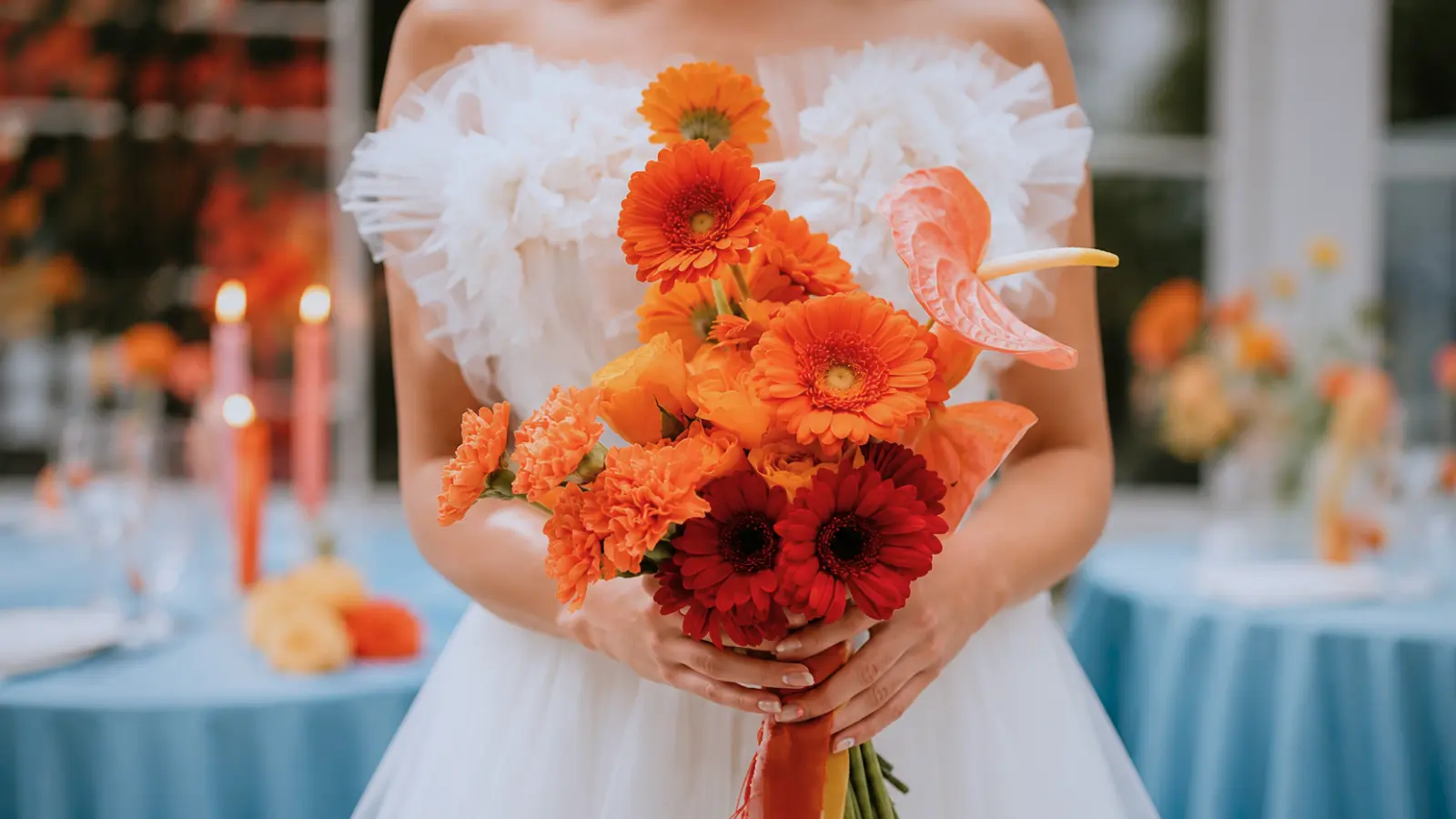
Burnt orange is the shade that has made the biggest move in wedding florals in recent years, largely because of how naturally it fits into the earthy, organic wedding aesthetic that has defined so much of contemporary bridal design. It’s a deep, muted orange with brown and warm undertones — closer to terracotta, rust, and amber than to anything vivid or bright — and that depth is precisely what makes it so versatile.
The flowers that deliver true burnt orange most reliably are deep orange garden roses, certain dahlia varieties in amber and rust tones, ranunculus in warm copper tones, and dried elements like bunny tail grass, pampas, and preserved leaves in amber. These flowers have a natural warmth that photographs beautifully in fall light and against earthy venue textures like stone, wood, and raw linen.
Burnt Orange vs. Terracotta: What’s the Difference?
Burnt orange sits slightly more in the orange family — deeper and more muted than bright orange, but still clearly orange. Terracotta leans further toward brown and clay, with more earthy undertones and less obvious orange identity. In bouquet terms, terracotta often reads better when built primarily around dried and neutral elements, while burnt orange can be built around fresh flowers with dried accents. Both pair well with ivory, burgundy, and deep green. If you’re unsure which you’re after, showing your florist a reference photo will resolve this faster than any color description.
For foliage, burnt orange responds best to dark, rich greenery — Italian ruscus, deep bay leaves, black-green eucalyptus varieties — rather than the brighter greens that would compete with the warmth of the flowers. Burgundy foliage, smoke bush, or deep red leaves woven through a burnt orange bouquet push the design into a richly layered fall territory that few other color combinations can match.
Orange Rose Wedding Bouquets
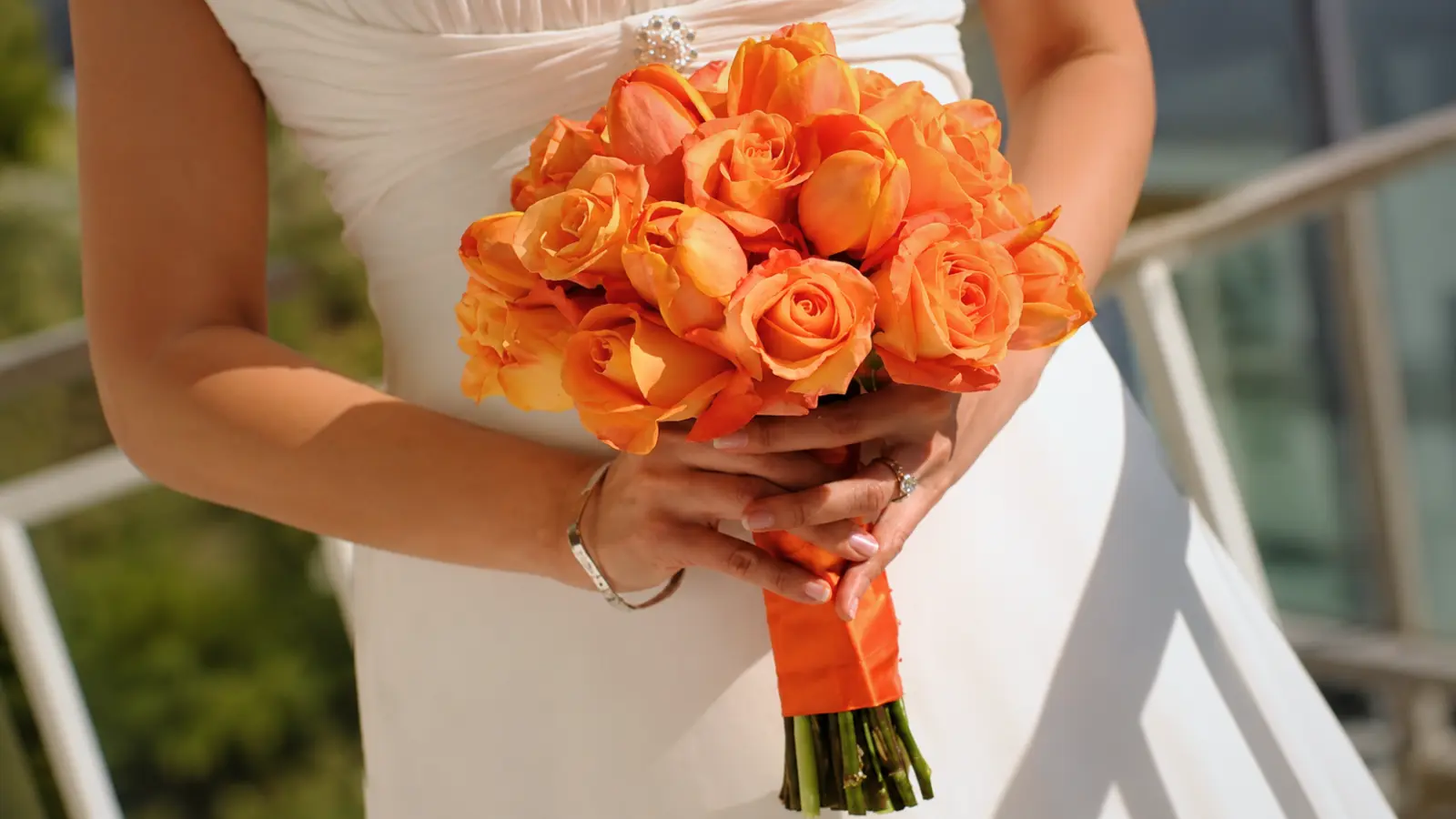
Orange roses are the most accessible entry point into this color family — they’re available year-round, come in a wider range of orange tones than most people expect, and work across both structured formal bouquets and loose garden-gathered arrangements. The choice between garden roses and standard roses shifts the character of the bouquet as meaningfully as the shade of orange does.
| Rose Type | Character | Best Orange Tones Available |
|---|---|---|
| Orange standard roses | Tighter, more uniform bloom; clean silhouette | Bright orange, vivid coral, mid-range orange |
| Orange garden roses | Fuller, more layered; romantic, lush texture | Peach, coral, apricot, deep amber, burnt orange |
| Coral / peach garden roses | Softer, transitional between pink and orange | Warm blush-orange, peachy apricot, light coral |
Garden roses are the stronger choice for burnt orange and terracotta bouquets specifically — their layered petals and variation in tone within a single bloom capture the warmth and depth that makes this shade read as sophisticated. Standard orange roses are more consistently uniform, which works well for a bright, high-contrast bouquet but can flatten slightly in the deeper, earthier tones. Coral and peach garden roses are worth considering even for brides who think they want a more saturated orange — in person and in photos, the softer coral tones often read as more elegant and feel more cohesive with a wider range of dress and venue combinations.
Orange Lily and Tulip Bouquets
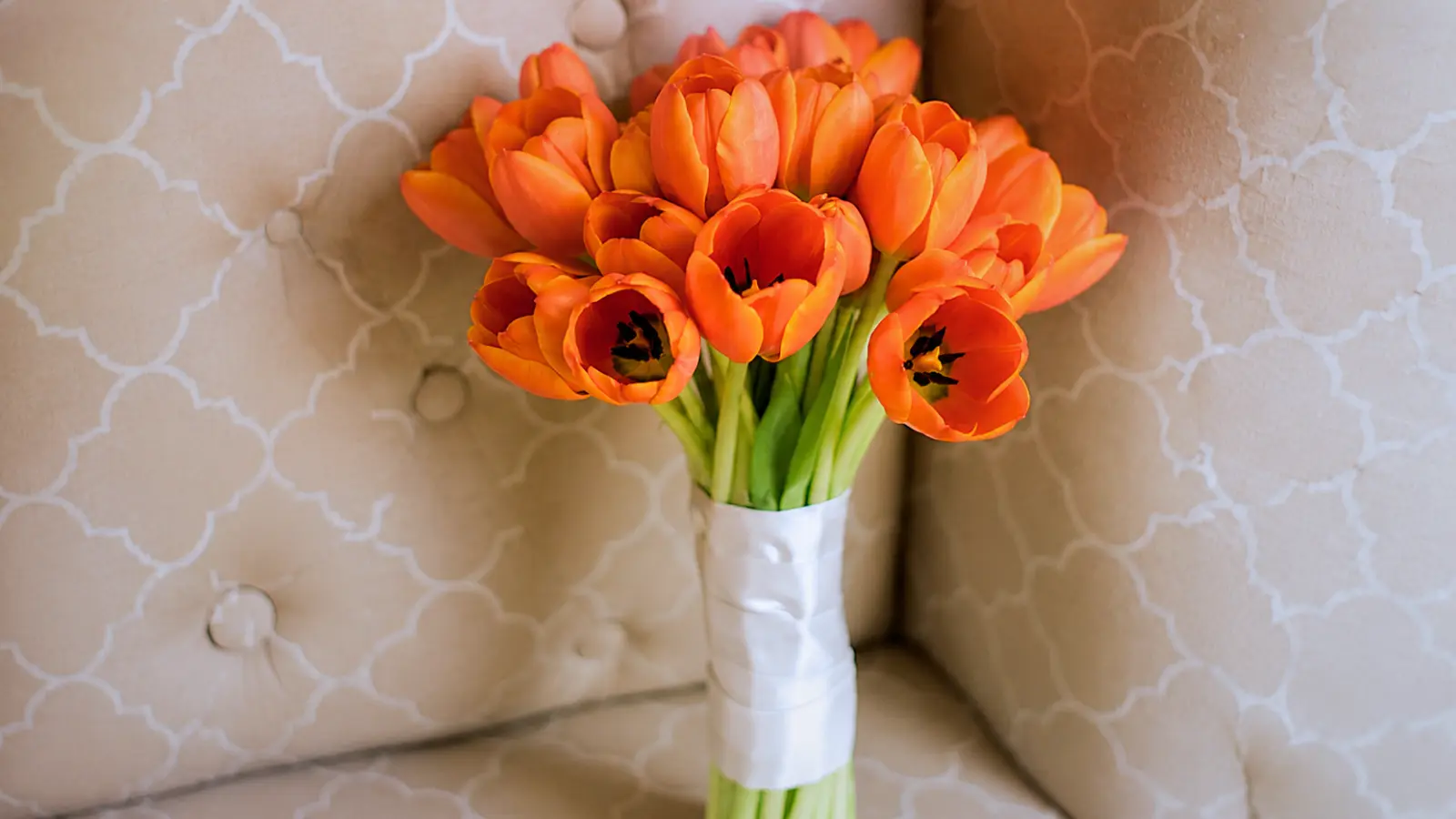
Orange lilies and orange tulips bring two very different energies to a bouquet, and both are better understood as accent or secondary flowers than as the primary focal point of a bridal arrangement.
Orange tulips are a spring flower at their best between February and May, when they’re plentiful, well-priced, and vibrant. A simple design works especially well for tulip wedding bouquets — orange tulips need few additional flowers for their smooth stems and single-color blooms to stand out. Mixing them with white or cream accents gives a tulip-forward bouquet enough contrast to feel deliberate rather than monochromatic. Outside of spring, orange tulips become harder to source reliably and their quality drops, which is worth factoring in early.
Orange lilies — Asiatic, Oriental, and similar varieties — bring significant volume and fragrance but can be harder to balance within a bridal bouquet because of their scale. Their large blooms can dominate smaller arrangements or create an uneven visual weight when mixed with more delicate flowers. They work well as one or two accent stems within a larger mixed arrangement rather than as the central flower. For deeper coverage on lily types and how they work in bridal settings, the dedicated lily guide addresses those details specifically.
Orange and White Wedding Bouquets
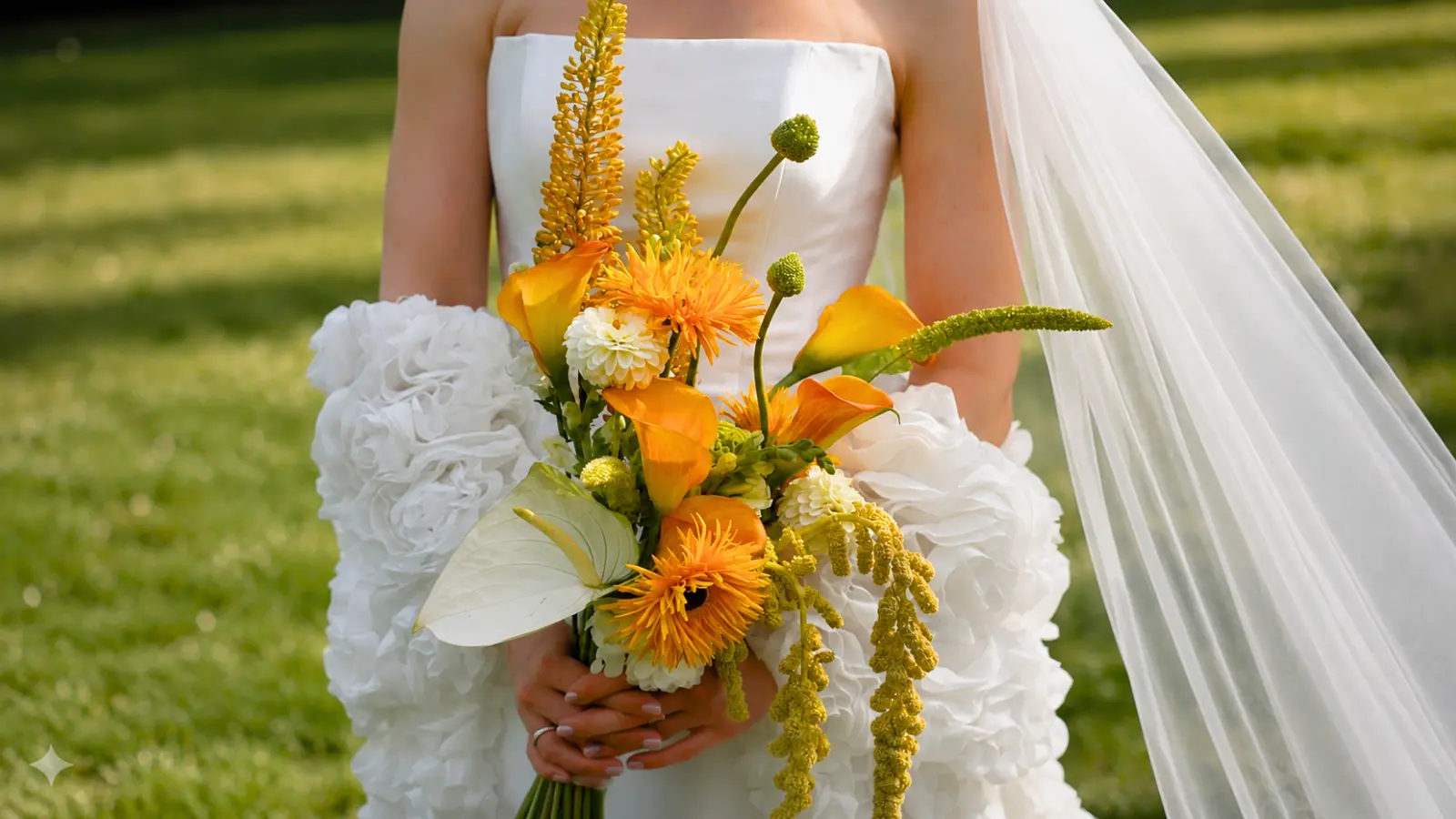
Orange and white is the most naturally balanced combination in this color family. White gives orange a neutral backdrop that prevents it from reading as too heavy or too seasonal, and orange gives white the warmth and personality it often lacks on its own. The resulting palette is versatile enough to work across spring, summer, and fall weddings without belonging exclusively to any one season.
The most effective approach is to let one color lead rather than splitting the bouquet evenly. Using white wedding bouquets as the foundation, with orange woven through as an accent, tends to create a crisp and modern result. Orange as the dominant color with white as secondary reads as warmer and more immersive in the palette. The 50-50 split can work but requires more care to avoid the two colors competing with each other rather than complementing.
Shade matters significantly here. Bright orange against pure white is a high-contrast, graphic combination that suits modern venues and summer settings particularly well. Burnt orange or coral against ivory or cream reads as softer and more romantic, and is the more natural choice for garden and rustic settings. Confirming that the orange tone and white tone are genuinely compatible — warm against warm, or cool against cool — will save you from a combination that looks slightly off in person even though it seemed right on paper.
Pink and Orange Wedding Bouquets
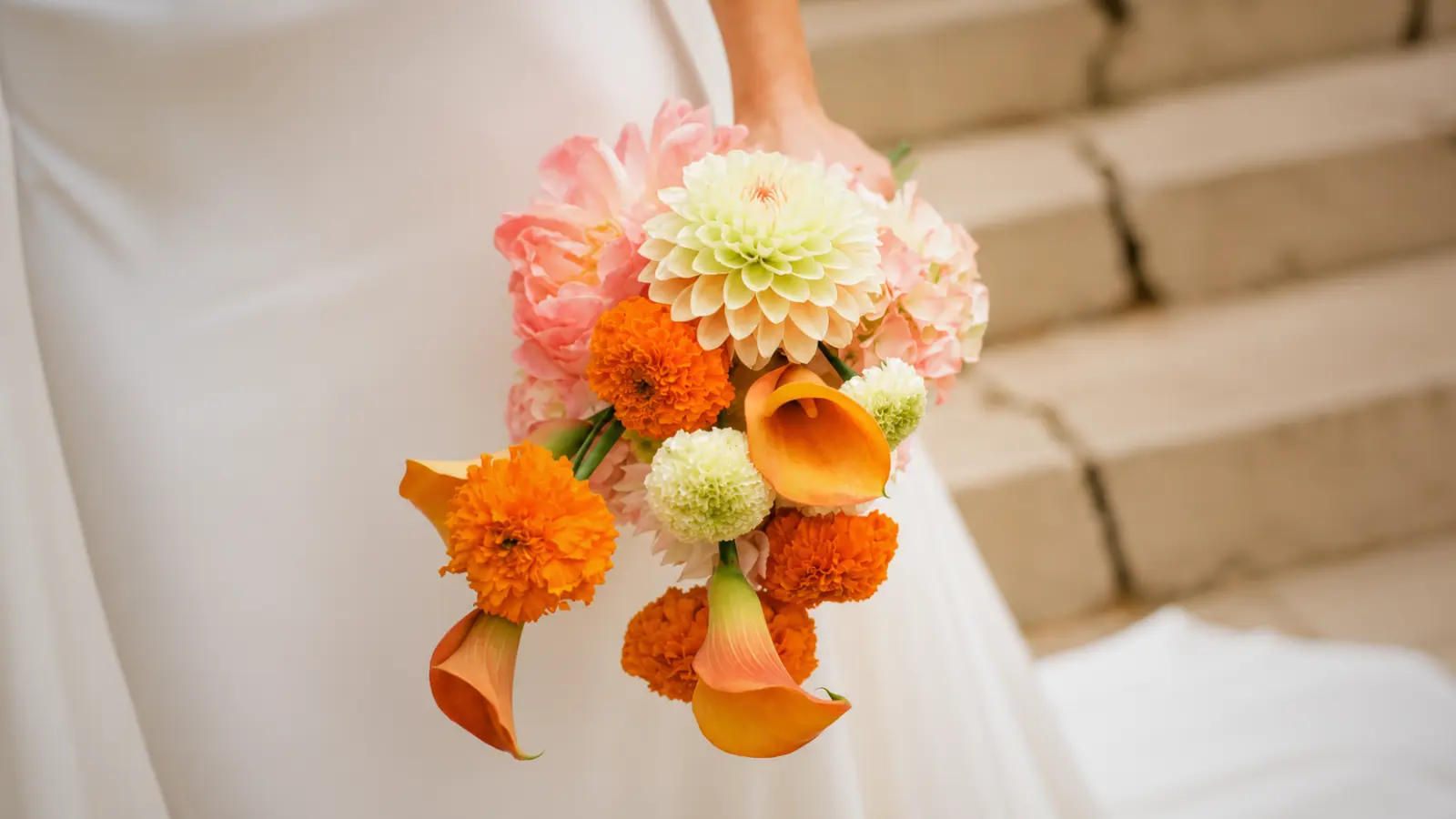
Pink and orange is a naturally warm combination that reads as romantic, sunny, and full of personality. It suits spring and summer weddings well and is particularly at home in outdoor, coastal, and garden settings where the palette echoes the warmth of the surrounding light and landscape.
The specific tones you choose determine how the combination feels. The soft blush tones found in pink wedding bouquets blend naturally with coral or peach orange, creating the most romantic version of this combination. Hot pink alongside vivid orange is bolder and more editorial, with an energy that suits a more deliberate, confident styling approach. Antique rose or dusty pink paired with burnt orange sits in warmer, earthier territory and is a natural fit for late summer and fall.
The tonal match between the two colors is the key consideration. Pink and orange that share the same warmth level — both with warm, yellow-leaning undertones, or both with cooler undertones — look cohesive. When one reads warm and the other reads slightly cool, the combination can feel like a near-miss rather than an intentional choice. Seeing both flowers together in person, rather than choosing from swatches or screen images separately, resolves this faster than any amount of color theory.
Orange and Blue Wedding Bouquets
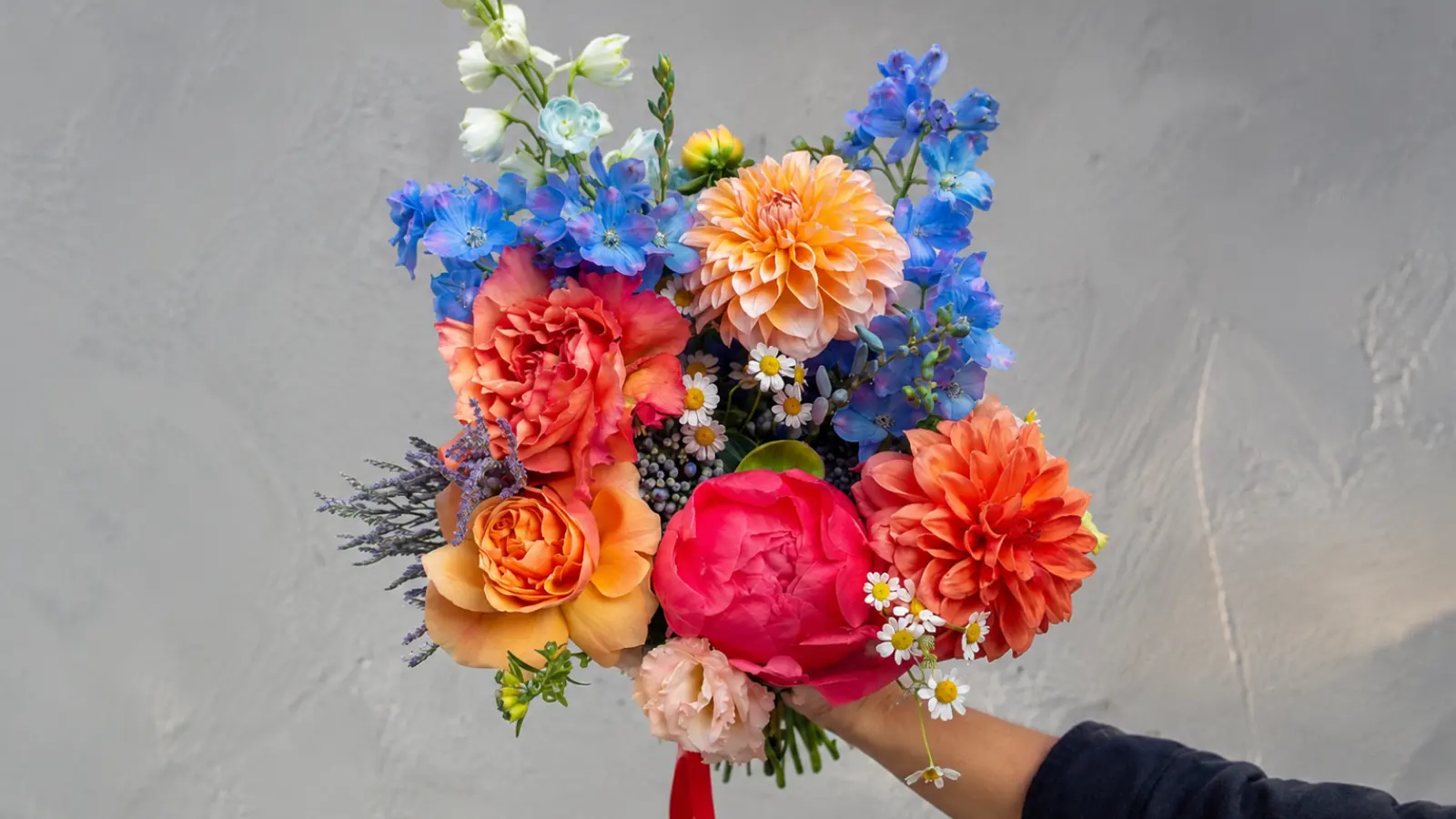
Orange and blue is a complementary color combination — the two sit directly opposite each other on the color wheel, which means they create inherent visual contrast without any additional colors needed to make them work. In a bouquet, this contrast can be striking and graphic when handled well, or visually jarring when the shades aren’t balanced thoughtfully.
| Orange Tone | Best Blue Pairing | Mood |
|---|---|---|
| Burnt orange / terracotta | Dusty blue (hydrangea, eryngium) | Earthy, romantic, muted contrast |
| Bright / vivid orange | True blue (delphinium, cornflower) | Bold, graphic, high-energy |
| Coral / peach orange | Soft blue or periwinkle (scabiosa, lisianthus) | Soft, summery, coastal |
The dusty tones associated with blue wedding bouquets pair especially well with burnt orange because both colors can share a muted, earthy quality. Bright orange alongside vivid blue is the most visually dramatic version and requires the most styling confidence. Adding white or ivory as a neutral buffer between the two colors — a few white ranunculus or cream garden roses — helps the combination breathe and prevents it from reading as too graphic for a bridal setting. A note on teal: orange alongside teal or aqua can work in a tropical or destination wedding context, but it reads as a more niche pairing; it’s worth being deliberate about rather than defaulting to.
Orange and Purple Wedding Bouquets
Orange and purple is another complementary pairing, and also one of the more demanding to execute well in a bouquet. When the shades align correctly, it reads as rich, creative, and unexpected. When they don’t, it can look either unresolved or uncomfortably close to seasonal associations that aren’t bridal.
The combinations that work best involve careful tonal matching. Burnt orange alongside deep plum or eggplant creates a rich, fall-appropriate palette with real sophistication — the warmth of the orange and the depth of the plum anchor each other well. Coral or peach orange alongside soft lavender is a gentler, more romantic direction that suits spring and garden weddings and is one of the easier orange-purple combinations to style naturally. The combination to approach with the most care is bright, saturated orange alongside vivid violet or bright purple — that pairing risks reading as Halloween-adjacent rather than bridal, and needs deliberate handling of foliage and construction to stay in the right territory.
Adding white or ivory as a third color in any orange-purple combination gives the eye a place to rest and keeps the palette from becoming too visually dense. Rich, dark foliage rather than bright green filler also helps the combination read as designed and intentional rather than assorted.
Orange and Yellow Wedding Bouquets
Orange and yellow is an analogous combination — the two colors sit adjacent on the color wheel and blend naturally without the contrast tension that complementary pairings create. The result is a warm, abundant palette that reads as harvest, late summer, and celebration, and it’s one of the most cohesive combinations available in the orange family.
Keeping both colors in the same temperature register is the main consideration here. Golden or amber yellow alongside burnt orange or deep amber orange transitions smoothly, creating a single warm-toned palette with natural depth. Bright lemon-yellow alongside vivid orange can feel slightly discordant because the cooler yellow and the warm orange can pull in different directions. For deeper coverage on the yellow side of this combination — tones, flower types, and seasonal availability — the yellow wedding bouquets guide covers those details fully.
This is a palette where foliage choice is particularly visible. Warm-toned dried elements — bunny tail grass, pampas, amber wheat — reinforce the harvest quality of orange and yellow beautifully. Dark green eucalyptus or deep matte foliage grounds the warmth without introducing a cool color that would undercut the palette’s cohesion.
Best Seasons for Orange Wedding Flowers
Orange is one of the most seasonally concentrated colors in wedding florals. Fall is by far its strongest season, not just aesthetically but in terms of genuine flower availability and quality. That said, year-round options exist for couples whose date doesn’t fall in autumn.
| Season | Best Orange Flowers Available | Notes |
|---|---|---|
| Spring | Orange tulips, coral and peach ranunculus, coral garden roses | Best season for tulips; coral and peach tones are widest in spring |
| Summer | Orange garden roses, orange dahlias, marigolds, orange zinnias | Strong season for vivid orange; dahlias begin appearing mid-to-late summer |
| Fall | Orange dahlias, deep amber roses, marigolds, dried elements, warm foliage | Peak season for burnt orange and terracotta; dahlias and warm tones at their best |
| Winter | Orange garden roses, coral ranunculus, orange calla lilies | Seasonal variety narrows; year-round roses and ranunculus are the most reliable |
The most practical takeaway: if your bouquet vision depends on dahlias or orange tulips, your wedding date needs to align with their natural windows. Orange garden roses and ranunculus provide the most scheduling flexibility and are the safest foundation for any orange bouquet regardless of the time of year. Discussing what’s genuinely in season for your specific month — rather than assuming availability from a general inspiration image — will produce a more reliable result and often a better price.
How to Style Orange Elegantly
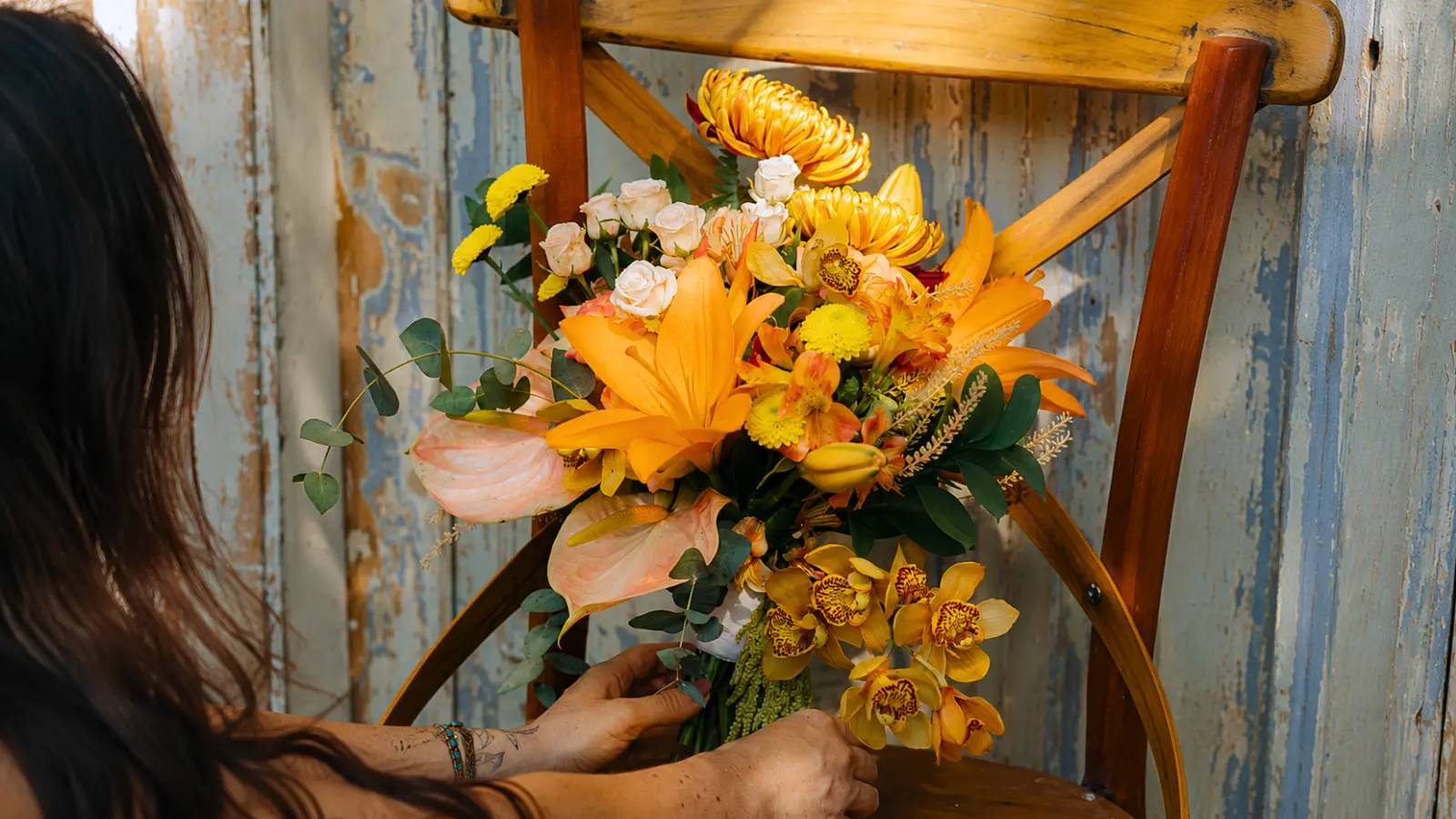
Orange has a natural warmth and energy that reads as celebratory, which is exactly its appeal — and also what needs careful management when the goal is sophistication rather than festivity. These are the specific choices that move an orange bouquet from bright to refined.
Choose the right shade for your setting. Burnt orange, terracotta, and deep amber are the most naturally elegant tones in this family — they carry warmth without the boldness of vivid orange. Coral and peach sit between pink and orange in a way that’s wearable across the widest range of venues. Bright, saturated orange can be striking, but it requires more deliberate pairing and construction to stay bridal rather than bold.
Use dark, rich foliage rather than bright green filler. This is the single most effective tool for elevating an orange bouquet. Italian ruscus, dark eucalyptus, bay leaves, and deep burgundy foliage give orange flowers a backdrop that reads as intentional and sophisticated. Bright green filler pushes orange toward casual and can, in the wrong combinations, tip the palette into territory that reads as seasonal rather than bridal.
Anchor with white or ivory accents. A bouquet that’s entirely orange, with no neutral breaks, can read as heavy or one-dimensional. Adding white or ivory flowers — garden roses, ranunculus, or sweet peas — as a secondary element gives the eye contrast and breathing room without introducing a new color.
Let one color lead in any combination. When pairing orange with blue, purple, pink, or yellow, choose a dominant color and let the other accent rather than splitting the design evenly. A 50-50 split between two strong colors requires precise shade matching and construction confidence to avoid looking like two separate bouquets pushed together.
Match the construction to the aesthetic. A tightly structured round bouquet in burnt orange garden roses reads as polished and formal. A loosely gathered arrangement with dried elements and trailing foliage reads as organic and garden-style. The construction should match the venue and the overall wedding aesthetic — orange is flexible enough to work in both directions, but it doesn’t look right when the construction contradicts the setting.
Orange Bouquet Mistakes to Avoid
Orange has a few specific pitfalls that come up predictably — most of them related to shade selection, pairing, and seasonal association rather than anything inherent to the color itself.
Treating all orange shades as interchangeable. Burnt orange, coral, peach, and bright orange require different flowers, different foliage, and different pairings to look right. Naming a color without specifying the shade can lead to a florist producing something that looks technically orange but not at all like what you had in mind. Bringing a reference image to your florist consultation is the most reliable way to align on the specific orange you’re after.
Pairing orange with black. Orange and black is the color combination most associated with Halloween, and it’s extremely difficult to use in a wedding bouquet context without the association surfacing. Burnt orange alongside dark chocolate or near-black foliage can work in small doses, but making black a prominent element in an orange bouquet almost always creates an unintended seasonal reading. If the goal is a dark, moody contrast for orange, deep burgundy and forest green are better alternatives.
Using bright green filler foliage. Standard bright green leaves alongside orange can read as tropical at best and as artificial at worst. Richer, darker greenery does significantly more for the palette and elevates orange into clearly curated territory.
Planning seasonal flowers without checking availability. Orange tulips and orange dahlias are both beloved but seasonal — tulips in spring, dahlias in summer through fall. A bouquet plan that depends on either of these outside their natural window risks sourcing difficulties and a significant price increase. Confirming availability for your specific date before committing to a flower type avoids this entirely.
Confusing bright orange with burnt orange when ordering. These two shades look nothing alike in person, but florists receive requests for both under the same name. Being specific — using terms like terracotta, rust, amber, copper, or bringing a physical color reference — ensures the flowers delivered match the shade you’ve envisioned.
Orange Wedding Bouquet Inspiration
Discover orange wedding bouquets featuring burnt orange, terracotta, coral roses, dahlias, elegant fall flowers, romantic color palettes, and beautiful inspiration for every wedding style.
Orange Is More Versatile Than Most Brides Realize
Orange wedding bouquets are often associated with autumn, but they’re capable of so much more. From soft coral arrangements for spring to rich terracotta and burnt orange designs for fall, this color family offers remarkable flexibility while bringing warmth, depth, and personality to every bridal look.
The secret isn’t choosing orange—it’s choosing the right shade. When paired with complementary flowers, thoughtful greenery, and a bouquet style that suits your dress and venue, orange becomes one of the most elegant and memorable color choices a bride can carry. Whether your vision is romantic, modern, rustic, or editorial, the right orange bouquet feels intentional, timeless, and uniquely your own.
Frequently asked questions (FAQ)
What shade of orange is best for a wedding bouquet?
The best shade of orange for a wedding bouquet depends on the mood and season of your wedding. Burnt orange, terracotta, rust, and amber tones usually feel the most sophisticated and work especially well for fall, rustic, bohemian, and garden weddings. Coral and peachy orange feel softer and more romantic for spring or summer. Bright orange can be beautiful, but it needs more careful styling so the bouquet feels intentional rather than overly bold or tropical.
What flowers work best for an orange wedding bouquet?
Orange garden roses, ranunculus, dahlias, tulips, calla lilies, marigolds, and chrysanthemums can all work well in orange wedding bouquets. Garden roses and ranunculus are the most versatile because they come in softer coral, peach, amber, and burnt orange tones. Dahlias are especially strong for summer and fall, while tulips are best for spring. Dark greenery or burgundy foliage helps orange flowers look more elevated and bridal.
What is the difference between burnt orange and bright orange for a wedding bouquet?
Burnt orange is deeper, warmer, and more muted, with earthy undertones that sit close to terracotta, rust, copper, and amber. It usually feels more sophisticated, autumnal, and romantic. Bright orange is more vivid and energetic, closer to citrus or tropical orange. It can work beautifully for summer, destination, or modern weddings, but it needs more careful color pairing to avoid feeling too loud or casual.
What colors go best with orange wedding bouquets?
Ivory, white, cream, blush, burgundy, dusty blue, yellow, peach, and deep green all pair well with orange wedding bouquets. Burnt orange looks especially strong with ivory, burgundy, terracotta, rust, and dark greenery. Coral and peachy orange pair beautifully with blush and cream. Bright orange works best with clean neutrals or intentional high-contrast colors like blue. Orange with black should usually be avoided unless you want a very specific seasonal look.
Is orange a good color for a fall wedding bouquet?
Yes, orange is one of the strongest colors for a fall wedding bouquet, especially in burnt orange, terracotta, copper, rust, and amber tones. These shades naturally match autumn flowers, dried elements, warm foliage, and outdoor fall venues. Orange dahlias, garden roses, ranunculus, marigolds, and dried grasses can create a bouquet that feels seasonal, rich, and romantic without looking too themed.
Can orange work as a bridal bouquet color?
Yes, orange can work beautifully as a bridal bouquet color when the shade is chosen carefully. Burnt orange, terracotta, amber, coral, and peach tones can feel warm, romantic, and distinctly bridal. The key is using refined flowers, balanced color pairings, and rich foliage so the bouquet feels intentional. Bridesmaids can carry a simpler or softer version, but orange is not limited to attendant bouquets.
How do you keep an orange wedding bouquet from looking like Halloween?
Avoid pairing orange with black, harsh dark purple, or overly graphic high-contrast details. Choose burnt orange, terracotta, rust, copper, peach, or amber instead of bright pumpkin orange, and pair it with ivory, blush, burgundy, deep green, cream, or warm neutrals. Flower choice and construction also matter: garden roses, dahlias, ranunculus, and loose greenery feel much more bridal than a stiff orange-and-black palette.