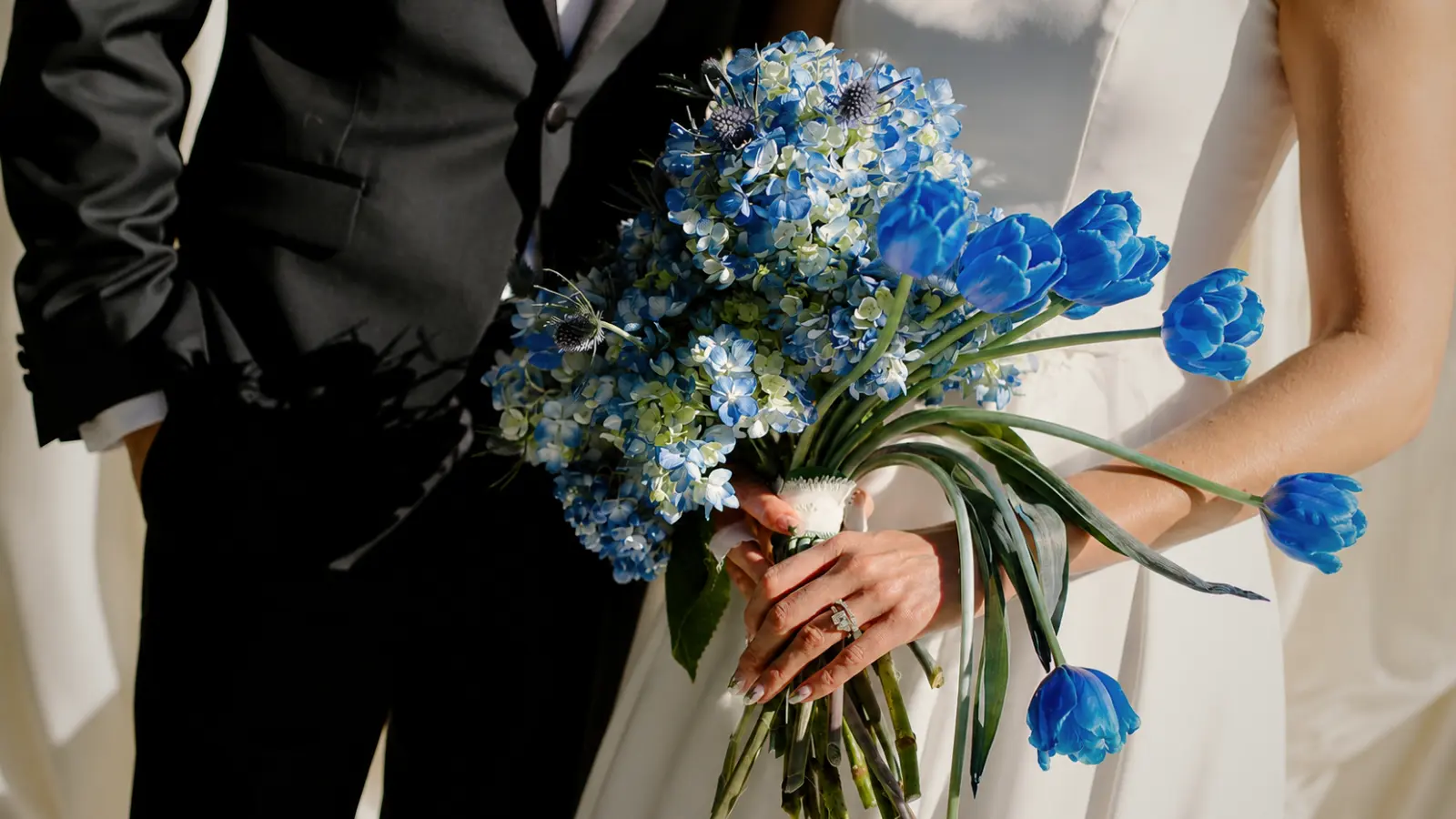
Blue wedding bouquets are a beautiful choice for brides who want something distinctive, romantic, and unexpectedly elegant. From soft dusty blue arrangements to dramatic navy bouquets and timeless blue-and-white designs, blue offers remarkable versatility while bringing a fresh alternative to more traditional wedding flower palettes.
Unlike white, blush, or pink flowers, true blue blooms are surprisingly rare in nature. That makes flower selection especially important, since some blue flowers are naturally colored while others are carefully dyed to achieve deeper or more vibrant shades. Understanding that difference helps you create a bouquet that matches both your vision and your expectations.
This guide explores blue designs within the broader world of wedding bouquets, including dusty blue, navy, blue-and-white bouquet ideas, naturally blue flowers, hydrangeas, “something blue” inspiration, and practical advice for choosing the right palette for your wedding style.
Blue Wedding Bouquet Ideas
Blue wedding bouquet colors generally fall into a few directions, each using a different mix of naturally blue flowers, dyed accents, or both.
| Style Direction | Core Flowers | Mood |
|---|---|---|
| Dusty Blue | Dusty blue hydrangea, eryngium, scabiosa, lisianthus | Soft, romantic, slightly muted |
| Navy / Deep Blue | Delphinium, deep thistle, dark iris, dark foliage | Bold, dramatic, formal |
| Blue & White | Hydrangea or delphinium with white roses or peonies | Crisp, classic, suits coastal and nautical themes |
| Something Blue Accent | Single blue flower, ribbon, or charm within another palette | Traditional touch without changing the overall color story |
Dusty blue and blue-and-white are the most achievable with naturally blue or naturally blue-toned flowers. Navy is the most demanding, since true deep blue is uncommon in flower form and the look is often built from deep purple-leaning blooms rather than a single perfectly navy flower.
Dusty Blue Wedding Bouquets
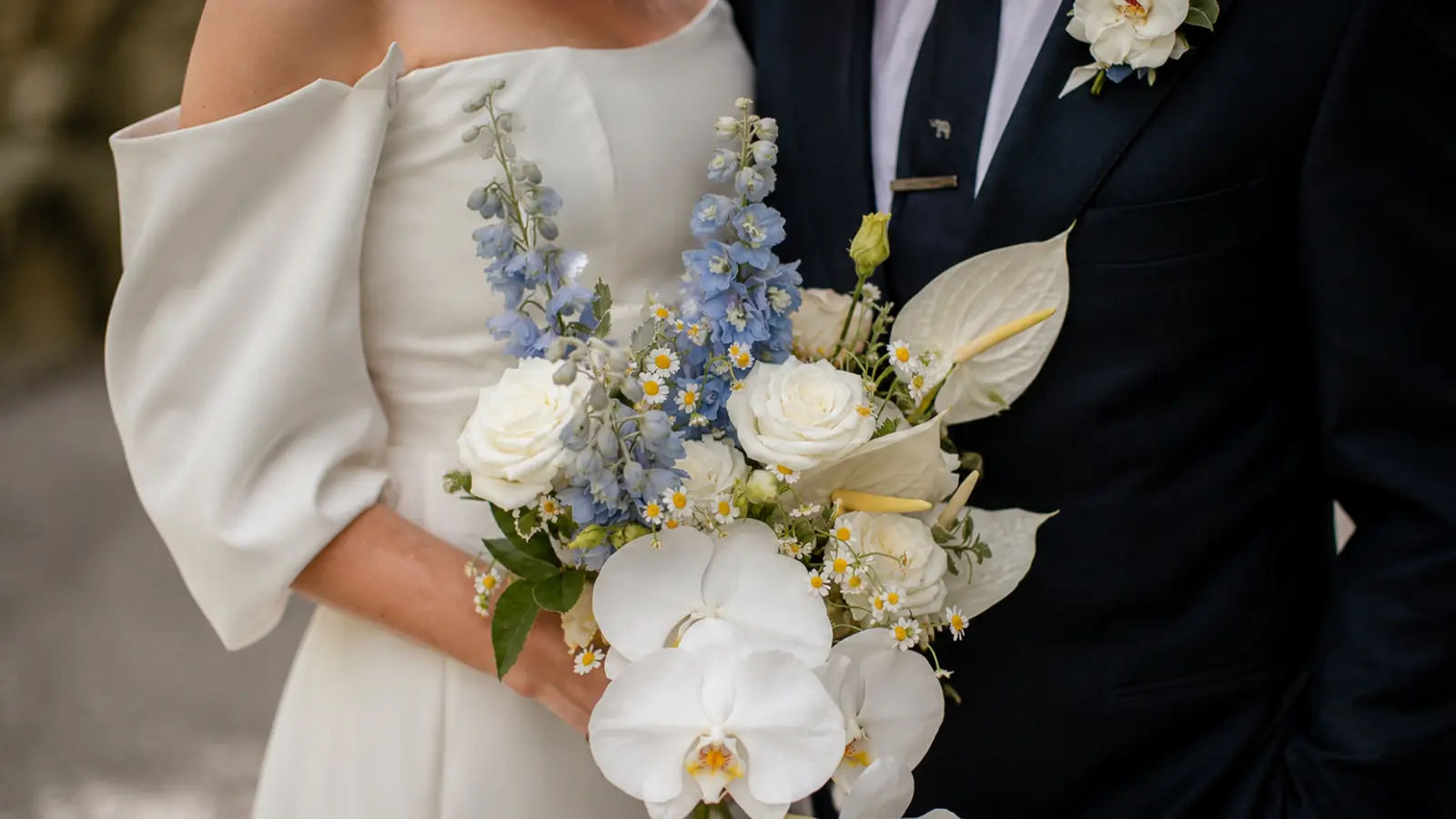
Dusty blue is the softest, most wearable version of blue in a bouquet — closer to faded denim or sea glass than a bold, saturated color. It suits romantic, garden, and rustic-elegant weddings especially well, and it’s also one of the more popular bridesmaid dress colors, which makes a dusty blue bouquet an easy color to coordinate around.
This palette is one of the easier blue directions to build with naturally available flowers. Dusty blue hydrangea, eryngium (sea holly), scabiosa, and certain lisianthus varieties all have a genuinely muted, grey-toned blue without any dye involved. Dusty miller, a soft silver-grey foliage, pairs naturally with this palette and reinforces the muted tone without adding another flower.
Because the palette is already soft, a little contrast helps keep the bouquet from blending into itself. A touch of blush, cream, or even a deeper navy accent flower gives the eye something to land on within an otherwise gentle, low-contrast color story.
Navy Blue Wedding Bouquets
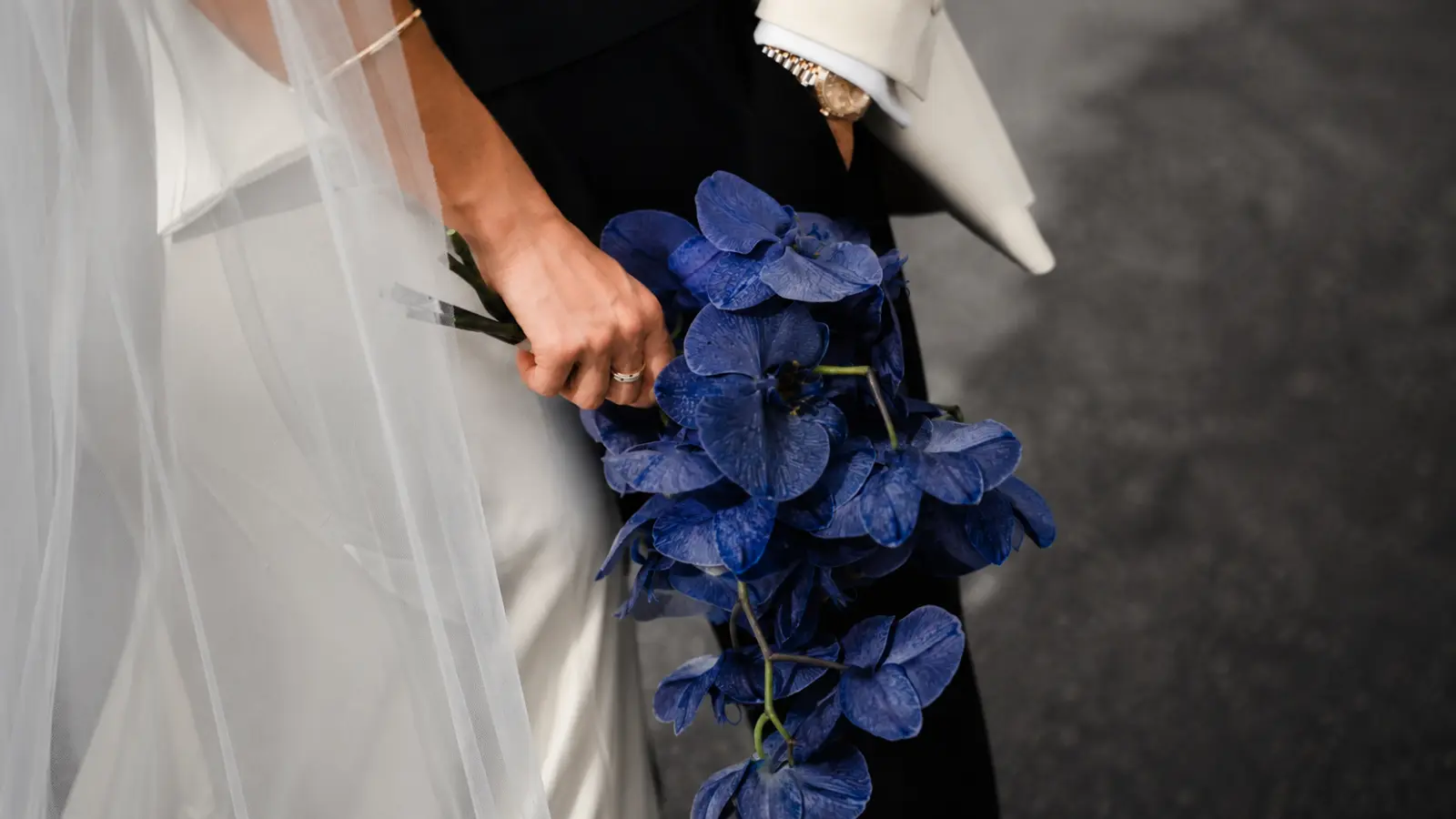
Navy is the most dramatic direction in a blue bouquet, and also the hardest to achieve in pure flower form. True navy — a deep, almost black-blue — is uncommon in nature, so navy bouquets are typically built from the deepest available blue-purple flowers rather than a single flower that’s perfectly navy on its own.
Delphinium in its deepest variety, dark eryngium, deep iris, and richly colored thistle all contribute to a navy effect, especially when grouped together and paired with dark, almost black-green foliage. The combined effect reads as navy even though no single flower is precisely that shade — the depth comes from layering several dark, cool-toned blues and purples rather than relying on one flower to do all the work.
Navy bouquets pair particularly well with white, ivory, or a single warm accent like burgundy for contrast, since an entirely dark, monochrome navy bouquet can lose definition and read as one dark mass rather than a designed bouquet.
Blue and White Wedding Bouquets
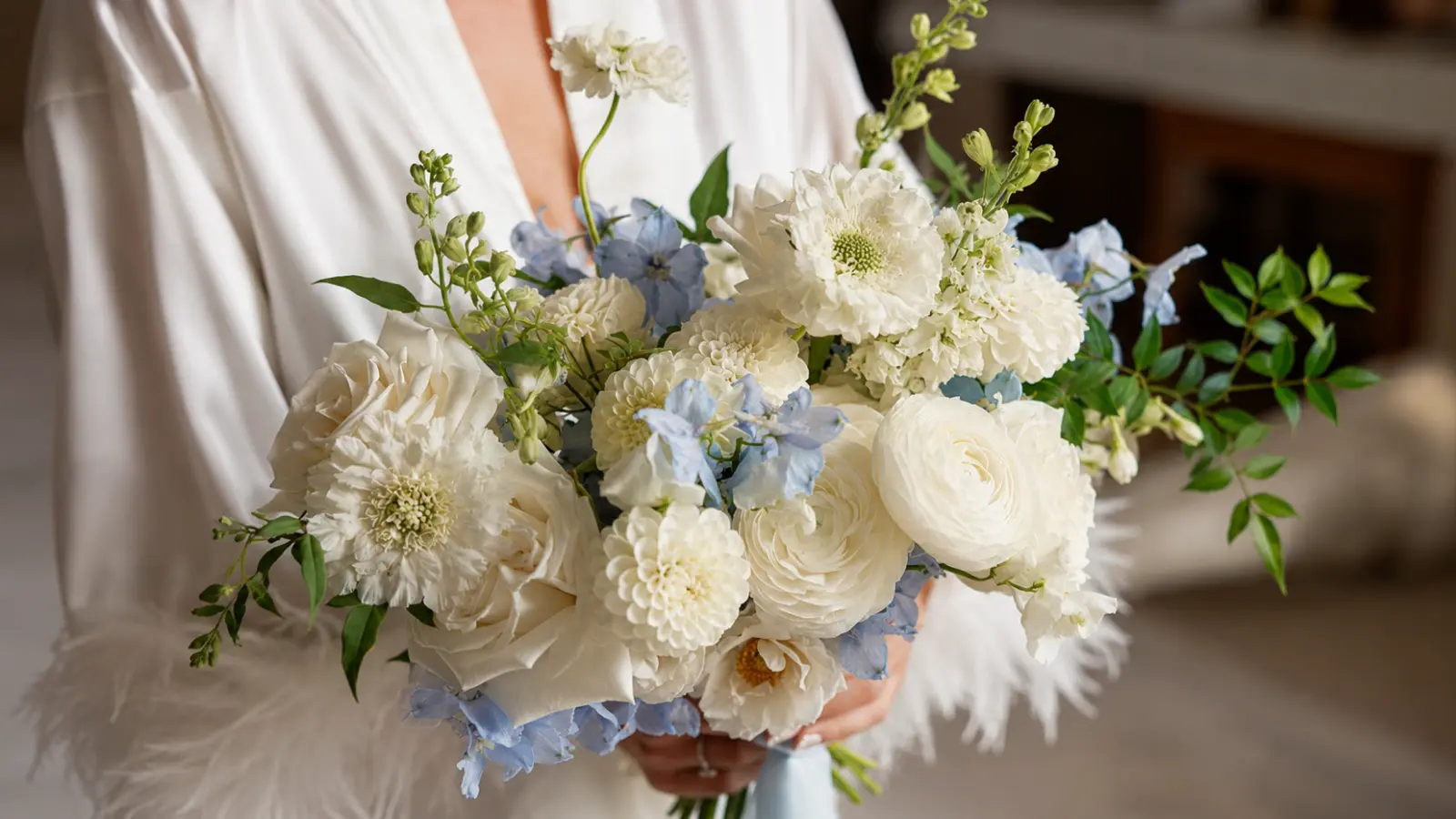
Blue and white is the most classic combination in this color family, and it’s a particularly natural fit for nautical, coastal, and destination weddings, though it works just as well for a traditional indoor ceremony.
The construction is straightforward: a base of white flowers — roses, peonies, or ranunculus — with blue hydrangea, delphinium, or thistle worked in as the secondary color, rather than splitting the bouquet evenly between both colors. This keeps the design from looking like two separate color stories pushed together. Letting white lead and blue accent, or vice versa, almost always looks more intentional than a perfectly even split.
For more on what makes an all-white bouquet work on its own — texture, tone, and flower pairing — the white bouquet guide covers that side of the combination in more detail.
Blue Hydrangea Bouquets
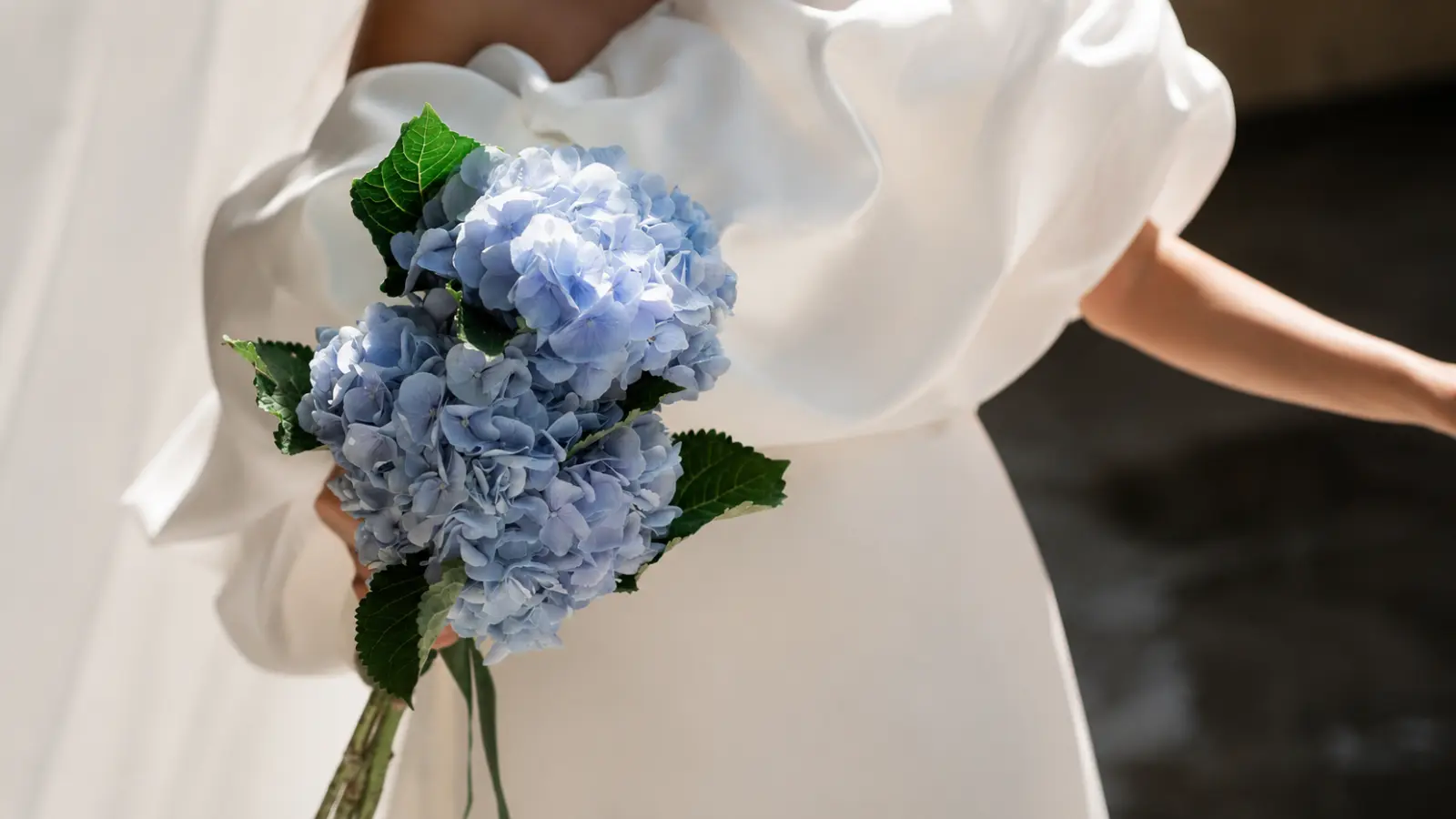
Hydrangea is the flower most associated with blue wedding bouquets, and for good reason: it’s one of the few flowers that’s genuinely, naturally blue, and its large, full blooms deliver significant volume and color impact from relatively few stems.
The science behind hydrangea’s color is worth knowing, because it explains a lot about why the exact shade varies. Hydrangea color depends on the acidity of the soil it’s grown in.
| Soil Condition | Resulting Color |
|---|---|
| Acidic soil | True blue |
| Neutral soil | Often a muddier purple or lavender |
| Alkaline soil | Pink, even on the same plant variety |
This is why two batches of “blue” hydrangea from different growers can look noticeably different — one might be a clear, true blue, while another leans more lavender or even slightly mauve. If a specific, consistent blue tone matters for your wedding, it’s worth discussing with your florist ahead of time and, where possible, seeing the actual stems before the wedding day rather than relying on a general color name.
Hydrangea’s one practical drawback is durability: its large, papery petals wilt faster than sturdier flowers, especially in heat. It holds up well with good hydration and a cool environment, but isn’t the most forgiving choice for a long day outdoors in direct sun. Pairing hydrangea with hardier blue accents like thistle or eryngium gives the bouquet some insurance if the hydrangea itself starts to soften.
Something Blue Bouquet Ideas
The “something blue” tradition doesn’t require the entire bouquet to be blue — and for couples who want a different primary color, a single accent is often the better choice anyway, since it satisfies the tradition without changing the bouquet’s main color story.
| Idea | How It Works |
|---|---|
| Single blue accent flower | One small blue bloom — a sprig of forget-me-nots or a single delphinium floret — tucked into an otherwise neutral bouquet |
| Blue ribbon wrap | A thin blue ribbon wrapped under or alongside the main stem wrap, visible only on close inspection |
| Hidden charm or fabric | A small blue charm, button, or fabric swatch (often a sentimental item) tied into the handle |
| Blue-tinted greenery | Foliage with a natural blue-grey tone, like eucalyptus, used as the greenery base |
This approach is especially useful for brides who want a white, blush, or other neutral-toned bouquet as the main visual but still want to honor the tradition. It also tends to be the easiest way to include blue while keeping the overall wedding bouquet cost lower, since it requires only one or two small elements.
What Flowers Are Naturally Blue?
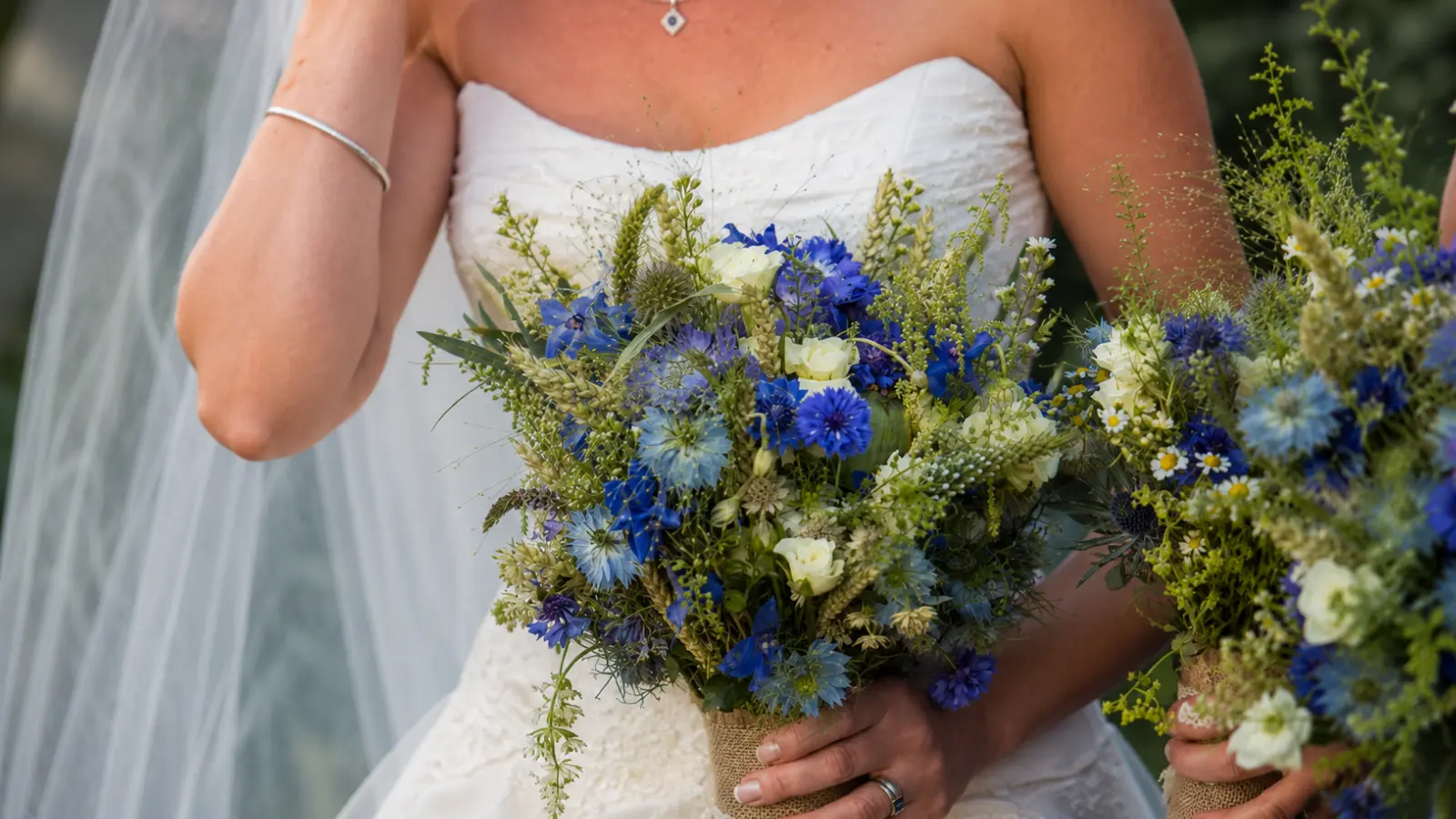
Before choosing blue wedding bouquet flowers, it is worth understanding that true blue is one of the rarest colors in the plant world, and many florist-supplied blooms are dyed or tinted.
| Category | Examples | Notes |
|---|---|---|
| Naturally blue | Delphinium, cornflower, muscari, forget-me-nots, eryngium, agapanthus, some scabiosa | Genuinely blue without dye; tones tend to be softer or more muted rather than vivid |
| Naturally blue, but variable | Hydrangea | True blue depends on the soil it was grown in; can shift toward purple or lavender |
| Commonly dyed or tinted | Roses, orchids, carnations, daisies | No naturally blue version exists; vivid blue versions are white flowers colored after cutting |
Neither natural nor dyed flowers are inherently better — the right choice depends on what you’re going for. Naturally blue flowers give a softer, more muted result that reads as genuinely organic, which suits dusty blue and blue-and-white palettes especially well. Dyed flowers can deliver a more saturated, vivid blue that simply doesn’t exist in nature, which some couples specifically want for a bold, graphic look.
The honest trade-off with dyed flowers is twofold: the color can look slightly more artificial up close, especially in bright light, and dyed petals are sometimes less durable than the flower’s natural, undyed form. If a fully natural look matters to you, building the bouquet around delphinium, hydrangea, eryngium, and similar genuinely blue flowers — rather than dyed roses or orchids — is the more reliable way to get there.
Blue Bouquet Mistakes to Avoid
Blue bouquets run into a specific set of issues, most of which trace back to the color’s natural rarity in flowers.
Expecting vivid, saturated blue from naturally blue flowers. True blue blooms tend to be soft and muted, not bold and bright. A request for a vivid royal-blue bouquet built entirely from naturally blue flowers is likely to come up short — that level of saturation usually requires some dyed flowers.
Not knowing dyed flowers are dyed. Vivid blue roses, orchids, and carnations are dyed white flowers. This isn’t a problem on its own, but going in without that knowledge can lead to surprise at the color’s intensity or how it ages compared to a naturally colored flower.
Relying entirely on hydrangea with no backup. Hydrangea wilts faster than sturdier flowers, especially in heat, and its exact shade can vary between batches. A bouquet with at least one hardier blue flower as backup — thistle or eryngium, for example — is more dependable.
Building an all-navy bouquet with no contrast. A bouquet built entirely from dark, deep blue-purple tones can lose definition and read as one dark mass, especially in photos. Pairing navy with white, ivory, or a touch of a warm accent color keeps it visually distinct.
Overcomplicating the “something blue” tradition. The tradition doesn’t require an elaborate blue design. A single small accent satisfies it just as well as a fully blue bouquet, and it’s often the better choice for a couple who wants a different primary color overall.
Blue Wedding Bouquet Inspiration
Explore beautiful blue wedding bouquets featuring dusty blue flowers, elegant navy arrangements, romantic blue-and-white bouquets, naturally blue blooms, and timeless bridal inspiration for every wedding style.
Blue Creates a Bouquet That Stands Apart
Blue wedding bouquets offer something few other floral palettes can achieve: a balance of elegance, originality, and timeless beauty. Whether you prefer the softness of dusty blue, the drama of navy, or the freshness of a blue-and-white arrangement, the most memorable bouquets are built around flowers that naturally complement the season, venue, and overall wedding style.
The key to a beautiful blue bouquet is understanding the flowers behind the color. By knowing which blooms are naturally blue, which rely on growing conditions, and which are carefully dyed, you’ll be able to work confidently with your florist and create a bouquet that looks intentional, harmonious, and unforgettable from the ceremony to the final photographs.
Frequently asked questions (FAQ)
Which flowers are naturally blue for a wedding bouquet?
Delphinium, cornflower, muscari, forget-me-nots, eryngium, agapanthus, and certain scabiosa varieties are naturally blue and do not require dye. Hydrangeas can also produce true blue blooms, but their exact color depends on the soil where they were grown. Because naturally vivid blue flowers are rare, most genuine blue bouquets feature softer or more muted shades rather than intense royal blue.
Are blue roses real or dyed?
There are no naturally blue roses. Blue roses sold by florists are white roses that have been dyed or tinted because roses do not naturally produce blue pigment. The same applies to many vividly blue carnations, orchids, and daisies. Dyed flowers can create a bold color statement, while naturally blue flowers offer a softer and more organic appearance.
What’s the difference between dusty blue and navy blue bouquets?
Dusty blue bouquets use soft, muted flowers with grey-blue tones to create a romantic and understated look. Navy bouquets rely on deeper blue-purple flowers, layered foliage, and strong contrast to create a richer, more dramatic appearance. Because true navy flowers are extremely rare, this effect usually comes from combining several darker blooms rather than using a single navy flower.
How can you include “something blue” without making your bouquet blue?
A single blue flower, a narrow blue ribbon woven into the handle, a sentimental blue fabric detail, or a small charm attached to the bouquet are all elegant ways to honor the tradition without changing the bouquet’s overall color palette. This approach allows couples to include the custom while keeping the main floral design neutral.
Why is my blue hydrangea turning purple?
Hydrangea color changes according to the acidity of the soil in which it was grown. Highly acidic soil produces clearer blue flowers, while less acidic conditions often create lavender or purple tones instead. Because of this natural variation, even hydrangeas from different growers may display noticeably different shades of blue.
Do blue flowers work well for summer or beach weddings?
Yes, provided you choose heat-tolerant varieties. Delphinium, eryngium, and thistle generally perform better outdoors than blue hydrangeas, which require consistent hydration and protection from prolonged heat. Blue-and-white bouquets are especially popular for coastal weddings because they complement the natural scenery while maintaining an elegant, timeless appearance.