
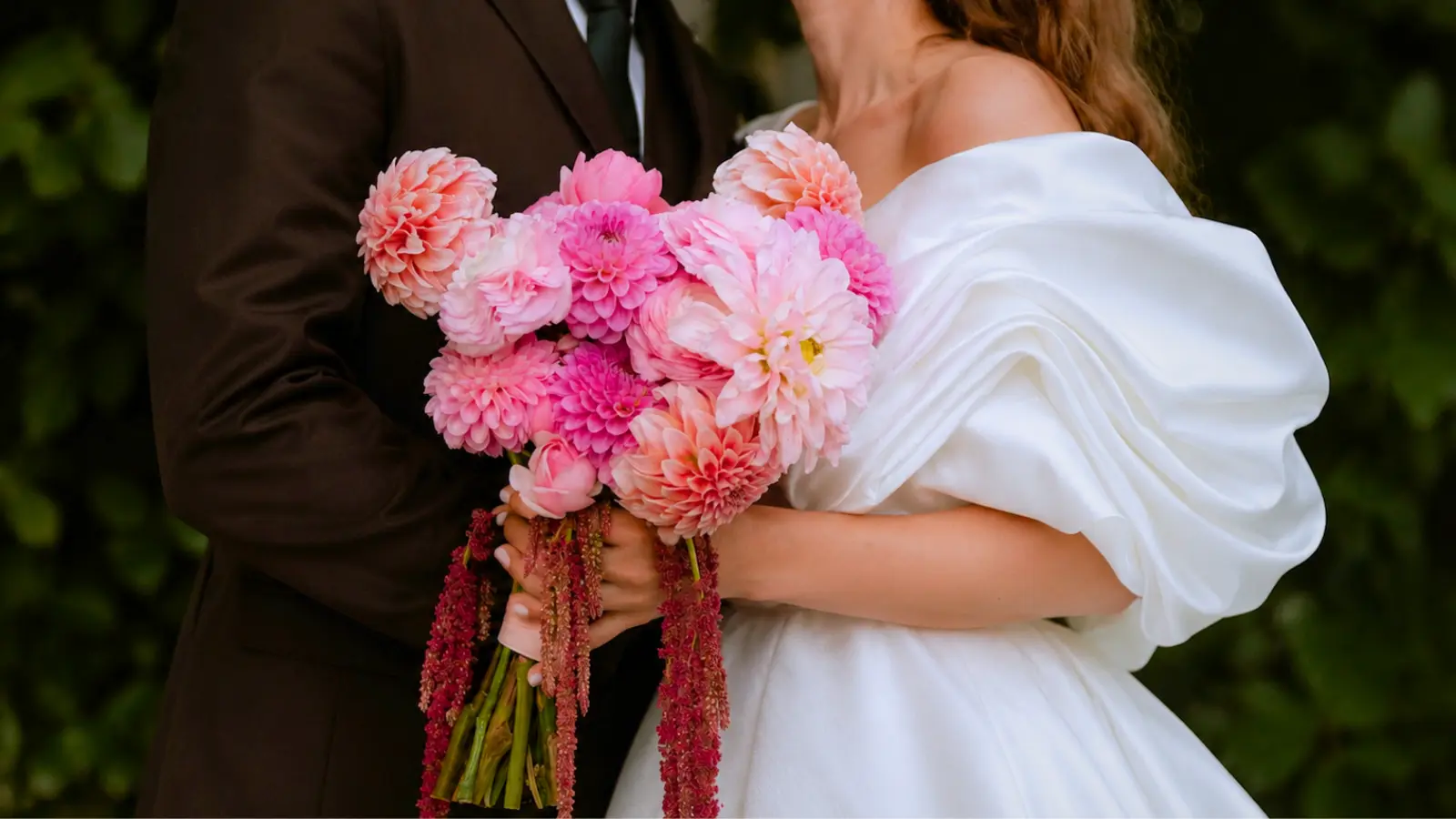
Pink wedding bouquets are one of the most popular choices for brides because they offer remarkable versatility, from barely-there blush tones to vibrant hot pink arrangements. Whether you’re planning a romantic garden ceremony, a classic ballroom wedding, or a modern celebration, pink flowers can be styled to feel timeless, elegant, bold, or effortlessly soft depending on the shade and flower selection.
One of the biggest misconceptions about pink bouquets is that they’re all the same. In reality, blush, soft pink, antique rose, and hot pink create completely different moods, photograph differently, and pair with different flowers and greenery. Understanding those differences is the key to creating a bouquet that feels intentional rather than simply choosing “pink.”
This guide explores pink designs within the broader world of wedding bouquets, including blush bouquets, pink roses, peonies, hot pink arrangements, elegant flower pairings, and practical styling advice to help you choose the perfect pink palette for your wedding day.
Pink Wedding Bouquet Ideas
Pink bouquets generally fall into a few distinct directions depending on how saturated and warm the color reads. The table below maps the most common approaches to the flowers, mood, and settings where each one works best — a useful starting point before narrowing down to a specific shade.
| Direction | Core Flowers | Mood | Best Suited For |
|---|---|---|---|
| Blush | Garden roses, ranunculus, white peonies with blush tones | Soft, romantic, near-neutral | Classic, formal, and garden weddings |
| Soft Pink | Pink garden roses, peonies, lisianthus, sweet peas | Romantic, warm, clearly pink | Spring and summer weddings, outdoor ceremonies |
| Antique Rose | Dusty pink garden roses, dried elements, ranunculus | Warm, earthy, vintage | Fall weddings, barn and rustic venues |
| Pink and White | Pink roses or peonies with white ranunculus or garden roses | Crisp, classic, balanced | Formal and garden settings; most venues |
| Hot Pink | Bright garden roses, peonies in deep pink, ranunculus | Bold, editorial, confident | Summer weddings, modern venues, statement look |
Within these directions, your wedding bouquet colors should be confirmed against your actual dress and venue lighting rather than only the flower name. A “blush” rose from one grower can look noticeably different from a “blush” rose from another — which is why bringing a fabric swatch to your florist meeting matters more with pink than with most other colors.
Blush Wedding Bouquets
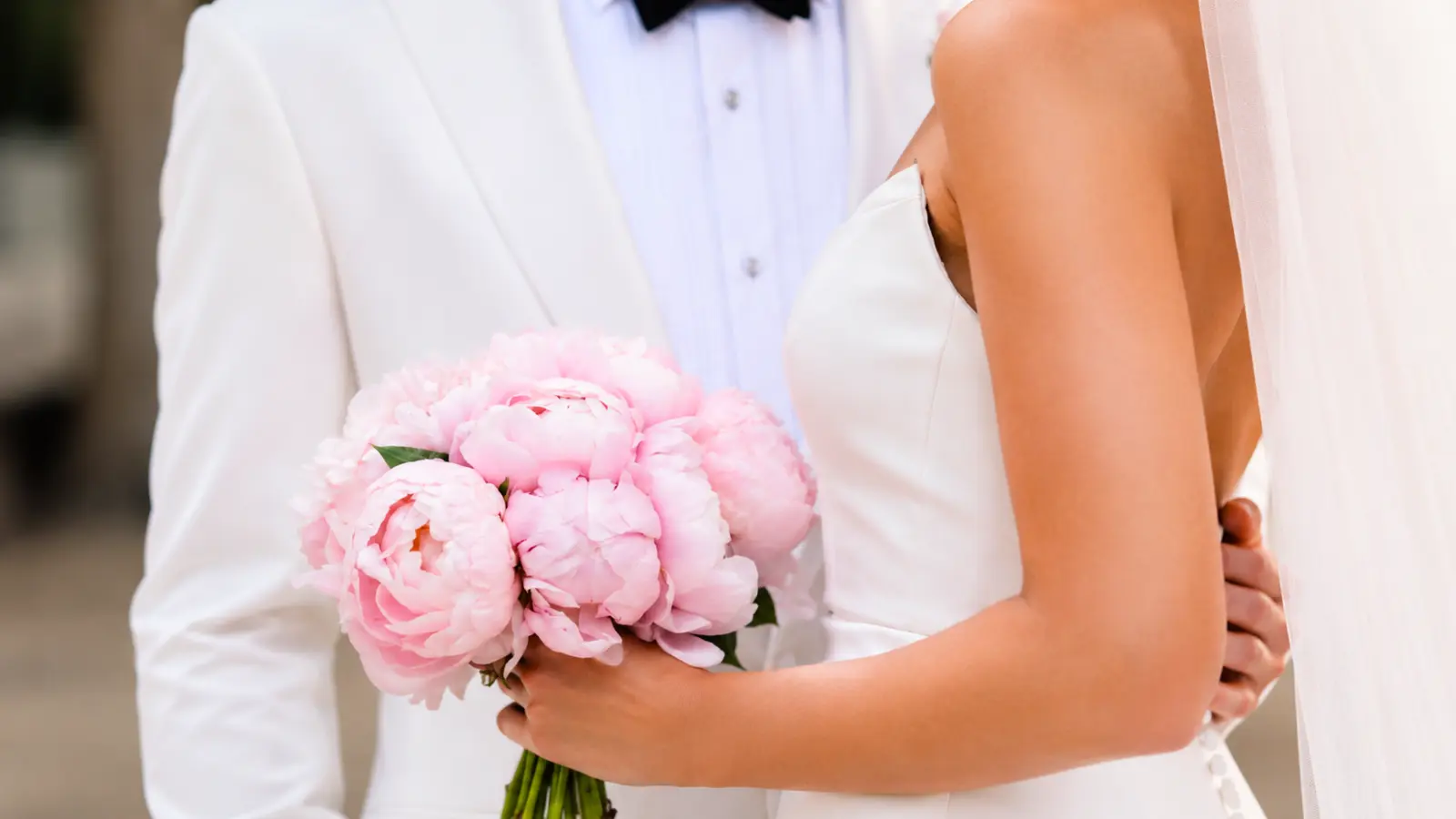
Blush is the softest entry point into the pink family — pale enough to function almost as a neutral and warm enough to feel romantic rather than clinical. Against a white or ivory dress, it adds color without creating contrast, which is exactly what some brides want. In full outdoor light, it can read very close to white in photos, so the texture and shape of the arrangement do most of the visual work.
Building a blush bouquet well means leaning into texture and layering. A bouquet of all-blush flowers at the same scale will flatten in photos. Combining different petal shapes — the tight, ruffled layers of a garden rose alongside the cleaner, more open face of a ranunculus — gives the eye something to move across even when the color barely changes. Adding a touch of ivory or cream as a second tone adds depth without shifting the overall palette.
For foliage, the classic pairing is dusty miller or silver-toned eucalyptus, which keeps the arrangement cool and elegant without pulling it warm. If you want a slightly more organic, garden-gathered feel, soft trailing greenery like jasmine vine works well. Bright green foliage can push a blush bouquet toward a fresher, more casual register — fine if that’s the direction, but worth doing intentionally rather than by default.
Style-wise, a loose hand-tied arrangement suits blush particularly well. The soft color and the organic shape reinforce each other. A tight, structured round bouquet in all blush can look slightly flat without enough contrast from foliage or a single deeper-toned accent flower to anchor it.
Pink Rose Wedding Bouquets
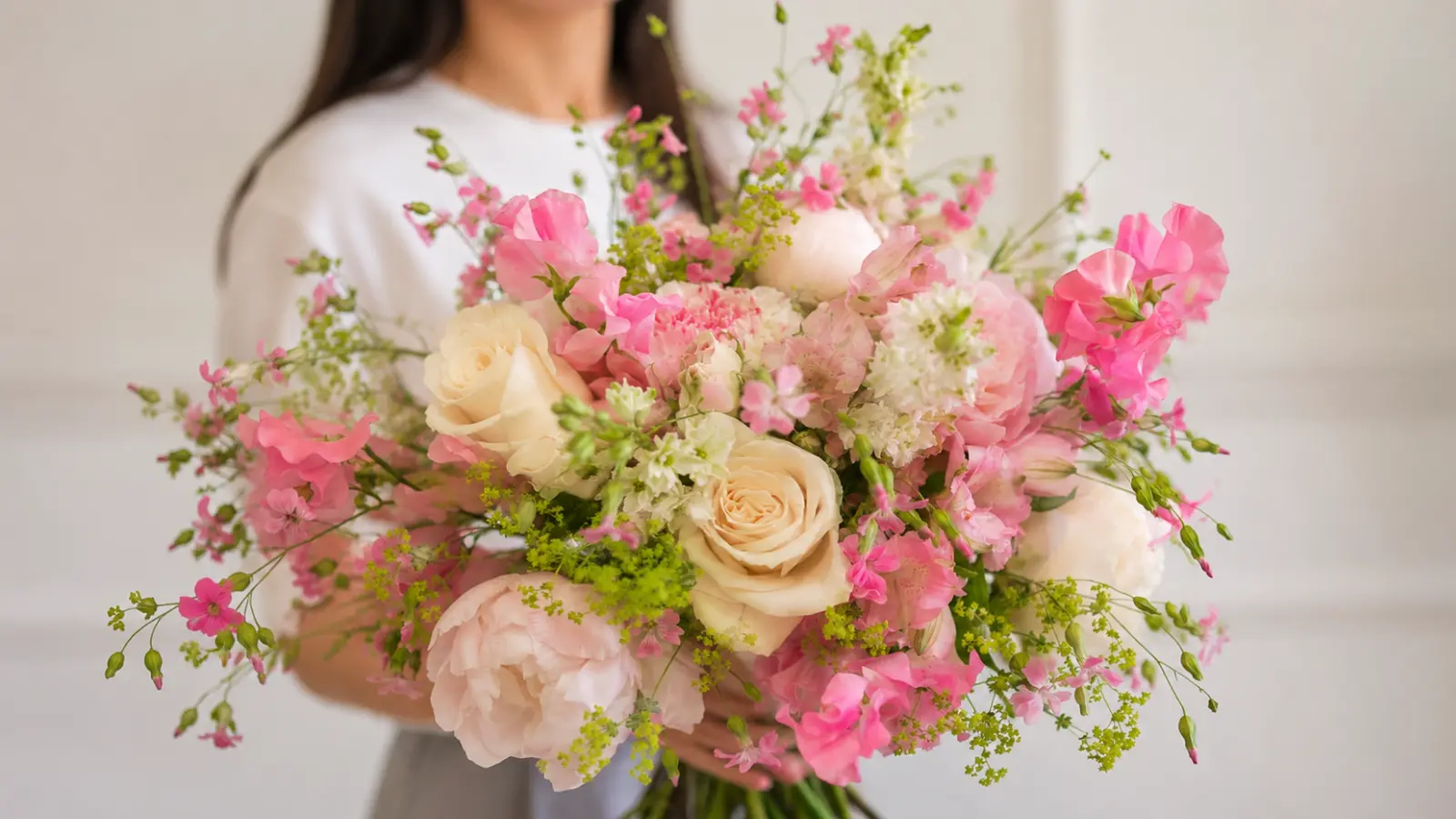
Roses are the most versatile pink flower in bridal florals, available year-round in a wider range of pink tones than almost any other bloom. The choice between standard roses and garden roses changes the character of a pink bouquet significantly — and it’s worth understanding the difference before your florist appointment.
| Rose Type | Character | Best For |
|---|---|---|
| Standard pink roses | Classic shape, widely available, consistent color, more affordable | Clean, classic bouquets; reliable across seasons |
| Garden roses (pink) | Fuller, more layered bloom; softer and more romantic; often fragrant | Romantic and garden-style bouquets; when texture matters |
| Spray roses | Smaller blooms on branching stems; delicate, airy | Filler and texture; adds softness around focal flowers |
Garden roses like Juliet, Patience, Keira, and similar varieties in blush and soft pink tones have become consistently popular for a reason — their layered petals catch light differently at every angle and bring a richness to photos that standard roses don’t quite match. They’re typically more expensive and slightly less consistent in availability, but for a pink bouquet where roses are the focal flower, the difference is visible.
Pink roses pair naturally with almost every secondary flower in the bridal palette: ranunculus, lisianthus, sweet peas, peonies in season, and most greenery options. Their versatility makes them a reliable anchor for whatever style of arrangement you’re building around them.
Pink Peony Wedding Bouquets
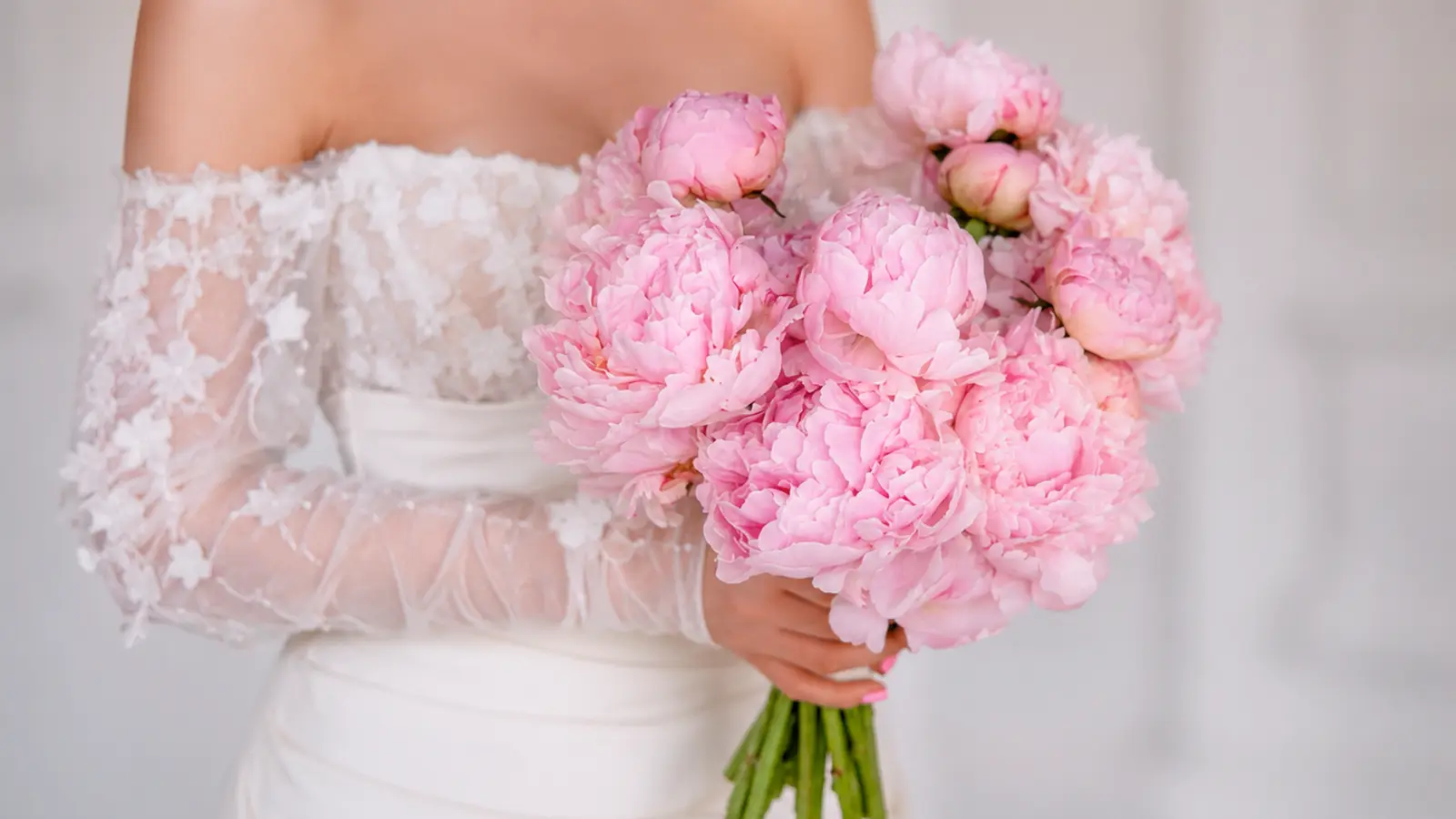
Peonies are the most requested pink flower in bridal florals, and the reason is easy to understand: their full, layered petals and soft fragrance create a look that photographs with real warmth and romance. A bouquet built around pink peonies in peak season is one of the more effortlessly beautiful options in wedding florals — full, slightly imperfect, and naturally lush in a way that takes considerable effort to replicate with other flowers.
The one constraint that matters: peonies are primarily available in late spring, typically from May through June in most of the United States. Outside that window, they become significantly harder to source and more expensive when they can be found at all. This is worth knowing early, because a lot of brides fall in love with the look of a peony bouquet without realizing how tightly it’s tied to the calendar.
For weddings outside peony season, the closest substitutes are garden roses (which share the layered, lush silhouette) and ranunculus (which has a similar multi-petaled structure at a smaller scale). Neither is identical, but a mixed arrangement of blush garden roses and ranunculus with soft-pink lisianthus achieves a genuinely similar effect — and a good florist can build it without it feeling like a compromise.
If your wedding falls within the peony window and pink peonies are a priority, bring that up early with your florist. Peonies are typically ordered weeks in advance, and the specific variety and tone you want may require more lead time than other flowers.
Pink and White Wedding Bouquets
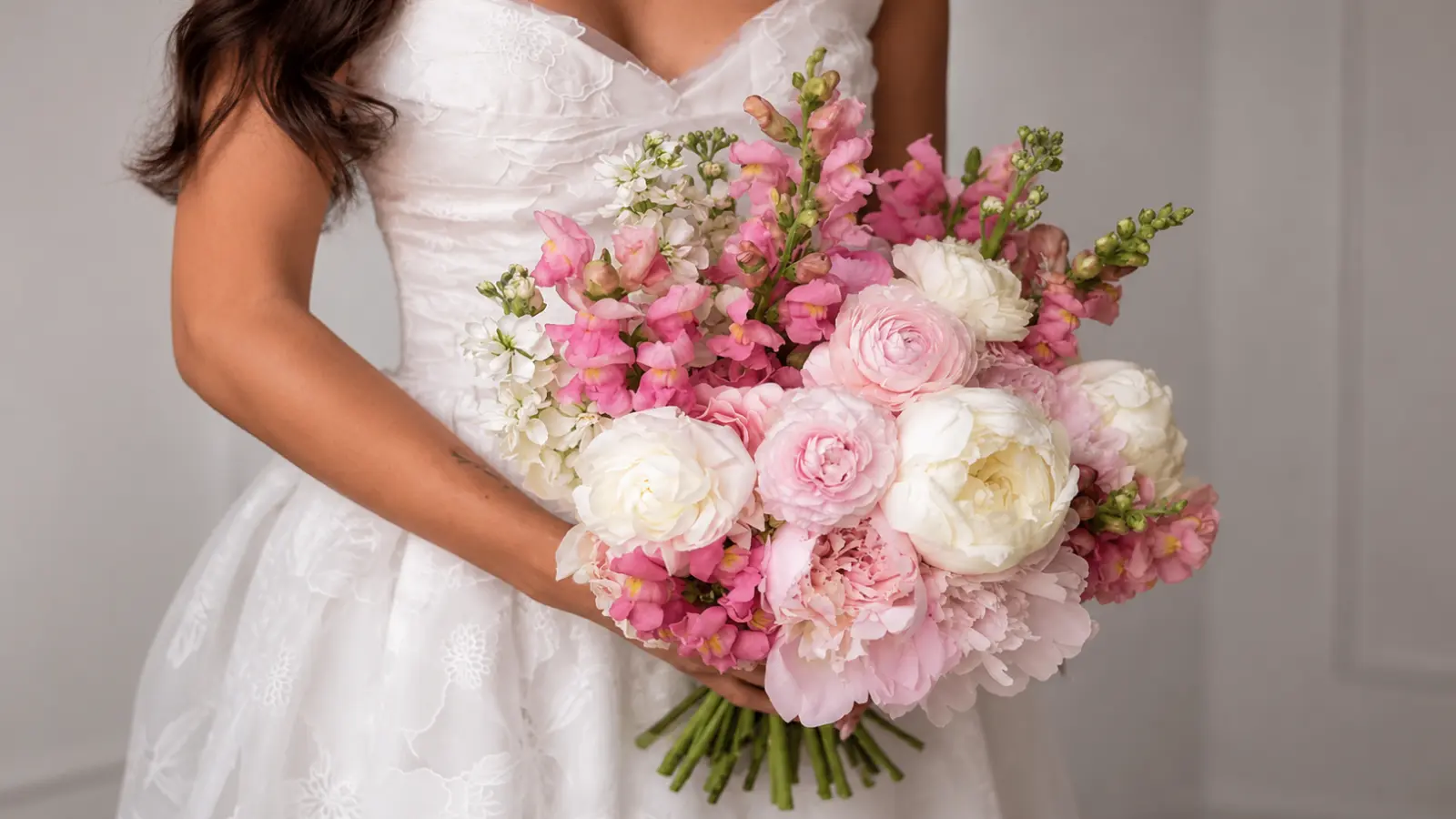
Pink and white is one of the most enduring combinations in bridal florals, and it works across the full range of pink shades. White clarifies and brightens whatever pink it’s paired with — it keeps blush from disappearing into itself in photos, and it gives soft or deeper pinks a clean, polished contrast that reads well at every scale from close-up portraits to full-length ceremony shots.
The balance between the two colors shapes the mood significantly. A mostly white bouquet with pink as the accent reads as a white bouquet. A mostly pink bouquet with white flowers tucked in reads as pink. If you want both colors to register as a genuine combination rather than one color with an accent, a 60/40 split in either direction is where it starts to feel intentional.
For the white element, white garden roses and white ranunculus are the most natural companions to pink — their similar scale and petal texture keep the arrangement cohesive. White sweet peas add a lighter, more delicate texture if the overall arrangement is on the softer side. For a more graphic, high-contrast version, white anemones with their dark centers pair well with deep or hot pink for a bolder look.
Hot Pink Bridal Bouquets
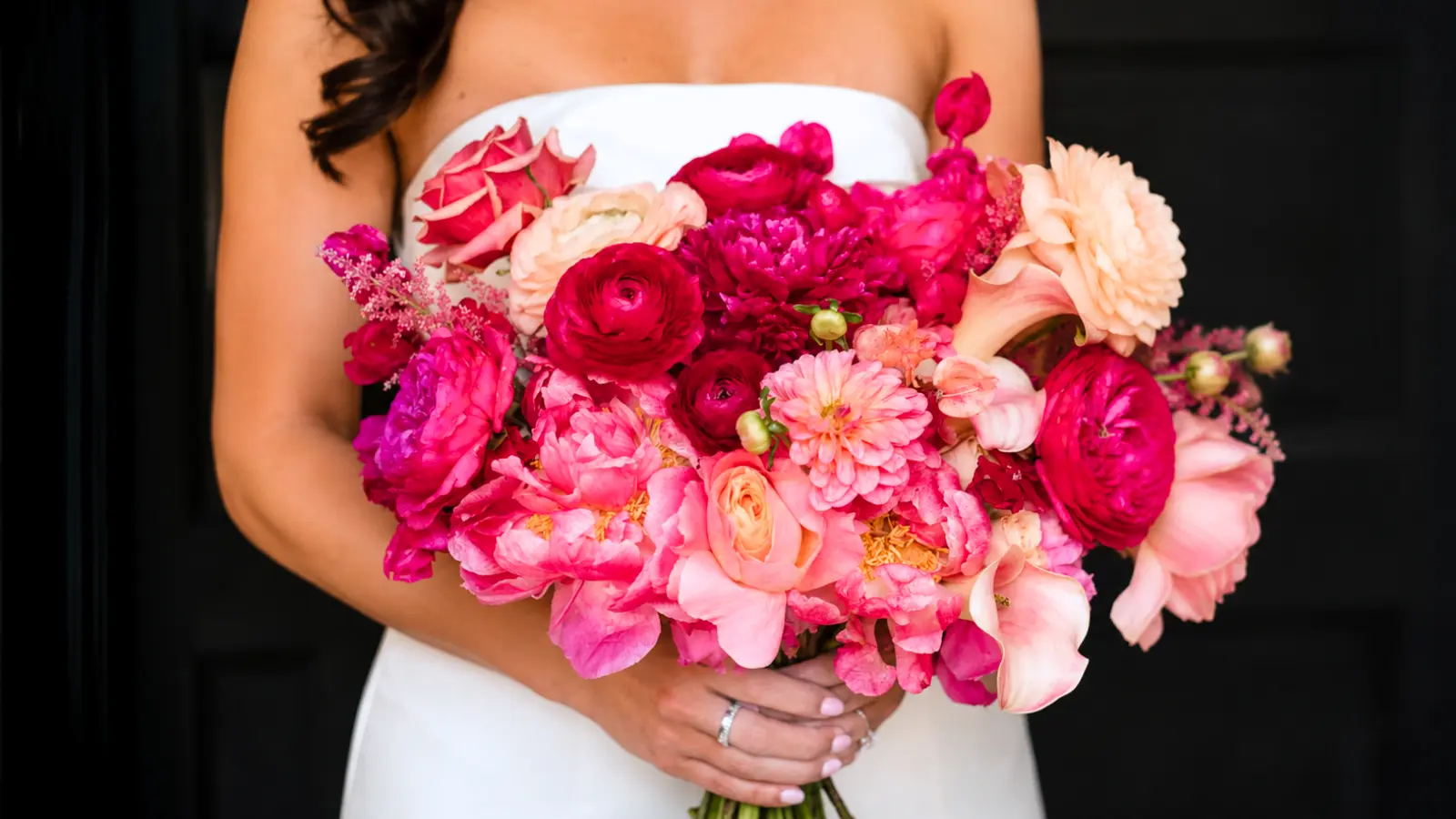
Hot pink is the direction most brides hesitate at — and also the one that, when executed well, tends to make the strongest impression in photos. A fully saturated, bright pink bouquet against a white dress is one of the clearest color contrasts in wedding florals. It reads as a deliberate choice, and deliberate choices almost always look better than uncertain ones.
The flowers that achieve genuine hot pink are more specific than for other shades. Certain garden rose varieties — particularly those in the coral-to-magenta range — deliver the saturated tone without tipping into a synthetic-looking brightness. Bright pink peonies in season are another strong option. Ranunculus in deep pink can contribute to a hot pink palette as a secondary flower, though they rarely carry the full saturation on their own. Dahlias in vivid pink are an excellent option for summer and fall weddings, offering scale and color intensity that few other flowers match.
What keeps a hot pink bouquet from reading as too casual or costume-like is the surrounding choices. Clean, structured dark green foliage — rather than mixed pastels or fussy fillers — gives the saturated pink something to push against. A single color story, rather than several bright colors competing, lets the pink do the work. And a bouquet shape with some structure — a garden round rather than a very loose, sprawling arrangement — keeps the overall look intentional.
How to Style Pink Flowers Elegantly
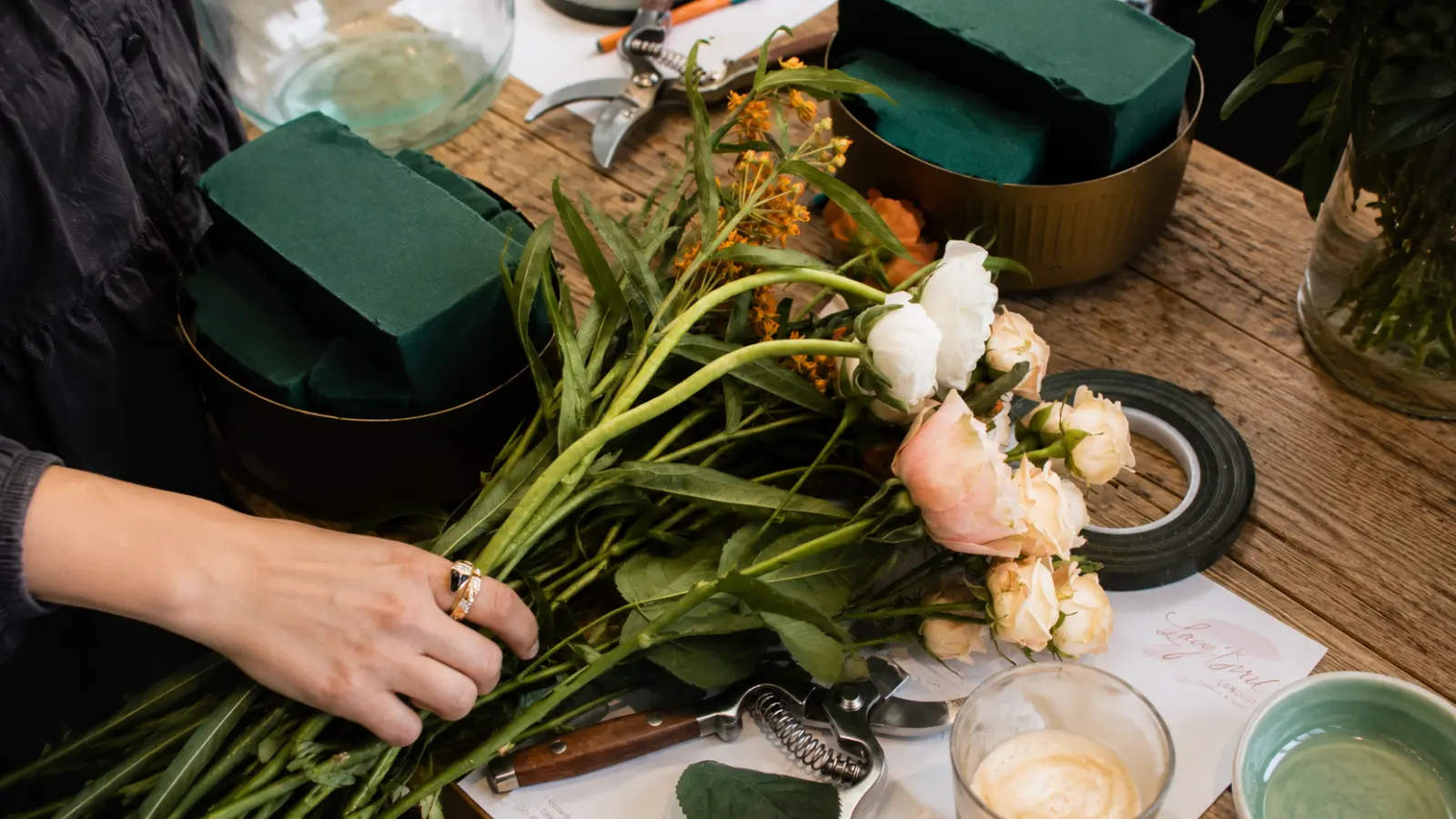
The question of how to make pink look sophisticated rather than sweet comes up in almost every pink bouquet conversation, and the answer is less about avoiding certain shades of pink than it is about understanding which variables shift pink’s register most dramatically.
Foliage is the single most effective lever. Dusty miller, silver-toned eucalyptus, and muted gray-green foliage keep a pink bouquet cool and quiet. Dark green foliage — magnolia, bay laurel, Italian ruscus — gives it weight and formality. Bright, warm green foliage pushes it in a fresher, more casual direction. The flowers themselves can stay exactly the same while the foliage changes the overall feel significantly.
Pairings matter equally. Pink with deep burgundy or wine-toned accents reads as rich and layered rather than girlish. Pink with ivory or cream stays elegant and warm. Pink paired with baby blue, yellow, or bright orange tips into a softer, more casual register that’s harder to control in a formal setting. If elegance is the goal, keep the surrounding colors either deeper and richer or quieter and more neutral.
Shape and construction make a difference too. A tightly structured round bouquet in pink reads more formally than a loose, cascading arrangement. A nosegay — small, round, held upright — in blush or soft pink has a refinement that a sprawling garden-style arrangement doesn’t. Choosing the shape that matches your venue and dress silhouette, rather than the shape that’s currently most popular on social media, almost always produces a more cohesive result.
Pink Bouquet Mistakes to Avoid
Most pink bouquet problems come from the same place: treating pink as a default color rather than a deliberate one, and letting decisions happen by accident rather than by design.
Assuming blush will read as pink in photos. In bright outdoor light, blush can appear nearly white. If you want pink to register in your photos, soft pink or antique rose is a more reliable direction than the palest blush — or ask to see your florist’s reference photos shot in conditions similar to your venue.
Counting on peonies outside of late spring. Peonies are available for a short window, and planning a bouquet around them for a September or November wedding without confirming availability first is a common source of last-minute disappointment. Know your substitutes before you need them.
Letting the foliage default to bright green. Bright green foliage is the florist’s easiest choice and often the one that quietly undermines a pink bouquet’s elegance. Asking specifically for dusty miller, silver eucalyptus, or dark-toned foliage is a small change that shifts the overall feel considerably.
Adding too many colors around pink. A pink bouquet that also includes coral, peach, lavender, and yellow can look busy rather than layered. A cleaner approach is one or two secondary colors that either reinforce the pink or provide deliberate contrast — not both at the same time.
Softening hot pink when it doesn’t need softening. Hot pink with a lot of pastel filler around it often looks more chaotic than bold. If you’ve chosen a saturated, vivid pink, let it lead — clean greenery and white accents will support it better than surrounding it with softer shades that compete without matching.
Pink Wedding Bouquet Inspiration
Discover beautiful pink wedding bouquets featuring romantic blush flowers, elegant garden roses, soft peonies, hot pink bridal arrangements, timeless color palettes, and floral inspiration for every wedding style.
Pink Is More Versatile Than It First Appears
Pink wedding bouquets have remained a bridal favorite because they offer far more variety than many brides realize. From barely-there blush arrangements that feel timeless and refined to bold hot pink bouquets that create unforgettable contrast, every shade tells a different story. The most beautiful bouquets aren’t defined by choosing pink—they’re defined by choosing the right pink for your wedding style, venue, and season.
The key is thinking beyond the color itself. By combining the right flowers, foliage, textures, and proportions, pink becomes one of the most sophisticated palettes in wedding florals. Whether your vision is classic, romantic, modern, or editorial, a thoughtfully designed pink bouquet will always feel elegant, personal, and beautifully connected to your celebration.
Frequently asked questions (FAQ)
What’s the difference between blush and soft pink wedding bouquets?
Blush is an extremely pale, warm pink that often appears almost neutral, especially in bright natural light. Soft pink has more saturation, making the color clearly visible while still feeling romantic and understated. Blush pairs beautifully with ivory and cream for timeless weddings, while soft pink creates slightly more contrast and visual presence in both photographs and floral designs.
What flowers are best for a pink wedding bouquet?
Garden roses are the most versatile choice because they are available year-round in a wide range of pink shades. Peonies create lush, romantic bouquets during late spring, while ranunculus, lisianthus, spray roses, and sweet peas add softness and texture throughout much of the year. The best bouquet usually combines multiple flower shapes rather than relying on a single variety.
Can a pink wedding bouquet look elegant instead of overly sweet?
Absolutely. Elegance comes from the overall design rather than the color itself. Dark or silver-toned foliage, restrained color palettes, structured bouquet shapes, and premium flowers such as garden roses create a sophisticated look. Pink becomes overly sweet only when it is combined with too many pastel colors or overly playful design elements.
Are peonies a good choice for a pink wedding bouquet?
Yes. Pink peonies are among the most popular bridal flowers because of their large, layered blooms and romantic appearance. Their main limitation is seasonality, as they are naturally available during late spring. Outside that window, blush garden roses and ranunculus create a similar fullness while remaining easier to source throughout the year.
Does a pink bouquet work with a white wedding dress?
Yes. Pink creates one of the most timeless combinations with a white wedding gown. Blush adds soft warmth with very little contrast, soft pink offers a classic romantic look, and hot pink creates a confident editorial statement. Matching the bouquet to the gown’s undertone—bright white or warm ivory—helps create a more cohesive overall appearance.
What colors pair best with a pink wedding bouquet?
Blush pairs naturally with ivory, sage, soft gold, and cream. Soft pink complements dusty blue, lavender, burgundy, and deep green, while hot pink works especially well with crisp white, emerald foliage, and gold accents. Limiting the palette to one or two supporting colors creates a more elegant bouquet than combining many pastel shades together.