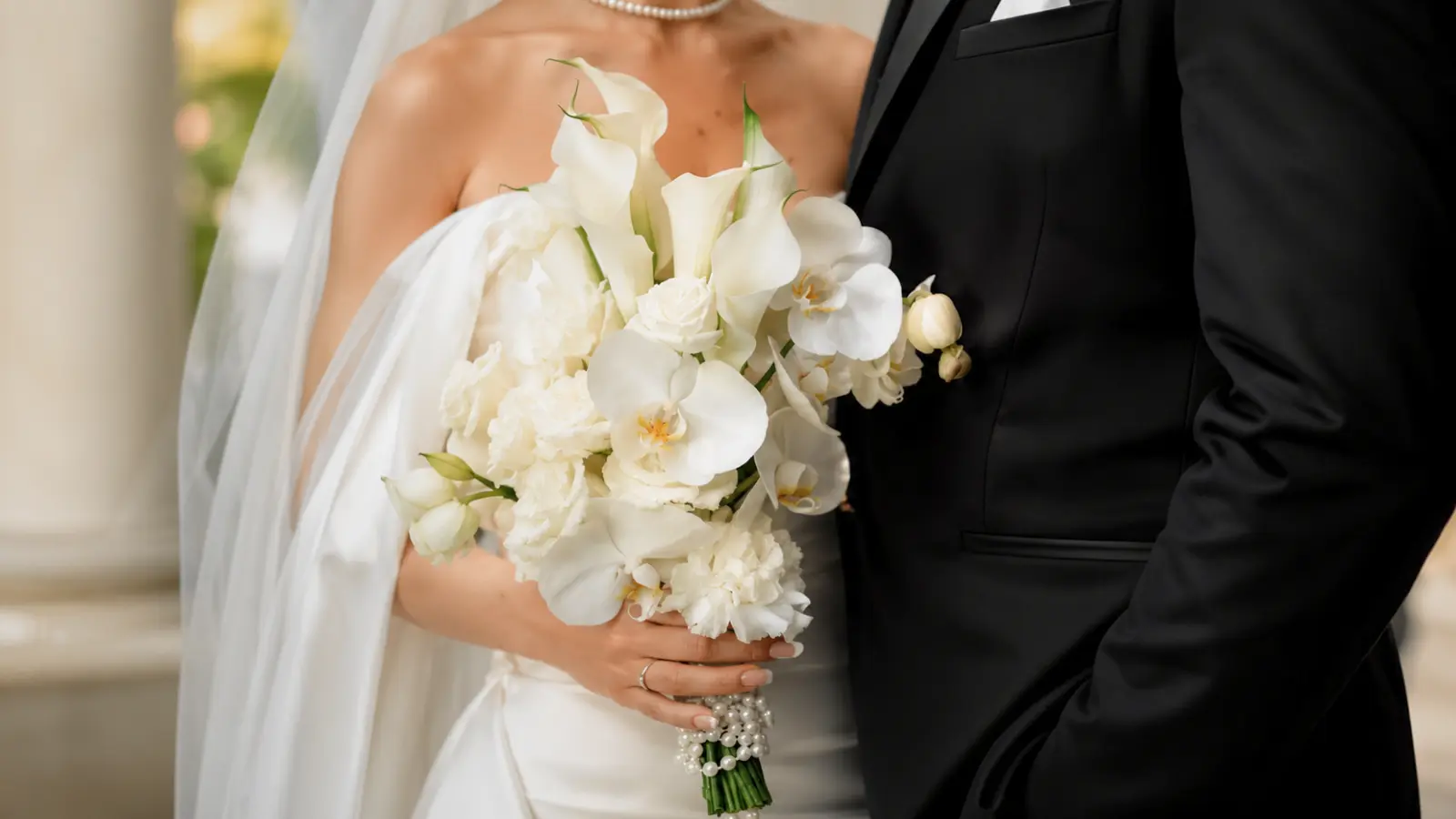
Artificial wedding bouquets have become an increasingly popular choice for brides who want beautiful flowers without worrying about seasonality, wilting, allergies, or last-minute floral logistics. Modern silk, faux, and real-touch flowers can create remarkably realistic bouquets while offering the flexibility to design, transport, and preserve them long before the wedding day.
The biggest misconception is that all artificial flowers look obviously fake. In reality, the final result depends far more on flower quality, styling, and construction than on whether the bouquet is made from fresh or artificial materials. High-quality real-touch flowers, thoughtful color palettes, and natural arrangements can create bouquets that photograph beautifully and feel surprisingly lifelike.
This guide explores artificial designs within the broader world of wedding bouquets, including silk, faux, and real-touch flowers, bouquet styles, costs, comparisons with fresh flowers, and practical advice for creating an arrangement that looks elegant, realistic, and perfectly suited to your wedding.
Are Artificial Wedding Bouquets Worth It?
The honest answer depends on your priorities, and a full comparison of fresh vs. artificial wedding bouquets is useful because artificial flowers solve wilting, seasonality, timing, and travel concerns without automatically being easier or cheaper.
Artificial tends to make the most sense for brides planning a destination wedding, where shipping or sourcing fresh flowers locally is complicated. It’s also a strong option for anyone with flower allergies or sensitivities, for brides who want to keep the exact bouquet they designed as a permanent keepsake, and for long engagements where the bouquet gets built well in advance and tucked away until the day arrives.
It tends to make less sense if you want a specific seasonal bloom with a texture that’s genuinely hard to replicate — fully blown garden roses or fluffy, layered peonies are two of the trickiest — or if a large portion of your photography plan involves close, detailed shots of the bouquet itself. Texture differences are easiest to spot at close range, so the closer the camera gets, the more the flower quality matters.
Silk vs. Faux vs. Real-Touch Flowers
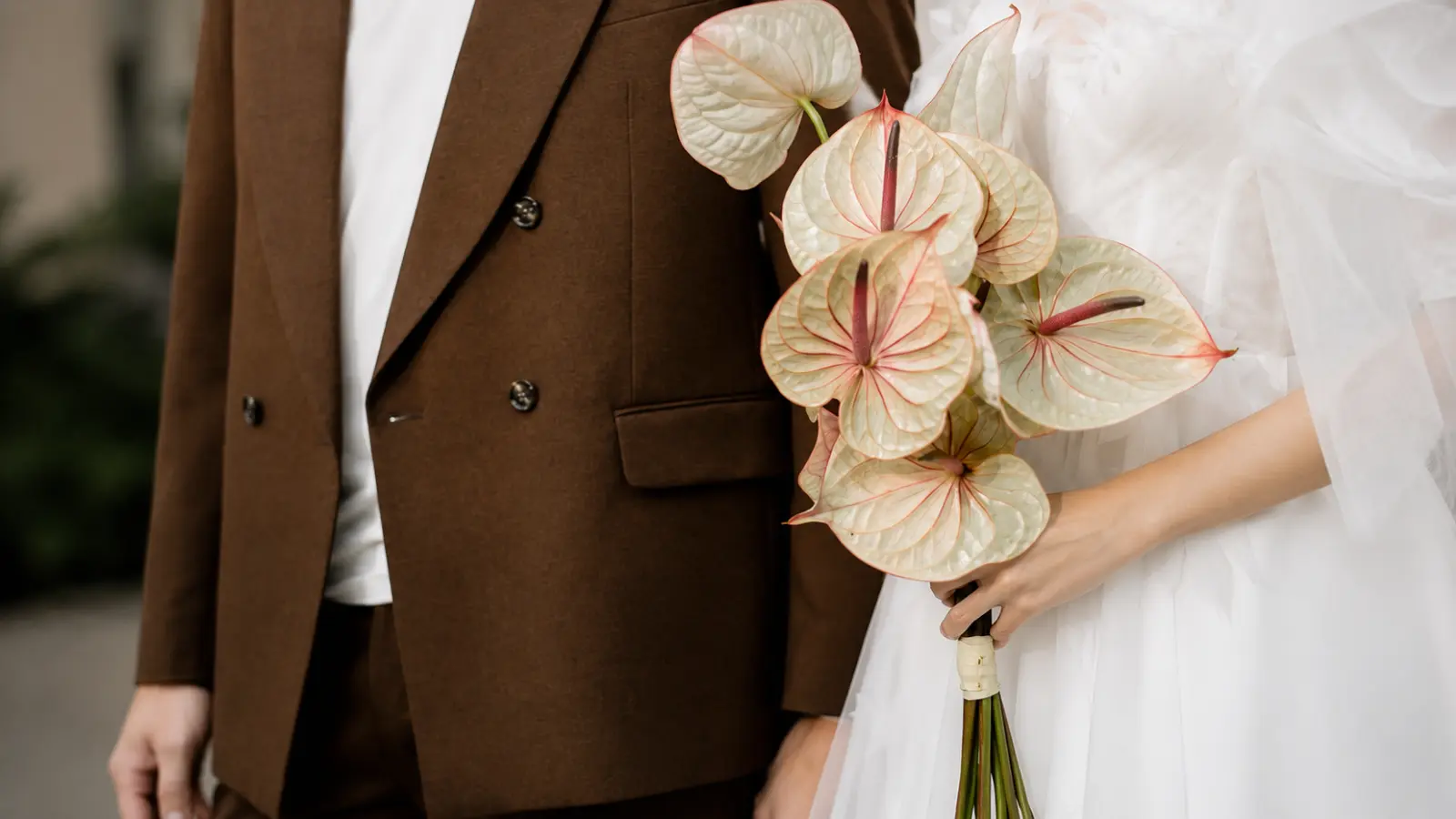
These three terms get used almost interchangeably in bridal shops and online listings, which makes it hard to know what you’re actually buying. They’re not the same thing, and the difference shows up in how the bouquet looks and feels in your hands.
Silk is the catch-all industry term for fabric-based artificial flowers, even though almost none of them are made from actual silk anymore — most are polyester. Quality varies enormously within this category. Budget silk flowers tend to have a visible sheen and a slightly stiff, uniform petal shape that reads as synthetic, especially in bright light. Higher-end silk uses matte fabric and more natural petal variation, which closes some of that gap.
Faux is a broader marketing term rather than a specific material. It can refer to silk, foam-based, or latex flowers, and is often used as a catch-all on product listings without telling you much about construction. When you see “faux” on its own, it’s worth asking what the flower is actually made from before assuming quality.
Real-touch flowers use a latex or rubberized coating layered over the petal structure, which gives them a soft, slightly cool texture that’s noticeably closer to a real flower than fabric. This is the category most florists reach for when a bride wants an artificial bouquet that’s difficult to identify as artificial in photos. Real-touch flowers can increase the overall wedding bouquet cost by a meaningful margin compared with standard silk or basic faux materials.
If your budget allows for it, real-touch is worth the upgrade for any flower that will be photographed up close — your bouquet, almost certainly, qualifies. Reserving the budget silk for secondary elements like greenery filler is a reasonable way to manage cost without sacrificing the look of the focal blooms.
Best Artificial Wedding Bouquet Styles
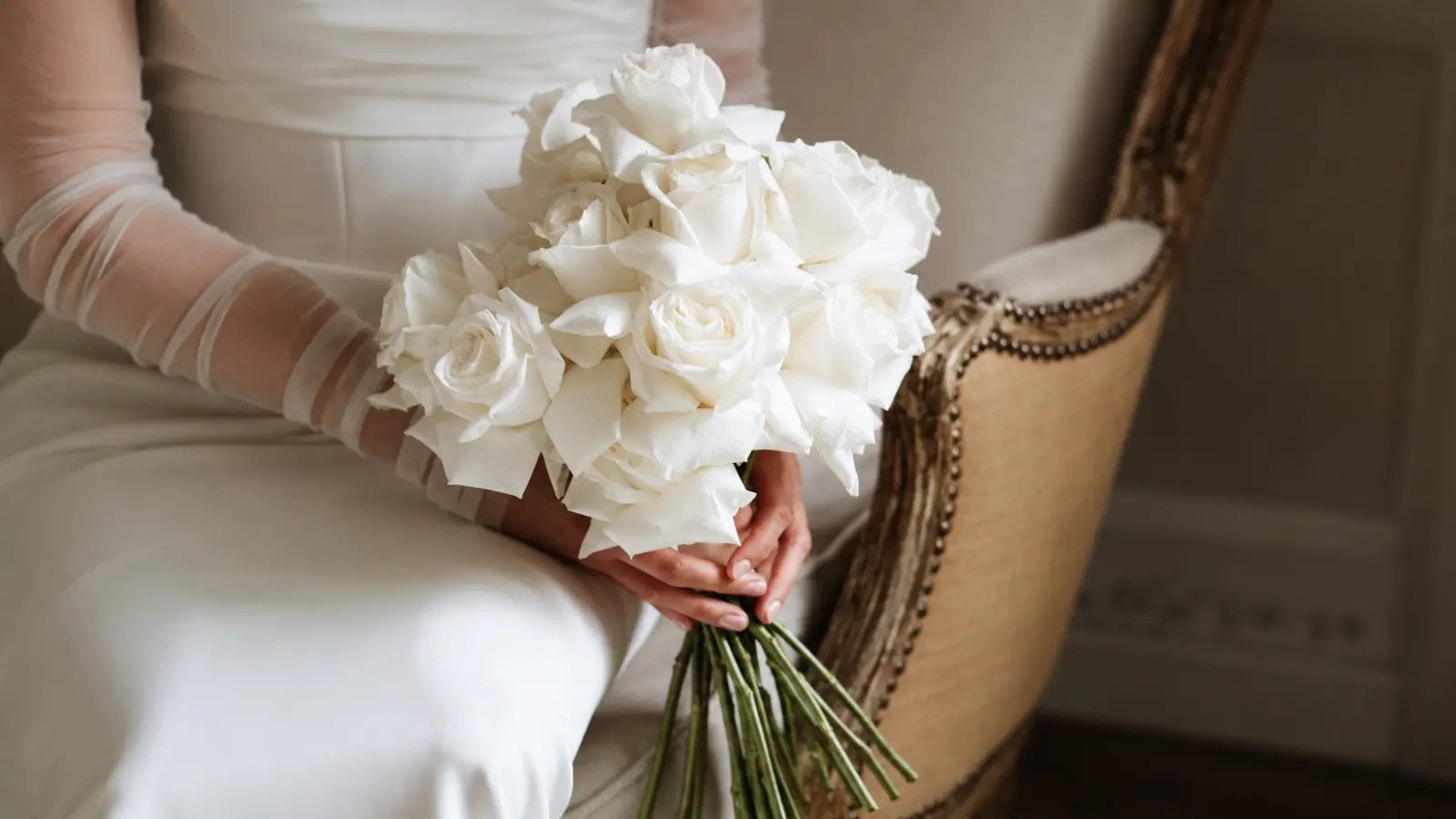
Artificial construction expands the range of bridal bouquet styles because the stems need no water, resist heat, and allow greater structural freedom.
Classic round bouquets. A full, rounded silhouette built from real-touch roses, peonies, or ranunculus is the most common request, and it’s where the technology shows up best — the dense, layered petal structure of a peony is genuinely difficult to fake convincingly, and real-touch construction handles it better than fabric.
Cascade and trailing designs. Because artificial stems hold their shape without wilting, cascading and trailing bouquets are easier to build and far easier to keep looking intentional throughout a long day. Unlike fresh cascading wedding bouquets, artificial cascade designs can hold their original shape throughout the reception.
Monochrome and single-flower bouquets. A bouquet built entirely from one flower type — all calla lilies, all orchids, all garden roses — depends heavily on every stem looking consistent. Artificial flowers solve the consistency problem that fresh flowers can’t always guarantee, since every artificial stem is identical by design.
Mixed real-and-faux designs. Some florists build a bouquet with artificial focal flowers and real greenery, or vice versa. This hybrid approach can soften the slightly-too-perfect look of an all-artificial bouquet while still avoiding the wilting risk on the most delicate blooms.
Artificial vs. Fresh Wedding Bouquets
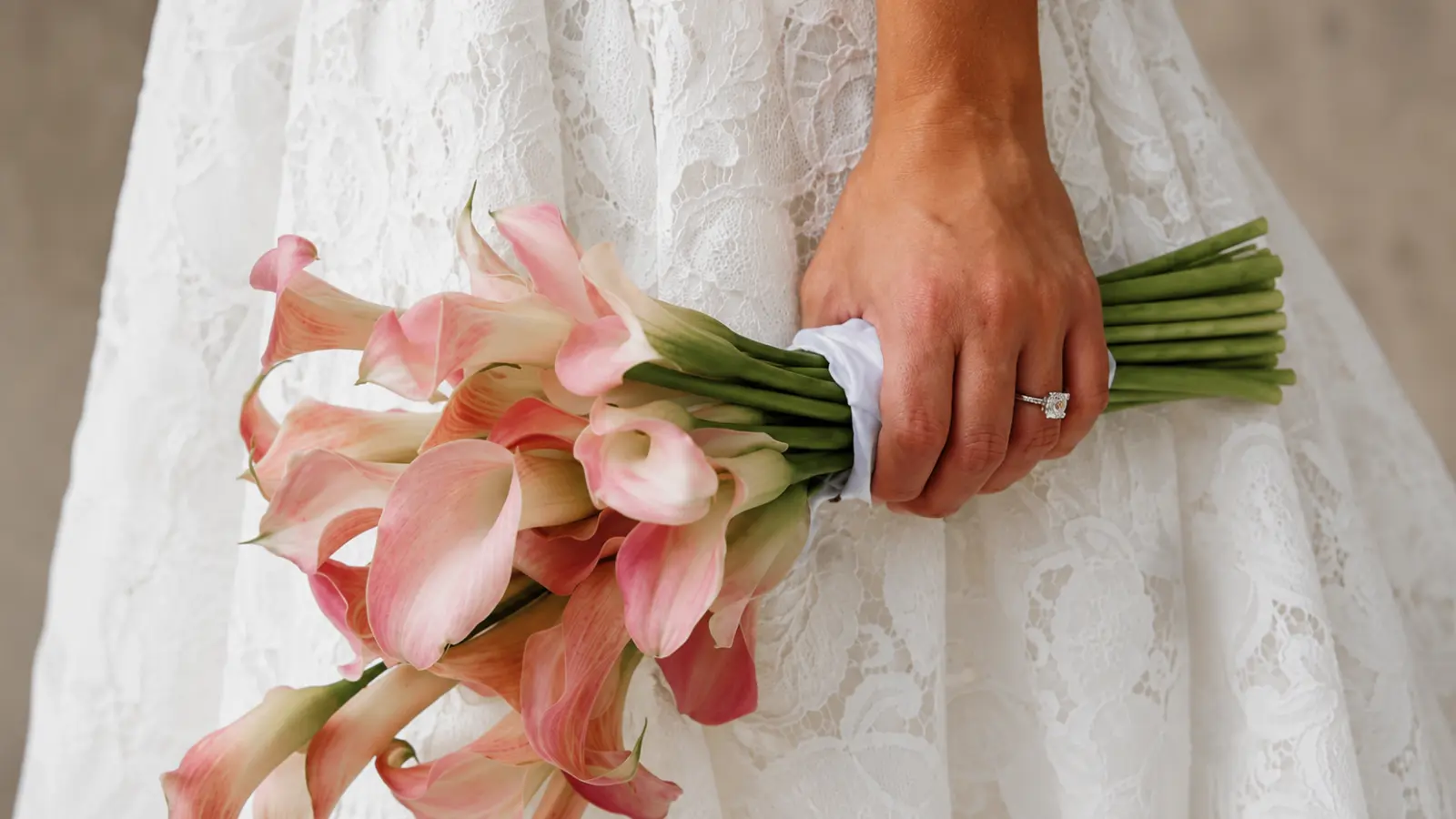
Neither option is better across the board — they trade different advantages for different tradeoffs, and the right answer depends on what you’re trying to protect against.
| Factor | Artificial Bouquet | Fresh Bouquet |
|---|---|---|
| Timing pressure | None — build weeks or months ahead | High — built within 24–48 hours of the ceremony |
| Seasonal flexibility | Any flower, any time of year | Limited to what’s in season or imported |
| Close-up photo realism | Strong with real-touch, weaker with budget silk | Always natural |
| Scent | None | Present, depending on flower choice |
| Keepsake potential | Keep the exact bouquet indefinitely | Requires separate preservation step |
| Allergies | Not a concern | Can be, depending on flower type |
If you’re trying to decide between the two, the most useful question isn’t which one is objectively better — it’s which tradeoffs you’d rather not deal with on your wedding day. A bride managing travel or a long engagement may prefer artificial flowers, while someone prioritizing natural scent and seasonal authenticity may prefer fresh wedding bouquets.
How Much Do Artificial Wedding Bouquets Cost?
Cost in this category depends far more on flower quality and design labor than on the simple fact that the flowers are artificial — a common assumption that doesn’t always hold up once you start pricing options.
A DIY bouquet built from budget silk stems purchased online or at a craft store can come together for under $50 in materials, though the result will generally look the part of a budget bouquet too. Mid-range silk with better petal detail and color variation typically pushes that closer to $75 to $125 for materials alone.
A professionally designed artificial bouquet, especially one built with real-touch flowers, typically runs from $150 to $350, depending on size, the number of focal blooms, and how much trailing or cascading detail is involved. Oversized or heavily layered designs can run higher still. This range is comparable to — and in some cases higher than — a simple fresh bouquet, which surprises a lot of brides who assume artificial is automatically the budget option.
Artificial flowers can reduce costs across the wedding party because wedding bouquets for bridesmaids can replicate one approved design without repeated florist labor or last-minute flower reorders.
How to Make Fake Flowers Look Realistic
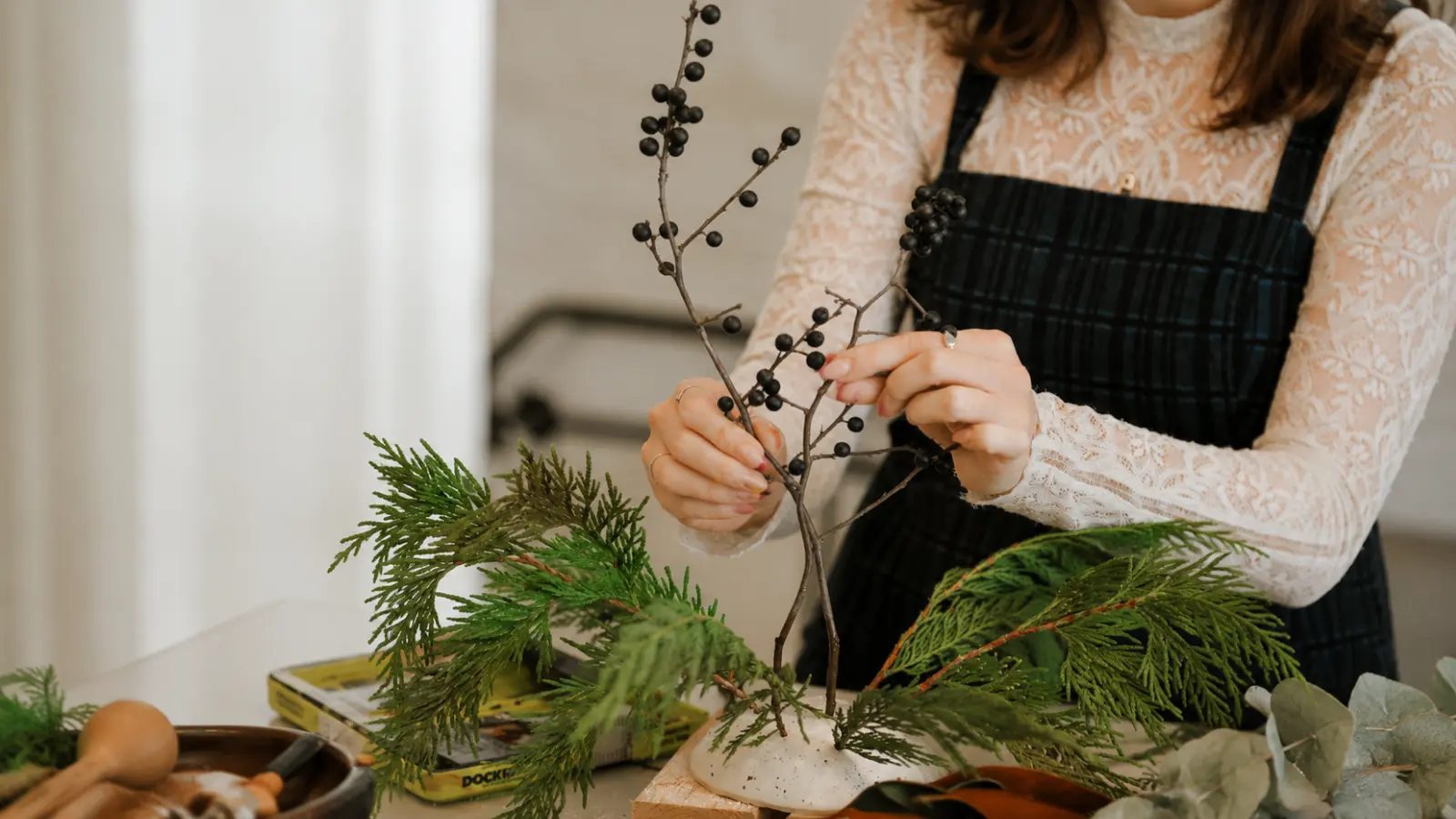
The difference between an artificial bouquet that reads as artificial and one that doesn’t usually comes down to a handful of small, fixable details rather than the flowers themselves.
- Mix in real greenery. A small amount of real eucalyptus, ferns, or foliage tucked around artificial focal flowers adds texture variation and a faint natural scent that helps sell the whole arrangement.
- Avoid uniform bloom sizes. Real flowers are never perfectly identical. Choosing stems with slightly varied sizes and trimming a few petals unevenly creates the organic imperfection that fresh bouquets have naturally.
- Steam the petals. A few seconds of steam from a handheld garment steamer softens sharp synthetic creases and gives fabric petals a more relaxed, natural fall.
- Arrange with asymmetry. Florists never place fresh stems in a perfectly even grid, and the same logic applies here — slight asymmetry in height and angle reads as intentional design rather than mass production.
- Choose matte over glossy. Glossy synthetic sheen is one of the fastest visual giveaways, especially under flash photography. Matte-finish silk or real-touch flowers photograph far more convincingly.
These adjustments require less technical skill than learning how to make a wedding bouquet, which makes them realistic even for a finished, store-bought arrangement.
Artificial Bouquet Mistakes to Avoid
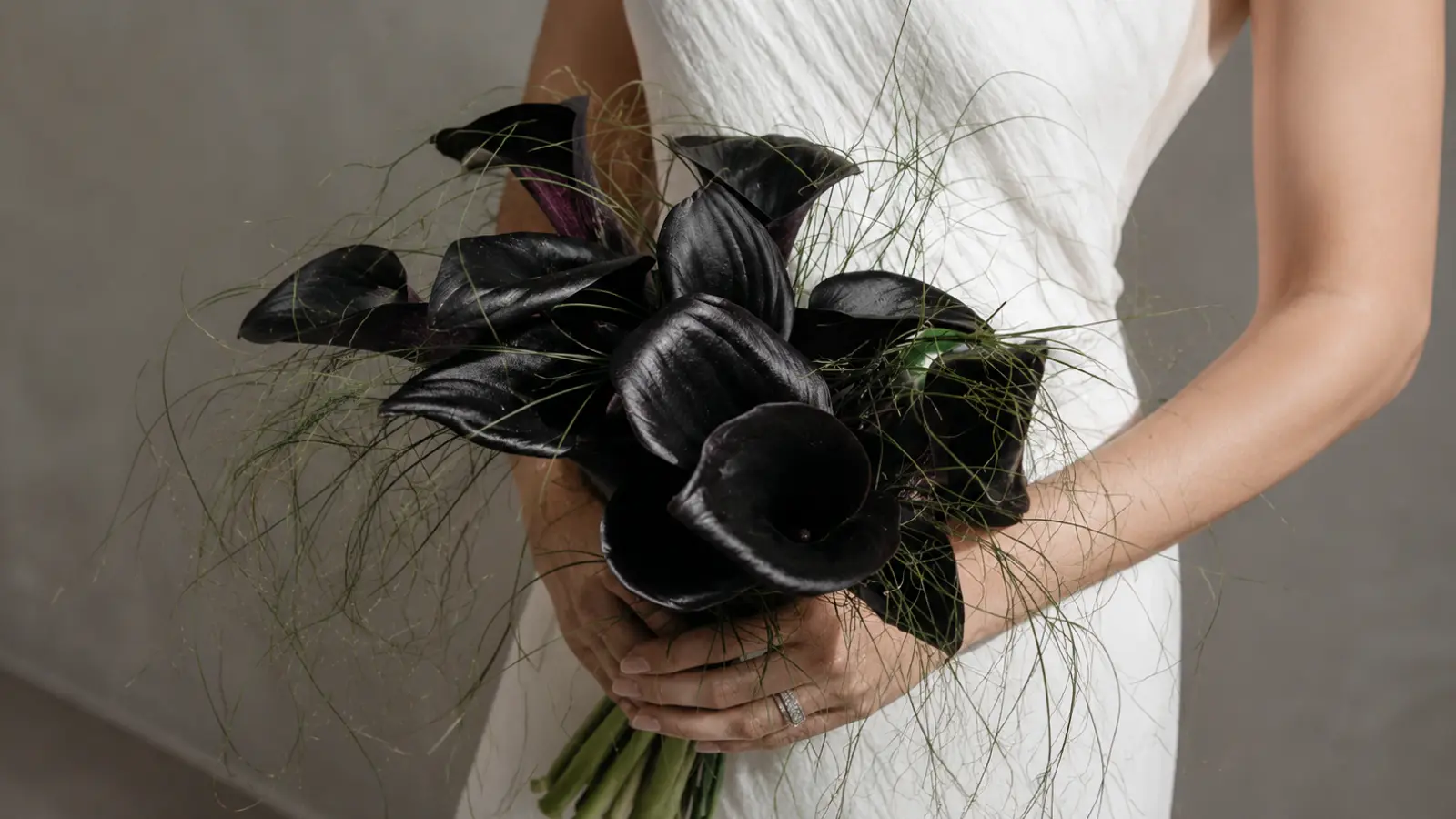
Most artificial bouquets that look obviously fake in photos aren’t failing because artificial flowers are inherently unconvincing — they’re failing because of a few avoidable choices made earlier in the process.
Buying the cheapest silk available. There’s a real visual gap between budget silk and mid-range or real-touch flowers, and it shows up clearly in photos. If the bouquet will be in your hands all day and in every portrait, this is not the place to cut cost aggressively.
Choosing flowers that are too uniform. A bouquet where every bloom is the exact same size and shape signals mass production faster than almost anything else. Mixing in some size variation, even within the same flower type, makes a meaningful difference.
Skipping the test photo. Take a few photos of the finished bouquet in natural light and in flash before the wedding day. Glossy or stiff-looking petals are far easier to spot in a photo than in person, and there’s still time to adjust if you catch it early.
Ignoring scale. Just like with fresh bouquets, an artificial bouquet that’s too small disappears in full-length photos, and one that’s too large can look unbalanced. Size it the same way you would a fresh bouquet — based on how it reads at portrait distance, not just up close.
Assuming artificial means no design effort. An artificial bouquet still benefits from the same design principles as a fresh one: focal flowers, supporting blooms, greenery, and a deliberate color story. Treating it as a finished product straight out of the box rather than a design project is where a lot of artificial bouquets fall short.
Artificial Wedding Bouquet Inspiration
Discover artificial wedding bouquets featuring real-touch flowers, elegant silk bouquets, faux floral arrangements, realistic bridal designs, timeless color palettes, and creative bouquet inspiration for every wedding style.
Artificial Flowers Are About Choice, Not Compromise
Artificial wedding bouquets are no longer simply an alternative to fresh flowers—they’re a thoughtful option for brides who value flexibility, durability, and long-term keepsakes without sacrificing beautiful design. When high-quality flowers are combined with careful styling and natural composition, the final bouquet can feel every bit as elegant as a fresh arrangement while offering practical advantages that real flowers simply can’t provide.
The most successful artificial bouquets begin with the same principles as any professionally designed bouquet: choosing quality materials, creating balanced proportions, and selecting flowers that suit your wedding style rather than following trends. Whether you choose silk, faux, or real-touch flowers, thoughtful design will always have a greater impact than the material itself, resulting in a bouquet that looks beautiful on your wedding day and remains just as meaningful for years afterward.
Frequently asked questions (FAQ)
Are artificial wedding bouquets worth it?
Yes, for many brides they are. Artificial bouquets are especially practical for destination weddings, long engagements, outdoor ceremonies in challenging weather, flower allergies, or couples who want to keep the bouquet exactly as it looked on the wedding day. Whether they’re worth it ultimately depends on whether convenience, durability, and permanence matter more to you than the scent and natural texture of fresh flowers.
What is the difference between silk, faux, and real-touch flowers?
Silk is the traditional industry term for fabric-based artificial flowers, even though most are now made from polyester. Faux is a broader marketing term that may include silk, foam, latex, or other synthetic materials. Real-touch flowers use a latex or rubberized coating that gives the petals a softer texture and a more natural appearance, making them the most convincing option for wedding bouquets and close-up photography.
How much do artificial wedding bouquets cost?
DIY bouquets made with basic silk flowers can cost less than $50 in materials, while professionally designed bouquets using premium real-touch flowers generally range from $150 to $350. Large cascading designs or luxury custom arrangements may cost more. The biggest factors are flower quality, bouquet size, and design complexity rather than whether the flowers are artificial.
Can artificial wedding bouquets look real in photos?
Yes—when high-quality flowers are used and the bouquet is professionally styled. Real-touch flowers, natural asymmetry, matte finishes, varied bloom sizes, and a small amount of fresh greenery make artificial bouquets surprisingly convincing, even in many close-up photographs. Lower-quality silk flowers with glossy petals or perfectly identical blooms are much easier to recognize as artificial.
How do you make artificial wedding flowers look more realistic?
Use high-quality real-touch flowers whenever possible, incorporate fresh or realistic greenery, vary bloom sizes, soften fabric petals with steam, and avoid perfectly symmetrical arrangements. Just as importantly, choose flowers with matte finishes instead of glossy surfaces, since shine is one of the most common visual clues that a bouquet is artificial.
Are artificial wedding bouquets better than fresh flowers?
Neither option is universally better. Artificial bouquets offer flexibility, durability, and the ability to preserve the exact arrangement without additional cost, while fresh flowers provide unmatched fragrance, natural texture, and seasonal authenticity. The best choice depends on your priorities, wedding logistics, photography plans, and personal preferences rather than on a single objective advantage.