
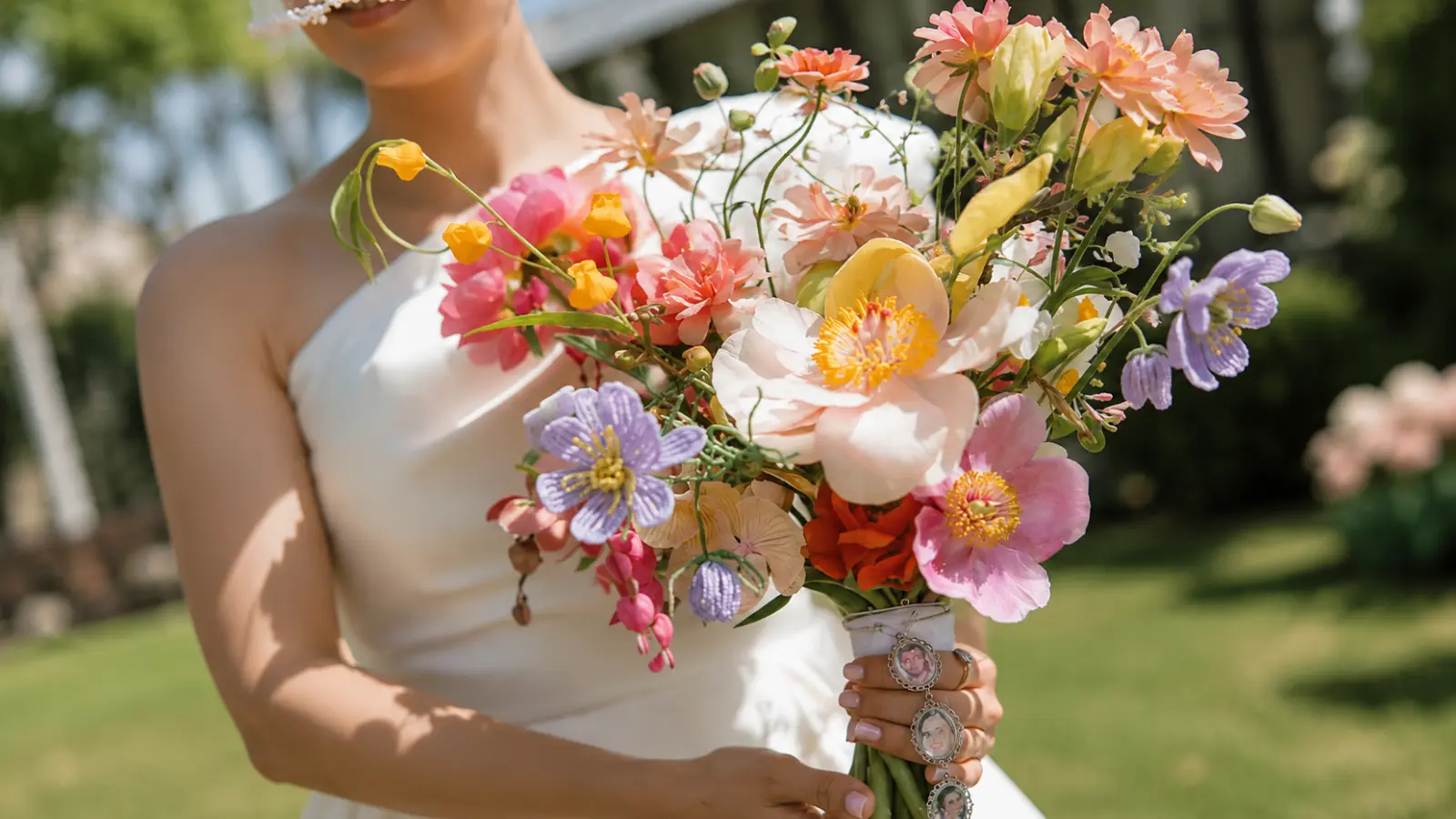
Spring wedding bouquets are known for their fresh seasonal flowers, soft color palettes, and naturally romantic style. With more flowers in bloom than any other season, spring offers brides an incredible variety of bouquet designs, from delicate pastel arrangements to lush garden-inspired bouquets filled with texture and movement.
One of the greatest advantages of a spring wedding is the abundance of flowers available throughout the season. However, spring isn’t a single moment—flowers that bloom in April may no longer be at their peak in June. Understanding how availability changes from month to month helps you choose wedding bouquet flowers that are both beautiful and naturally in season for your wedding date.
This guide explores spring designs within the broader world of wedding bouquets, including the best seasonal flowers, pastel bouquet ideas, April, May, and June flower availability, color palettes, and practical tips for creating a bouquet that feels fresh, timeless, and perfectly suited to your celebration.
Spring Wedding Bouquet Ideas
Spring bouquets generally land in one of a few directions: a soft, pastel garden-style bouquet built around peonies or ranunculus; a fresh white-and-green bouquet with a clean, classic look; a bolder, more saturated bouquet using tulips, ranunculus, and anemones in brighter colors; or a romantic, loosely gathered bouquet with trailing elements like sweet pea vines or wisteria.
The right direction depends less on personal style alone and more on where in spring the wedding actually falls. A pastel garden-style bouquet built around peonies is a far easier, more affordable goal in mid-May than in early April, when peony availability is inconsistent. Anchoring the bouquet style to the flowers genuinely available on the wedding date — rather than a generic idea of “spring” — produces a better result and an easier planning process.
Best Flowers for Spring Wedding Bouquets
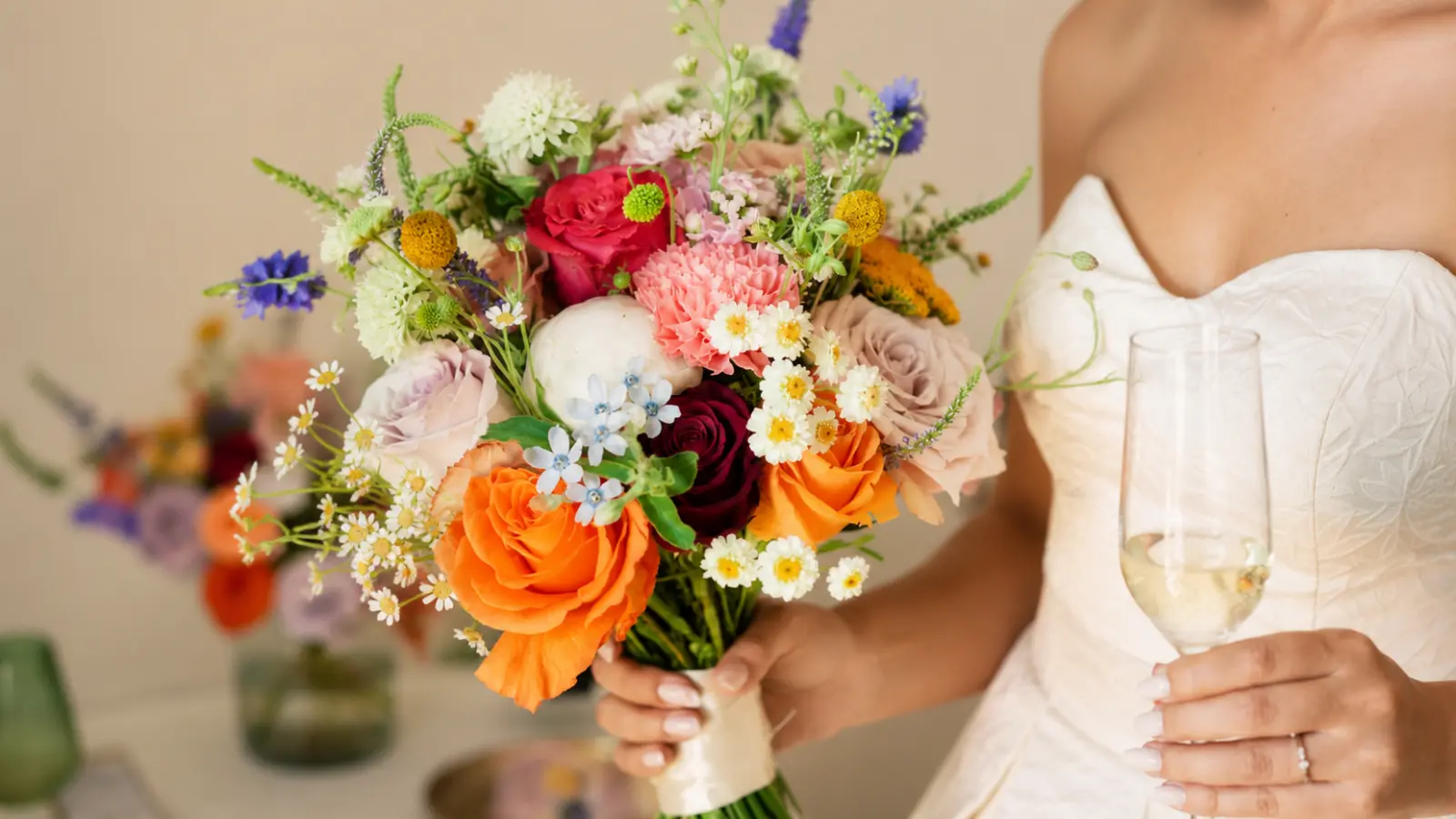
Spring’s flower list is the longest of any season, but not every flower on it is available for the entire season. Knowing which flowers are dependable early, mid, and late spring makes it much easier to plan around your specific date rather than a generic moodboard.
| Flower | Peak Window | Notes |
|---|---|---|
| Tulips | Early spring | Wide color range; delicate and best used close to the ceremony date |
| Anemones | Early to mid-spring | Dark-centered varieties add a distinctive focal point |
| Ranunculus | Early to mid-spring | Layered, rose-like petals; one of the most dependable spring flowers |
| Lilac | Mid-spring | Fragrant and full; adds volume and softness as a secondary element |
| Peonies | Mid-spring | Short, weather-dependent window; the most requested spring flower and the least guaranteed |
| Sweet peas | Mid-spring | Delicate, fragrant, often used as a trailing or filler element |
| Lily of the valley | Mid-spring | Small, fragrant bell-shaped blooms; classic but delicate and short-lived once cut |
| Garden roses | Late spring | Reliable as peony season winds down; carries the bouquet into early summer |
Peonies deserve a specific note: they are the flower most requested for spring weddings and also the one with the shortest, least predictable availability window. A bouquet built entirely around peonies, with no flexibility, is a risk. The more dependable approach is to build the bouquet around ranunculus or garden roses, with peonies included if and when they’re available rather than treated as the only acceptable focal flower.
Pastel Spring Bouquets
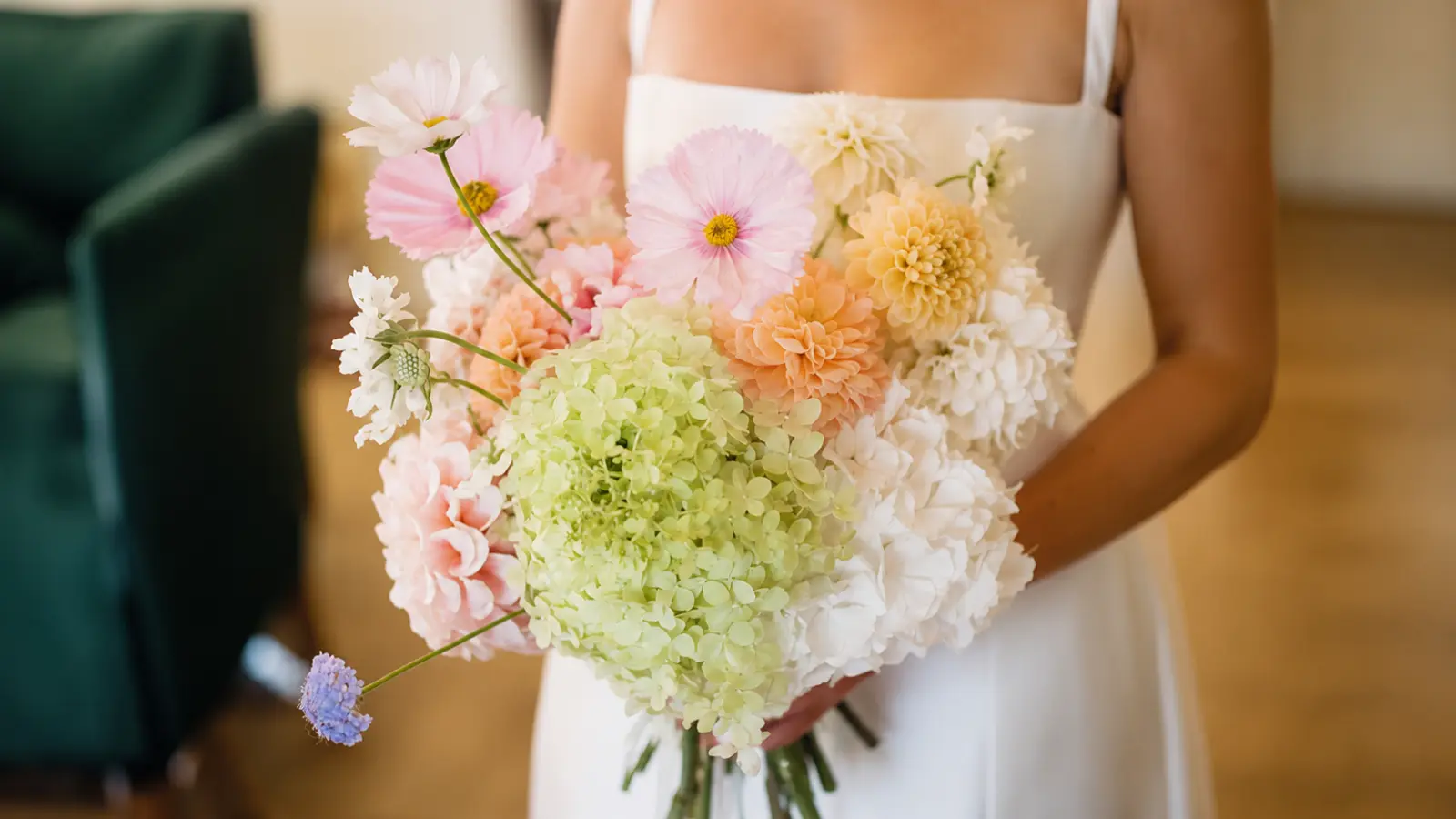
Pastel is the color direction most associated with spring, and for good reason — blush, lavender, butter yellow, and soft mint all pair naturally with the season’s flower list. The risk with pastel bouquets is flatness: an entire bouquet built from one pale tone can lose definition, especially against a white dress or in bright daylight.
The fix is tonal variation rather than abandoning pastel altogether. A bouquet built from two or three different pastel shades — blush peonies with lavender sweet peas and a touch of butter-yellow ranunculus, for example — reads as considered and layered rather than flat. Foliage matters here too: soft sage or eucalyptus works better than bright green, which can fight with delicate pastel tones rather than support them.
Adding Just Enough Contrast:
A bouquet that is entirely pale, with no deeper accent anywhere, can look washed out in photos even when it’s beautiful in person. One slightly richer flower — a deeper pink ranunculus, a touch of mauve, or a single dustier-toned bloom — gives the eye somewhere to land without disrupting the overall soft, pastel feeling. The goal isn’t to add a bold color; it’s to add one shade with enough depth to keep the bouquet from flattening into a single tone.
Pastel bouquets also pair well with garden-style construction — a looser, more natural shape rather than a tight, uniform round — since the relaxed form suits the softness of the color palette better than a very structured, formal silhouette would.
April Wedding Bouquets
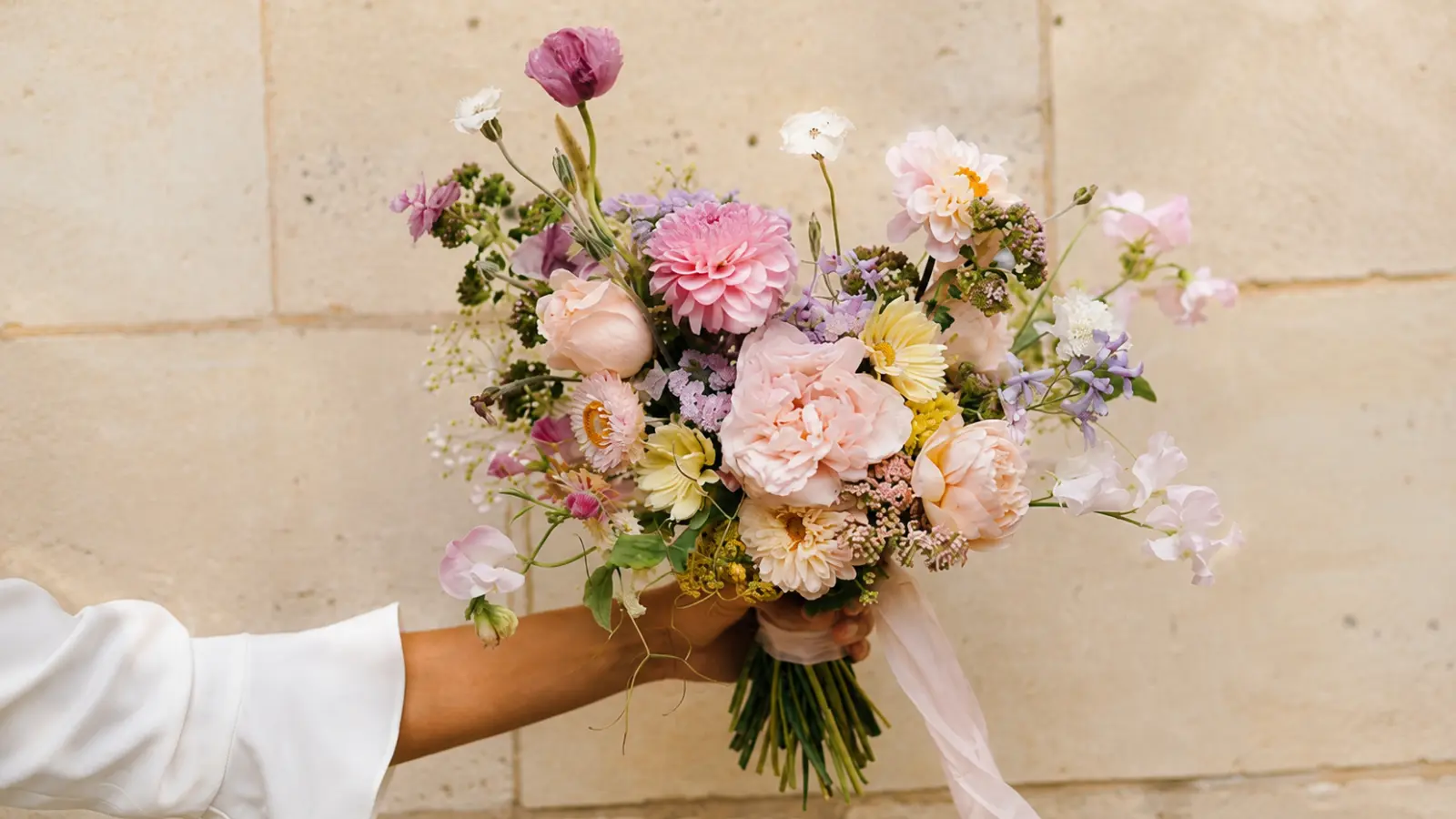
April sits at the early edge of spring, and the flower list reflects that. Tulips, ranunculus, and anemones are the most dependable choices, often joined by early lilac toward the end of the month. Peonies are inconsistent this early — some regions and growing conditions bring early peonies, but it isn’t a flower to plan around without a backup.
April bouquets often lean slightly cooler and more muted than later spring bouquets — soft lavenders, pale pinks, and creams rather than the warmer, fuller pastel tones that come with peony season. This isn’t a limitation so much as its own distinct look: an April bouquet has a delicate, early-season character that a June bouquet, with its fuller blooms and warmer palette, doesn’t share.
Because the weather in April can still swing cool, flowers with some resilience to temperature changes — ranunculus and tulips in particular — tend to perform more reliably than more delicate options if any part of the day involves time outdoors.
May Wedding Bouquets
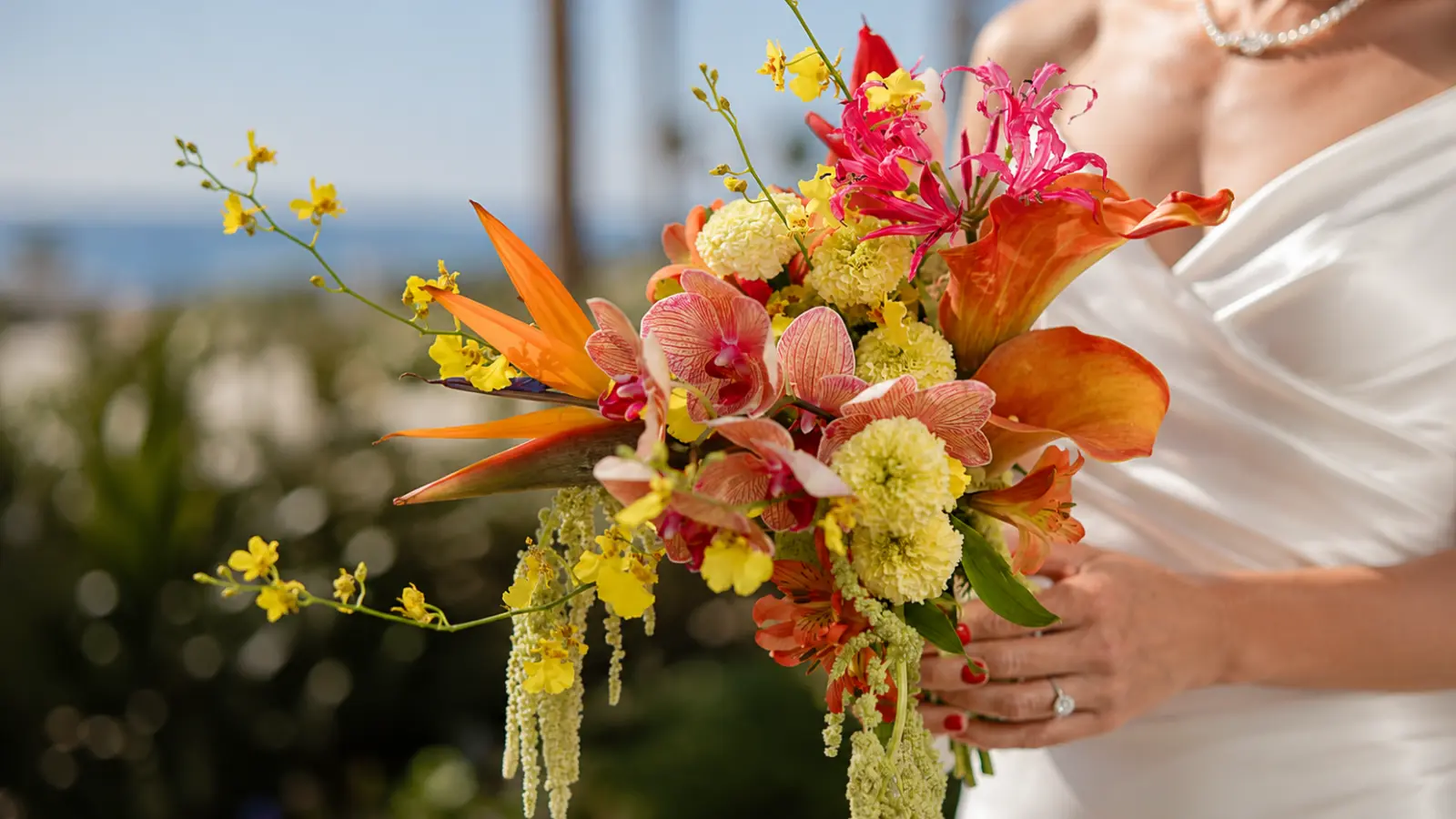
May is the high point of spring’s flower availability. Peony season is typically in full swing, ranunculus and anemones are still strong, sweet peas and lilac are widely available, and garden roses are starting to come into their own as well. There is more flower variety available in May than in almost any other month of the year.
This makes May the most flexible month for spring bouquet planning — couples have genuine choice between a peony-forward bouquet, a mixed garden-style design, or a lighter, more pastel-focused arrangement, largely without the availability constraints that shape April or the seasonal shift that affects June. It’s also, as a result, one of the most popular wedding months, which is worth factoring into florist booking timelines.
A well-built May bouquet often layers two or three of the season’s strongest flowers — peonies with ranunculus and a touch of sweet pea, for instance — rather than relying on a single flower type, simply because there’s enough availability to make a layered, textured bouquet without sourcing difficulty.
June Wedding Bouquets
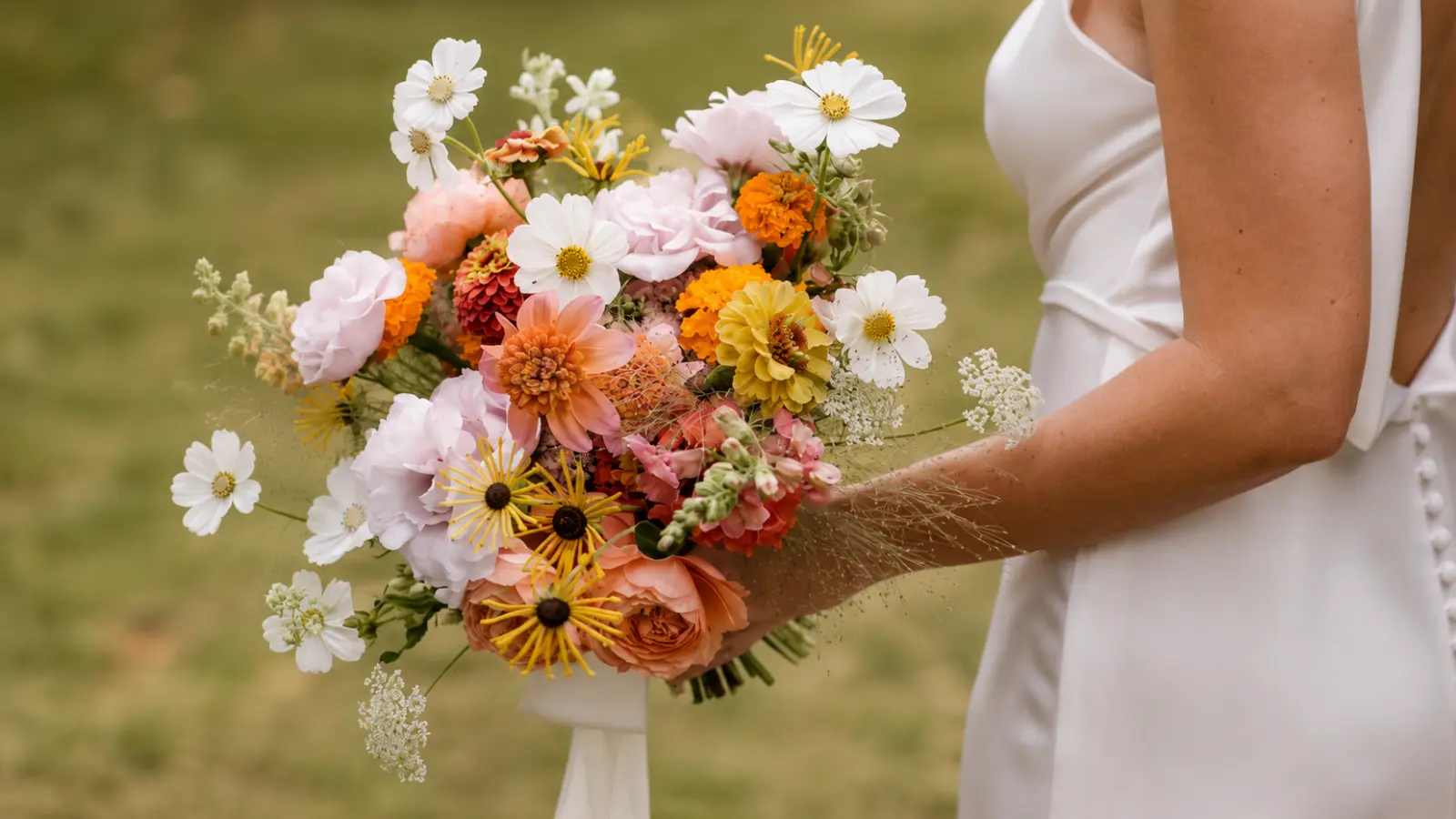
June marks the transition out of spring and into early summer, and the flower list shifts accordingly. Peony season is typically winding down by this point — still available early in the month in many regions, but less reliable than in May. Garden roses move into their peak window and often become the primary focal flower. Lisianthus, delphinium, and the earliest summer blooms start to become realistic options as well.
Color-wise, June bouquets have room to be slightly warmer and more saturated than April or May bouquets, since the season has moved closer to summer’s broader color range. A June bouquet can still be entirely pastel if that’s the goal, but it can also incorporate brighter pinks, coral tones, or deeper garden rose varieties without feeling out of step with the date.
Couples set on a peony-heavy bouquet for a June date should talk to their florist early about timing — booking peonies for late May or very early June is far more reliable than counting on them for a date deeper into the month.
Spring Bouquet Color Palettes
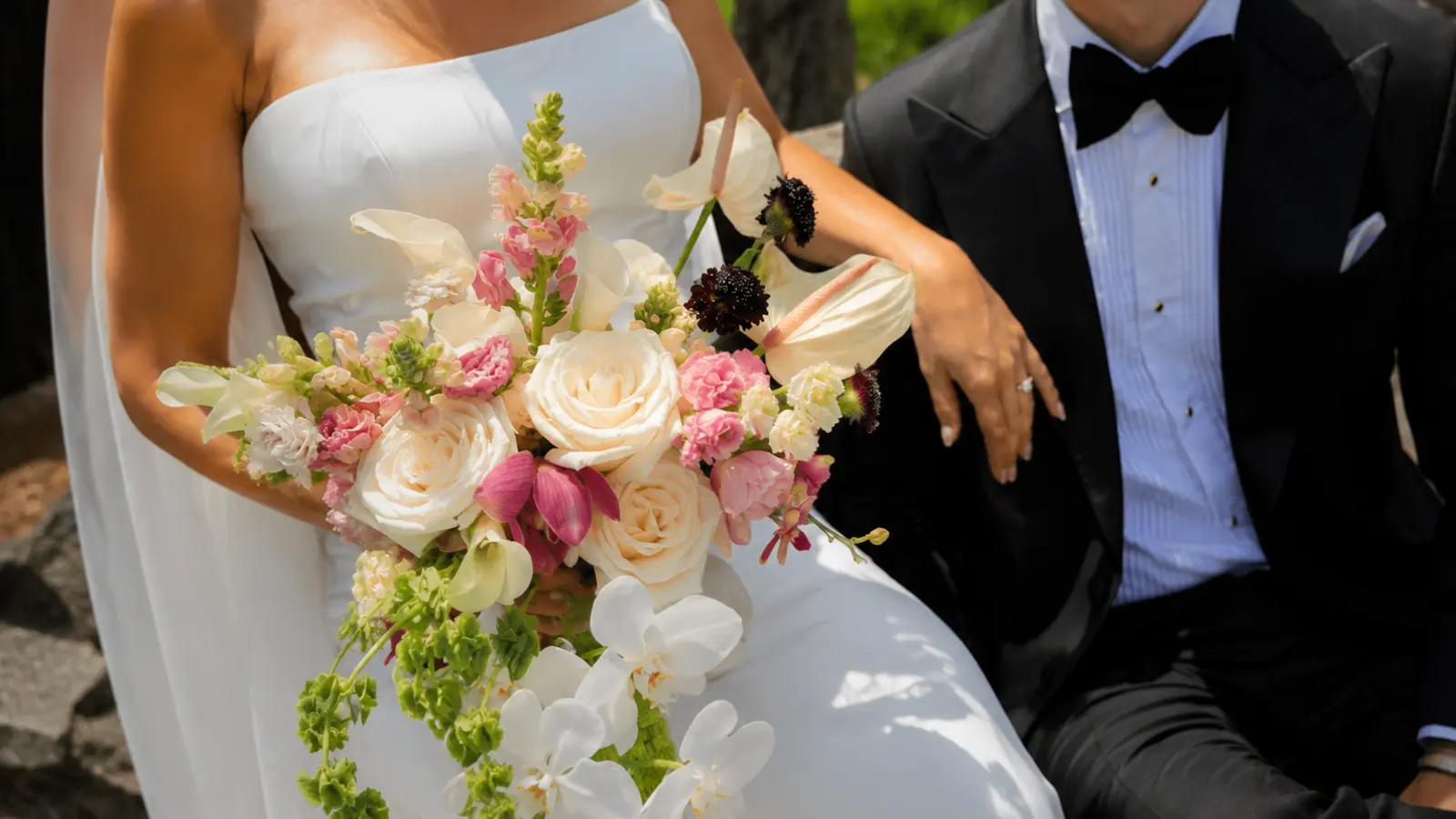
Spring supports a wider range of wedding bouquet colors than any other season, from the softest pastels to genuinely bold, saturated combinations.
| Palette Direction | Core Colors | Mood |
|---|---|---|
| Soft Pastel | Blush, lavender, butter yellow, mint | Romantic and classic; the most associated with spring |
| Garden Romantic | Peach, dusty rose, cream | Warmer and slightly richer than pure pastel; suits garden-style bouquets |
| Fresh White & Green | White, ivory, soft green | Clean and timeless; works for nearly any spring venue |
| Bold Spring | Coral, fuchsia, kelly green | Vivid and energetic; best for couples who want more saturation |
Soft pastel and garden romantic are the most requested directions and the easiest to build given spring’s flower availability — nearly every flower on the spring list comes in shades that fit one of these two palettes. Fresh white-and-green is the most versatile choice for couples who haven’t settled on a broader wedding color scheme yet, since it complements almost any other color used elsewhere in the wedding. Bold spring is the least common but a genuinely good option for couples who find pastel too quiet for their taste — tulips and ranunculus both come in colors saturated enough to support it.
Spring Bouquet Mistakes to Avoid
Spring bouquets run into a fairly predictable set of problems, most of which come from treating the season as one uniform style rather than a fast-moving few months.
Planning entirely around peonies with no backup. Peonies have a short, weather-dependent season. A bouquet design that only works with peonies puts the whole plan at risk if availability is poor that year. Building around a more dependable flower like ranunculus or garden roses, with peonies added when available, is the safer approach.
Treating April, May, and June as interchangeable. Flower availability and color tone shift meaningfully across these three months. A bouquet plan built around peak May availability may need real adjustment for an April or late-June date.
Going entirely pastel with no tonal variation. A bouquet built from a single pale shade can look flat and washed out, especially in photos. Mixing two or three pastel tones, or adding one slightly deeper accent, keeps the bouquet from losing definition.
Overusing baby’s breath as a default filler. It’s a classic, but used in large quantities it can make a bouquet look dated or sparse rather than soft. Sweet pea vines, additional foliage, or a secondary bloom typically give a fuller, more current look.
Ignoring regional bloom variation. Spring flower timing shifts depending on climate and growing region — what’s blooming in April in one part of the country may not be available until May elsewhere. Confirming actual availability with a local florist matters more in spring than in any other season.
Spring Wedding Bouquet Inspiration
Discover beautiful spring wedding bouquets featuring fresh seasonal flowers, romantic pastel color palettes, peonies, tulips, ranunculus, garden-inspired arrangements, and timeless bouquet ideas for spring weddings.
Celebrate the Season Through Your Flowers
Spring offers more floral possibilities than any other time of year, making it the perfect season to create a bouquet filled with natural beauty, color, and texture. Whether you’re drawn to delicate pastel flowers, elegant white arrangements, or lush garden-inspired designs, choosing blooms that are naturally in season will always create a bouquet that feels more authentic and effortlessly beautiful.
The most memorable spring bouquets aren’t defined by following trends—they’re shaped by the flowers that are at their best when your wedding takes place. By working with the season instead of against it, you’ll create a bouquet that not only looks stunning in photographs but also reflects everything that makes a spring wedding so special.
Frequently asked questions (FAQ)
What flowers are best for a spring wedding bouquet?
Peonies, tulips, ranunculus, sweet peas, anemones, lilac, garden roses, and lisianthus are among the best flowers for spring wedding bouquets. The best choice depends on the wedding month: tulips and anemones are more dependable in early spring, peonies usually peak in mid-spring, and garden roses become more reliable as spring moves into early summer.
How do you choose flowers for a spring wedding bouquet?
Start with your wedding month rather than a general spring moodboard. April bouquets usually rely on tulips, ranunculus, and anemones, May offers the widest flower variety, and June shifts toward garden roses and early summer blooms. Choosing flowers that match your actual date gives you better quality, easier sourcing, and a more natural seasonal look.
Are peonies available for an April wedding?
Peonies can sometimes be available in April, but they are not dependable enough to build an entire bouquet around without a backup plan. Tulips, ranunculus, anemones, and early lilac are more reliable choices for April weddings. If peonies are important to your vision, discuss greenhouse-grown or imported options with your florist early.
What is the difference between an April and a June wedding bouquet?
An April bouquet usually feels lighter, cooler, and more delicate, with flowers such as tulips, ranunculus, and anemones. A June bouquet often feels fuller and warmer, with garden roses, lisianthus, late peonies, and more saturated color options. May sits between the two and usually offers the broadest spring flower availability.
What colors work best for spring bouquets?
Blush, lavender, butter yellow, mint, peach, dusty rose, ivory, and fresh green are some of the strongest spring bouquet colors. Soft pastels create a classic romantic look, while peach and dusty rose feel warmer and more garden-inspired. For couples who want more energy, coral and fuchsia can create a bolder spring palette.
How do you keep a pastel spring bouquet from looking washed out?
Use more than one pastel tone, add one slightly deeper accent flower, and include soft green or grey-toned foliage for contrast. A bouquet made entirely from pale flowers can lose definition against a white dress or bright daylight. Tonal variation keeps the bouquet soft while still giving it shape in photos.