
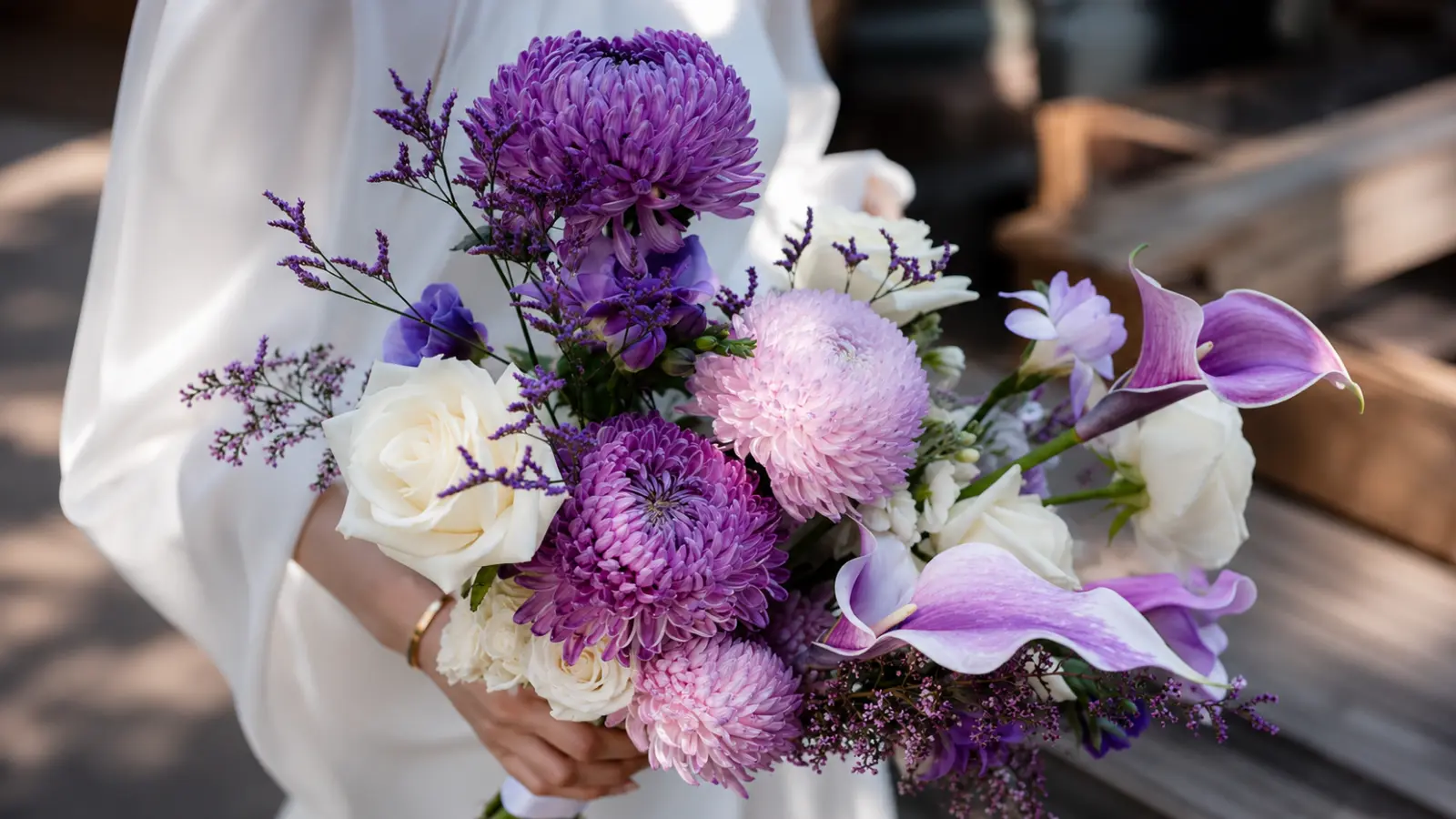
Purple wedding bouquets offer one of the widest color ranges of any bridal flower palette. From soft lavender and delicate lilac to rich plum and dramatic deep purple, each shade creates a completely different atmosphere while bringing elegance, personality, and depth to a wedding bouquet. Choosing the right tone is just as important as choosing the flowers themselves.
Unlike many bouquet colors, purple changes dramatically depending on lighting, flower varieties, and the colors surrounding it. A lavender bouquet can feel airy and romantic in natural daylight, while a plum arrangement creates bold contrast in an evening ballroom. Understanding those differences helps you choose a bouquet that complements your venue, wedding style, and photography rather than relying only on a favorite color.
This guide explores purple designs within the broader world of wedding bouquets, including lavender, lilac, dusty mauve, violet, plum, and deep purple ideas, the best flowers for each shade, beautiful color pairings, and practical tips for creating a bouquet that feels balanced, timeless, and uniquely yours.
Purple Wedding Bouquet Ideas
Purple bouquets generally fall into a few distinct directions, each with its own aesthetic and its own set of flowers. The clearest way to narrow down your wedding bouquet colors is to decide whether you’re working with a soft, muted purple or a rich, saturated one — because that distinction changes almost every other decision.
| Direction | Core Flowers | Mood | Best Suited For |
|---|---|---|---|
| Lavender | Lisianthus, sweet peas, garden roses, lavender herb | Soft, romantic, airy | Garden, barn, outdoor spring ceremonies |
| Lilac | Stock, lisianthus, freesia, Syringa (spring only) | Vintage, cool, delicate | Estate, greenhouse, spring weddings |
| Dusty Mauve | Garden roses, scabiosa, dried lavender, lisianthus | Earthy, warm, bohemian | Desert, barn, fall outdoor weddings |
| True Violet | Clematis, lisianthus, allium, violet garden roses | Saturated, confident, modern | Ballroom, outdoor, modern venues |
| Plum / Deep Purple | Dahlias, dark anemones, deep calla lilies | Rich, dramatic, jewel-toned | Formal ballroom, vineyard, fall and winter |
One practical note before moving forward: purple is also one of the shades most affected by lighting conditions. A dusty mauve that looks warm and earthy in afternoon garden light can read almost gray under cool indoor lighting. Bringing a reference swatch to your florist — and sharing your venue photos — will save you from surprises on the day.
Lavender Wedding Bouquets
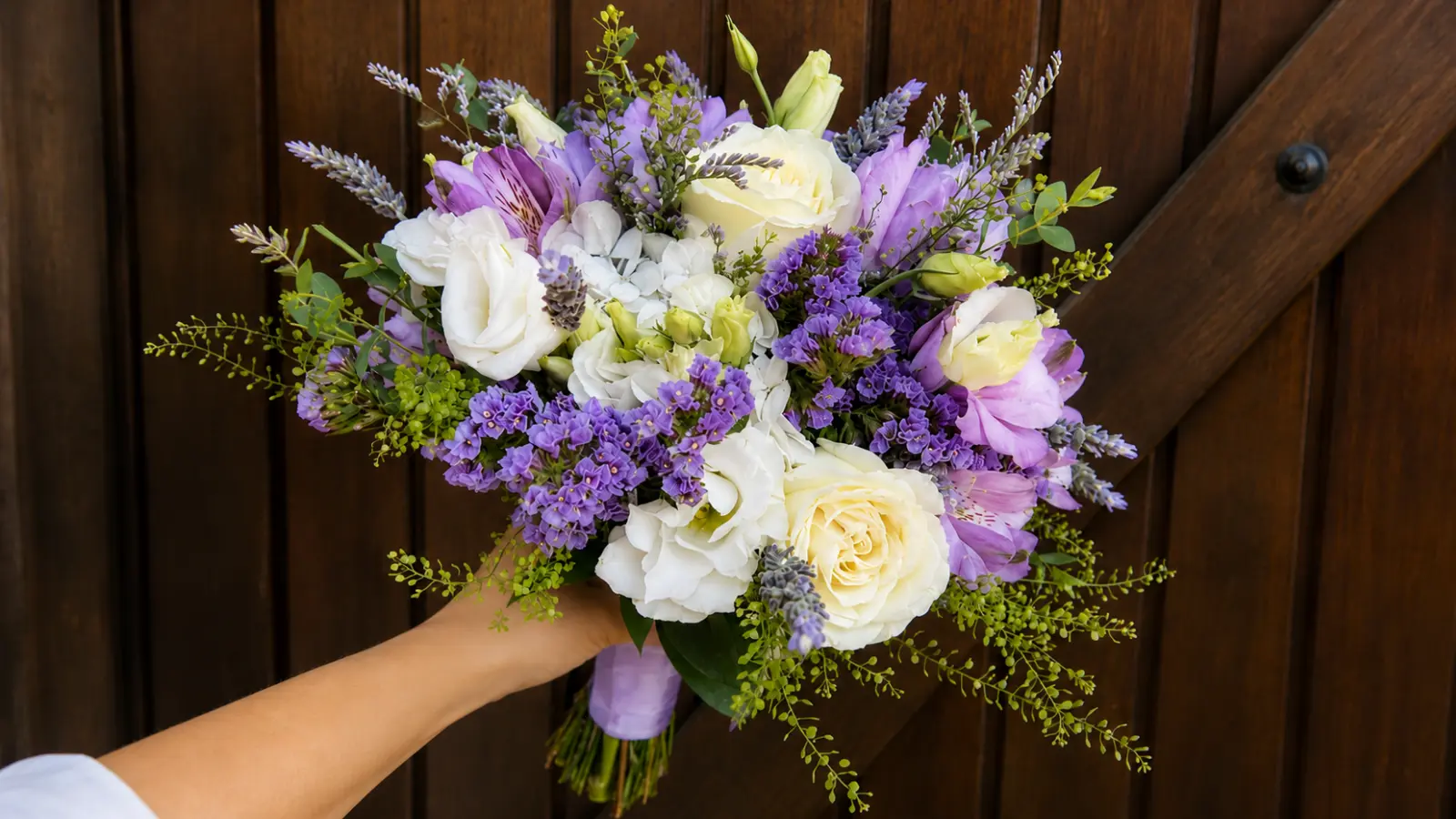
Lavender is the most requested direction in purple wedding florals, and the reason is simple: it sits close enough to gray that it functions almost like a neutral. A true lavender bouquet pairs comfortably with ivory, white, soft blush, sage green, and pale blue without pulling focus from the dress or competing with the venue. For brides who want color without committing to something saturated, it’s a reliable middle ground.
The challenge with lavender is avoiding flatness. Because the tone is so soft, an arrangement built entirely from pale flowers can lose definition in photos — especially in bright outdoor light. The fix is texture: combining matte and open-faced flowers, layering different petal shapes, or adding a single deeper-toned element to anchor the arrangement. A bouquet of all lavender lisianthus and nothing else is harder to photograph well than the same flowers mixed with something that adds depth.
For achieving a true lavender tone, lisianthus is the most flexible option — it’s available across most of the year and comes in exactly the right soft violet. Sweet peas in pale purple are beautiful but have a short spring season. Clematis offers a larger, more dramatic petal in a genuine lavender tone. For foliage, dusty miller is the natural match: its silvery leaves pull the palette cool and add the textural contrast lavender often needs.
Style-wise, a loose hand-tied or garden arrangement suits lavender better than a tight round bouquet. The organic shape mirrors the softness of the color, while a structured round can make the pale tones look even more muted. For brides who want a cleaner finish, a mixed round with two or three flower types at different scales adds enough visual movement to keep the arrangement from reading as flat.
Lilac Wedding Bouquets
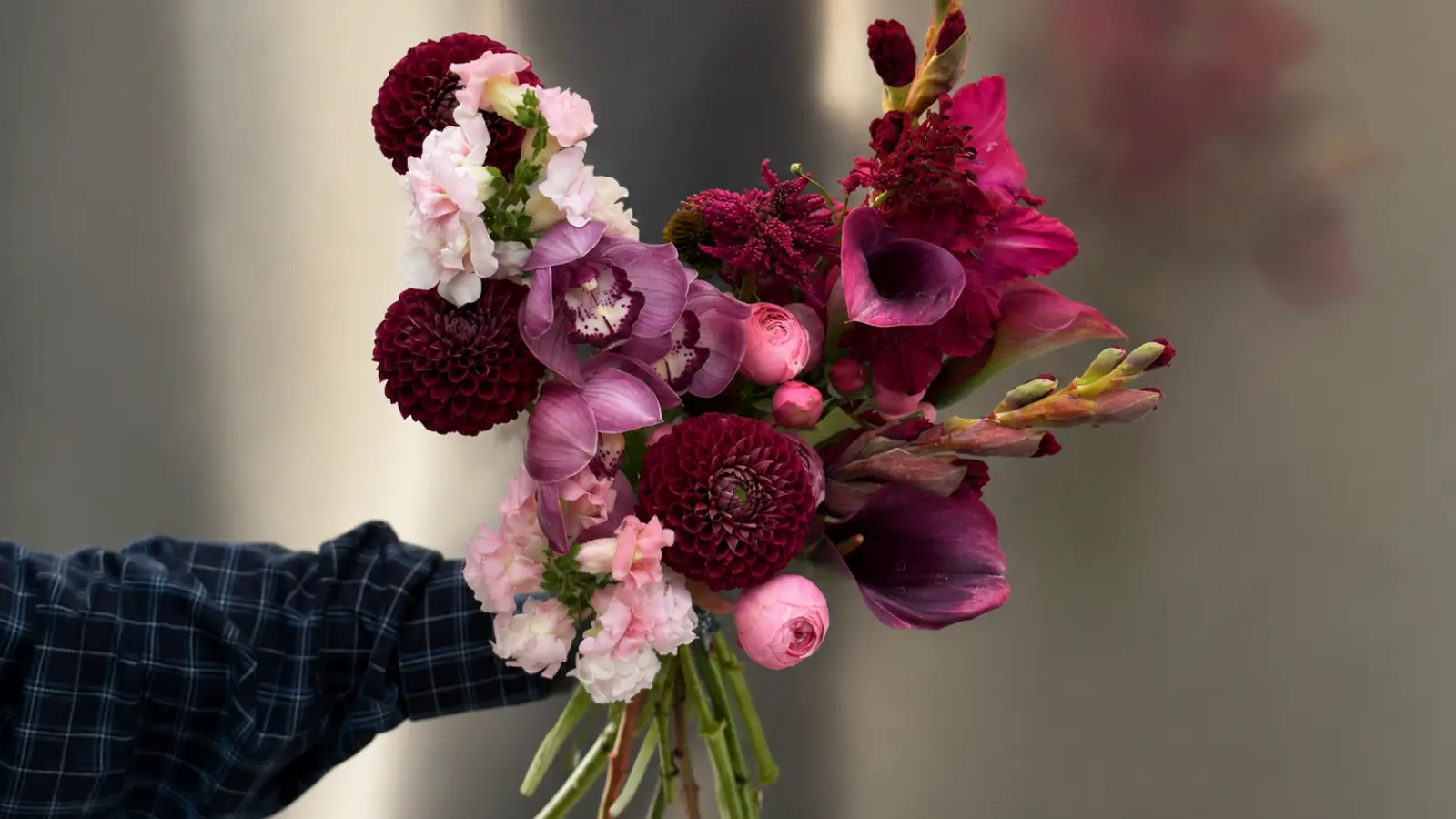
Lilac sits one step cooler and more saturated than lavender — it has a definite purple identity while still reading as soft. Visually, it carries a vintage quality that connects naturally to estate venues, greenhouse ceremonies, and spring settings. In photos, it tends to hold its color better than lavender, particularly when paired with white or ivory.
The most important thing to know about lilac: actual lilac blooms — Syringa — are available for a short window in spring, typically April and May. When your wedding falls within that window and your florist can source them, real lilac adds something no substitute replicates: a branching texture and a fragrance that fills a room. Outside of spring, your florist will build the color story from other flowers.
Stock (Matthiola) is the closest substitute in both color and feel — densely packed florets in a cool lilac-pink, with a strong fragrance of its own. Lisianthus in lavender tones is the most reliable year-round option. Freesia adds structure and fragrance with a slightly more delicate scale. Together, these three can build a convincing lilac palette even without actual Syringa in the stems.
For pairing, lilac works best with colors on the cool side: cream or ivory rather than warm yellow-white, dusty blue, and pale antique rose. Warm accents like coral or orange can push lilac toward looking washed out by comparison, so if you want to add warmth, do it through the foliage tone rather than the flower colors.
Deep Purple and Plum Bridal Bouquets
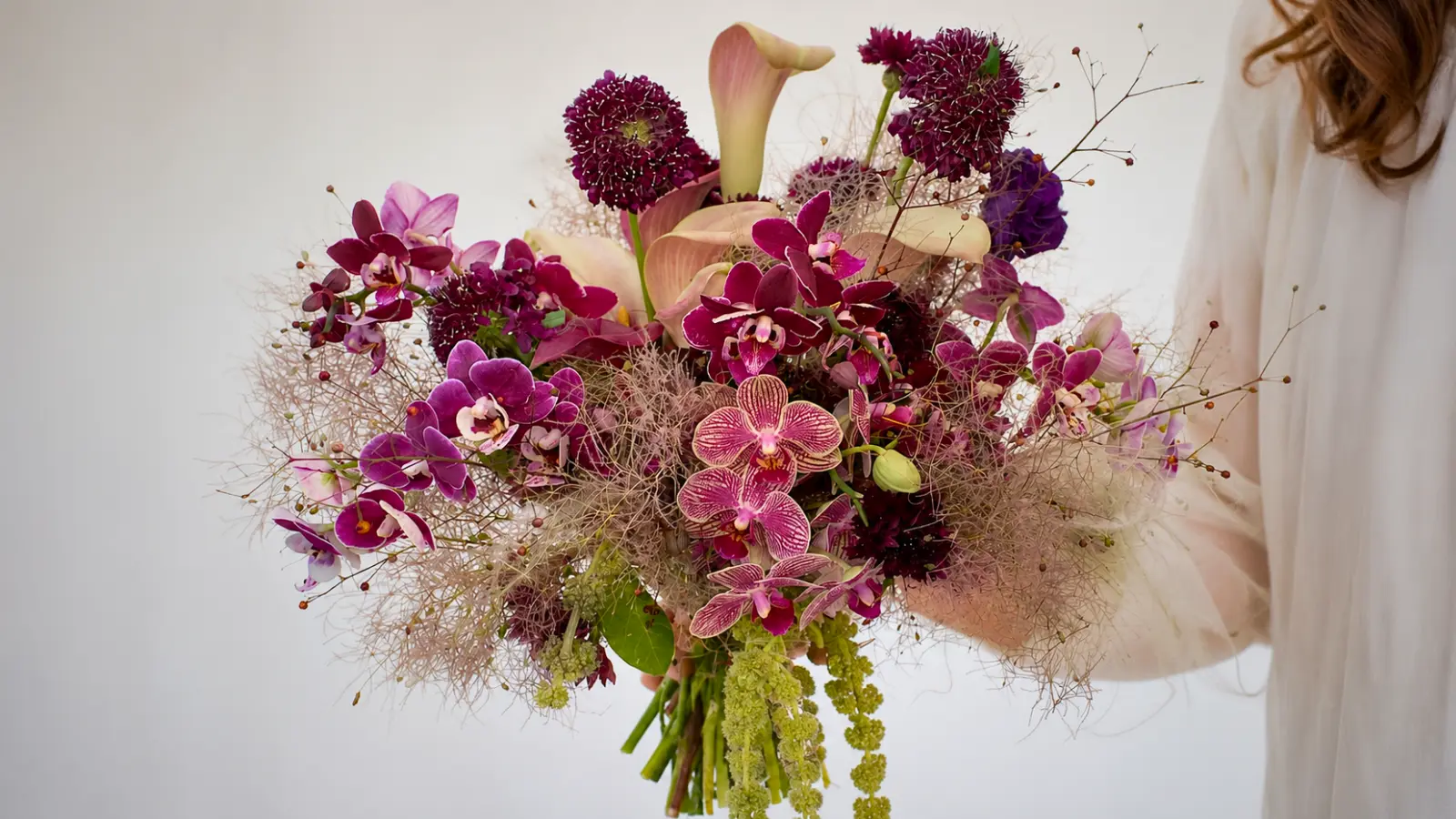
Deep purple and plum are a different conversation entirely. These shades don’t read as soft or romantic in the conventional sense — they read as deliberate, rich, and striking. A well-executed plum bouquet against a white dress in a formal setting is one of the strongest color contrasts in wedding florals, and it photographs with real presence rather than disappearing into the background.
The practical challenge is that the distance between plum, eggplant, deep violet, and burgundy-purple is narrow, and lighting shifts all of them. A plum bouquet under warm golden reception lighting can pull closer to burgundy. Under cool natural light, it reads more saturated violet. This is a detail worth bringing to your florist with actual venue photos rather than relying on general color descriptions.
For deep purple tones, dahlias are the strongest option — large-headed varieties in deep violet carry color well across different lighting conditions and bring enough scale to make a visual statement. Dark anemones, with their near-black centers and deep purple petals, add a graphic quality that works particularly well in moody or editorial arrangements. For a more architectural direction, calla lilies in deep purple give a cleaner line.
Deep purple and plum work best in formal and evening settings: ballrooms, churches, vineyard venues, spaces with dramatic lighting. They suit fall and winter weddings naturally, where the richness of the color connects to the season. Style-wise, a structured round bouquet in deep plum with dark foliage reads as refined and deliberate. A looser arrangement with trailing elements can lean more moody — especially when paired with near-black foliage and dark ribbon wrapping.
Purple and White Wedding Bouquets
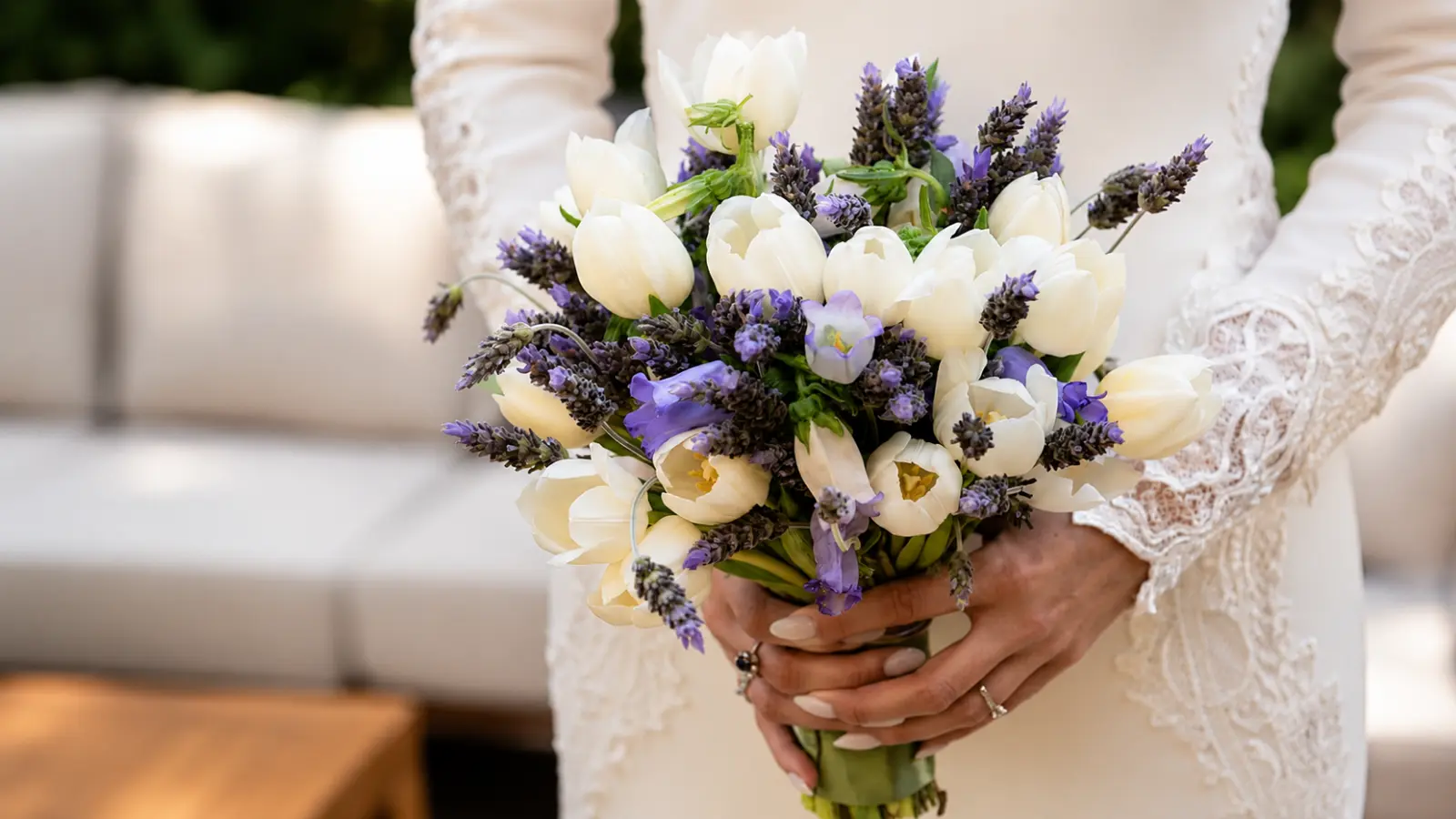
Purple and white is the most versatile combination in this color family, and it works across the full range of purple shades — from the softest lavender to the richest plum. White clarifies and lightens whatever purple it’s paired with, which is useful at both ends of the spectrum.
For lavender and lilac, adding white gives the arrangement enough contrast to read clearly in photos and prevents the pale tones from disappearing into each other. For deep purple and plum, white creates genuine contrast — sharp in photos, polished in person. The dynamic changes based on which color leads.
| Purple Shade | With White, It Creates | Foliage That Helps |
|---|---|---|
| Lavender | Soft, fresh, garden feel — prevents flatness | Dusty miller, silver eucalyptus |
| Lilac | Cool, vintage, slightly formal | Italian ruscus, silver-tone foliage |
| True Violet | Crisp, confident, strong color contrast | Bright greenery, eucalyptus |
| Plum / Deep Purple | Graphic, formal, high-contrast — strong in photos | Dark green magnolia, bay laurel |
The ratio matters more than most brides expect. A bouquet that’s mostly white with purple accents will read as a white bouquet with a color accent — and vice versa. If you want both colors to register as a genuine combination, a split of roughly 60/40 in either direction is where it starts to feel intentional rather than one color with an afterthought.
Best Flowers for Purple Wedding Bouquets
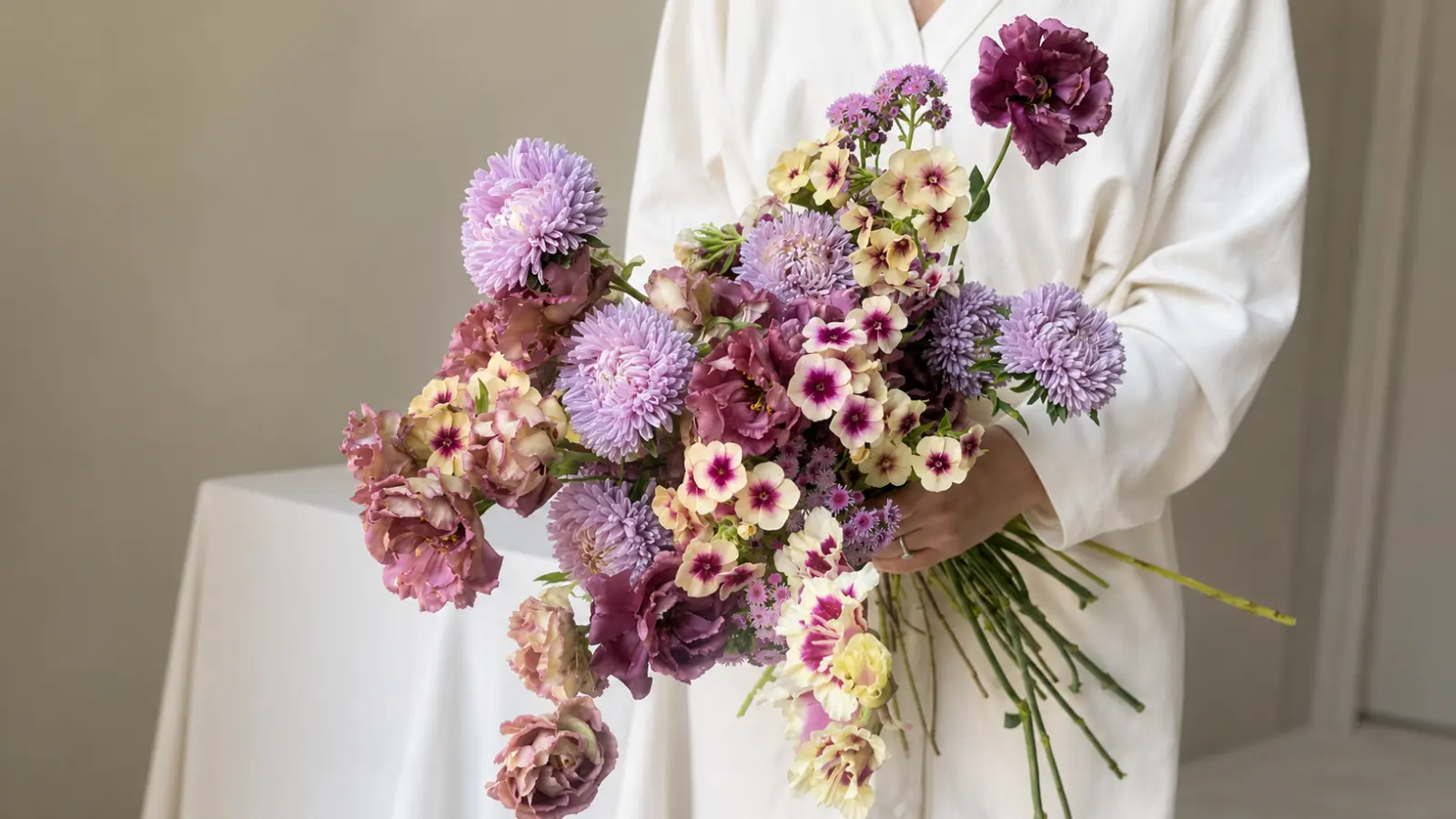
Purple is one of the more reliable colors in wedding florals in terms of flower availability, but specific shades within the family have very different seasonal windows. The table below covers the flowers most commonly used, what range of purple they actually achieve, and what they’re best suited for in a bouquet.
| Flower | Purple Range | Season | Best Used As |
|---|---|---|---|
| Lisianthus | Pale lavender to mid-violet | Year-round | Focal flower; reliable and widely available |
| Sweet Peas | Lavender, lilac, soft violet | Spring only | Delicate filler; adds fragrance and softness |
| Clematis | True violet, soft lavender | Late spring through summer | Dramatic large petal; strong purple statement |
| Stock (Matthiola) | Lilac, cool mauve | Spring and fall | Fragrant filler; adds volume and clustered texture |
| Anemones | Deep violet to near-black | Fall through spring | Graphic accent; dark centers add contrast |
| Dahlias | Violet, plum, deep purple | Late summer and fall | Large-scale focal flower; carries color well in photos |
| Garden Roses (purple varieties) | Soft lilac to dusty mauve | Year-round (select varieties) | Lush focal bloom; layered texture |
| Scabiosa | Soft lavender, violet | Summer through fall | Airy filler; wildflower quality |
| Allium | Violet, soft purple | Late spring through early summer | Structural accent; spherical shape adds interest |
| Lilac (Syringa) | Pale lilac, soft violet | April–May only | Branching accent; irreplaceable fragrance in season |
| Freesia | Lavender to violet | Spring and early summer | Fragrant secondary bloom; delicate structure |
One detail worth discussing with your florist: purple is one of the more variable colors from grower to grower. The same variety purchased from two different sources can look noticeably different — one might lean blue, another closer to pink-violet. If color consistency matters to you, asking to see the actual stems before the wedding day rather than approving a variety name is a reasonable request.
Purple Bouquet Mistakes to Avoid
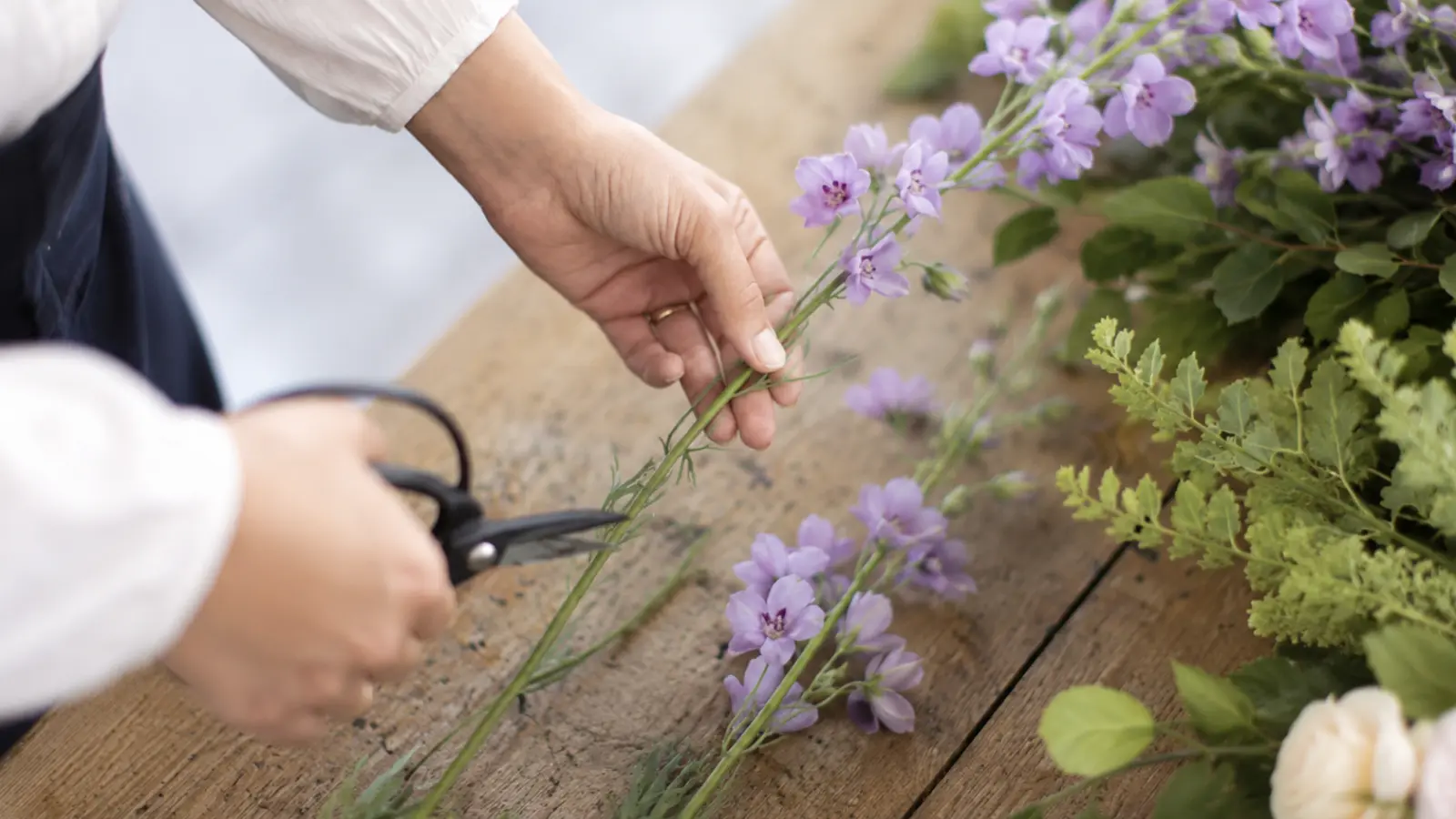
Most purple bouquet problems trace back to the same core issue: the color wasn’t pinned down precisely enough before the flowers were ordered. These are the specific mistakes that come up most often.
Describing the color only in words. “Soft purple” and “dusty purple” and “pale violet” are three different briefs. Saying “lavender” when you mean dusty mauve, or “lilac” when you mean true violet, can lead to a bouquet that looks nothing like what you had in mind. Bring a physical swatch — a ribbon, a fabric sample from a bridesmaid dress, or a printed color chip — to the florist meeting.
Not accounting for venue lighting. Purple shifts more dramatically under different light sources than most colors. Deep violet can read near-black under warm candlelight. Pale lavender can wash out under cool midday outdoor light. If your ceremony and reception have different lighting conditions, it’s worth discussing how your bouquet will read in both environments.
Mixing too many shades of purple at once. Combining lavender, lilac, violet, and plum in one arrangement often looks unintentional rather than layered. A cleaner approach is to pick one or two tones as the core palette and let everything else support them — additional variation usually reads as muddled rather than complex.
Overlooking the greenery decision. The foliage in a purple bouquet does more work than in most other colors, because purple is sensitive to the warm/cool balance around it. Dusty miller keeps the palette cool and romantic. Bright green pulls it fresh and springy. Dark magnolia or bay laurel gives it a formal, moody weight. Getting the greenery right matters as much as getting the flowers right.
Planning around lilac or sweet peas without checking your wedding date. Both have limited seasonal windows, and substitutes — while good — are not identical. If your date falls outside their availability and these flowers are central to your vision, knowing that early gives you time to adjust the plan rather than being surprised when your florist brings it up close to the date.
Purple Wedding Bouquet Inspiration
Discover beautiful purple wedding bouquets featuring lavender, lilac, plum, and deep purple flowers, elegant white pairings, romantic seasonal blooms, and timeless bouquet inspiration for every wedding style.
The Right Shade Makes All the Difference
Purple is one of the most expressive colors in wedding florals because every shade tells a different story. Soft lavender creates a light, romantic atmosphere, lilac feels fresh and vintage, while plum and deep purple bring richness, elegance, and dramatic contrast. Choosing the right tone is less about following trends and more about finding the palette that reflects your wedding style and the feeling you want to create.
The most beautiful purple bouquets begin with clarity rather than color alone. By understanding how different shades photograph, which flowers naturally produce each tone, and how seasonal availability influences your options, you’ll be able to create a bouquet that feels intentional, harmonious, and unforgettable from the ceremony through the final photographs.
Frequently asked questions (FAQ)
What flowers come in natural purple for a wedding bouquet?
Many wedding flowers naturally bloom in shades of purple, including lisianthus, sweet peas, clematis, scabiosa, anemones, freesia, stock, allium, certain garden roses, and several dahlia varieties. True lilac (Syringa) is also naturally purple but has a very short spring season. Because purple occurs naturally across many flower families, couples can create everything from soft lavender bouquets to dramatic plum arrangements without relying on dyed flowers.
What’s the difference between lavender, lilac, and plum wedding bouquets?
Lavender is soft, muted, and slightly grey-toned, creating an airy and romantic look. Lilac is cooler and a little more saturated, giving bouquets a refined vintage feel. Plum and deep purple are richer, darker, and far more dramatic, making them especially popular for formal fall and winter weddings. Choosing the shade first helps determine the flowers, foliage, and overall bouquet style.
Do purple wedding bouquets photograph well?
Yes, but different shades behave differently in photographs. Pale lavender can lose definition in bright outdoor light without enough texture or contrast, while deep plum may appear almost black in warm indoor lighting. Mid-tone violets usually photograph most consistently across different lighting conditions. Discussing your venue’s lighting with both your florist and photographer helps ensure the bouquet appears as intended.
Can I use real lilac flowers in my wedding bouquet?
Yes, if your wedding takes place during their natural season. Fresh Syringa lilac is generally available in April and May, offering distinctive fragrance and branching texture. Outside spring, florists typically recreate the look using lisianthus, stock, sweet peas, and other flowers with similar tones. While imported lilac may sometimes be available, seasonal blooms usually offer the best quality.
What colors pair best with purple wedding bouquets?
The ideal pairing depends on the shade of purple. Lavender works beautifully with ivory, sage, blush, and soft grey, while lilac complements cream, dusty blue, and pale pink. Rich plum tones pair naturally with deep green, burgundy, gold, and warm ivory. Matching colors to the specific purple shade creates a far more balanced bouquet than treating every purple as the same color.
Does a purple bouquet work with a white wedding dress?
Absolutely. Purple creates one of the strongest contrasts against a white wedding dress while still feeling timeless and elegant. Cool bright-white gowns pair beautifully with lavender, lilac, and true violet, while ivory or champagne dresses often harmonize better with warmer shades such as dusty mauve or deep plum. Matching undertones between the bouquet and the gown creates a more cohesive bridal look.