
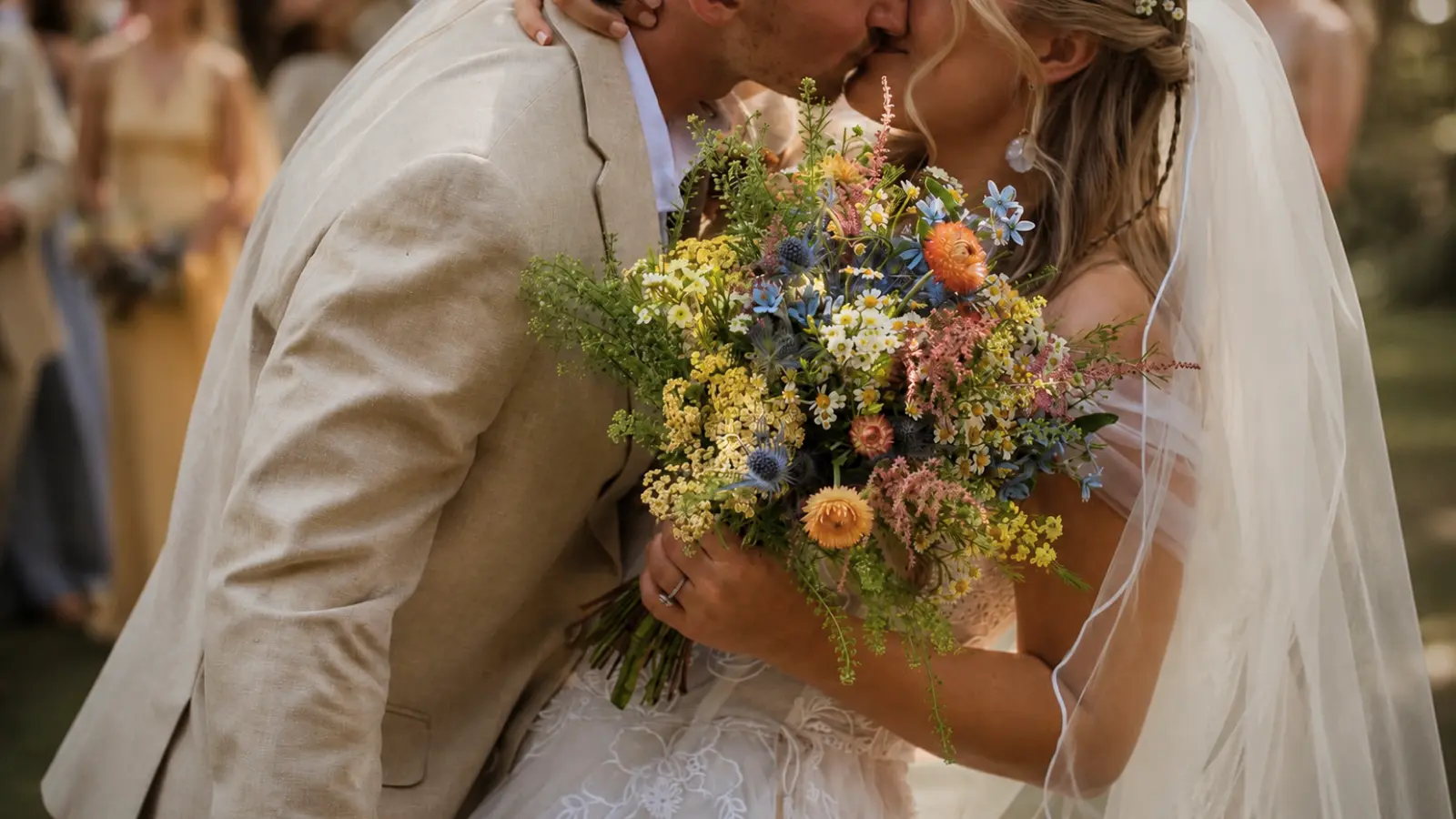
Rustic wedding bouquets celebrate natural beauty through organic textures, seasonal flowers, and relaxed floral designs that feel effortlessly gathered rather than overly arranged. Whether you’re planning a barn wedding, a countryside celebration, a mountain venue, or an outdoor ceremony, rustic bouquets create warmth and character while remaining elegant and thoughtfully designed.
The biggest misconception is believing that rustic means messy or unfinished. In reality, the most beautiful rustic bouquets rely on careful composition, balanced color palettes, and intentional flower selection. Wildflowers, sunflowers, dahlias, herbs, dried grasses, and natural greenery all work together to create movement without sacrificing structure or refinement.
This guide explores rustic design within the broader world of wedding bouquets, including wildflower arrangements, sunflower ideas, country wedding flowers, fall-inspired palettes, and practical styling advice.
Rustic Wedding Bouquet Ideas
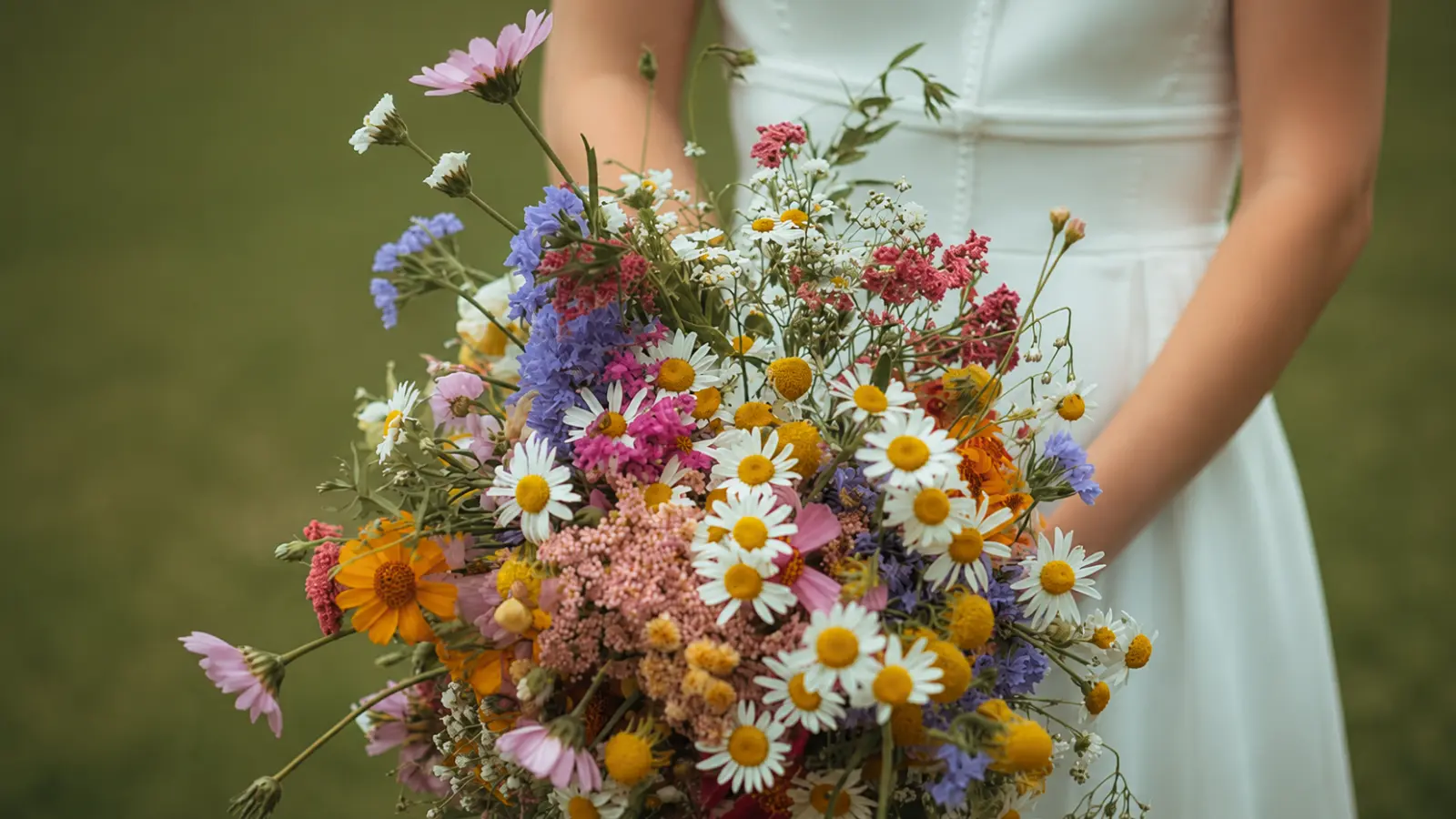
Rustic does not describe only one of the available bridal bouquet styles; it describes an organic feeling that can appear across different shapes and flower combinations. The common thread across rustic designs is an unhurried, organic quality: flowers that look like they belong outdoors, palettes rooted in earth and harvest tones, textures drawn from nature rather than from a florist’s supply shelf.
What separates a rustic bouquet that looks considered from one that looks thrown together is usually a clear compositional idea underneath the relaxed surface. These are the approaches that land most consistently:
- The wildflower gather: Small, varied blooms — cosmos, queen anne’s lace, black-eyed susans, larkspur — loosely arranged at different heights with fine grasses or herbs woven through. The defining quality is irregularity: no two stems at the exact same height, no forced symmetry. The structure underneath is still deliberate; the looseness is the result, not the method.
- The focal flower with natural greenery: One standout bloom (sunflower, dahlia, or garden rose) repeated three to five times, supported by eucalyptus, olive branch, or Italian ruscus. Simple to execute, hard to get wrong, and photographs clearly at any distance.
- The fall harvest palette: Dahlias in deep burgundy and rust, garden roses in blush or copper, marigolds, and dried wheat or seed pods tied together with a natural twine or raw ribbon. Rich, seasonal, and unmistakably autumnal without needing to hit every fall color at once.
- The herb and bloom mix: Fresh herbs — rosemary, thyme, sage, lavender — used as the primary green base, with flowers worked in as accents. Fragrant and tactile in a way that other bouquet styles aren’t, and a good choice for brides who want something truly unexpected.
- The dried arrangement: Pampas grass, dried cotton, bleached grasses, dried strawflowers, and preserved foliage. No fresh flowers required, which makes this option practical for brides planning well in advance or for ceremonies in particularly warm or dry conditions.
The cleanest starting point for any rustic design is a two-ingredient test: one focal flower and one greenery element. If that combination works, build from there. If it doesn’t, no amount of additional material will fix it.
Rustic Wildflower Bouquets
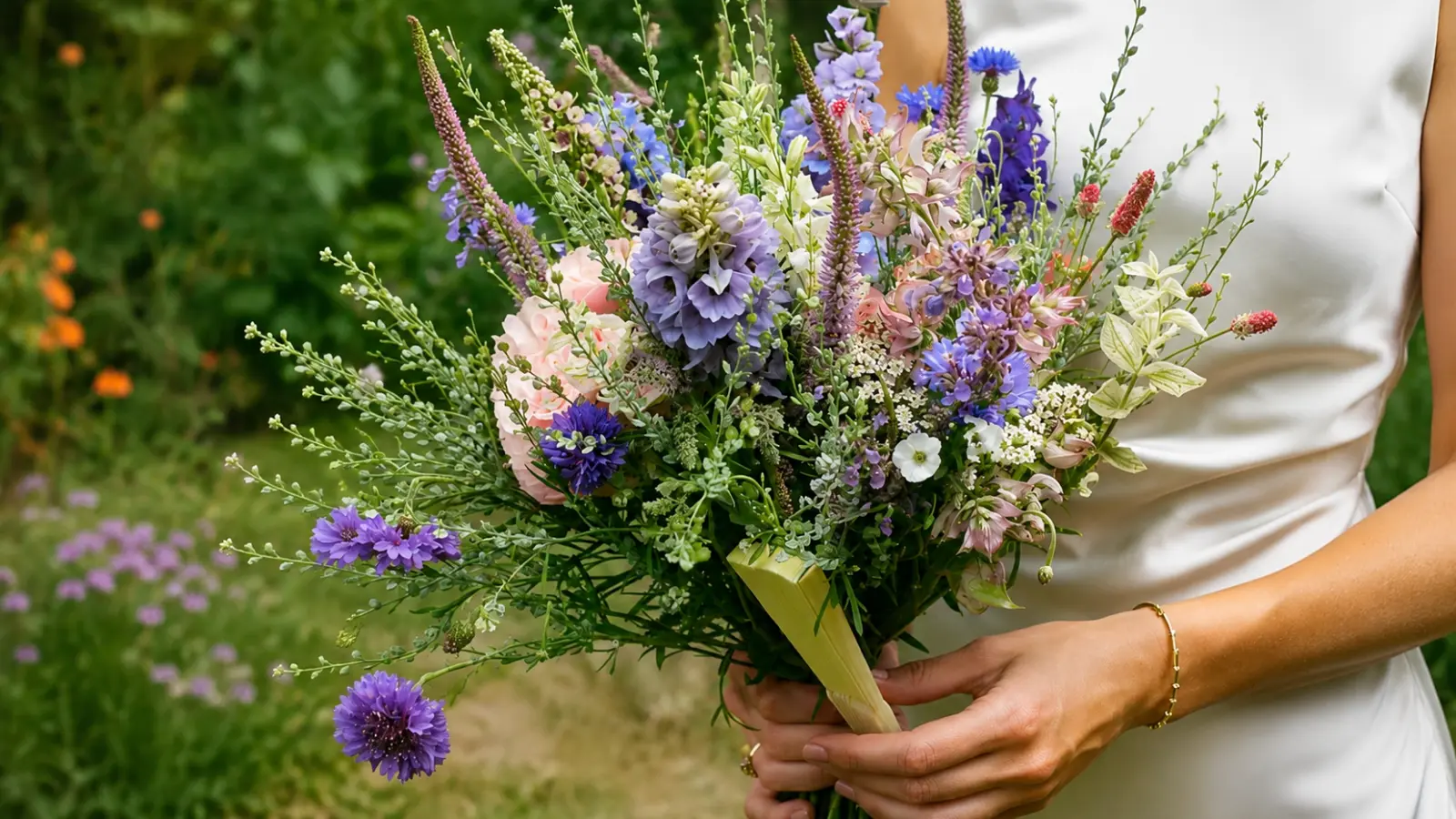
Within wildflower wedding bouquets, the defining rustic quality is an arrangement that looks gathered rather than formally constructed. The stems sit at varying heights, the blooms are smaller and more numerous than a traditional focal-flower design, and the overall silhouette is irregular rather than round or contained. Done well, it reads as effortless. Done without care, it reads as unfinished.
The flowers most associated with the style are the ones that actually grow wild or closely resemble wildflowers in scale and character:
- Queen anne’s lace: Fine, flat clusters of tiny white flowers on thin stems. One of the most useful filler and texture elements available. Adds an airy, delicate quality and works in nearly every palette.
- Cosmos: Daisy-like blooms in pink, white, magenta, and bicolor. Light stems that move naturally, contributing to the loose, just-picked quality of the bouquet.
- Black-eyed susan: Yellow-orange petals with a dark center. A strongly rustic flower that adds warmth and pairs well with deep green foliage or dried grasses.
- Scabiosa (pincushion flower): Small, soft blooms in lavender, white, or deep purple. Fine texture that reads as delicate without being fragile.
- Larkspur: Vertical spikes of small blooms in purple, pink, or white. One of the few upright elements that works naturally in a wildflower-style arrangement, adding height variation without looking engineered.
- Billy buttons (craspedia): Small, perfectly round yellow pompom blooms on straight stems. Unusual and graphic — a small number scattered through a wildflower bouquet adds unexpected interest.
- Yarrow: Flat-topped clusters in yellow, white, or blush. One of the most heat-tolerant options in this category and a good choice for outdoor summer or early fall ceremonies.
The construction detail that separates a wildflower bouquet that holds together from one that doesn’t: the stems should be bound tightly at the grip point even if the blooms above are loose. A well-secured wrap keeps the bouquet from rotating in the hand and prevents individual stems from sliding out as the day goes on. Twine, cotton ribbon, or raw silk all suit the aesthetic without contradicting the natural feeling of the flowers.
Rustic Sunflower Bouquets
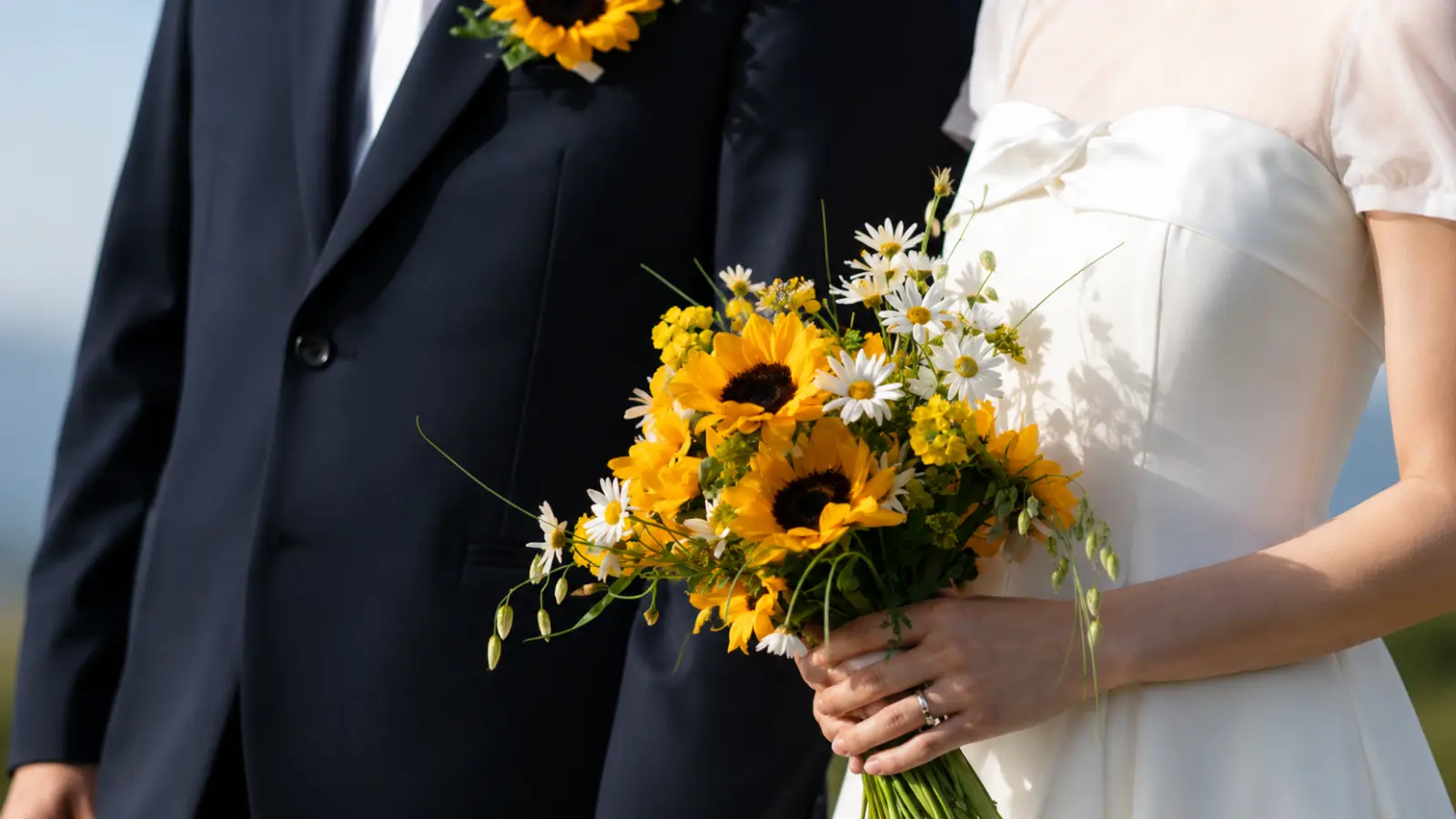
Before choosing sunflower wedding bouquets, it is important to understand how the flower’s scale and strong visual personality affect the entire composition. A single sunflower head is large — often three to five inches across — and visually dominant in a way that most other wedding flowers aren’t. That dominance works in their favor when the rest of the bouquet is built to complement them, and against them when the composition hasn’t accounted for their presence.
There are essentially two ways to use sunflowers well in a bridal bouquet:
As the primary focal flower. A bouquet built around sunflowers uses them as the main event and supports them with elements that enhance rather than compete: eucalyptus, dark-leaf ruscus, olive branches, and textural additions like dried grasses or wheat. Secondary flowers — zinnias, marigolds, or small dahlias — can fill in at a smaller scale without fighting for attention. The palette stays warm and earthy: yellow, orange, deep green, and brown rather than introducing cool tones that conflict with the sunflower’s inherent warmth.
As an accent within a larger composition. One or two sunflowers placed among dahlias, garden roses, and deep greenery read very differently from a bouquet built around them. Used this way, sunflowers add scale contrast and a casual, outdoor quality without dominating the design. This approach works well for brides who want a touch of rustic warmth in an otherwise romantic or garden-style bouquet.
| Sunflower approach | Best for | Support flowers |
|---|---|---|
| Primary focal flower | Barn, country, summer outdoor | Zinnias, marigolds, wheat, eucalyptus |
| Accent in a mixed bouquet | Garden, rustic-romantic, late summer | Dahlias, garden roses, ruscus |
| Dwarf or Teddy Bear variety | Smaller bouquets, bridesmaid designs | Cosmos, black-eyed susan, fine grasses |
One practical note: standard sunflowers are heavy. A bouquet with five or six full-size sunflower heads becomes noticeably heavier than a comparable arrangement built from lighter flowers. Dwarf varieties — Teddy Bear and Elf are two common ones — have the same visual character at roughly half the head size, which makes them significantly more practical for a bouquet that will be held throughout a long ceremony.
Rustic Fall Wedding Bouquets
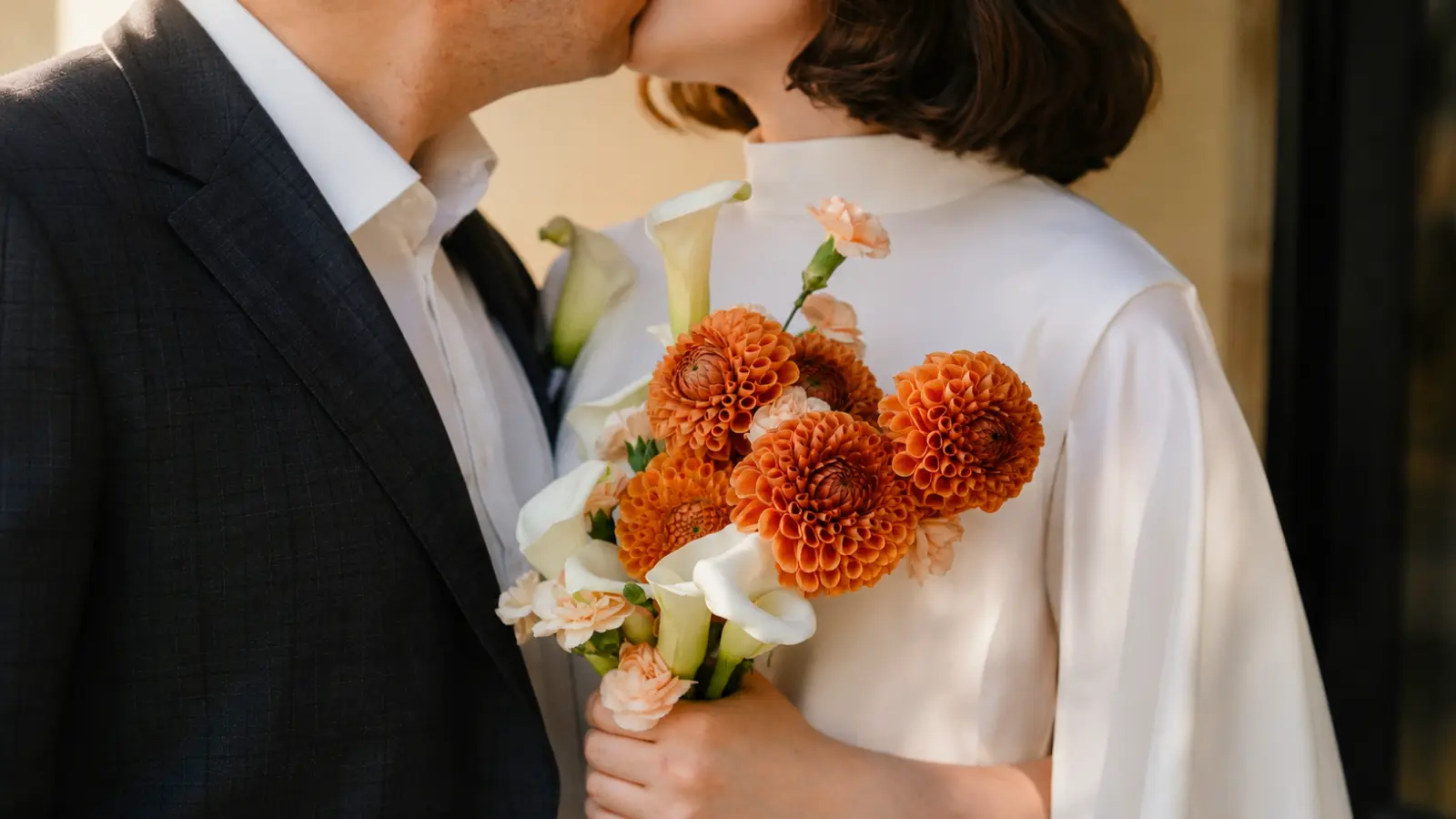
Rustic design feels especially natural in fall wedding bouquets, when seasonal flowers and dried textures align with warm, earthy palettes. The flowers available in late summer and autumn — dahlias, marigolds, anemones, late zinnias, and garden roses in deep tones — align naturally with the rustic palette, and the dried and textural elements that characterize the style (wheat, grasses, seed pods, cotton) are at their most seasonal relevance in fall.
The combination makes fall rustic bouquets some of the richest-looking bridal designs available. The fall rustic palette has more range than most brides expect. These are the tonal directions that work most consistently:
- Warm harvest: Deep orange, rust, burnt sienna, mustard yellow, and brown — the traditional fall palette, anchored by dahlias in copper or terracotta tones with marigolds and dried wheat.
- Moody burgundy: Deep burgundy dahlias, dark garden roses, and anemones in near-black, offset by dusty sage or deep green foliage. Rich and dramatic rather than warm and bright.
- Dusty and muted: Dried pampas, bleached cotton, blush dahlias, and ivory garden roses in a soft, faded palette. Less vibrant than the harvest tones but with significant visual texture and a very current aesthetic.
- Terracotta and sage: A combination that’s appeared consistently across fall wedding design for the past several seasons. Terracotta-toned dahlias or garden roses alongside sage green foliage and dried grasses. Warm without being overwhelming, distinctive without being trendy.
Dried elements deserve particular attention in fall bouquets. Wheat stalks, dried cotton branches, pampas grass plumes, dried seed pods, and preserved eucalyptus all add texture and depth that fresh flowers alone don’t provide. They’re also practical: dried elements don’t wilt, don’t require water, and hold their shape throughout the day without any extra care. A fall rustic bouquet built with a mix of fresh dahlias and garden roses alongside dried wheat and grasses tends to look more complex and intentional than a bouquet built from fresh flowers alone.
One point to discuss with your florist when planning dahlia wedding bouquets is that availability varies by variety and can become inconsistent at the edges of the season. If specific dahlia colors are central to your design, confirm availability and consider a backup option — late-season zinnias or garden roses in similar tones can substitute without dramatically changing the look.
Country Wedding Bouquets
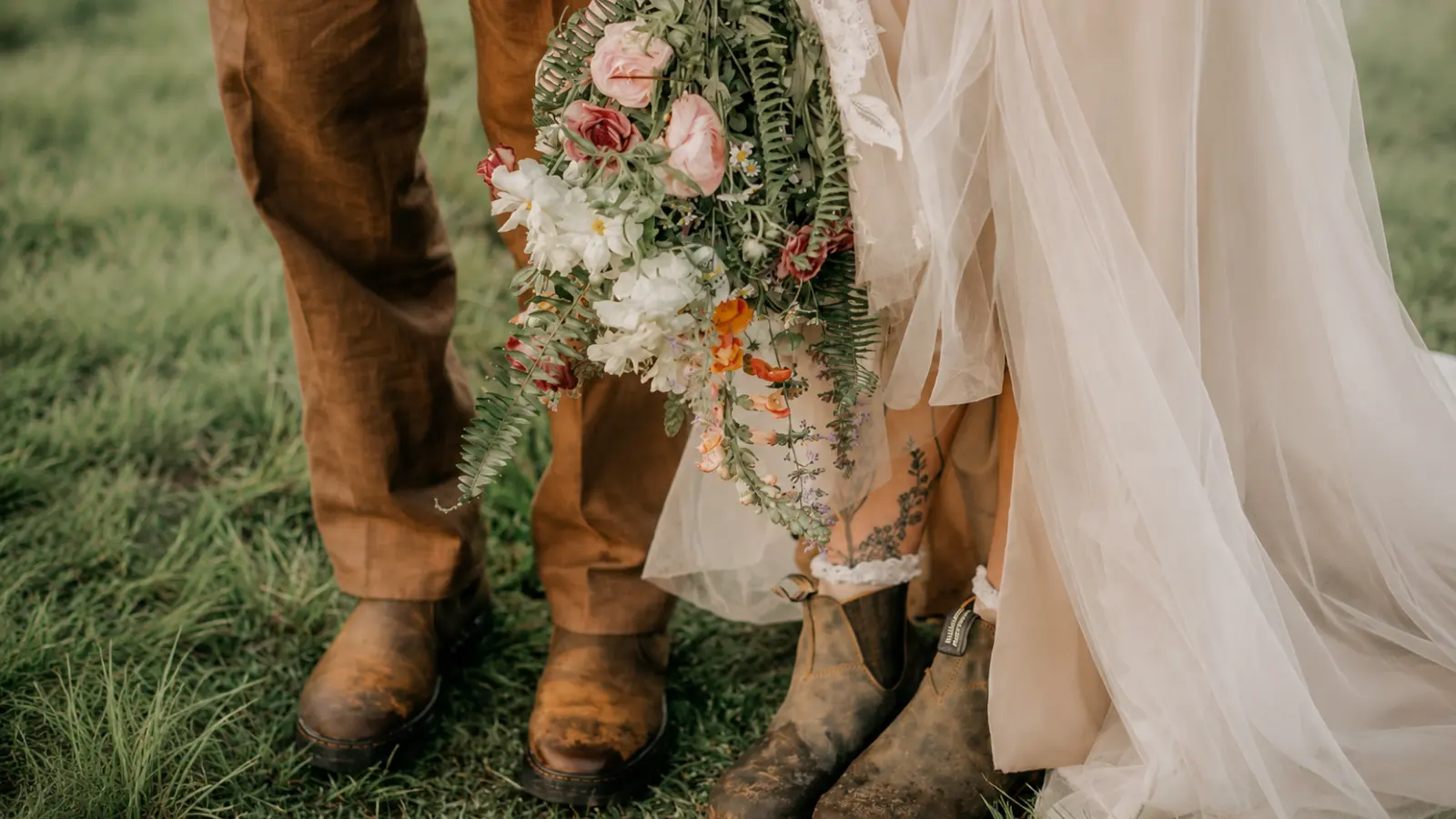
Country wedding bouquets share the rustic aesthetic but tend to skew toward a slightly warmer, more traditionally American feel — closer to a farmhouse table than a European countryside, and often with a stronger presence of sunflowers, zinnias, and wildflowers rather than the more refined dahlias and garden roses that appear in higher-end rustic designs.
The distinction matters practically because it affects scale and composition. Country bouquets tend to be fuller and less edited than refined rustic designs — more flowers, more variety, a wider color range. The look is celebratory and generous rather than restrained and considered. Both are legitimate approaches; the choice depends on the overall wedding aesthetic and the bride’s personal preference.
What works well in country-style bouquets specifically:
- Zinnias: Intensely colored, sturdy, and cheerful. Available in every warm tone from yellow to deep magenta, and one of the most reliably heat-tolerant summer flowers. A zinnia-heavy bouquet reads as country without any additional cues.
- Strawflowers: Paper-textured blooms in orange, yellow, pink, and red that dry naturally on the stem. They add texture and longevity, and suit both fresh and dried country bouquets.
- Dried grasses and wheat: More prominent in country designs than in refined rustic ones. Stalks of wheat or bunches of dried grasses add an agricultural quality that suits barn and farm venues specifically.
- Herbs: Lavender bunches, rosemary sprigs, and sage are more commonly used as structural elements in country bouquets than in other styles. They add fragrance, texture, and a garden-kitchen quality that fits the country aesthetic well.
- Cotton bolls: A distinctly Southern American element — particularly appropriate for barn or farmhouse weddings in the fall. A few cotton branches woven into a country bouquet add visual texture and a strong sense of place.
Country bouquets also tend to use more casual wrapping than refined rustic designs. Natural twine, burlap ribbon, or a simple cotton wrap tied at the stem all suit the aesthetic and keep the bouquet looking consistent with the setting rather than introducing a formal finishing element that conflicts with the relaxed feeling of the flowers.
Best Flowers for Rustic Bouquets
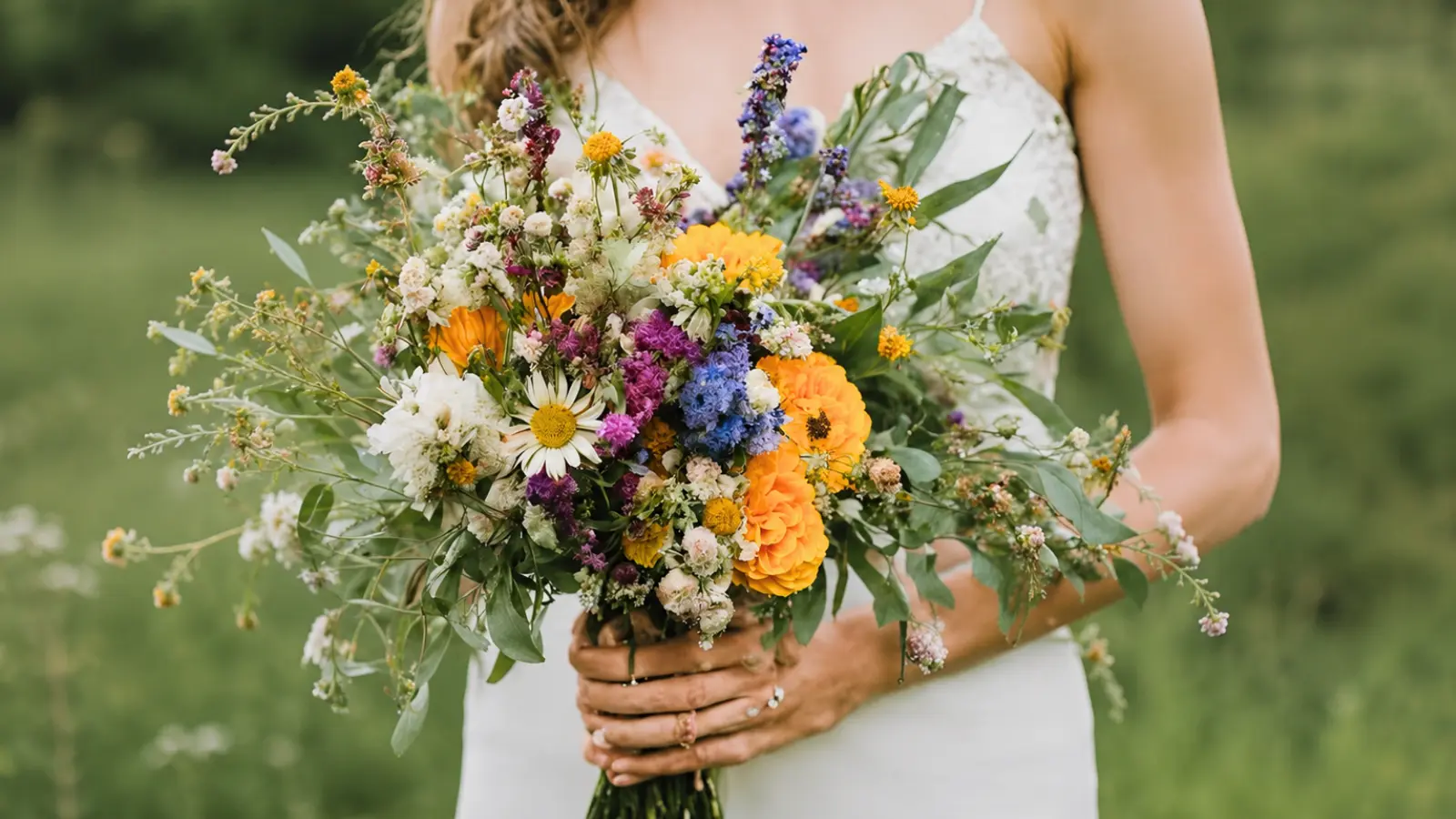
The best wedding bouquet flowers for rustic designs look natural outdoors, do not depend on a polished finish, and contribute texture and character as much as color. The list below covers the most reliable options across the style’s full range — from wildflower-light to fall-harvest-rich.
| Flower / Element | Role in the bouquet | Best season |
|---|---|---|
| Dahlia | Focal flower; available in every rustic tone | Late summer, fall |
| Sunflower | Focal or accent; strong visual presence | Summer, early fall |
| Zinnia | Color and filler; heat-tolerant | Summer, early fall |
| Marigold | Warm color accent; strong fall character | Summer, fall |
| Queen anne’s lace | Airy filler; adds delicacy at low cost | Summer |
| Cosmos | Movement and lightness; wildflower feel | Summer |
| Anemone | Focal accent; strong contrast in fall palettes | Fall, early spring |
| Dried wheat / grasses | Texture; longevity; no wilting | Year-round (dried) |
| Pampas grass | Texture and movement; works dried or fresh | Fall, winter (dried) |
| Eucalyptus / olive branch | Greenery base; works across all rustic styles | Year-round |
The foliage principles used in greenery wedding bouquets also affect whether a rustic arrangement feels refined, garden-like, European, woodland, or distinctly country. Eucalyptus reads as refined-rustic. Italian ruscus reads as lush and garden-like. Olive branch reads as European and somewhat elevated. Ferns read as woodland. Rosemary and herbs read as country and fragrant. Choosing intentionally rather than accepting whatever the florist has on hand that week makes a meaningful difference in how the finished bouquet reads.
Rustic Bouquet Mistakes to Avoid
Rustic is one of the styles where well-intentioned choices most frequently produce results that don’t match the inspiration. Most of the common problems come from misreading what “natural” means in a bouquet context — and from adding elements without a clear reason for each one.
Too many flower types. The most frequent issue with rustic bouquets is overcrowding. Seven different flower varieties, three types of greenery, and two dried elements don’t add up to a richer-looking bouquet — they add up to a busy one. A palette of three to four flower types with one or two greenery elements is almost always more effective than a wider mix. The complexity should come from texture and tone variation, not from ingredient count.
No focal flower. A wildflower bouquet without a clear focal element looks random rather than gathered. Even the loosest, most naturally assembled designs benefit from one flower that appears more frequently or at a larger scale than the others. It gives the eye somewhere to land and creates a sense that the composition is held together by a decision.
Conflicting palettes. Rustic palettes are warm and earthy by nature: yellows, oranges, deep reds, burgundies, sage, and terracotta. Introducing cool tones — lavender, bright pink, blue — without deliberate intention can make the bouquet feel pulled in two directions. If cool tones are part of the design, they work better as accents against a primarily warm base than as co-equal elements.
Dried elements that look wilted rather than intentional. There’s a difference between a dried element that’s been deliberately chosen for its textural quality and a fresh flower that wasn’t properly conditioned and dried out by accident. Dried wheat, pampas, and strawflowers look intentional. Wilted cosmos or brown-edged dahlias do not. If incorporating dried elements, source them as dried from the start rather than hoping fresh flowers will dry gracefully in the bouquet.
Informal wrapping with a formal dress. Twine and burlap ribbon suit barn ceremonies and country dresses, but they conflict with fitted lace gowns or formal ballgowns. The wrapping should match the dress as much as the flowers do. Raw silk ribbon, a neutral satin, or even a length of leather cord can read as rustic without introducing a casual element that sits poorly against a more structured dress.
Skipping the practice run for DIY designs. Rustic bouquets are among the most attempted DIY projects in wedding floristry — and among the ones that most frequently look different in reality than in the inspiration photo. If you’re assembling your own bouquet, a practice run two to three weeks before the wedding with the same flower types (not necessarily the final flowers) is worth the time and modest cost. The hand-tying technique for a loose, multi-stem design takes more practice than it looks.
Rustic Wedding Bouquet Inspiration
Discover rustic wedding bouquets featuring wildflowers, sunflowers, dahlias, dried grasses, country wedding flowers, natural greenery, and timeless floral inspiration for barn and outdoor weddings.
Rustic Beauty Comes From Intention
Rustic wedding bouquets are beautiful because they embrace nature without sacrificing thoughtful design. The relaxed shapes, textured flowers, dried elements, and seasonal greenery create arrangements that feel warm, authentic, and effortlessly elegant—but only when every element has a clear purpose. Rustic doesn’t mean random. It means allowing natural beauty to become the foundation of the design.
The most memorable rustic bouquets begin with the landscape around your wedding. By choosing flowers that belong to the season, limiting the palette, and balancing movement with structure, you’ll create a bouquet that feels genuine rather than styled. The result is a timeless arrangement that reflects both your surroundings and your personal style long after the wedding day has passed.
Frequently asked questions (FAQ)
What makes a rustic wedding bouquet look natural instead of messy?
A rustic bouquet looks intentional when it has one clear focal flower, a restrained palette of two or three complementary colors, and layered textures that feel balanced rather than crowded. Loose stems, dried elements, and natural greenery should support the overall composition instead of competing for attention. The goal is to create movement and character while maintaining a design that still feels thoughtfully arranged.
What flowers work best in a rustic wedding bouquet?
Sunflowers, dahlias, zinnias, cosmos, Queen Anne’s lace, yarrow, black-eyed Susans, marigolds, and garden roses are among the best flowers for rustic bouquets. Dried wheat, pampas grass, seed pods, lavender, rosemary, and eucalyptus add texture and reinforce the natural character of the arrangement. The strongest rustic bouquets combine flowers with different shapes while keeping the overall palette cohesive.
What’s the difference between a rustic bouquet and a wildflower bouquet?
A wildflower bouquet is designed to look freshly gathered from a meadow, using many small blooms and an airy, irregular shape. A rustic bouquet is a broader design style that may include wildflowers, but it also incorporates larger focal flowers, dried materials, herbs, and more intentional structure. In other words, every wildflower bouquet can feel rustic, but not every rustic bouquet is a wildflower bouquet.
Are rustic wedding bouquets only suitable for barn weddings?
Not at all. Rustic bouquets also complement vineyard weddings, mountain venues, garden ceremonies, woodland celebrations, outdoor estates, and many modern weddings that emphasize natural materials and relaxed elegance. The flowers should reflect the overall atmosphere of the venue rather than the venue type alone.
Can sunflowers look elegant in a rustic wedding bouquet?
Yes. Sunflowers become surprisingly elegant when they are balanced with refined flowers such as garden roses or dahlias and supported by rich greenery instead of many equally bold blooms. Using one or two sunflower heads as focal accents usually creates a more sophisticated bouquet than building the entire arrangement around sunflowers.
What greenery works best in rustic wedding bouquets?
Eucalyptus, olive branches, Italian ruscus, ferns, rosemary, sage, thyme, dried grasses, wheat, and preserved foliage all complement rustic bouquets beautifully. The best greenery adds texture and movement without overwhelming the flowers, helping the bouquet maintain its relaxed yet intentional appearance.