
The wedding bouquet toss is one of the best-known reception traditions, yet it’s also one of the most frequently questioned by modern couples. Once considered an essential part of nearly every wedding, the bouquet toss has evolved into an optional celebration that many couples personalize, update, or replace entirely to better reflect their guests and their wedding style.
While the tradition is often associated with predicting who will marry next, today’s bouquet toss is less about superstition and more about creating a fun, memorable reception moment. Some couples embrace the classic format, while others choose inclusive participation, anniversary dances, ribbon pulls, or other creative alternatives that keep the spirit of the tradition without following every old custom.
This guide explores the wedding bouquet toss in detail, including its history, meaning, reception timing, toss bouquets, etiquette, modern alternatives, and practical advice for deciding whether this tradition belongs in your wedding celebration.
What Is a Wedding Bouquet Toss?
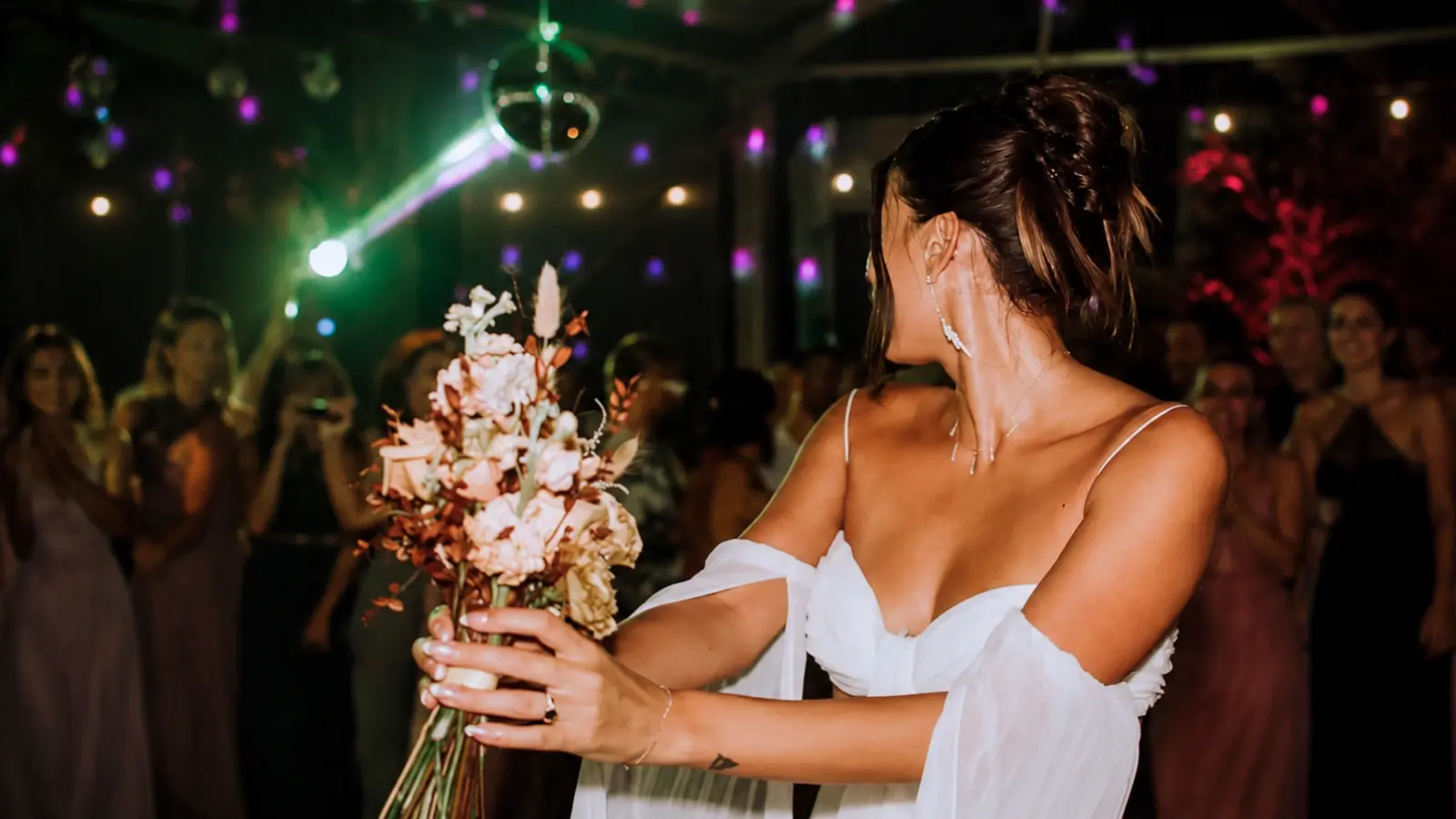
The bouquet toss is a reception moment, usually held later in the evening, where the bride turns her back to a group of gathered guests and throws her bouquet over her shoulder. Whoever catches it is, by tradition, said to be the next person in the group to get married. It’s typically announced by the DJ or band, treated as a lighthearted, semi-organized moment rather than a formal ceremony element.
In most receptions, it’s paired with the garter toss, with the two happening back to back as a kind of matched set — one for the bride’s side, one for the groom’s. Neither is required, and a growing number of couples choose to do one without the other, or skip both entirely.
Bouquet Toss Meaning and Tradition
The tradition has roots that go back further than most people expect, and the original version wasn’t nearly as charming as the modern one. In medieval England, guests believed that touching the bride or taking a piece of her dress would transfer some of her luck to them — which, understandably, led to brides being mobbed and their dresses torn apart by overly enthusiastic guests.
Throwing the bouquet became a practical solution: give the crowd something to chase that wasn’t the bride herself. Over time, the meaning shifted from “luck transfer” to the more specific, lighter idea attached to it today — that catching the bouquet predicts who marries next. The superstition stuck around far longer than the original reasoning behind it, which is true of a lot of wedding traditions that have outlived their literal origin story.
When Does the Bouquet Toss Happen?
Timing varies by reception, but the bouquet toss most commonly happens after dinner, once the dance floor has opened and the energy in the room has picked up. It’s rarely one of the first things on the timeline — most couples wait until guests have had a chance to eat, settle in, and loosen up a little before asking them to gather for a group moment.
A common sequence puts the bouquet toss shortly before or after the garter toss, both slotted in during a natural lull between dinner and the later stretch of dancing. If your reception has a formal cake cutting or speeches, the toss usually comes after those moments rather than competing with them for attention.
Do Brides Still Do the Bouquet Toss?
Plenty do, and plenty don’t — there’s no longer a clear default either way, which is part of why this has become a genuine planning decision rather than an assumed part of every reception. Brides who keep it tend to describe it as a fun, low-stakes moment that photographs well and gets the room laughing. Brides who skip it tend to point to the same reason: it puts an unrequested spotlight on single guests, some of whom would rather not be singled out in front of a room full of people.
Neither choice is the “correct” one editorially. The honest read is that this tradition has become genuinely optional in a way that, say, the first dance hasn’t — which makes it worth a real conversation with your partner rather than defaulting to whatever happened at the last wedding you attended.
Who Participates in the Bouquet Toss?
Traditionally, the bouquet toss was reserved for single women, gathered together and announced as the group competing for the bouquet. That framing is exactly what makes some brides uncomfortable with the tradition as written — it assumes everyone single in the room wants to be identified as such, in front of everyone else, on command.
A lot of modern receptions handle this more loosely: anyone who wants to participate is welcome to join, regardless of relationship status, gender, or whether they’re “supposed” to be in the group. Framing the invitation as open and optional — “anyone who wants in on this, come on up” — removes most of the discomfort while keeping the moment itself intact.
What Is a Toss Bouquet?
A toss bouquet is a smaller, simpler arrangement made specifically to be thrown during this moment, rather than using the actual bridal bouquet. It follows the bridal bouquet’s general aesthetic and wedding bouquet colors, often using the same flowers in a smaller, looser version.
Most florists include a toss bouquet as a standard add-on, and it’s a popular choice for exactly the reason it sounds like: nobody wants to throw the bouquet they paid for, photographed all day, and possibly plan to preserve.
Toss Bouquet vs. Bridal Bouquet
The bridal bouquet is designed, photographed, and kept afterward, making it important to decide what to do with your wedding bouquet after the wedding. A toss bouquet exists for one specific moment and one specific purpose: getting thrown into a crowd without anyone worrying about the cost or sentimentality of what’s being damaged in the process.
A toss bouquet usually represents a smaller part of the overall wedding bouquet cost because it skips premium flowers and intricate wrapping. The design principles of simple wedding bouquets work well here, using sturdy blooms that can handle being thrown, which is a real practical consideration the bridal bouquet was never designed for.
Bouquet Toss Songs
Music matters more for this moment than most couples expect — the right song builds anticipation and gets people up and gathered without an awkward lull, while the wrong one can make the whole thing feel like dead air on the dance floor. A good bouquet toss song is high-energy, recognizable within the first few seconds, and short enough that the moment doesn’t drag while the DJ waits for guests to crowd in.
This isn’t the place to get into specific song picks — that’s a long list with its own logic around tempo, crowd energy, and timing cues for the DJ. For a full breakdown of genres, era options, and crowd-tested picks, the dedicated guide on bouquet toss songs covers it in depth.
Modern Bouquet Toss Alternatives
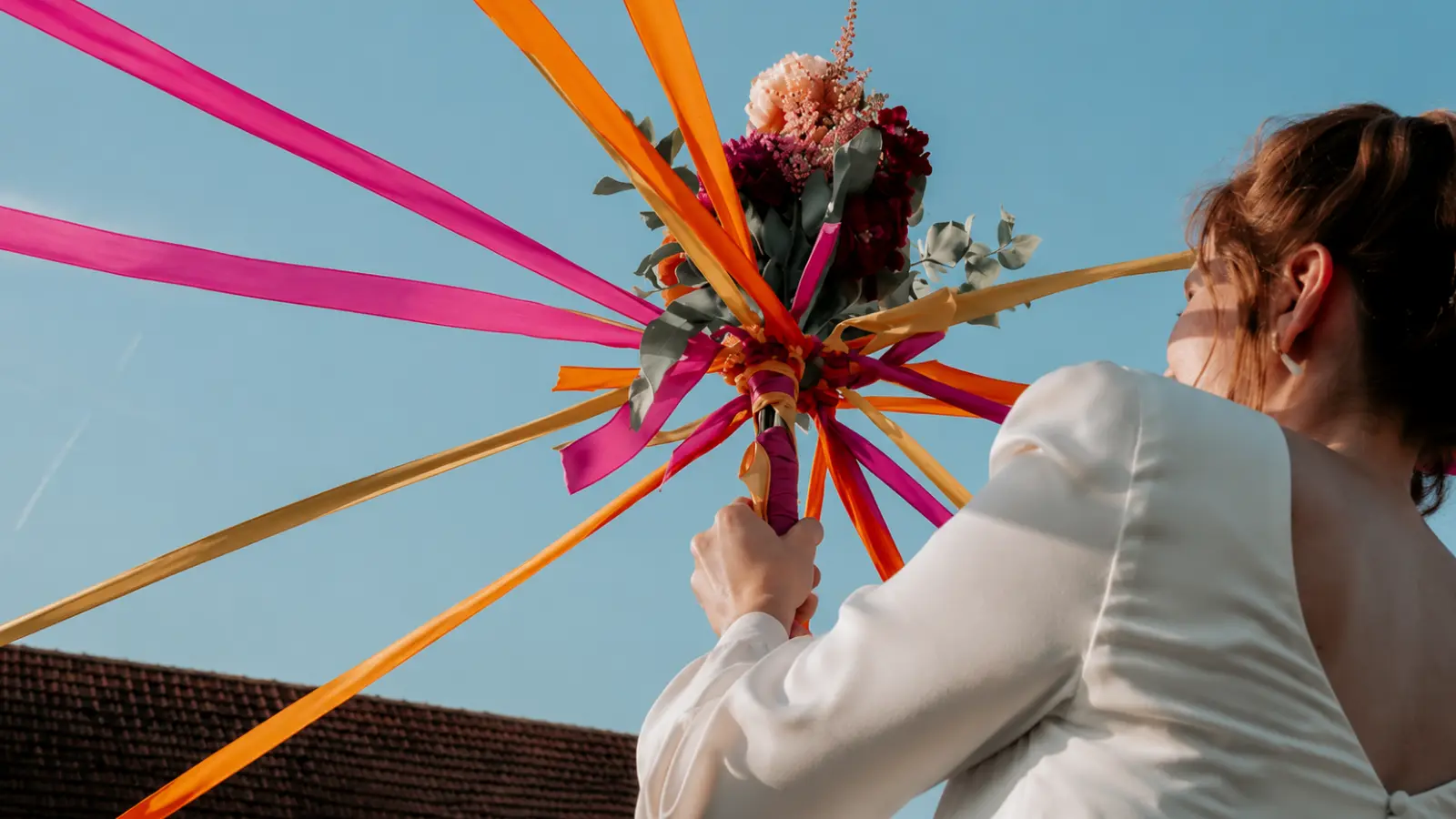
For couples who like the idea of a fun group moment but want to update the format, a handful of alternatives have become genuinely popular replacements rather than just workarounds.
- The anniversary dance. The DJ asks all married couples to the floor, then eliminates by years married until the longest-married couple remains — who receives the bouquet as a gift rather than a competitive catch.
- The ribbon pull. A bouquet rigged with several ribbons, each attached to a small charm, lets multiple guests each pull a ribbon at once. One ribbon is tied to “good luck”; everyone gets a keepsake regardless.
- An open invitation toss. The same traditional format, but framed as open to anyone who wants to join rather than specifically single guests — same fun, less spotlight pressure.
- Skipping it entirely. Plenty of receptions simply don’t include a toss moment at all, displaying the bouquet at the sweetheart table instead and moving straight into open dancing.
Each of these keeps some version of the lighthearted spirit the original tradition was going for, without the specific framing that makes some guests uncomfortable. Choosing one is really a matter of which version fits your reception’s energy and your guest list.
Should You Skip the Bouquet Toss?

There’s no editorial case that says you should or shouldn’t — this is genuinely a personal call, and the right answer depends more on your guest list and your own comfort with the tradition than on any rule about what receptions are supposed to include.
It’s worth skipping if you have a lot of single guests who you suspect would rather not be gathered and put on display, if the tradition doesn’t feel meaningful to you personally, or if your reception timeline is already tight and doesn’t have natural room for an extra organized moment. It’s worth keeping if you and your guests genuinely enjoy this kind of lighthearted, photo-friendly tradition, or if one of the modern alternatives lets you keep the fun without the parts that don’t sit well with you.
Bouquet Toss Mistakes to Avoid
A few avoidable missteps show up consistently around this moment, and most of them are easy to plan around with a little advance thought.
Throwing the actual bridal bouquet. Without a toss bouquet, brides risk damaging an arrangement they may want to keep, preserve, or simply enjoy for the rest of the night. Ask your florist about a toss bouquet add-on well before the wedding.
Not telling the DJ or coordinator the plan in advance. Whether you’re doing the traditional version, an alternative, or skipping it, your DJ or planner needs to know ahead of time so the moment doesn’t get awkwardly improvised in front of guests.
Springing it on guests without warning. Announcing the toss with enough notice lets single guests who’d rather not participate quietly step back, rather than being visibly singled out in the moment.
Picking the wrong song length. A song that’s too long drags out a moment that should be quick and energetic; one that’s too short can cut off before the actual toss happens. A quick conversation with your DJ about timing solves this easily.
Tradition Should Feel Right for Your Celebration
The wedding bouquet toss has lasted for generations because it creates a joyful, interactive moment that brings guests together. At the same time, modern weddings have shown that traditions don’t have to remain unchanged to remain meaningful. Whether you choose the classic toss, an updated version, or a completely different activity, the goal is the same: creating a moment that feels natural, enjoyable, and true to your celebration.
Before deciding, think less about what weddings are “supposed” to include and more about what fits your guests, your reception, and your personality as a couple. When a tradition feels intentional instead of automatic, it becomes far more memorable—and far more meaningful—for everyone involved.
Frequently asked questions (FAQ)
Should you have a bouquet toss at your wedding?
Only if it feels right for your celebration. The bouquet toss is no longer considered a required part of the reception, and many couples now decide based on their guest list, wedding style, and personal preferences rather than tradition alone. If it sounds fun and fits the atmosphere you want to create, keep it. If it feels uncomfortable or unnecessary, skipping it is just as acceptable.
What is a wedding bouquet toss?
A wedding bouquet toss is a reception tradition in which the bride throws her bouquet—or a separate toss bouquet—over her shoulder to a group of guests. According to tradition, the person who catches it is believed to be the next to get married. Today, many couples treat it as a fun reception activity rather than a superstition.
Do you need a separate toss bouquet?
Not necessarily, but most florists recommend using one. A toss bouquet is smaller, lighter, and designed specifically for throwing, helping protect the bridal bouquet from damage. It’s especially worthwhile if you plan to preserve your bouquet after the wedding or if it contains premium flowers that could easily be damaged.
Who should participate in the bouquet toss?
Traditionally, the bouquet toss was limited to single women. Today, many couples invite anyone who would like to join, regardless of relationship status or gender. Presenting it as an open and optional activity creates a more relaxed atmosphere while avoiding the pressure that some guests associate with the traditional format.
When does the bouquet toss happen during the reception?
The bouquet toss usually takes place after dinner, once the dance floor is active and guests have settled into the reception. Many couples schedule it shortly before or after the garter toss, although it can also stand alone. The best timing is when guests are already gathered and the energy in the room is high.
What are the best alternatives to the bouquet toss?
Popular alternatives include presenting the bouquet to the longest-married couple during an anniversary dance, organizing a ribbon pull where multiple guests receive keepsakes, inviting everyone to participate regardless of relationship status, or skipping the tradition entirely. The best alternative is the one that matches your reception’s atmosphere and makes your guests feel included.