
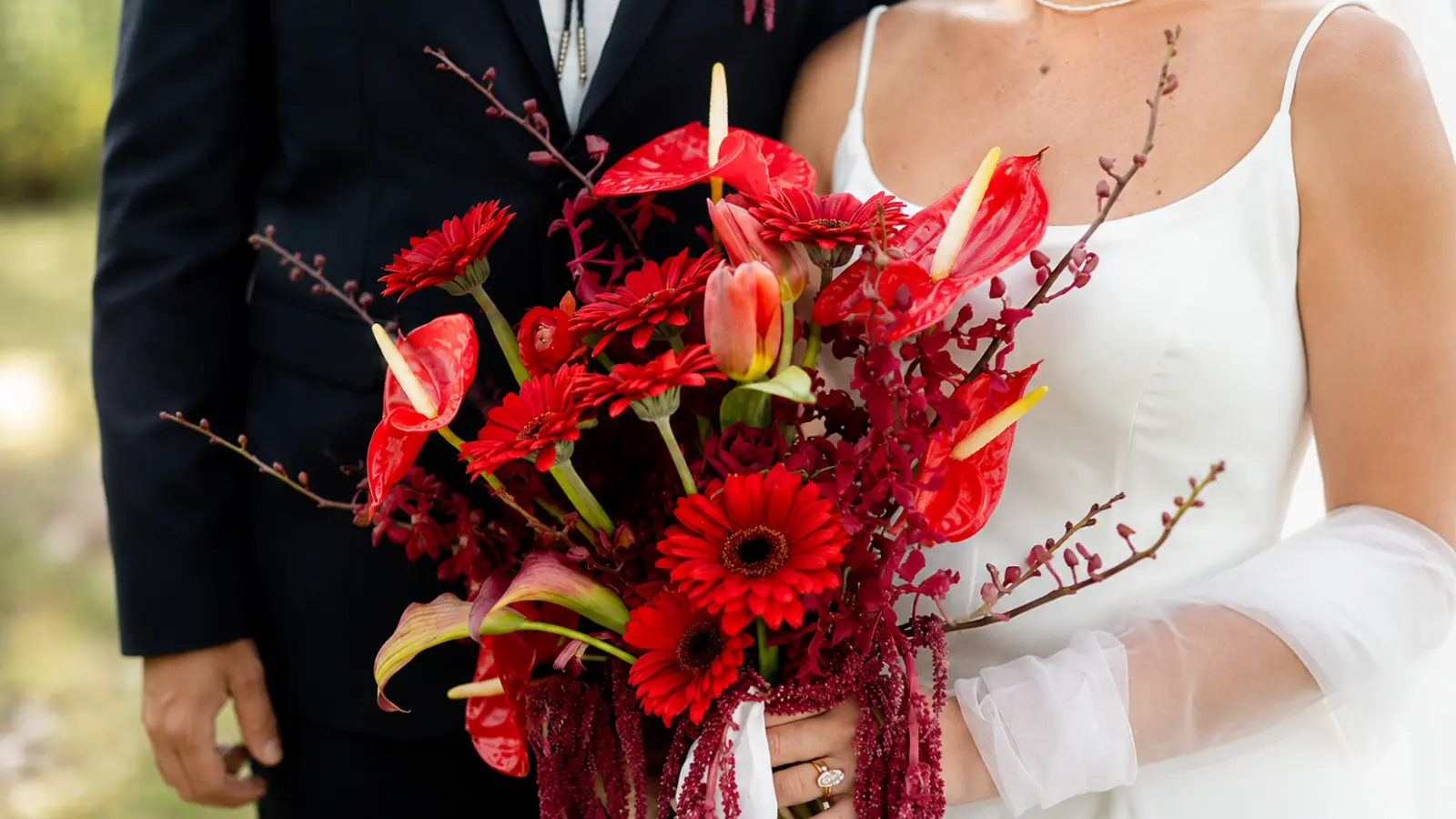
Red and burgundy wedding bouquets are a timeless choice for brides who want rich color, dramatic elegance, and unforgettable floral designs. While bright red creates a classic and confident statement, burgundy introduces depth, warmth, and sophistication, making both colors beautiful options for romantic, formal, rustic, and modern weddings throughout the year.
Although these colors are often grouped together, they create very different visual effects. Red feels vibrant and iconic, while burgundy offers a softer, moodier palette that pairs naturally with ivory, blush, champagne, and dark greenery. Understanding how each shade behaves in different lighting, seasons, and bouquet styles helps you choose a design that complements your wedding rather than simply adding bold color.
This guide explores these rich color palettes within the world of wedding bouquets, including classic red roses, burgundy floral designs, seasonal flower choices, elegant color pairings, bouquet ideas, and practical styling advice for creating a bouquet that feels dramatic, balanced, and timeless.
Red Wedding Bouquet Ideas
Red bouquets tend to land in one of three directions, and each one requires a slightly different approach to flowers, greenery, and construction. Knowing which direction fits your wedding before you meet with a florist will make that conversation significantly more productive.
| Style Direction | Core Flowers | Mood |
|---|---|---|
| Classic Red | Red roses (garden or standard), dark greenery | Bold, timeless, formal; suited to church and ballroom settings |
| Moody Burgundy | Burgundy garden roses, dahlias, dried elements | Romantic, slightly dark; works across garden, barn, and outdoor venues |
| Red and White | Red roses with white peonies, ranunculus, or spray roses | Crisp and graphic; classic contrast that reads well in every light |
| Black and Red | Red roses or anemones with black foliage or near-black blooms | Dramatic, editorial; suits formal or avant-garde weddings |
The classic red direction is the most universally legible: it works in almost every venue and photographs clearly at any distance. The moody burgundy direction has more flexibility but rewards careful flower selection, since burgundy can read almost purple in certain light if the wrong varieties are chosen. Red and white is the safest combination for brides who want red without the full weight of a single-color bouquet.
Red Rose Wedding Bouquets
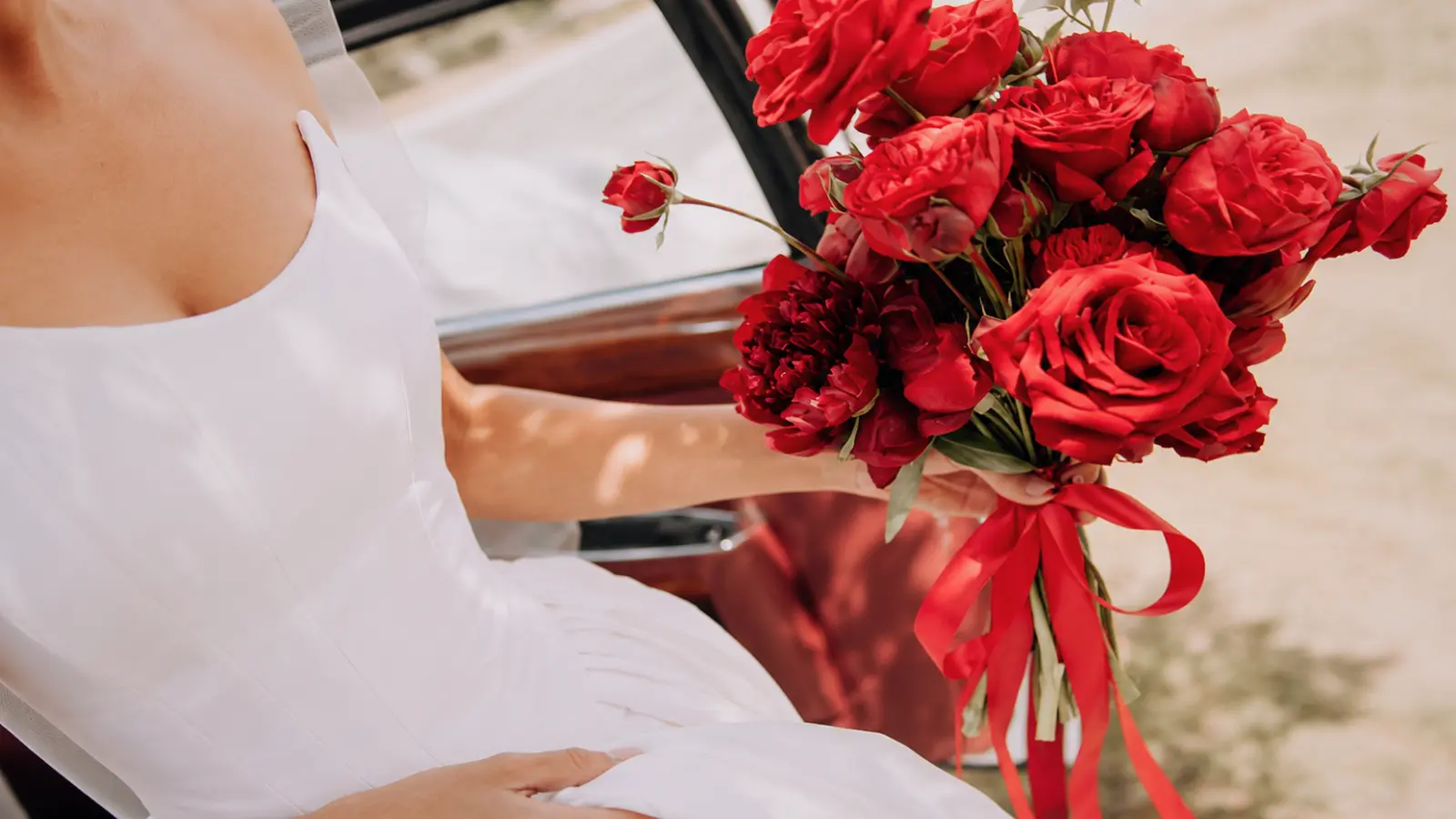
Red roses are the foundation of this color family for practical reasons, not just sentimental ones. They’re available year-round, they come in a wider range of shades than most people realize, and they hold up reliably through a long ceremony and reception. But not all red roses deliver the same result, and the choice between garden roses and standard roses changes the character of the bouquet more than most brides expect.
Garden Roses vs. Standard Roses
Standard red roses have a tighter, more uniform bloom and a silhouette most people immediately recognize as a rose. They’re dependable, cost-conscious, and suit a classic, structured bouquet well. Garden roses are fuller and more ruffled — more petals, more movement, a look closer to a peony than a florist rose. They also carry fragrance that standard roses rarely do at this point in commercial production.
| Rose Type | Character | Best Fit |
|---|---|---|
| Standard red roses | Clean, graphic, uniform shape | Classic and formal bouquets; graphic red-and-white combinations |
| Red garden roses | Fuller, layered, slightly more informal | Romantic and garden-style bouquets; red-and-burgundy mixes |
| Red spray roses | Smaller multi-bloom stems; adds volume efficiently | Fill and texture within a larger mixed bouquet |
One shade detail worth discussing with your florist: red roses range from bright, warm cherry red to a deeper, almost crimson tone depending on the variety. If the exact shade matters, particularly if you’re matching a specific fabric color in a dress or sash, ask to see the actual stems rather than relying on a variety name or catalog photo. Reds shift noticeably under different lighting conditions, and what looks right in the shop may read differently in the ceremony space.
Burgundy Wedding Bouquets
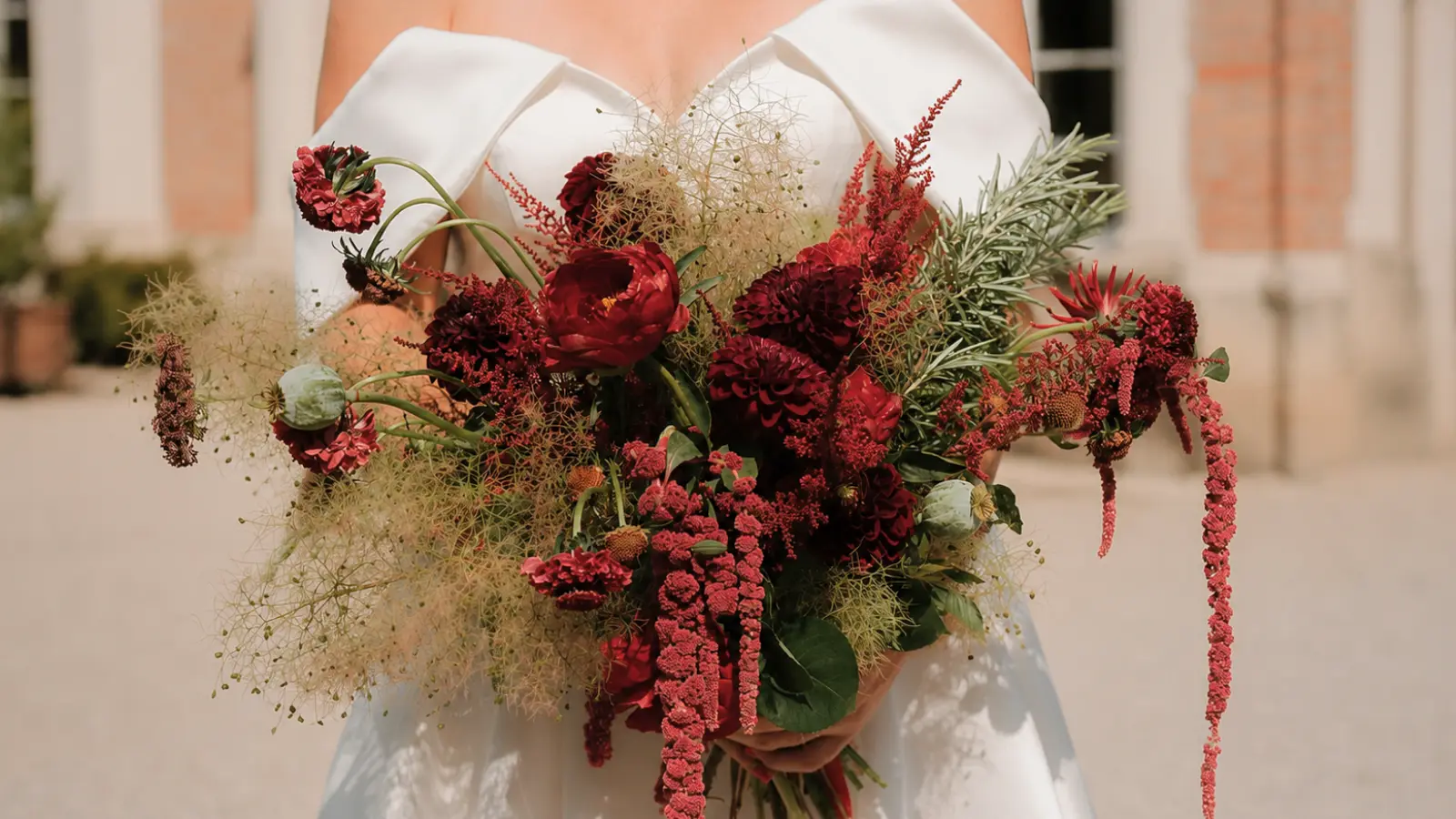
Burgundy is one of the most requested wedding colors for a reason: it behaves well across a wider range of aesthetics than almost any other deep tone. It doesn’t require a formal venue to work. It doesn’t demand a dark palette around it. And it pairs naturally with the neutral tones — ivory, blush, champagne — that already anchor most wedding color stories.
The best flowers for a burgundy bouquet share a specific quality: they hold their depth in photos without going flat or reading as brown under warm indoor lighting. Burgundy garden roses, particularly varieties like Dark Spirit or similar deep wine-toned cultivars, are the most reliable starting point. Burgundy dahlias — available in late summer through fall — add a completely different shape and significant visual weight. Scabiosa in deep wine tones brings delicacy without losing the color’s richness.
Building the Color Correctly
The common mistake with burgundy is treating it as a single, uniform color. A bouquet built entirely from one burgundy flower, in one consistent shade, tends to flatten in person and in photos. The bouquets that work best layer two or three slightly different values of the same wine tone: some flowers leaning deeper toward plum, others sitting closer to true burgundy, alongside greenery that adds contrast without lightening the mood.
Dark, rich foliage is essential. Bright green leaves pull the palette toward garden-casual when most burgundy bouquets are aiming for something more intentional. Italian ruscus, smoke bush, and deep-toned eucalyptus varieties all work with burgundy rather than against it. A few stems of a lighter accent flower — a soft blush rose or ivory ranunculus — give the eye somewhere to rest without shifting the overall mood.
Red and White Wedding Bouquets
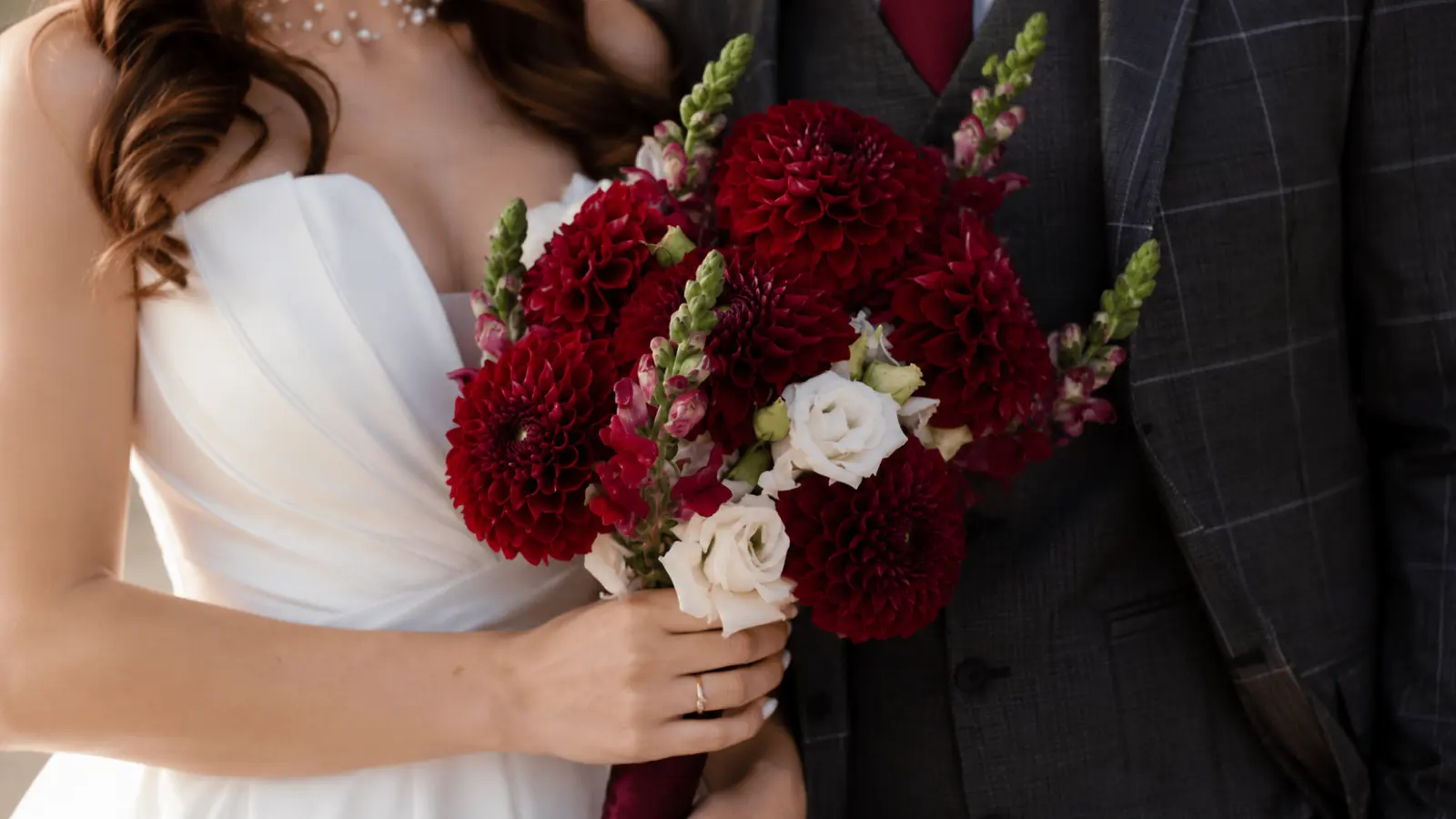
Red and white is the most graphic combination in this color family, and one of the clearest examples of two colors doing more together than either would alone. The contrast is sharp, it reads well at any distance, and it suits a range of wedding settings from formal church ceremonies to clean, modern venues.
The key to making it work is proportion. An even split between red and white tends to create a bouquet that reads as two separate color stories pushed together. Letting one color lead produces a much more cohesive result: white as the base with red as the intentional accent, or the reverse. White leading and red accenting keeps the bouquet from feeling too bold in lighter, airier venues. Red leading with white as punctuation suits darker, more dramatic settings.
Flower Combinations That Work
White peonies paired with red garden roses is a classic combination that photographs particularly well: the shapes are similar enough to read as cohesive, but the color contrast is strong. White ranunculus with red roses is a slightly more affordable alternative with a similar visual effect. For a more textural direction, white anemones — with their distinctive dark centers — pair with red blooms in a way that feels less traditional and more editorial.
One thing worth avoiding in a red-and-white bouquet: bright, lime-tinged green filler. It competes with both the red and the white rather than supporting either. Neutral-toned greenery, white wax flower for texture, or minimal foliage altogether tend to keep the composition cleaner.
Black and Red Wedding Bouquets
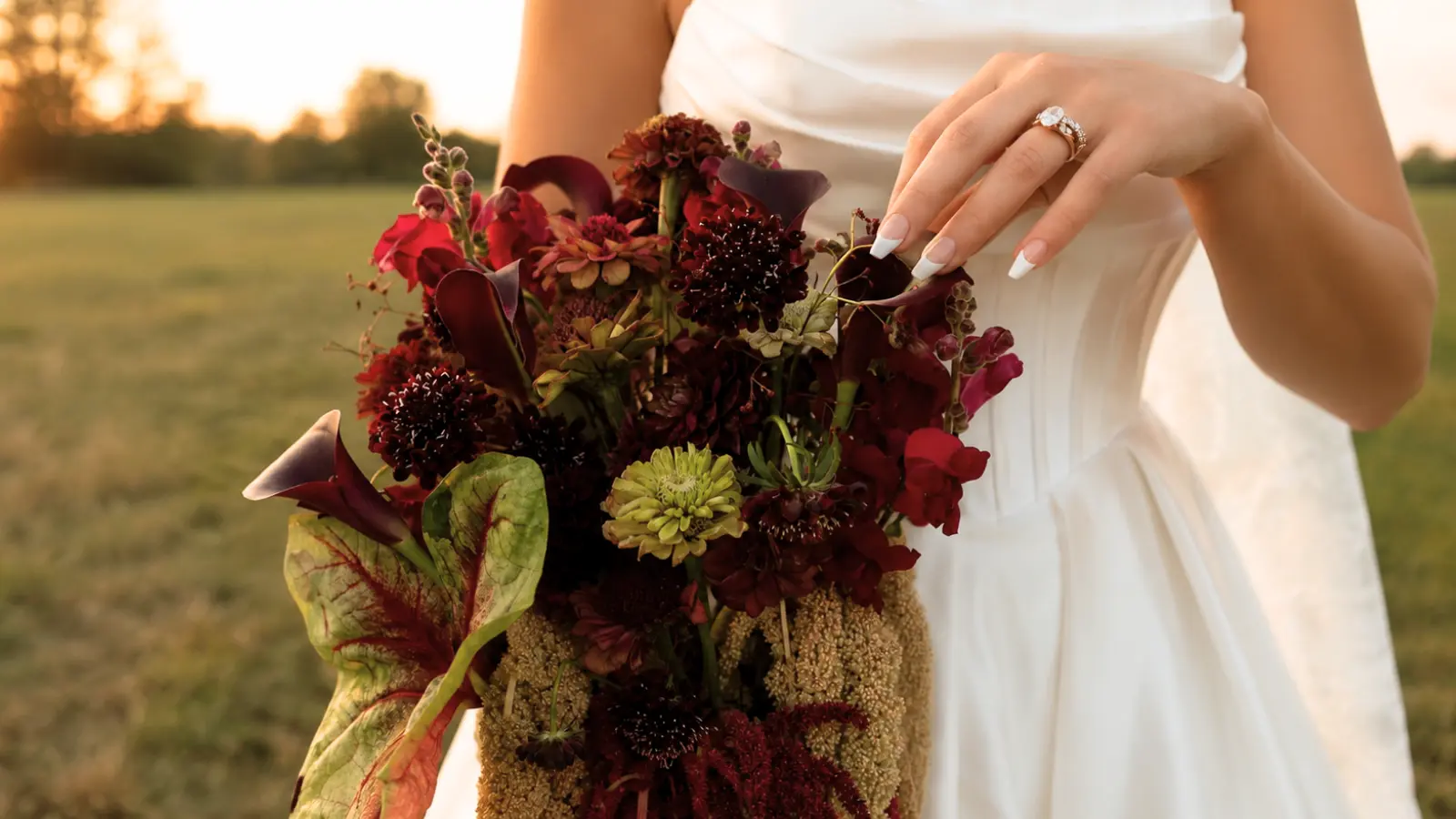
Black and red is the most dramatic direction in this color family, and also the most specific in terms of where it works well. It’s an editorial choice rather than a traditional one, and it suits formal, contemporary, and avant-garde weddings in ways that it wouldn’t suit a garden ceremony or a relaxed outdoor setting.
True black flowers don’t exist in nature, so this palette is built from near-black blooms and very dark foliage. Black-centered anemones are the most common choice: their dark centers create a graphic contrast with the red petals in the same bloom, which makes them useful even in a primarily red bouquet where you want the black element to feel integrated rather than added. Dark burgundy-to-black dahlias like the Black Beauty variety add a similar effect with more petal volume. Black mondo grass, dark ti leaves, and near-black foliage complete the palette without requiring any dyed flowers.
The result, when built well, has a richness that reads differently from either a classic red or a standard dark bouquet. It works especially well for evening ceremonies, black-tie receptions, and brides whose dress has a strong graphic quality — a sleek column gown or a structured fit-and-flare where the bouquet should feel like a deliberate design element rather than a soft floral accessory.
Best Seasons for Red Wedding Flowers
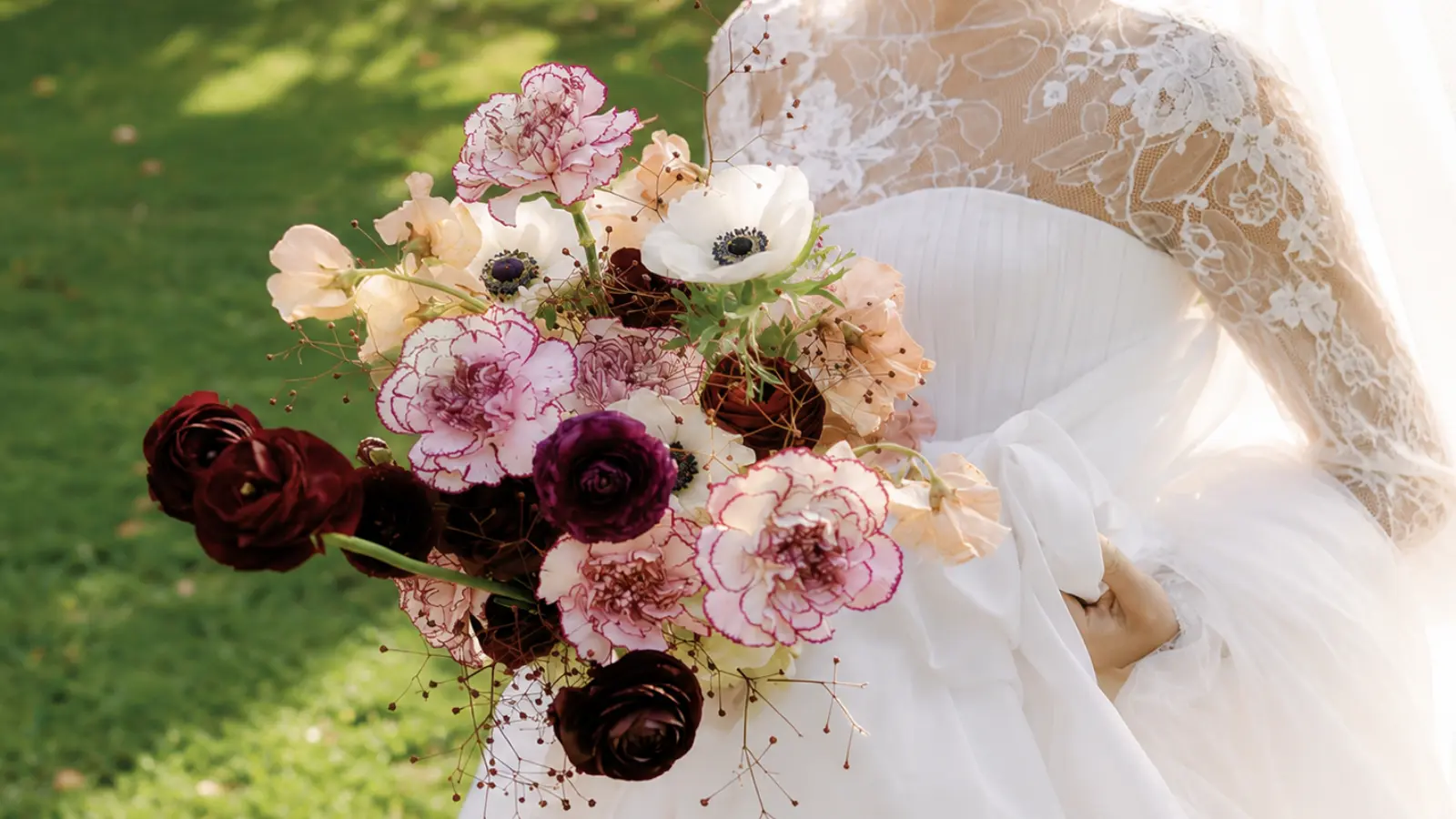
One of the practical advantages of this color family is that red and burgundy are available in some form across every season. The specific flowers shift, but the palette itself is never in short supply. That said, certain seasons deliver stronger options — and understanding the seasonal calendar makes it easier to choose flowers that perform well without stretching the budget.
| Season | Strong Red and Burgundy Choices | Notes |
|---|---|---|
| Spring | Red and burgundy tulips, anemones, ranunculus, early garden roses | Tulips and anemones are at their seasonal best; softer shapes suit spring settings |
| Summer | Garden roses, standard roses, peonies (early summer), sweet william | Widest availability; heat can stress delicate blooms, but roses and sweet william hold well |
| Fall | Burgundy dahlias, red dahlias, garden roses, marigolds, dried elements | The strongest season for this palette; dahlias peak late summer through October |
| Winter | Red roses, amaryllis, anemones, hellebores, winter berries | Red roses are year-round; amaryllis and berries add seasonal richness unavailable other times |
Fall is the season where this palette naturally peaks. Burgundy dahlias, red dahlias, and deep garden roses in wine and crimson tones are all at their best from late summer through October, and they sit naturally alongside the dried and textural elements — wheat, dried lunaria, pampas grass in muted tones — that suit fall weddings well. Winter is a close second, particularly for brides who want the drama of red roses against a ceremony full of white and candlelight.
How to Make Red Bouquets Look Elegant
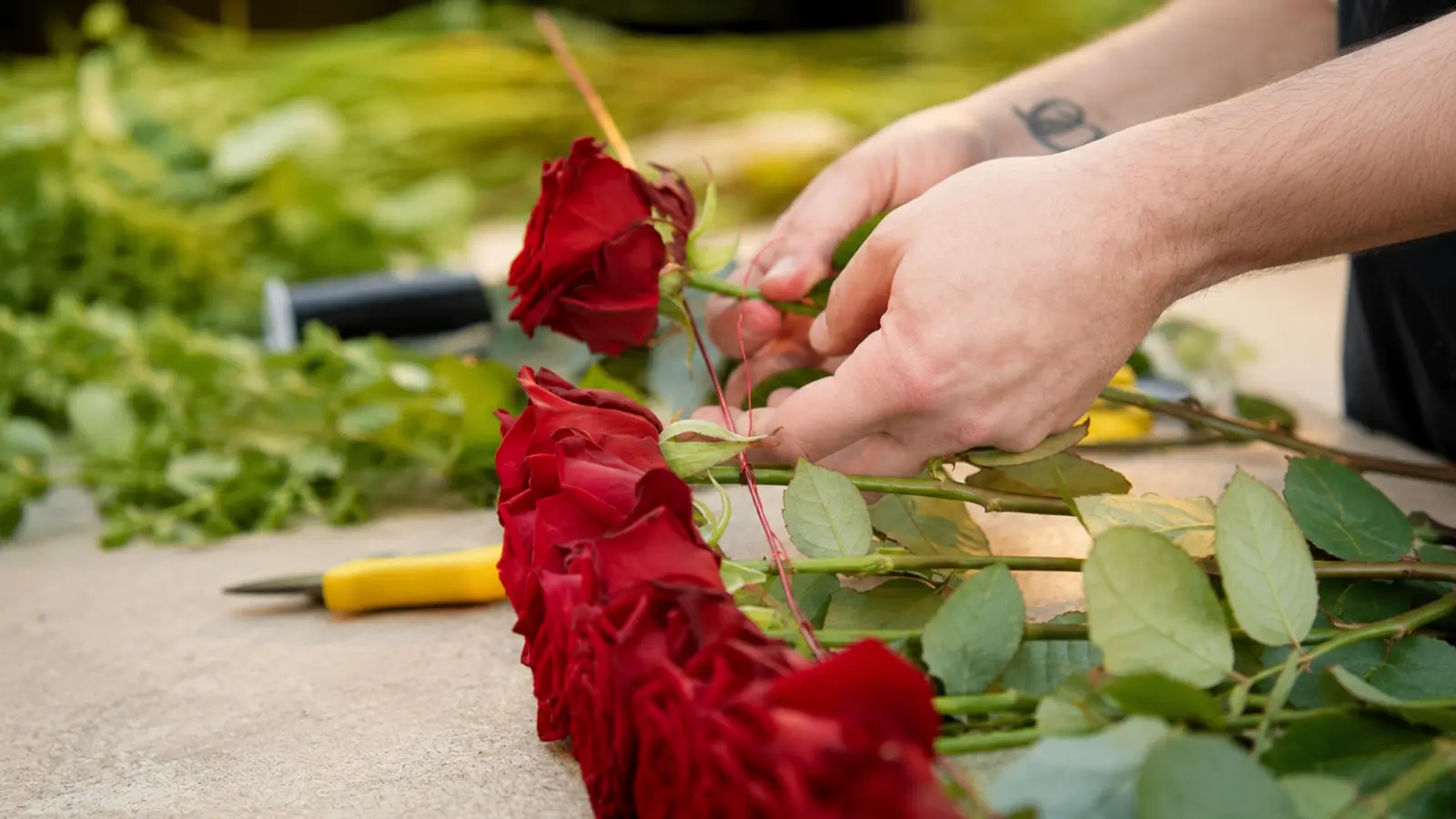
Red is a confident color, and confident colors require a specific kind of restraint to read as elegant rather than loud. The bouquets in this color family that look most sophisticated share a few consistent choices — none of which require expensive flowers or elaborate construction.
Foliage is the most underestimated variable. Bright, saturated green leaves pull a red bouquet toward festive rather than editorial. Dark greenery — Italian ruscus, smoke bush, deep eucalyptus varieties with a grey or bronze cast — gives the red flowers a richer backdrop. Avoid the lime-toned fillers that work well in softer palettes; they fight this one.
Layering two or three values within the red-to-burgundy range creates depth that a single uniform shade never achieves: some flowers at bright cherry red, others pulling toward wine or crimson. Pair that with a slightly loose, hand-tied construction rather than a tightly domed shape, and the bouquet reads as warm rather than graphic.
Finally, one neutral anchor gives the eye somewhere to rest. Three or four ivory ranunculus or blush spray roses tucked into a primarily red bouquet doesn’t shift the palette. It just makes the red feel intentional rather than total.
Mistakes to Avoid
This color family has a few predictable failure points, most of which trace back to proportion, greenery choice, or a mismatch between the palette and the venue.
Bright green filler (lime-toned leaves, standard baby’s breath) shifts a red bouquet toward holiday territory. Neutral or dark greenery is almost always the better call. Similarly, an all-burgundy bouquet built from one flat shade tends to lose definition in photos, especially under warm indoor light. Layering two or three values of burgundy, or adding a small blush or ivory accent, prevents this.
Venue context matters more with this palette than with softer colors. Red and burgundy work well in formal ballrooms, candlelit spaces, rustic barns, and fall outdoor settings. They can feel heavy in very bright, minimalist venues with white walls and a lot of natural light — worth considering before committing to a deep palette.
One fabric-specific note: red next to a warm ivory or champagne dress can read as an unintentional clash rather than a deliberate contrast. Burgundy sits more comfortably against warm-toned fabrics. If the dress is bright white, red is a natural pairing. If it leans ivory or champagne, burgundy is usually the more flattering choice.
Red and Burgundy Wedding Bouquet Inspiration
Discover romantic red and burgundy wedding bouquets featuring elegant garden roses, rich dahlias, dramatic seasonal flowers, classic red-and-white arrangements, and timeless floral inspiration for every wedding style.
Rich Color Creates Lasting Elegance
Red and burgundy wedding bouquets remain timeless because they combine emotion, elegance, and remarkable versatility. Whether you prefer the bold confidence of classic red roses or the rich sophistication of deep burgundy flowers, the most beautiful bouquets are the ones that balance color with thoughtful flower selection, texture, and proportion rather than relying on intensity alone.
The key is choosing a palette that complements your season, venue, and overall wedding style. By layering tones, selecting the right greenery, and working with flowers that naturally perform well throughout the year, you’ll create a bouquet that feels intentional, refined, and unforgettable from the ceremony to the final photographs.
Frequently asked questions (FAQ)
What’s the difference between red and burgundy wedding bouquets?
Red wedding bouquets feel bold, timeless, and classic, creating strong contrast and visual impact. Burgundy bouquets are deeper, moodier, and more sophisticated, with wine-toned hues that pair naturally with ivory, blush, champagne, and dark greenery. While red often becomes the focal point of the wedding palette, burgundy usually blends more seamlessly into layered floral designs and seasonal color schemes.
What flowers work best for a red wedding bouquet?
Red garden roses, standard roses, dahlias, anemones, tulips, and ranunculus are among the strongest choices for red bridal bouquets. Garden roses create a softer, romantic look, while standard roses produce a more structured, classic arrangement. Dark greenery such as Italian ruscus or deep eucalyptus adds richness without reducing the intensity of the red flowers.
Can you combine red and burgundy in the same bouquet?
Absolutely. Layering bright red with deeper burgundy creates natural depth and dimension that a single shade cannot achieve. Burgundy anchors the composition while red provides brightness and contrast. Adding small touches of ivory or blush further separates the tones and keeps the bouquet balanced rather than visually heavy.
How do you make a red wedding bouquet look elegant instead of overwhelming?
The most elegant red bouquets rely on contrast rather than quantity. Pair red flowers with dark or silver-toned greenery, introduce burgundy or wine-colored blooms for depth, and include a few ivory or blush accents to soften the palette. Loose hand-tied construction also creates a more refined appearance than tightly packed, perfectly round bouquets.
What colors pair best with burgundy wedding bouquets?
Burgundy pairs beautifully with ivory, champagne, blush, forest green, deep navy, gold, and copper. These colors highlight the richness of burgundy without competing for attention. Using one neutral accent alongside burgundy usually creates a more timeless bouquet than combining multiple bold colors.
Is red a good choice for a winter wedding bouquet?
Yes. Red is one of the strongest colors for winter weddings because flowers such as roses, amaryllis, and anemones are readily available during the season. Combined with cedar, pine, eucalyptus, or winter berries, red creates a dramatic yet elegant bouquet that feels naturally suited to winter rather than automatically looking Christmas-themed.