
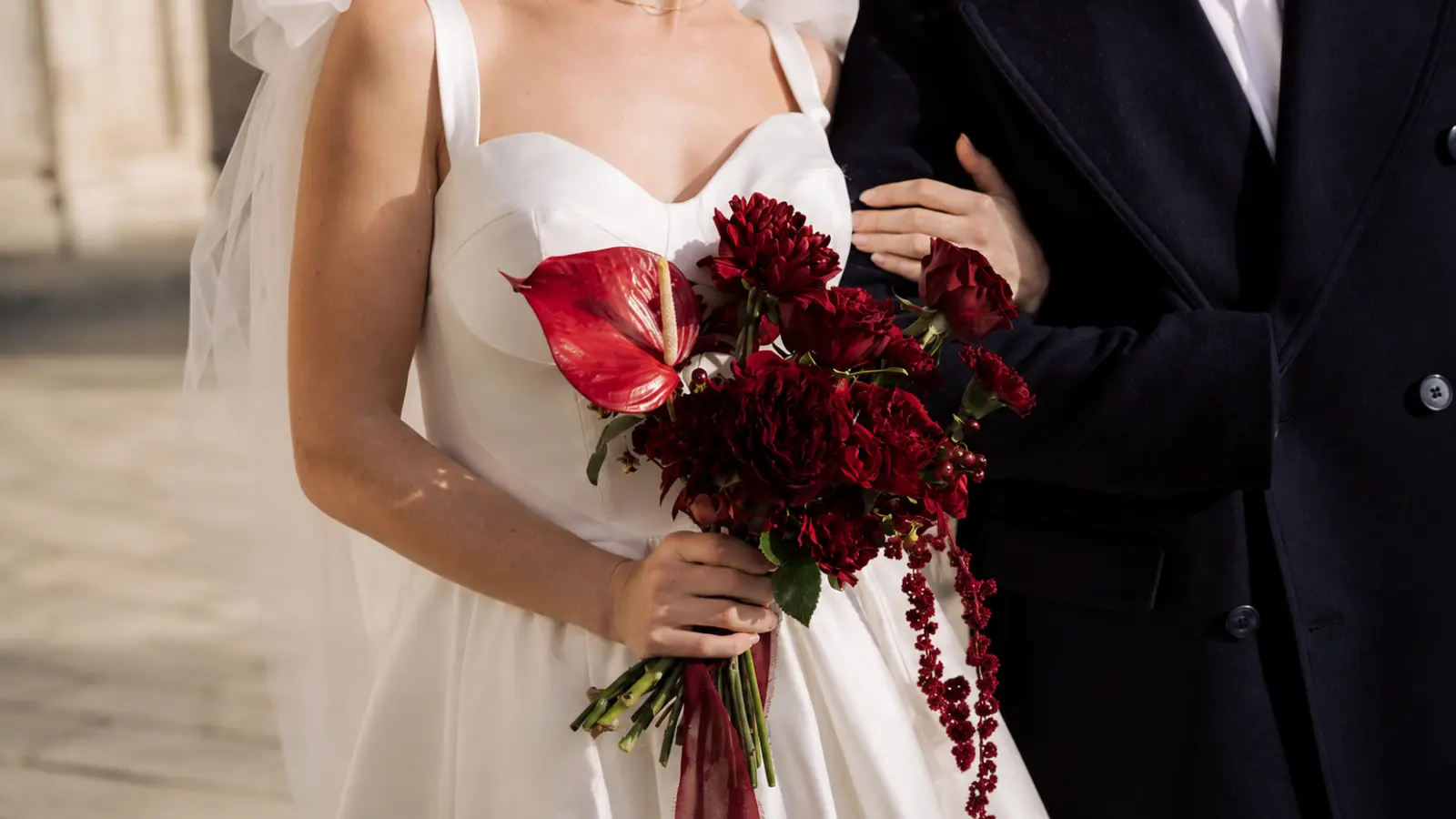
Winter wedding bouquets capture the beauty of the season through rich textures, elegant flowers, and striking color contrasts. From timeless white arrangements with evergreen foliage to deep jewel-toned bouquets and festive Christmas-inspired designs, winter offers unique floral combinations that simply aren’t available during the rest of the year.
The key to designing a beautiful winter bouquet isn’t using as many flowers as possible—it’s choosing seasonal blooms, thoughtful greenery, and a color palette that complements both the wedding style and the atmosphere of the season. Whether you’re planning a formal ballroom celebration, a snowy outdoor ceremony, or a wedding close to Christmas, the right bouquet should feel naturally connected to its surroundings rather than overly themed.
This guide explores winter designs within the broader world of wedding bouquets, including the best seasonal flowers, elegant white bouquets, Christmas-inspired arrangements, evergreen and berry accents, winter color palettes, and practical advice for creating a bouquet that feels timeless, sophisticated, and perfectly suited to your wedding day.
Winter Wedding Bouquet Ideas
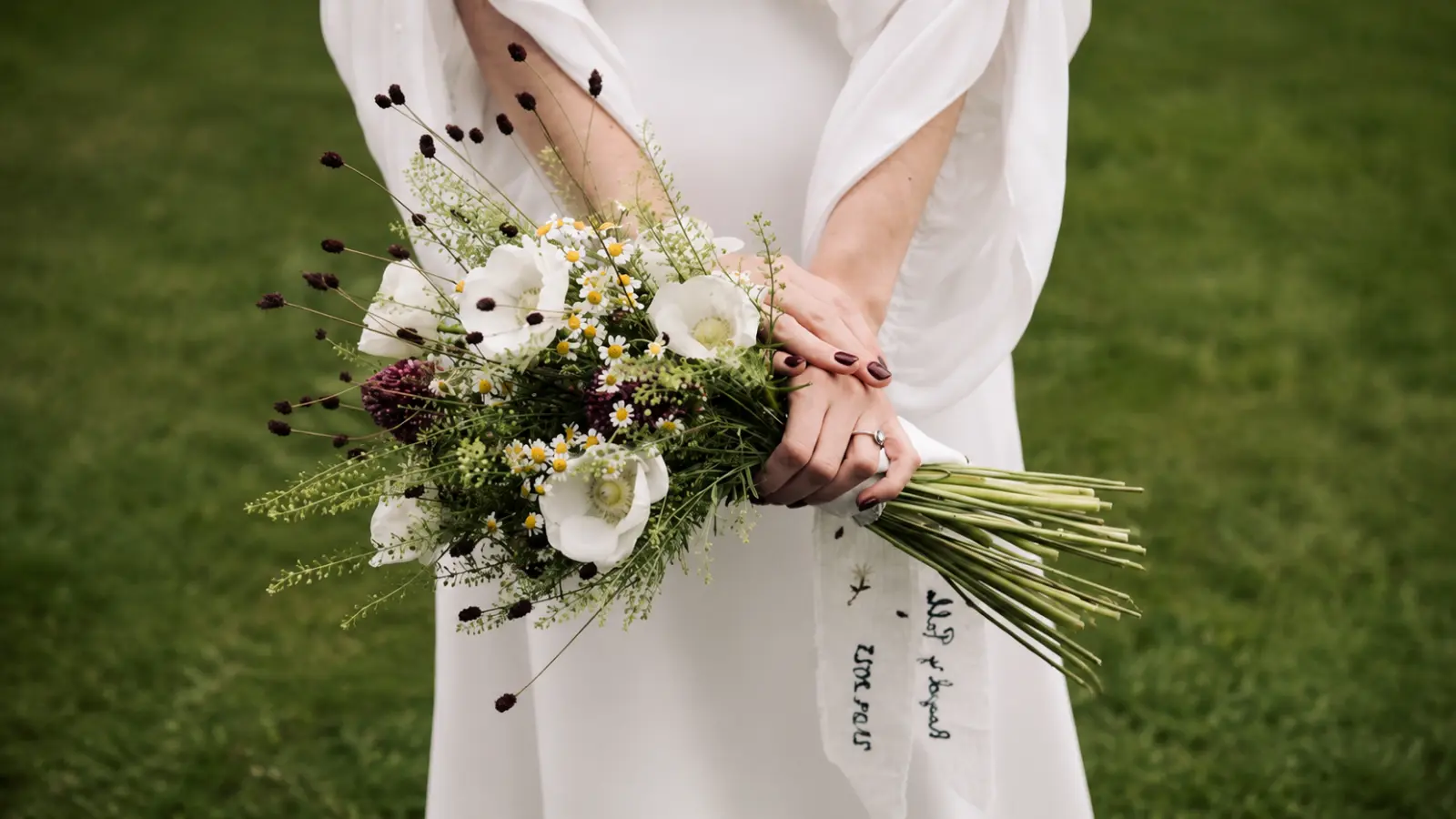
Most winter bouquets fall into one of a few clear directions, and the most successful ones commit to a single idea rather than blending several. The four that come up consistently are an elegant white-and-green bouquet built for a formal indoor venue, a Christmas-leaning bouquet built around red, gold, and evergreen, a deep jewel-toned bouquet that feels rich without being festive, and a foraged, texture-heavy bouquet built mostly from evergreen and berries with flowers used sparingly.
None of these is more “correct” than the others — the right direction depends on the venue, the date relative to the holidays, and how much the couple wants the bouquet to read as seasonal versus simply elegant. A wedding in early January at a modern venue calls for a very different bouquet than one on a date close to the holidays at a venue already decorated for Christmas.
White Winter Wedding Bouquets
A white wedding bouquet is one of the most versatile options for winter because it feels elegant and timeless rather than tied to any specific holiday, and it works equally well at a candlelit church ceremony, a modern ballroom, or an intimate elopement against snow.
The flowers that make this work are ones with real substance rather than thin, delicate petals that can look washed out against white dresses and pale winter light. White garden roses, ranunculus, anemones with dark centers, and calla lilies are the most common focal choices. Anemones in particular are worth highlighting — the contrast between the white petals and near-black center gives the bouquet a focal point that pure white-on-white can lack.
| Flower | Why It Works |
|---|---|
| White garden roses | Full, substantial bloom that holds its shape well through a full day |
| White anemones | Dark center adds a focal point that prevents an all-white look from going flat |
| Ranunculus | Layered, rose-like petals give a soft, romantic texture |
| Calla lilies | Clean, architectural lines suit a more modern or minimalist bouquet |
| Paperwhites | Smaller, delicate bloom with fragrance; best used as a secondary flower |
The detail that separates a striking white winter bouquet from a flat one is foliage. Standard bright green leaves can make an all-white bouquet look unfinished. Dark, almost black-green foliage — Italian ruscus, eucalyptus with a deeper tone, or trimmed cedar — gives the white flowers something to contrast against, which does more for the finished look than adding more white blooms.
Christmas Wedding Bouquets
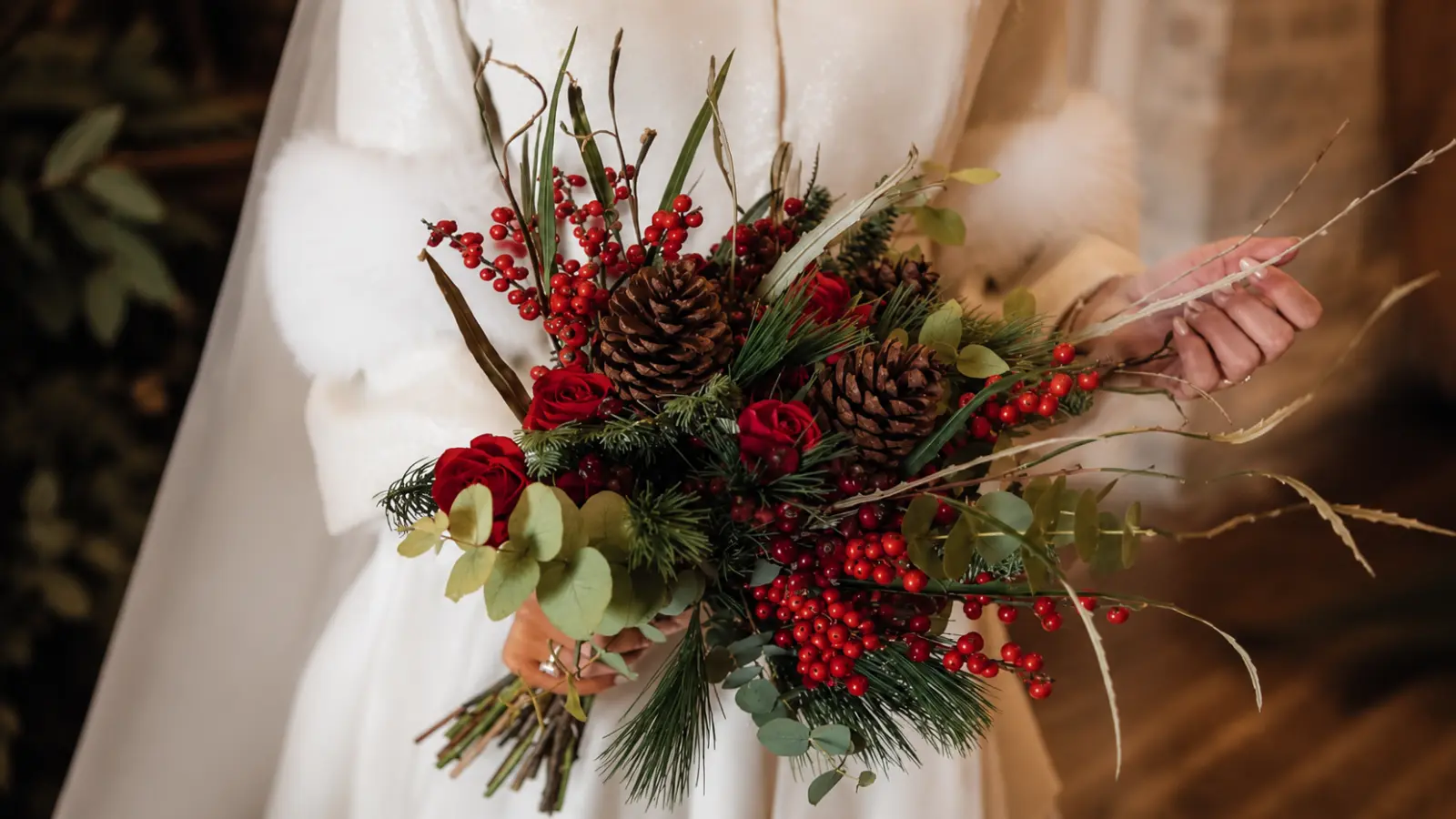
A Christmas-leaning bouquet is a deliberate choice, not the automatic default for every winter wedding. It suits couples marrying close to the holidays who want that connection reflected in their flowers, or anyone who genuinely loves the aesthetic and wants to lean into it.
The core palette is red, gold, and evergreen, but the most elegant versions use restraint rather than going fully literal. Deep burgundy garden roses or amaryllis carry the “red” without being a bright, primary red. Gold comes through in ribbon, dried foliage tones, or small accents like gold-dipped eucalyptus rather than a separate gold flower. Evergreen — cedar, pine, or noble fir sprigs — does the most work to set the seasonal tone, often more than the flowers themselves.
Elegant Winter vs. Christmas-Themed — Know the Difference:
An elegant winter bouquet uses the season’s flowers and a cooler or jewel-toned palette without referencing the holiday directly — white, silver, deep green, and burgundy all qualify. A Christmas-themed bouquet intentionally nods to the holiday itself, usually through red, gold, and evergreen used together, sometimes with berries or a plaid or velvet ribbon. Both are valid winter choices; the difference is whether the bouquet is meant to read as “winter wedding” or “wedding near Christmas,” and it’s worth deciding which one you’re going for before choosing flowers, since the two directions pull in different aesthetic directions.
Where Christmas bouquets go wrong is when they lean on literal holiday materials rather than flowers and foliage doing the work. Ornaments, glued glitter, or anything that resembles a wreath more than a bouquet tends to look like a craft project rather than bridal florals. The most successful Christmas-leaning bouquets are built almost entirely from flowers, evergreen, and berries — the same materials a florist would use for an elegant winter bouquet — with the palette doing the seasonal signaling rather than added decoration.
Winter Bouquet Flowers
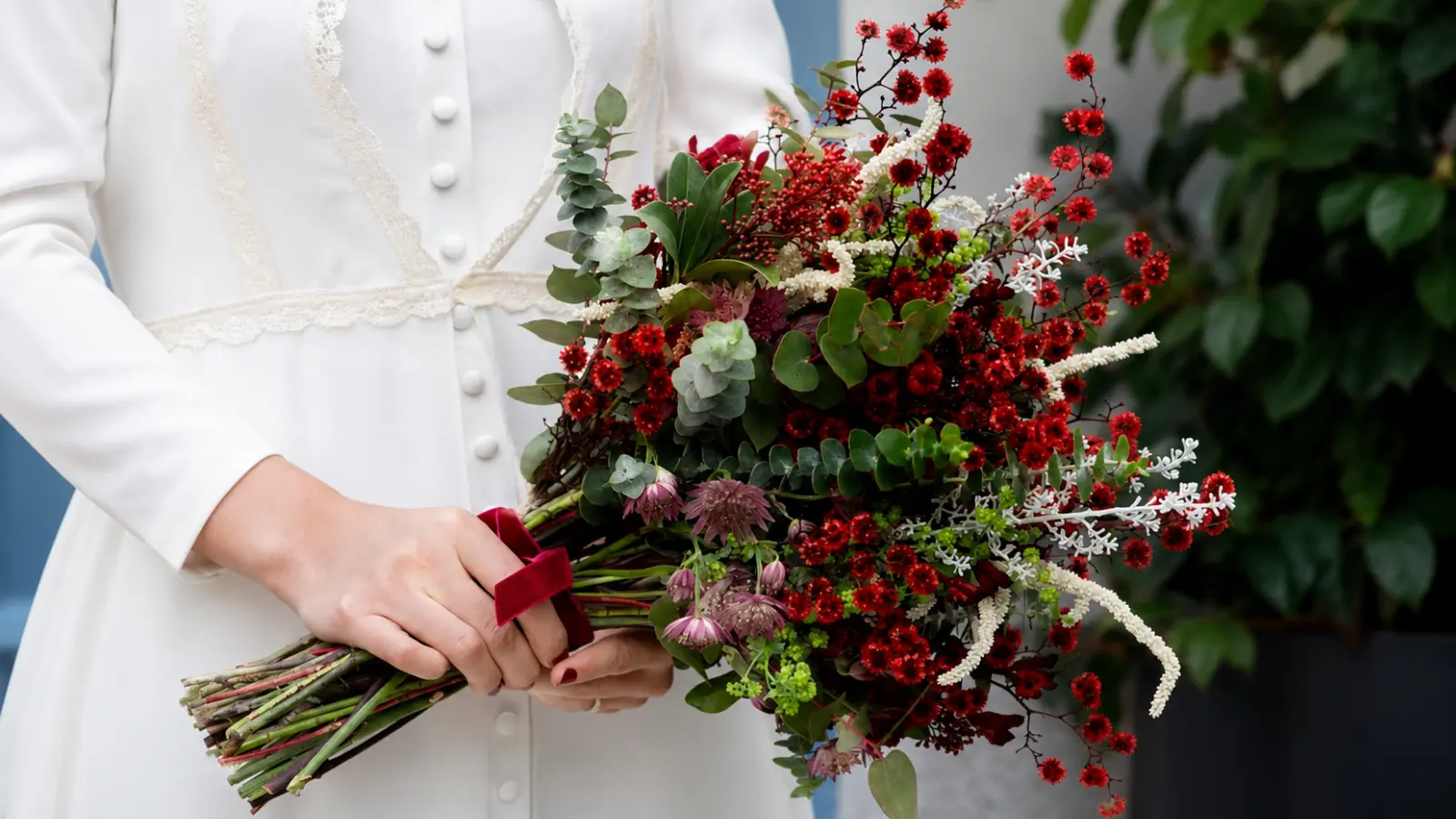
Winter has a smaller natural selection of wedding bouquet flowers, but several are genuinely at their best during this season rather than simply being imported at a premium.
| Flower | Role in the Bouquet | Notes |
|---|---|---|
| Amaryllis | Primary focal flower | Large, dramatic bloom genuinely at its seasonal peak in winter; available in white, red, and deep burgundy |
| Anemones | Focal or secondary | Dark-centered varieties add contrast; one of the more distinctive winter flowers available |
| Ranunculus | Secondary | Layered petals add softness; widely available through winter into early spring |
| Hellebores | Secondary / textural | Subtle, slightly nodding bloom that adds a quieter, more organic texture |
| Garden roses | Focal | Sourced from greenhouse production through winter; deep burgundy varieties suit jewel-toned palettes |
| Calla lilies | Focal (modern style) | Clean, sculptural lines; suits minimalist or contemporary winter bouquets |
| Paperwhites | Secondary | Fragrant, delicate; best mixed with sturdier flowers rather than used alone |
Because the natural flower palette is narrower in winter, the bouquet leans more heavily on foliage, berries, and the structural choices around the flowers than a spring or summer bouquet does. That isn’t a limitation so much as a different starting point — winter bouquets that lean into texture and contrast rather than trying to maximize flower variety tend to look more deliberate, not less.
Evergreen and Berry Bouquet Ideas
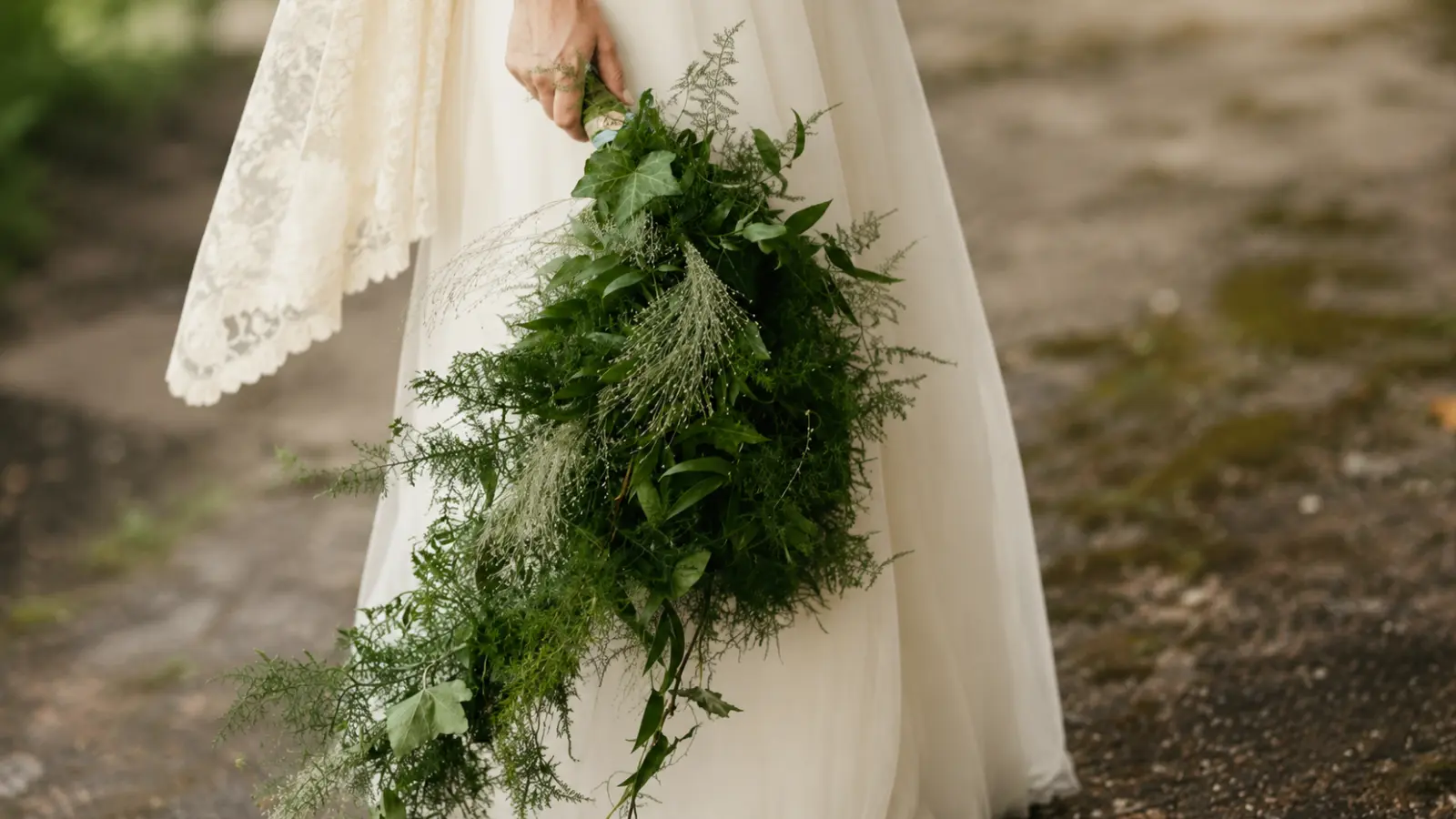
Evergreen foliage and winter berries are what give a winter bouquet its identity. No other season has access to this combination of textures, and using them well is often what separates a bouquet that feels specifically wintry from one that simply uses white or red flowers.
| Element | Role | Notes |
|---|---|---|
| Cedar | Structural foliage | Soft, full sprigs that hold their shape and scent well through the day |
| Pine / noble fir | Structural foliage | Adds a more pronounced, classic “winter forest” texture; slightly stiffer than cedar |
| Eucalyptus | Filler foliage | Softer and more flexible than true evergreen; works in both elegant and Christmas-leaning bouquets |
| Winterberry | Accent / color | Bright red berries on bare branches; adds color without adding another flower |
| Hypericum berries | Accent / texture | Smaller, rounder berries in red, white, or green; a subtler alternative to winterberry |
| Silver brunia | Textural accent | Small silvery-grey balls that add a frosted, cool-toned texture |
The most common mistake with evergreen and berries is using too much of them relative to the flowers. Because cedar and pine are dense and full, it’s easy to end up with a bouquet that looks more like a foraged greenery bundle than a bridal bouquet built around focal flowers. A reliable ratio is to let the evergreen and berries fill in around two or three clear focal flowers rather than competing with them for attention — the greenery should support the flowers, not outnumber them.
Winter Bridal Bouquet Colors
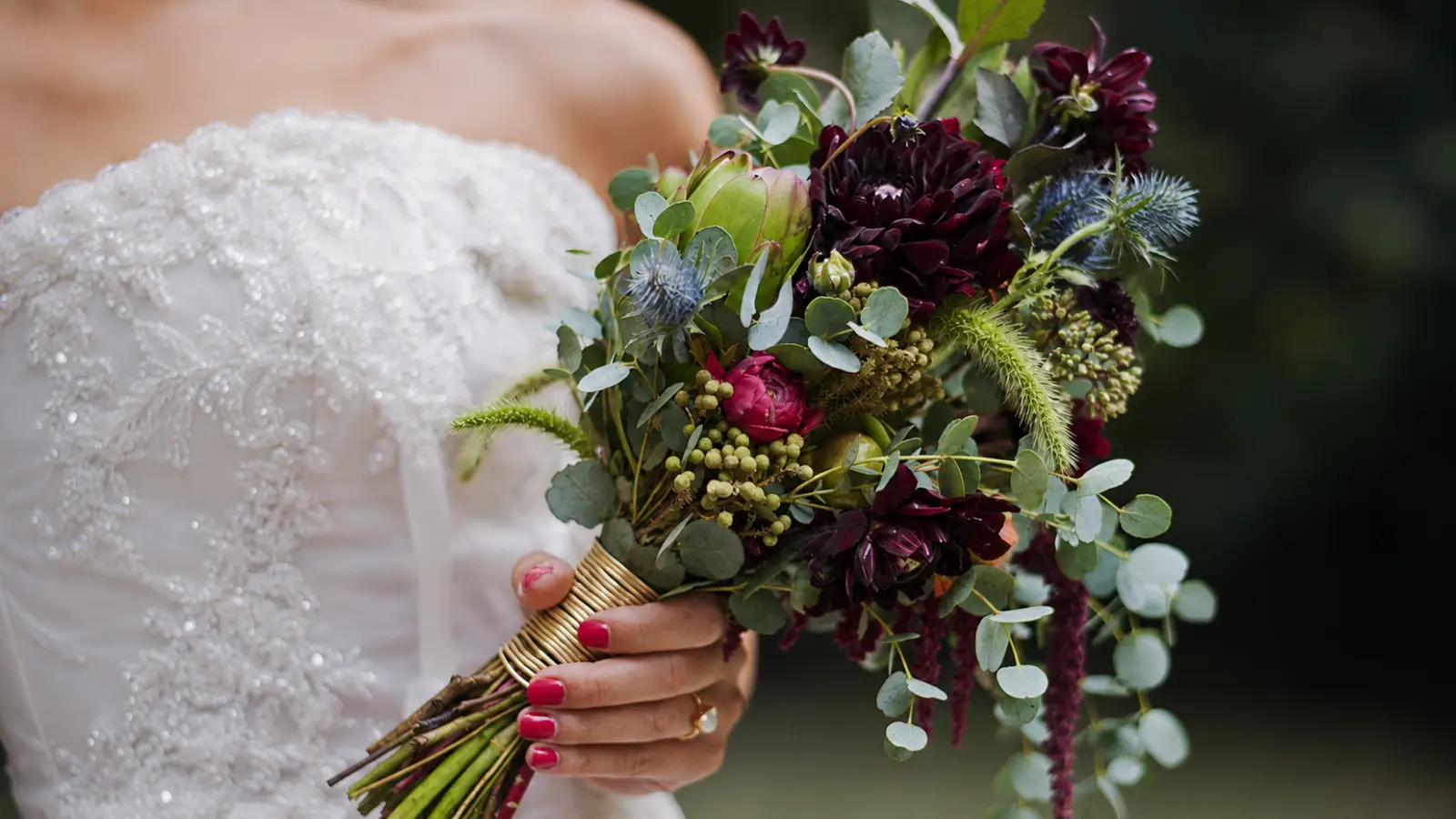
Wedding bouquet colors for winter generally fall into a few clear directions depending on the atmosphere you’re trying to create and which one fits depends almost entirely on whether the bouquet is meant to feel elegant-and-seasonal or explicitly festive.
| Palette Direction | Core Colors | Mood |
|---|---|---|
| White & Silver | White, ivory, silver-grey foliage | Classic and timeless; suits nearly any winter venue |
| Christmas Red & Gold | Burgundy-red, gold accents, deep green | Explicitly festive; best for weddings close to the holidays |
| Deep Jewel Winter | Burgundy, emerald, navy-adjacent blue | Rich and moody without leaning festive |
| Frosted Blue-Green | Dusty blue, silver, pale green | Cool and understated; works well for modern or minimalist styling |
White and silver is the safest, most universally appropriate choice — it works for nearly any winter date and venue without signaling a specific occasion. Deep jewel winter is the best option for couples who want richness and depth without anyone reading the bouquet as “Christmas.” The frosted blue-green direction is the least common but particularly effective for modern, minimalist weddings that want a winter feeling without warmth or saturation.
How to Choose Flowers for a Winter Wedding
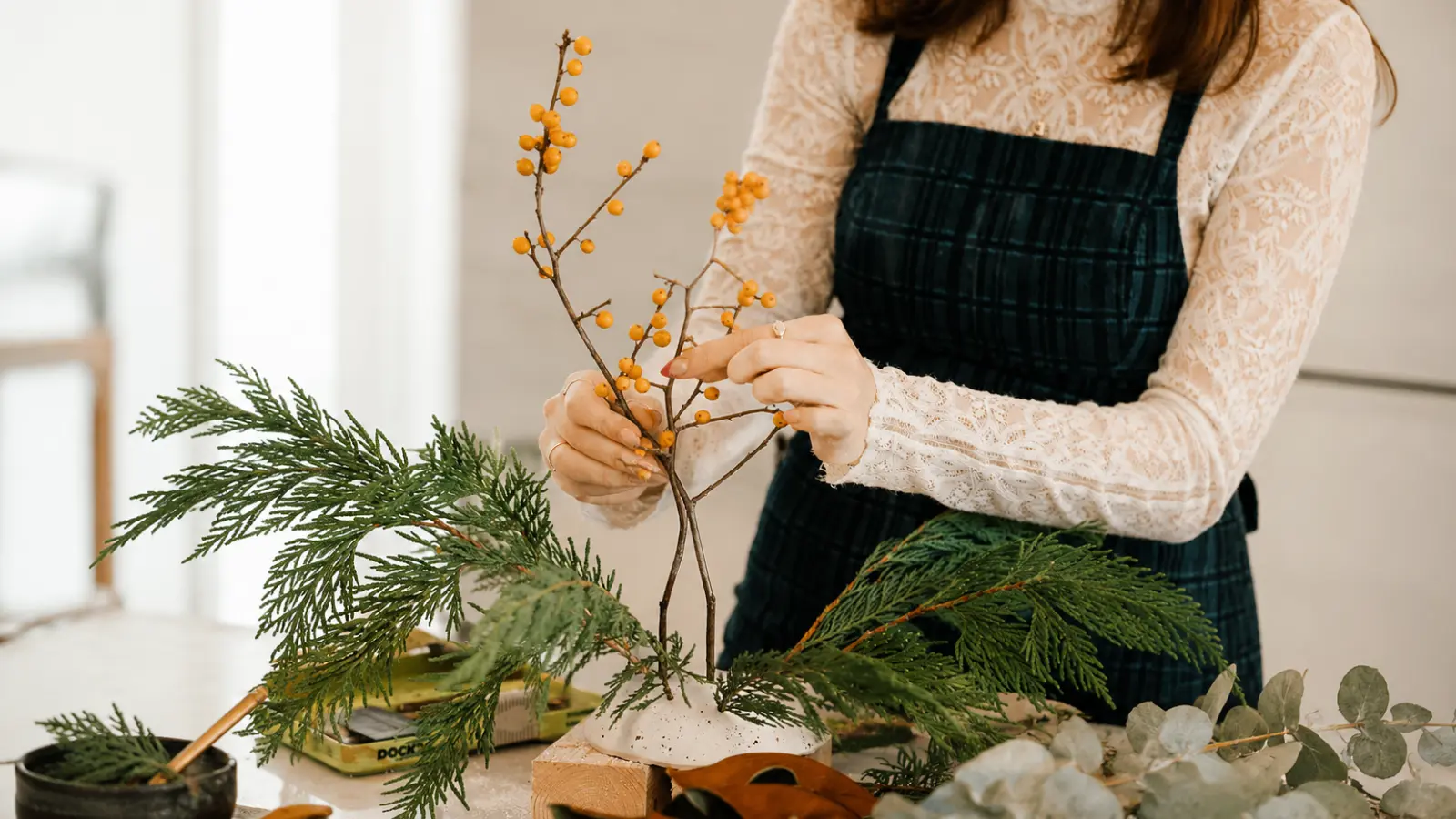
The starting point is deciding which version of winter you’re building toward, since that decision shapes every flower and color choice after it. A wedding date close to the holidays at a venue already decorated for Christmas points naturally toward red, gold, and evergreen. A wedding in early or mid-winter at a neutral venue has more room to choose between elegant white, jewel-toned, or frosted palettes without any pull toward a festive direction.
Venue matters as much as date. A bouquet built around deep, dark colors can disappear against a venue that’s already rich with dark wood, candlelight, and greenery — in that setting, a brighter white or silver bouquet stands out more. Conversely, a pale, delicate bouquet can look thin against a stark, modern, all-white venue; a bouquet with more contrast and structure holds its own better in that setting.
Budget and availability are also part of the decision. Winter’s natural flower palette is narrower than other seasons, and several go-to bouquet flowers — peonies, garden dahlias, and most summer blooms — are entirely out of season and either unavailable or significantly more expensive to source through greenhouse production or import. Leaning into flowers that are genuinely at their best in winter, like amaryllis and anemones, generally costs less and looks more intentional than trying to force in flowers from another season. For a fuller breakdown of how seasonality affects what you’ll pay, the wedding bouquet cost guide covers this in more detail.
Winter Bouquet Mistakes to Avoid
Winter bouquets run into a fairly specific set of problems, most of which come from either fighting the season’s natural limitations or leaning too hard into holiday imagery.
Defaulting to red and green without deciding if that’s actually the goal. Red and green is the instinctive winter combination, but it automatically reads as Christmas-themed. Couples who want an elegant winter bouquet without that association should start from white, jewel tones, or frosted blue-green instead.
Relying on poinsettias as a cut flower. Poinsettias are a classic winter plant but a poor choice for a held bouquet — their sap can irritate skin, and they don’t hold up well once cut. Amaryllis or deep red garden roses deliver a similar color without the practical drawbacks.
Using too much evergreen relative to flowers. Cedar and pine are dense and visually heavy. Without enough flowers to balance them, the bouquet can read as a greenery bundle rather than a bridal bouquet built around clear focal blooms.
Choosing flowers too delicate for the conditions. If the bouquet will spend any real time outdoors in cold temperatures — for photos or an outdoor ceremony — thin-petaled flowers can bruise or droop faster than they would indoors. Sturdier choices like amaryllis, garden roses, and evergreen hold up better to cold exposure.
Underestimating how pale flowers photograph against snow. An all-white bouquet against a snowy backdrop can lose definition in photos without something darker for contrast. Dark foliage, a deeper-toned ribbon, or one richer secondary flower keeps the bouquet visible and distinct rather than blending into the background.
Winter Wedding Bouquet Inspiration
Explore beautiful winter wedding bouquets featuring elegant white flowers, evergreen foliage, Christmas-inspired arrangements, rich jewel tones, seasonal blooms, and timeless bouquet ideas for winter celebrations.
Let Winter Shape the Beauty of Your Bouquet
Winter offers a floral palette unlike any other season, where contrast, texture, and carefully chosen seasonal flowers create bouquets with remarkable elegance. Whether you prefer a classic white arrangement, rich jewel tones, or a subtle Christmas influence, the most memorable bouquets are the ones that embrace the season naturally instead of relying on predictable holiday themes.
By choosing flowers that thrive in winter and building your bouquet around thoughtful color combinations and seasonal greenery, you’ll create an arrangement that feels authentic to your wedding rather than simply decorative. When the season itself becomes part of the design, your bouquet gains a timeless beauty that will stand out long after the celebration is over.
Frequently asked questions (FAQ)
How do you make a winter wedding bouquet feel elegant instead of looking like Christmas?
An elegant winter bouquet relies on contrast, seasonal flowers, and restrained color rather than obvious holiday symbolism. White flowers, deep green foliage, silver accents, jewel tones, and natural winter textures create a distinctly seasonal look without feeling Christmas-themed. The bouquet should suggest winter through its palette and materials rather than through holiday decorations.
What flowers are best for a winter wedding bouquet?
Amaryllis, anemones, ranunculus, garden roses, hellebores, paperwhites, calla lilies, and white lisianthus are among the best flowers for winter weddings. Many of these flowers are naturally at their peak during the season, providing better quality and stronger performance than flowers imported from warmer months. Evergreen foliage and winter berries complete the bouquet with texture and seasonal structure.
What is a white winter wedding bouquet made of?
A classic white winter bouquet usually combines white garden roses, ranunculus, anemones, or calla lilies with deep green or silver-toned foliage. Dark greenery provides contrast that keeps the bouquet from blending into snowy landscapes or pale winter light, while subtle textures such as silver brunia or eucalyptus create additional depth.
Are evergreens and berries practical in a wedding bouquet?
Yes. Cedar, pine, eucalyptus, winterberry, hypericum berries, and silver brunia hold up exceptionally well during winter weddings while adding texture, structure, and seasonal character. The key is balance—using evergreen foliage to frame the flowers rather than allowing greenery to dominate the bouquet.
What colors work best for a winter bridal bouquet?
White and silver remain the most timeless winter palette, while deep burgundy, emerald, plum, and rich jewel tones create warmth and elegance without feeling overly festive. Couples planning weddings close to Christmas may intentionally incorporate deeper reds and gold accents, while cooler blue-green palettes create a more modern winter aesthetic.
How do you choose flowers for a winter wedding without the bouquet looking sparse?
Choose flowers with naturally full blooms, such as amaryllis, garden roses, and ranunculus, then build volume with evergreen foliage instead of relying on many different flower varieties. Winter bouquets are most successful when they embrace the season’s smaller flower palette and focus on contrast, texture, and thoughtful proportions rather than sheer abundance.