Wedding cake alternatives are desserts couples choose instead of a traditional tiered wedding cake, including cupcake towers, donut displays, macaron towers, cheesecakes, dessert tables, and other creative options. The goal is not simply replacing cake — it is creating a dessert moment that matches the couple’s taste, wedding style, and overall experience.
Choosing a wedding cake alternative can be an intentional design decision rather than a compromise. Some couples want more flavor variety, easier serving, a lower-maintenance setup, or a dessert that feels more personal than a classic cake. When displayed thoughtfully, alternatives like cupcake towers, donut walls, and dessert tables can become just as memorable and visually impressive as a traditional centerpiece cake.
In this guide, you’ll discover 12 wedding cake alternative ideas, including cupcakes, donuts, macarons, cheesecake, bundt cakes, dessert tables, ice cream stations, cookie displays, and more. You’ll also learn which options work best for different wedding styles, how to keep the cake-cutting moment, and how to choose an alternative that feels intentional instead of like a backup plan.
How to Choose the Right Wedding Cake Alternative
Before looking at specific alternatives, it helps to understand the framework for choosing between them — because the decision is not simply “which dessert do we like best.” The right alternative depends on several variables that interact with each other, and couples are more likely to choose well when they think through those variables before falling in love with a specific visual on Pinterest.
The venue and aesthetic. Some alternatives look extraordinary in certain settings and out of place in others. A donut wall is a natural fit at a relaxed outdoor or barn wedding and can feel incongruous at a formal hotel ballroom. A macaron tower reads as elegant and European in a sophisticated setting and precious at a casual backyard gathering. Before choosing an alternative, ask: does this dessert feel like it belongs in this specific space?
The guest count. Some alternatives scale easily — a dessert table, a donut wall, a cookie display can accommodate 20 or 200 guests with adjustments to quantity rather than format. Others are inherently suited to smaller gatherings — a single cheesecake as the centerpiece works beautifully at 30 guests and becomes logistically complicated at 150. Know your headcount before narrowing the options.
The season and temperature. This matters more for dessert alternatives than for traditional cake in some cases. Buttercream-based cupcakes soften significantly in warm weather. Ice cream bars require refrigeration infrastructure. Macarons are humidity-sensitive. Donuts are remarkably temperature-tolerant. Summer outdoor weddings usually require more careful dessert planning than indoor climate-controlled receptions.
The cake cutting moment. Some couples genuinely do not care about preserving the cake cutting ritual — it is not a moment that matters to them. Others would feel the loss of it. If the cutting moment matters, almost any alternative can accommodate a small supplementary cutting cake. Decide this before committing to a format that cannot produce the moment at all.
The budget. Alternatives are not automatically cheaper than traditional cake. Macarons are expensive per piece. Individual mini cakes can be more labor-intensive than a tiered cake of equivalent servings. A fully curated dessert table with multiple vendor components can cost as much or more than a custom cake. Comparing wedding cake cost should always be done on a per-serving basis — and should include all display, rental, and setup costs, not just the food itself.
Cupcake Wedding Cakes
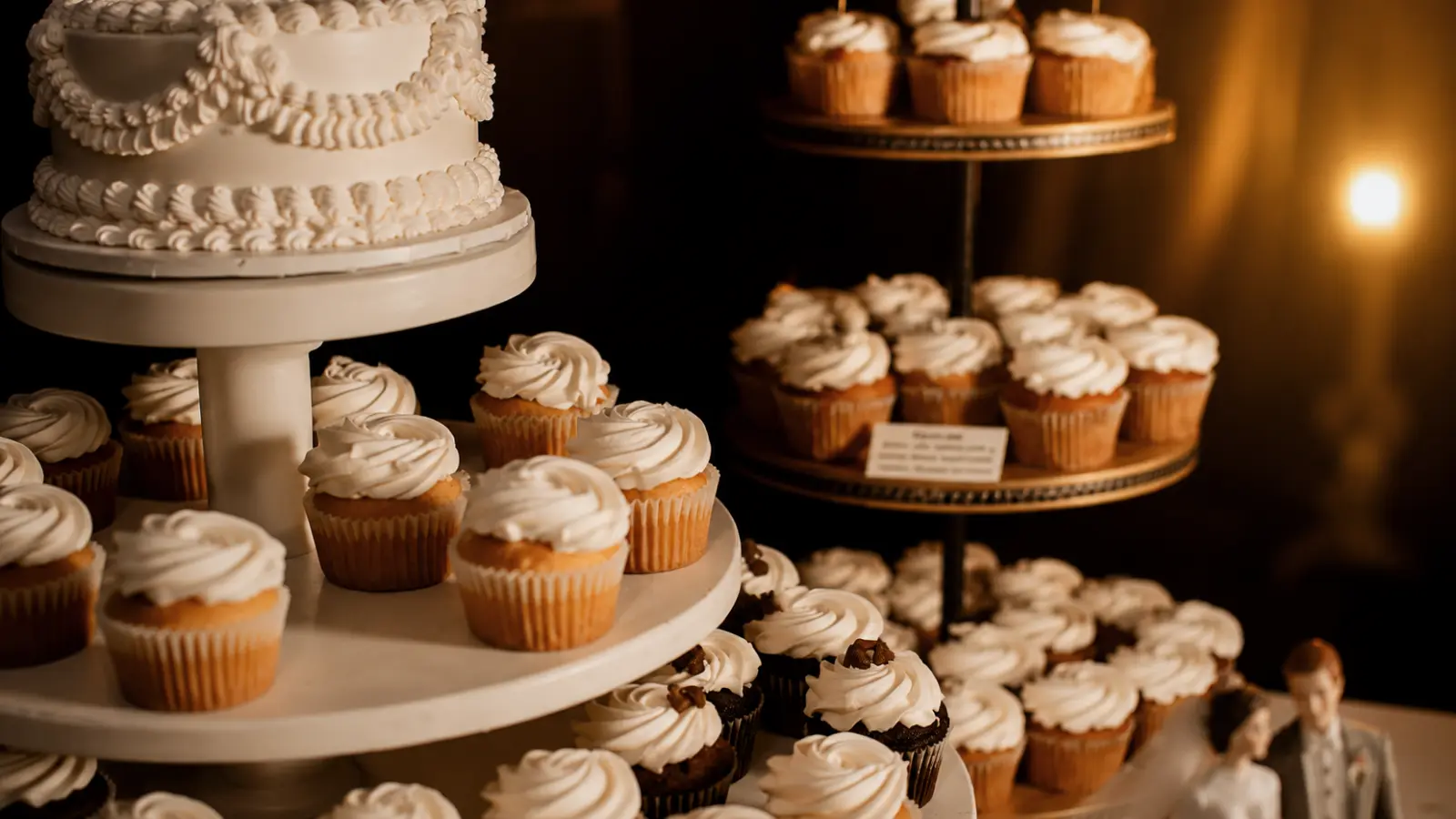
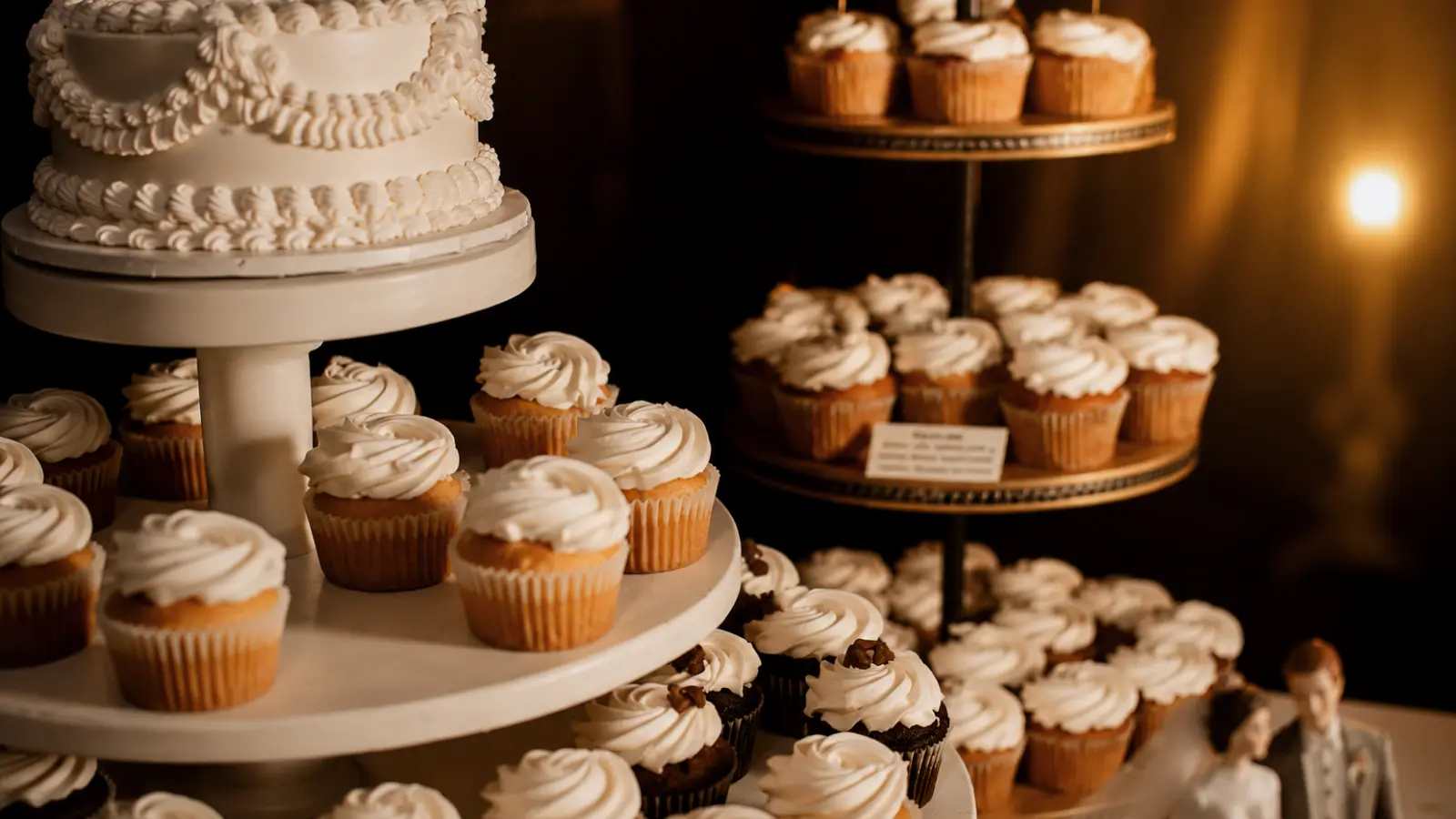
Cupcake wedding cakes are one of the most familiar wedding cake alternatives at American receptions because they solve several practical serving problems while still creating a strong dessert display. The reason is not trend; it is practical. Cupcakes solve several of the most common complaints about traditional wedding cake: no cutting required, no serving staff needed, no awkward wait while slices are plated, no uneven portions. Guests serve themselves, every serving is identical, and the format is inherently casual and accessible in a way that a tiered cake is not.
What many couples do not realize until they start planning: a well-executed cupcake tower can look as visually impressive as a traditional tiered cake — sometimes more so — because the scale and variety of decoration across 80 or 100 individual cupcakes creates a visual complexity that three-tier wedding cakes with a single design approach cannot always achieve in the same way. And the format allows for flavor variety in a way that a traditional cake cannot: guests can choose between vanilla, lemon, salted caramel, and red velvet without the couple having to commit the entire dessert to one flavor combination.
How cupcake towers work in practice
The display structure. Cupcakes can be displayed on a tiered stand that visually mimics the silhouette of a traditional wedding cake — creating the impression of a tiered structure from a distance while up close revealing individual cupcakes. The stand can be rented, purchased, or provided by the baker. Confirm the stand dimensions before the tasting so the baker knows how many cupcakes to produce per tier level.
The small cutting cake. Many cupcake tower setups include a small single-tier cutting cake on the top tier — a miniature version of a traditional wedding cake that the couple cuts for photographs while guests serve themselves from the cupcakes below. This preserves the visual of the cake cutting moment without requiring a full traditional cake. If this is important, request it explicitly and confirm the baker offers this format.
The flavor strategy. Two or three wedding cake flavors is usually the sweet spot — enough variety to feel generous without creating a distribution problem. Confirm with your baker what percentage of each flavor to produce based on your guest count and any known preferences. If the wedding has a significant dietary restriction profile — many gluten-free guests, for example — build a dedicated flavor in that category rather than assuming guests will find something that works.
The decoration approach. Cupcake decoration should be cohesive across the tower rather than identical on every cupcake. A color palette — all blush, ivory, and gold — with varied piping styles creates visual interest without looking chaotic. Alternatively, all cupcakes can be decorated identically for a more formal, structured look. The baker should see the wedding’s overall aesthetic before finalizing the decoration plan.
When cupcake towers work best
Many wedding styles and guest counts. Particularly effective at outdoor weddings where the self-serve format reduces the need for staffing. Works for casual, garden, bohemian, and modern receptions equally. For formal black-tie events, the format needs more deliberate styling — the stand, the decoration, and the display context all need to signal that the choice was intentional and refined.
When to reconsider
Outdoor summer receptions in warm climates where buttercream will soften rapidly. Very formal events where the self-serve format might feel inconsistent with the overall service style. Venues where a designated dessert table space is not available and the display would have to compete with other table elements for visual prominence.
| Factor | What to Know |
|---|---|
| Cost vs traditional cake | Comparable on a per-serving basis for similarly decorated cupcakes. Simpler decoration is less expensive; elaborate individual piping can cost more than a single decorated tiered cake of equivalent servings. |
| Serving logistics | Self-serve; no cutting or plating required. Confirm napkins and small plates are provided at the display. |
| Temperature | Buttercream softens above 75°F. Indoor or shaded display required for warm-weather events. |
| Cake cutting moment | Easily preserved with a smash cake topper on the top tier of the tower. |
| Best guest count | Any — scales easily from 20 to 300+ guests by adjusting tier count and cupcake quantity. |
Donut Wedding Cakes
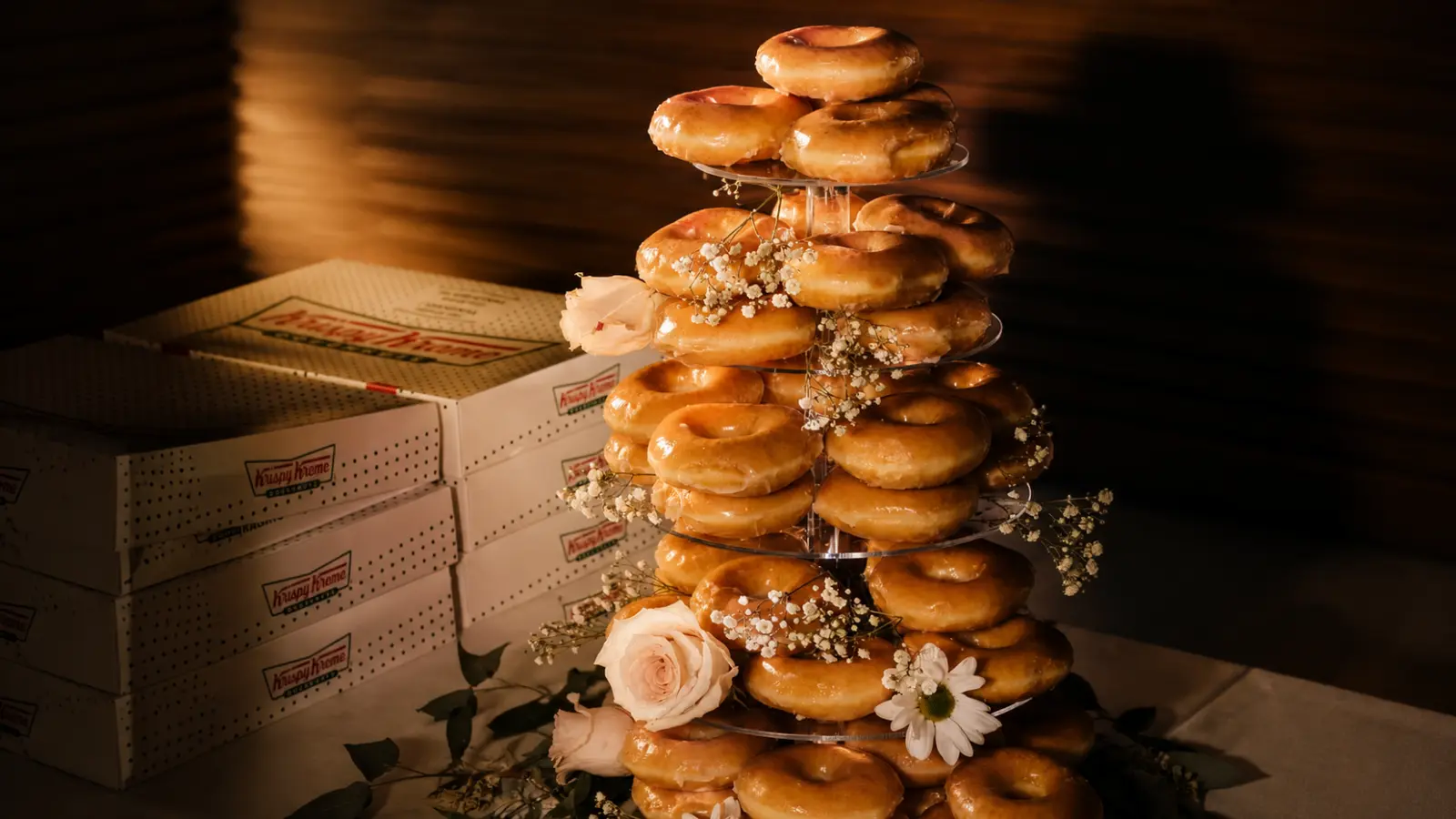
Donut displays remain a popular wedding cake alternative because they are approachable, easy to serve, and genuinely practical. Donuts are approachable, universally liked, easy to eat standing up, and remarkably temperature-tolerant compared to buttercream-based alternatives. A donut display at a late-morning brunch wedding is as natural as coffee service. A donut wall at a relaxed outdoor evening reception feels festive and fun without requiring any explanation.
The format has two distinct versions, and they produce completely different guest experiences:
The donut tower. Donuts stacked on a tiered stand in a structure that visually mimics a traditional tiered cake. From a distance, particularly in photographs, a well-styled donut tower can look remarkably like a wedding cake. Up close it is clearly playful and intentional. The tower is the display; guests take donuts from the tiers as they approach. A small decorated donut on the very top — or a small cutting cake at the base — handles the cake cutting moment.
The donut wall. A pegboard, grid, or framed structure with pegs on which individual donuts are hung. Guests pull directly from the wall. The wall itself becomes a visual element of the reception décor — it can be customized with a neon sign, framed text, floral garland, or a hashtag. The wall format is the more social of the two: guests gather around it, photograph themselves with it, and take donuts throughout the evening rather than in one concentrated dessert moment.
Customization options for donut displays
Donuts can be glazed, sprinkled, or topped to match almost any color palette. A blush-and-gold wedding can have blush glazed donuts with gold leaf. A minimalist white wedding can have all-white glazed donuts with a single edible flower. A more playful reception can have a variety of toppings that reflect the couple’s personalities. Confirm with your donut vendor how much lead time they need for custom glazes and toppings — not all bakeries offer full customization.
When donut displays work best
Casual, outdoor, bohemian, barn, or brunch weddings. Extremely effective at events where dessert is expected to be part of a social experience rather than a formal moment. Also works well at wedding receptions where the guest list skews younger and the couple wants the food to feel like them.
When to reconsider
Formal black-tie events where the casual nature of a donut wall may feel inconsistent with the overall tone. Very large receptions where the logistics of a donut wall — replenishing the display, managing the crowd around it — need careful vendor coordination.
| Factor | What to Know |
|---|---|
| Cost vs traditional cake | Among the most budget-friendly alternatives on a per-serving basis. Display rental or wall construction is an additional cost — confirm whether the vendor provides this or whether it needs to be rented separately. |
| Temperature | Donuts are relatively temperature-tolerant compared with many frosted desserts, making them a practical option for many outdoor weddings. Confirm display timing with the bakery, especially in heat or direct sun. |
| Serving logistics | Fully self-serve. The wall or tower display eliminates the need for dessert service staff. Napkins provided at the display. |
| Cake cutting moment | A small cutting cake at the base of the tower preserves the moment. Alternatively, the couple can “pull the first donut” from the wall as a ceremonial gesture — less traditional but highly photographable. |
| Best guest count | Works at any size. The wall format is particularly effective at 80 to 200 guests where the social element around the display is a reception feature in itself. |
Cheesecake Wedding Cakes
Cheesecake as a wedding cake alternative occupies a specific niche: it is for couples who genuinely prefer cheesecake over any other dessert and want the wedding food to reflect that, rather than defaulting to a cake they would never choose in their regular life. When it is chosen authentically, a beautifully presented cheesecake or cheesecake tower can feel genuinely striking — and for guests who do not love traditional cake, it may become one of the more memorable desserts of the reception.
The format ranges from a single large cheesecake displayed on a statement cake stand — for smaller intimate weddings — to a tiered cheesecake tower with multiple rounds in different flavors and sizes that visually mimics the structure of a traditional wedding cake. The tiered version is the most visually impressive and the most logistically demanding: cheesecake rounds need to be properly chilled and cannot be stacked directly without structural support.
Cheesecake formats for weddings
Single large cheesecake. Similar to small wedding cakes, a single statement cheesecake — 10 to 12 inches, richly decorated with fresh fruit, flowers, or a glaze — can become the main display piece when placed on an elevated stand. Serves 20 to 30 guests from one cake. For larger guest counts, supplement with sheet cheesecakes served from the kitchen. Visually impactful for the display; practical for the serving.
Tiered cheesecake tower. Multiple cheesecake rounds in graduated sizes — typically 12″, 9″, and 6″ — stacked on cake boards with internal dowel support between layers. Can be decorated with fresh fruit, flowers, chocolate drizzle, or glazes. The structural challenge is significant: cheesecake cannot support its own weight the way a firm cake can. Confirm that your baker has specific experience with tiered cheesecake construction before booking.
Cheesecake in multiple flavors. Different tiers in different flavors — classic New York on the bottom, lemon on the middle, strawberry on the top — allows guests to choose a slice from their preferred tier. Requires clear labeling at the display. Popular at receptions where the couple wants the dessert to feel like a genuine tasting experience rather than a uniform serving.
Individual cheesecake portions. Mini cheesecakes — individually portioned, each decorated — served as individual desserts rather than a shared display. More expensive per serving but eliminates the cutting and serving logistics entirely. Each guest receives a beautifully finished individual dessert that requires no staff service.
When cheesecake works best
Intimate weddings of under 60 guests where the display can be the centerpiece without needing to serve the entire room from one structure. Also works well when supplemented by kitchen sheet cakes. Indoor receptions with temperature control — cheesecake requires refrigeration and cannot sit at room temperature for extended periods without quality decline.
When to reconsider
Outdoor summer receptions where refrigeration is unavailable or unreliable. Very large weddings where serving logistics from a tiered cheesecake become complicated. Any event where significant lead time cannot be given to the baker — cheesecake requires more careful temperature management from production to display than most other alternatives.
Bundt Cake Wedding Cakes
Bundt cakes as a wedding cake alternative represent something slightly different from the other options on this list. Most wedding cake alternatives are about informality, accessibility, or playfulness. A well-executed bundt cake display is about elegance through simplicity. The ring shape of a bundt cake, particularly when glazed or dusted with powdered sugar, has a timeless, European quality that reads as sophisticated rather than casual.
The typical bundt cake wedding display involves multiple bundt cakes in different sizes and flavors, arranged on a tiered stand or at different heights on a styled table. The variety of shapes creates visual interest in the same way thoughtful wedding cake designs do, without requiring elaborate decoration. A lemon bundt cake with a simple drizzle glaze, dusted with edible flowers, displayed on a marble stand, is as visually refined as many elaborately decorated traditional cakes.
Why bundt cakes work well for weddings
The glaze is forgiving. Unlike buttercream, a glaze finish is temperature-stable, does not soften in warm conditions, and looks clean and intentional without requiring a highly skilled decorator. A simple powdered sugar glaze or a drizzle icing over a well-shaped bundt cake reads as deliberate and elegant.
The flavor range is excellent. Bundt cakes work in virtually any flavor: lemon poppy seed, brown butter vanilla, almond, olive oil and orange, carrot with cream cheese glaze, chocolate with ganache drizzle. The dense, moist texture of a bundt holds up better over the course of a reception than many lighter cake types.
The serving is simple. A bundt cake is sliced like any other cake — the ring shape means every slice is identical in size and each has the same glaze-to-cake ratio. No awkward corner pieces, no unequal distribution of decoration.
When bundt cake displays work best
Intimate or small weddings of 20 to 80 guests. Garden, European-inspired, rustic-elegant, and modern minimalist aesthetics. Any event where the couple wants an alternative that reads as a genuine design choice rather than a compromise — a bundt cake display done well signals intention, not limitation.
When to reconsider
Very large receptions where the number of individual bundt cakes required becomes unwieldy. Any event where the couple specifically wants a cutting moment — bundt cakes can be cut ceremonially but the visual is less compelling than a tiered cake or even a cupcake tower smash cake.
Macaron Tower Wedding Cakes
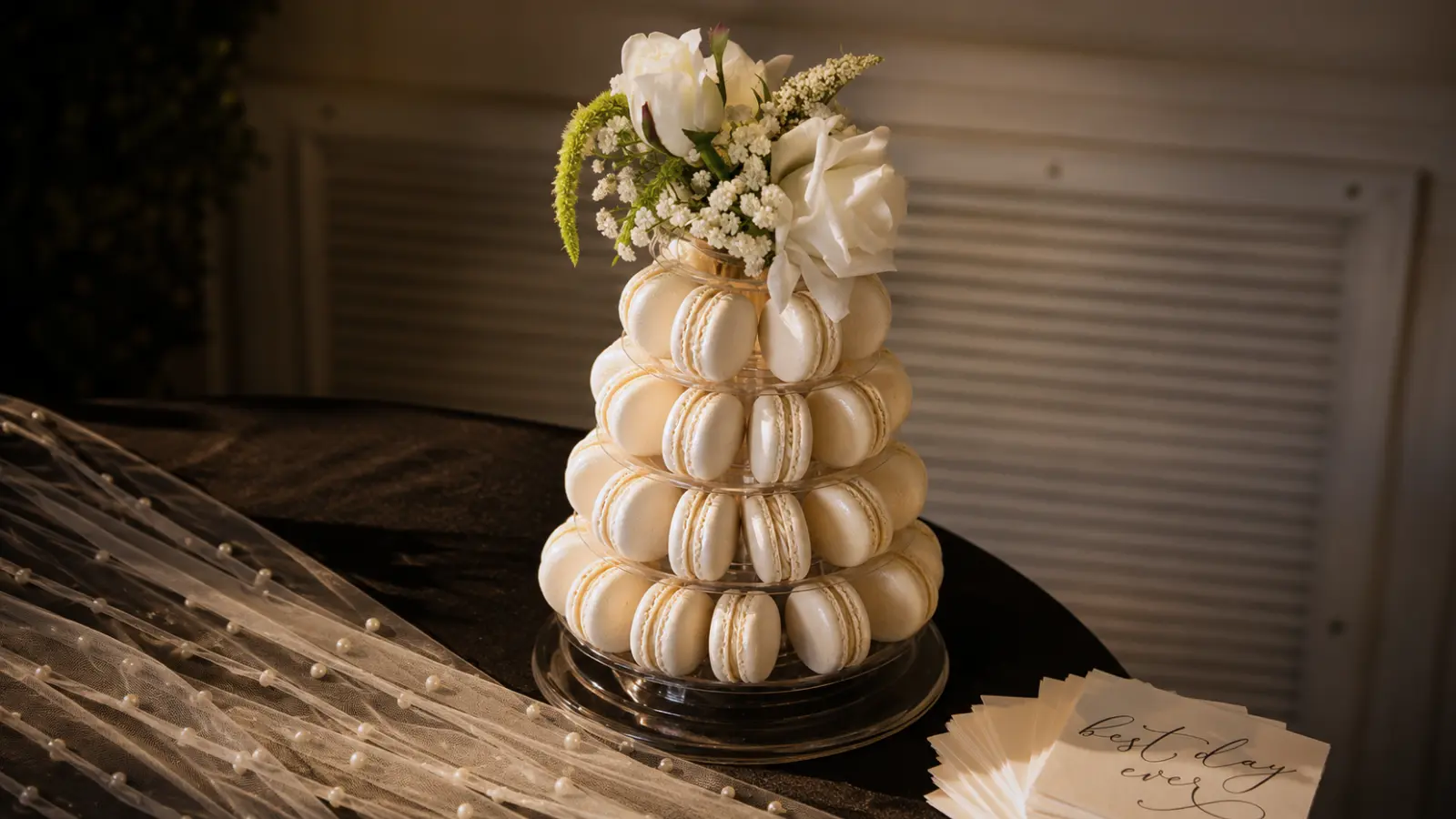
A macaron tower is one of the most visually striking alternatives in the wedding cake conversation — and one of the most expensive on a per-serving basis. The visual logic is simple: a cone-shaped structure built entirely from French macarons, assembled on a cone form and decorated with flowers, ribbons, or greenery. The result is colorful, precise, and unmistakably intentional — there is no version of a macaron tower that looks accidental.
The expense is real and worth understanding before falling in love with the visual. French macarons require significant skill to produce consistently — the shells must be uniform, the filling must be stable, and the assembly of a tower of 100 or more macarons without damaging the shells requires expertise. A well-made macaron costs substantially more per piece than a cupcake or a donut. A macaron tower for 100 guests — roughly 150 to 200 macarons — represents a significant investment.
The alternative approach that many couples choose: a smaller macaron tower as a display piece and visual centerpiece, supplemented by other desserts at a dessert table for serving volume. This gives the couple the visual impact of a macaron tower at a fraction of the serving cost.
Macaron tower considerations
Flavor variety. One of the genuine pleasures of a macaron tower is the flavor range. Raspberry, pistachio, salted caramel, lemon, vanilla, chocolate, lavender, rose — a tower with five or six flavors displayed in bands of color creates both visual variety and a tasting experience that a single-flavor cake cannot provide. Confirm with your macaron baker what flavors they produce consistently well — not all flavor recipes produce equally stable shells.
Humidity sensitivity. Macarons are famously humidity-sensitive — the shells soften in high humidity and can become sticky or lose their texture. This is a meaningful concern at outdoor summer receptions in humid climates. Confirm your baker’s humidity management approach before committing to macarons in a challenging environment.
Color and palette customization. Macaron shells can be tinted to match almost any color palette. This is one of the strongest customization arguments for a macaron tower — the ability to build a display in exactly the wedding’s colors, with the macarons themselves functioning as both the dessert and the décor.
When macaron towers work best
Formal, European-inspired, or fashion-forward weddings where the sophistication of the French pastry tradition fits the overall aesthetic. Indoor receptions with temperature and humidity control. Smaller weddings of 30 to 60 guests where the tower can serve the full guest count, or larger weddings where the tower is one component of a dessert table.
When to reconsider
Outdoor summer weddings in humid climates — macaron quality degrades meaningfully in these conditions. Very large receptions where the cost of serving the full guest count from macarons alone becomes prohibitive. Any event where the budget is the primary constraint — macarons are not a cost-saving alternative.
Mini Cakes and Individual Desserts
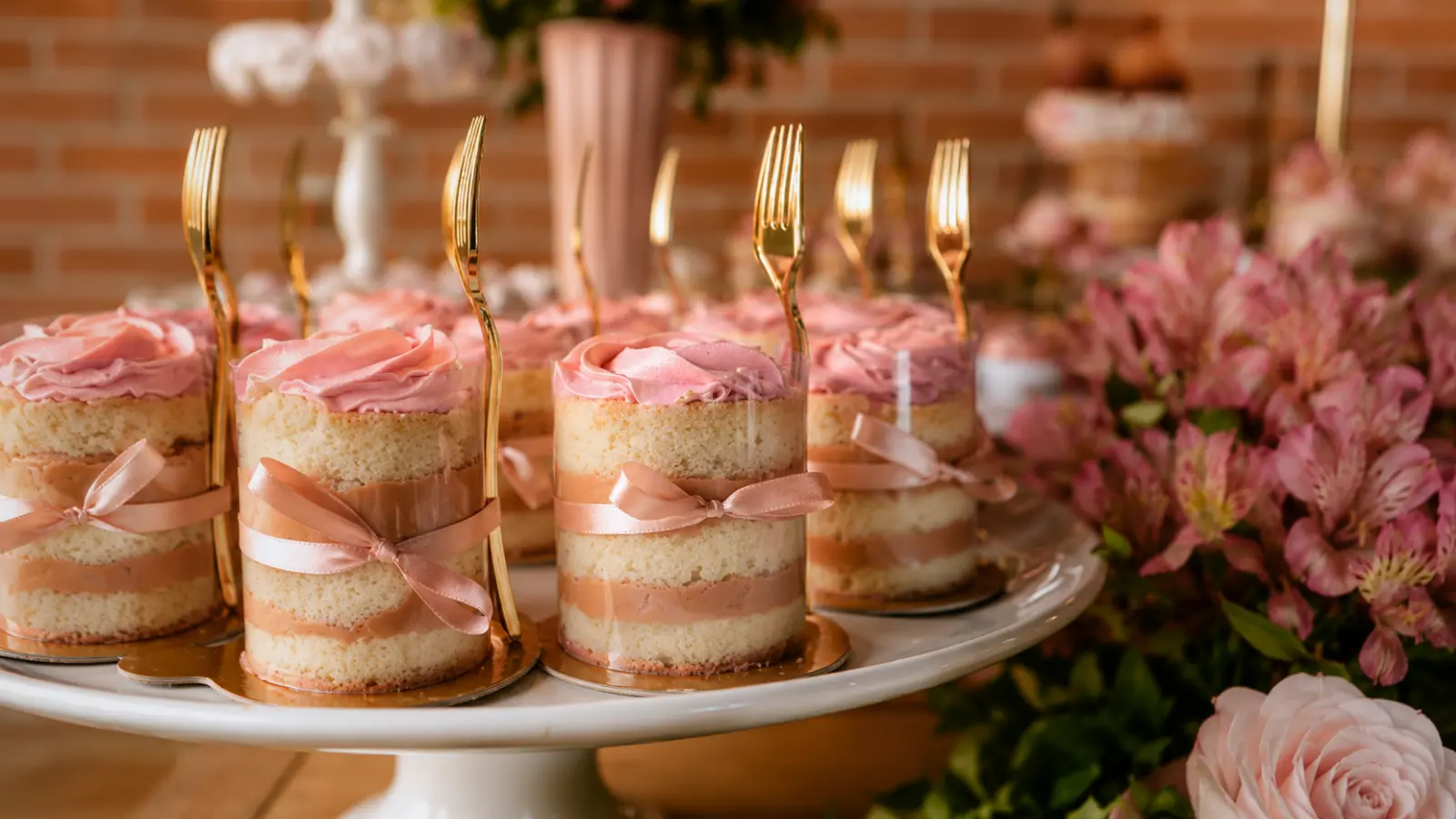
Individual mini cakes — each guest receives their own complete, decorated single-portion cake — occupy a specific sweet spot in the wedding dessert alternatives landscape. They are more formal and more elevated than cupcakes, more intimate than a shared tiered cake, and more personally tailored than almost any other alternative. When executed well, a table of guests each receiving their own beautifully decorated mini cake creates a moment that no shared dessert can replicate.
The formats vary: a true mini cake is a small tiered or single-tier cake, roughly 4 inches in diameter, fully frosted and decorated as a standalone piece. Individual tarts, small entremet cakes, or personal sized cheesecakes also fall into this category. The common thread is that each guest’s dessert is a complete, finished, individually decorated piece rather than a slice of something shared.
When individual mini cakes work best
Formal dinners and seated receptions where a plated dessert service fits the overall format. Smaller weddings of 20 to 60 guests where the investment per piece is manageable. Any reception where the couple wants the dessert experience to feel like a fine dining moment rather than a buffet. Particularly effective at weddings where dietary customization is important — individual cakes can be labeled by dietary category and distributed accordingly.
When to reconsider
Large receptions where the per-piece cost multiplies significantly. Very casual or outdoor events where individual plated desserts feel formally out of place. Any event where budget is a primary constraint — individual mini cakes are among the more expensive alternatives on a per-serving basis.
Dessert Tables
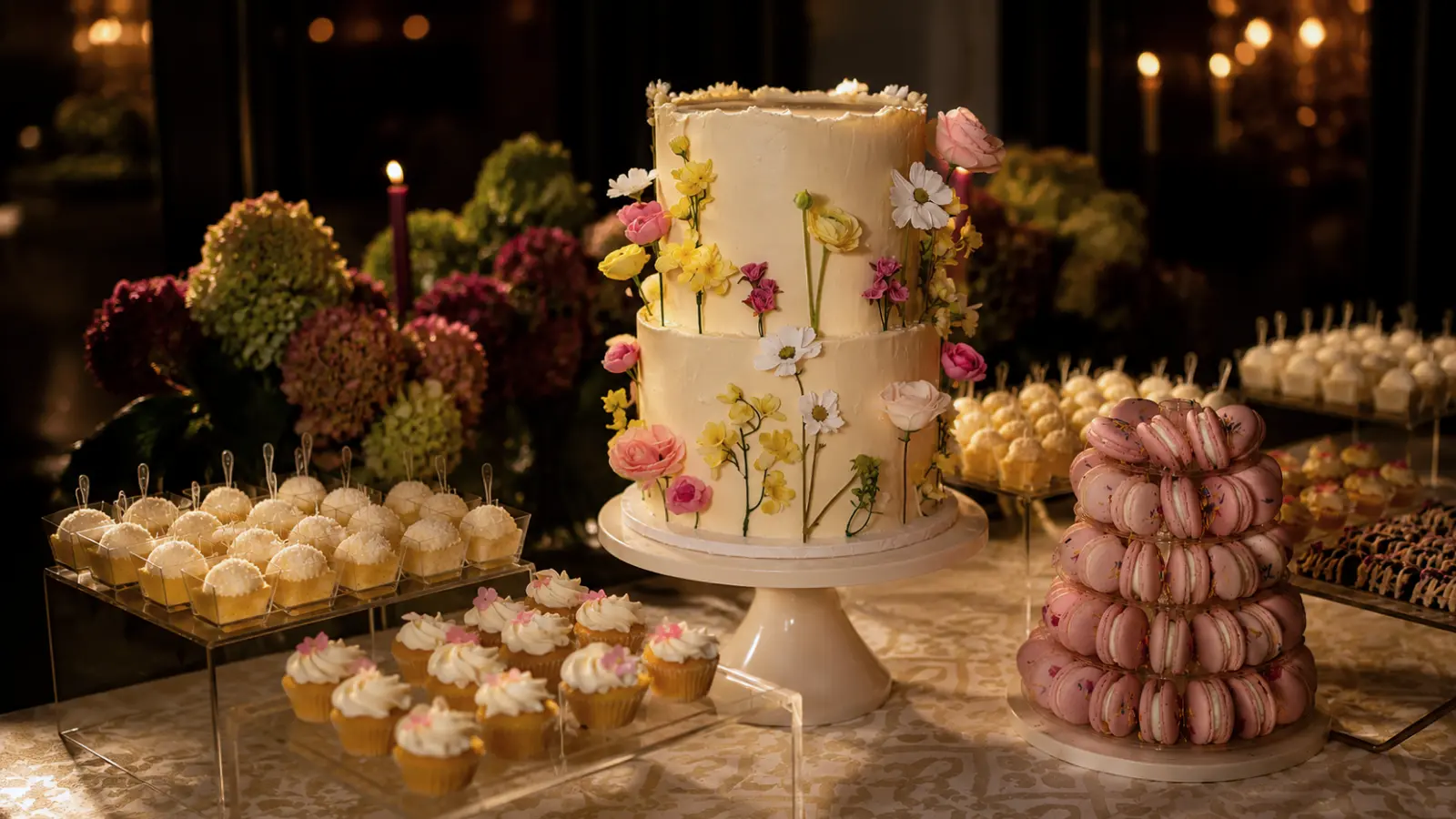
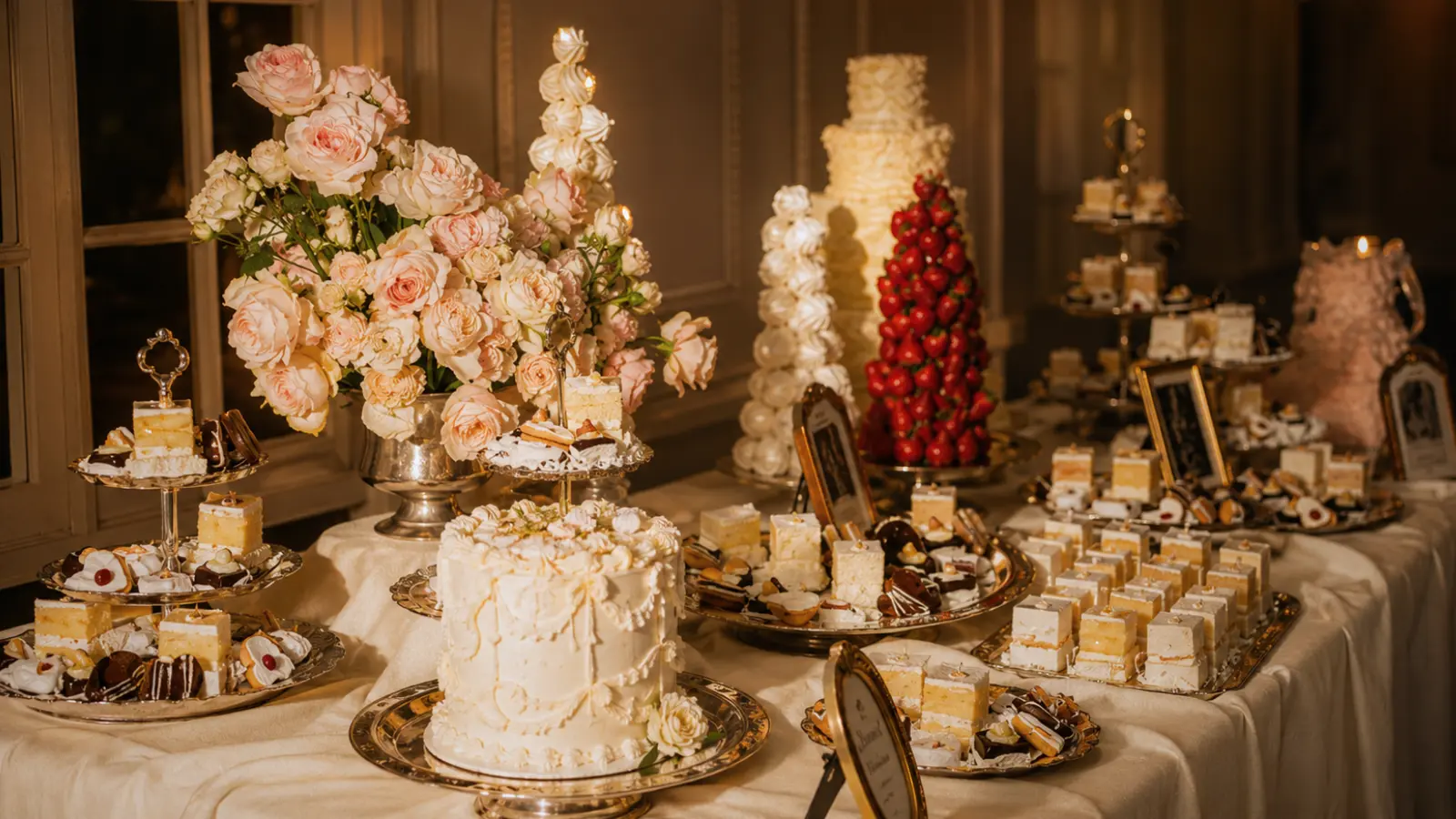
A dessert table is not one alternative — it is many alternatives combined into a single experience. At its best, a dessert table is a curated collection of the couple’s favorite sweets, styled as a cohesive visual display, that guests visit throughout the reception rather than waiting for a single dessert service moment. At its worst, it is a collection of individually unimpressive items that was assembled without a visual or culinary logic and looks like a bake sale.
The difference between a forgettable dessert table and a genuinely extraordinary one comes down to styling, presentation, and thoughtful wedding cake table ideas. The individual items do not need to be elaborate — a beautifully arranged collection of macarons, petits fours, chocolate truffles, shortbread cookies, and small tarts can look as impressive as any custom tiered cake when the styling is intentional. The key variables: a color palette that unifies the display, varied heights and textures in the presentation, professional-quality signage for each item, and linen or surface materials that connect to the wedding’s overall aesthetic.
What a well-curated dessert table includes
- A visual anchor. One item that serves as the display’s centerpiece — a small tiered cutting cake, a macaron tower, a dramatic flower-covered cake, or an oversized statement piece that gives the table a focal point.
- Three to five supplementary desserts. Mini cupcakes, cookies, chocolate bark, tarts, brownies, petits fours, truffles — enough variety to offer options without creating a chaotic display.
- Varied heights. Wedding cake stands at different levels, platters directly on the table, glass domes, and footed bowls create visual movement instead of a flat surface — the display needs visual movement, not a flat surface covered in plates at the same level.
- Cohesive styling. A single color palette, a consistent material language (all white ceramic, or all marble and gold, or all rustic wood), and labeled signage in the wedding’s typography and design style.
- Practical logistics. Tongs or serving pieces at each item, napkins accessible without reaching across the display, adequate lighting so guests can see what they are choosing.
When dessert tables work best
Any wedding style and any guest count — dessert tables are the most adaptable of all the alternatives. Particularly effective when the couple has specific dietary requirements across their guest list (the table can accommodate multiple options by category). Also works well when the couple has strong opinions about specific sweets that do not easily translate into a single tiered format.
When to reconsider
Weddings at venues with very limited space where a full table display is physically impractical. Events where a single powerful dessert moment is more important to the couple than variety. Very tight budgets where assembling a quality display across multiple items is more expensive than a single well-executed cake.
Ice Cream and Gelato Alternatives
Ice cream bars, gelato carts, and soft-serve stations have become an increasingly popular wedding dessert alternative — particularly for outdoor summer receptions, late-night after-party dessert moments, and any event with a casual or festive atmosphere where the dessert is meant to be fun rather than formal. The experience of building a custom ice cream cup or cone from a curated selection of flavors and toppings is inherently social — guests gather, they talk, they make choices, they compare what they built. It is an active experience rather than a passive one.
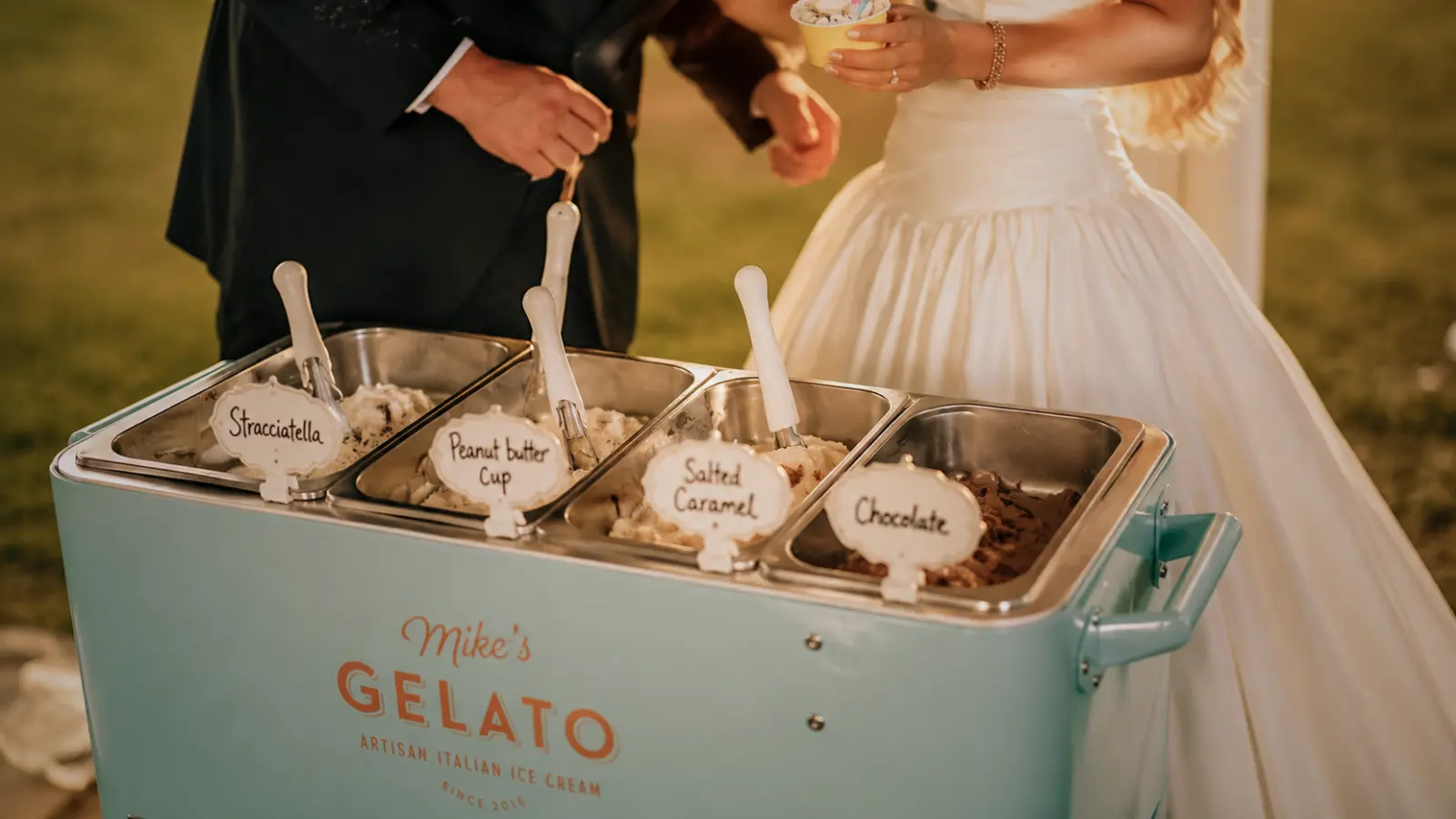
Ice cream format options
The gelato cart. A staffed cart with a vendor who scoops gelato to order. The most elegant version of the ice cream alternative — a genuine gelato vendor with a beautiful cart, artisanal flavors, and proper cones or cups reads as a curated experience rather than a casual add-on. Works particularly well at European-inspired, garden, or sophisticated outdoor events.
The ice cream sundae bar. A self-serve display with scoops pre-scooped or served from a chilled container, alongside a topping bar — sauces, sprinkles, candies, fresh fruit, whipped cream, and other customization options. More casual than a gelato cart but highly interactive. Topping bar styling is part of the design — it can look beautiful when done deliberately.
Soft-serve with custom flavors. A soft-serve machine with one or two curated flavors — a specific soft-serve flavor developed for the wedding, served in custom cones or cups with branded napkins. More visually distinctive than standard soft-serve and increasingly popular at modern or design-forward weddings.
Ice cream sandwiches. Pre-made ice cream sandwiches — a flavor selected by the couple, in custom-stamped packaging — passed as a late-reception dessert by servers or available at a display station. Highly portable, no equipment required, and easily customized in flavor and packaging.
When to reconsider
Formal seated dinner receptions where a self-serve or cart dessert feels inconsistent with the overall service style. Indoor events where the logistics of frozen dessert service require infrastructure the venue cannot provide. Very late-evening receptions where the primary dessert moment has already passed and an ice cream station would feel supplementary rather than central.
Cookie Towers and Displays
A cookie tower or cookie display occupies similar territory to a donut wall — it is festive, approachable, and immediately appealing to nearly every guest regardless of age. The difference is in the visual flexibility: cookies can be shaped, decorated, and displayed in a wider variety of ways than donuts, which means a cookie display can match almost any wedding aesthetic from rustic to formal.
The cookie tower. Cookies displayed on a tiered stand in a tower structure, styled to coordinate with the wedding’s color palette. Sugar cookies with royal icing decoration can be made to match the wedding invitation design, the bouquet flowers, or the venue’s architecture. A cookie tower of elaborately decorated sugar cookies can be visually impressive, and the per-cookie cost is often lower than a macaron while still feeling highly customized.
The cookie bar. A self-serve display of multiple cookie varieties — shortbread, chocolate chip, snickerdoodle, decorated sugar cookies, sandwich cookies — arranged on a styled table. Less visual drama than a tower but more flavor variety and an inherently welcoming, accessible format.
Cookie favors as the dessert. Individual cookies packaged as take-home favors that also serve as the reception dessert — a combination that eliminates the need for a separate dessert service. A beautifully packaged custom cookie that serves as both favor and dessert is a practical and personal approach that many guests appreciate precisely because it gives them something to take home.
Cheese Wheel Wedding Cakes
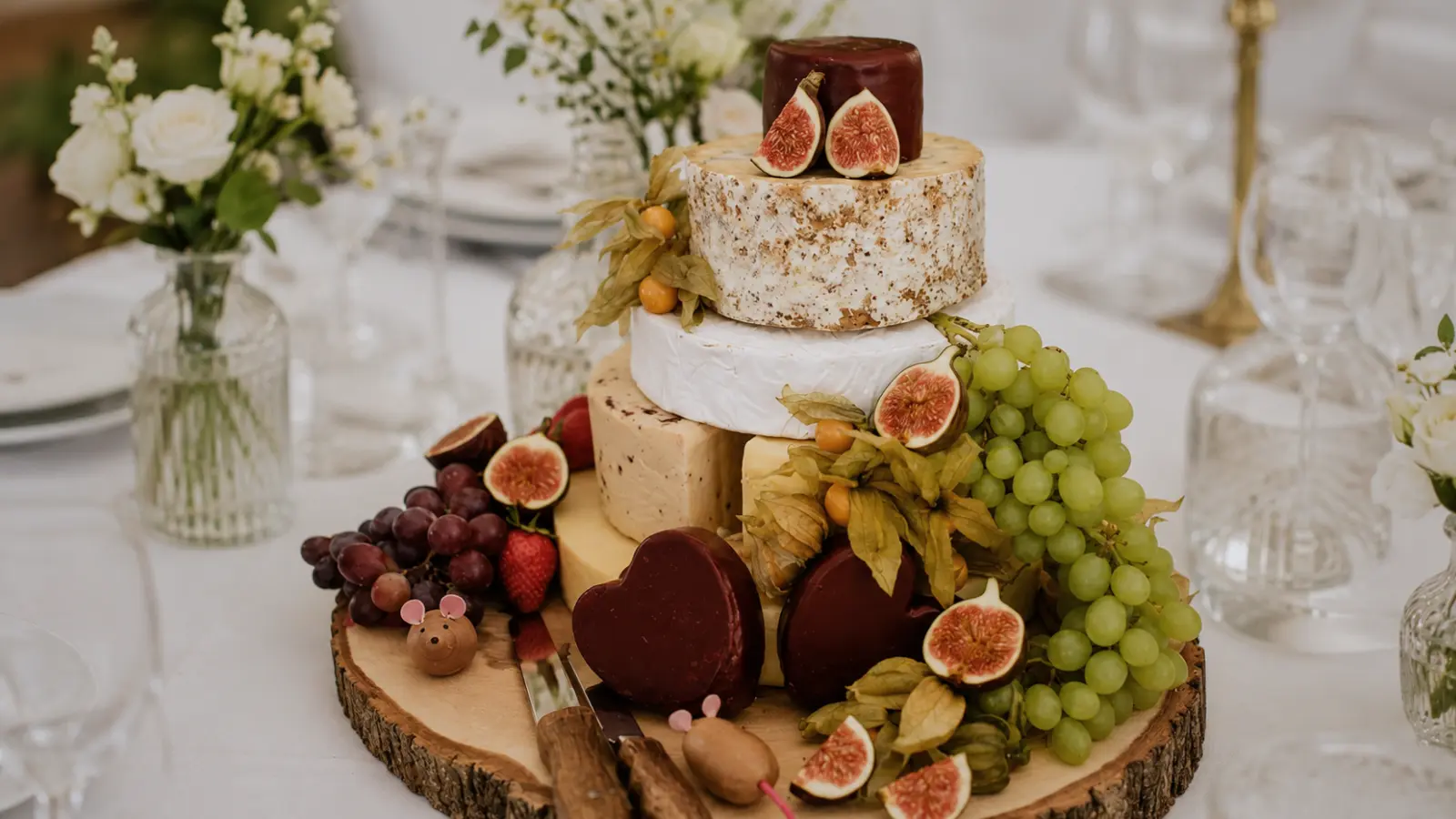
Cheese wheel cakes are one of the most genuinely unexpected alternatives on this list because they turn a savory grazing display into a wedding-style centerpiece. The concept is simple: actual wheels of cheese — typically three to five varieties in graduated sizes — stacked and decorated to resemble a tiered cake. The result looks, from a distance, like a dramatic and elegant tiered cake. Up close, it is a collection of excellent cheeses displayed as a centerpiece.
The appeal is specific to a certain couple and a certain kind of wedding. For hosts who love cheese more than they love cake, who are serving a food-focused guest list, or whose wedding has a European, vineyard, or culinary identity, a cheese wheel cake can feel like a deeply intentional choice. It pairs naturally with wine service, becomes a grazing element during cocktail hour, and produces photographs that are distinctive in a way that no traditional cake can match.
How to build a cheese wheel cake
The variety selection. A typical cheese wheel cake uses three to five varieties chosen for visual contrast as well as flavor balance. A standard progression: a large base of aged cheddar or gouda, a middle tier of brie or camembert, and a smaller top tier of fresh chèvre or a flavored cheese. The contrast between the wax-coated exterior of an aged cheese, the white rind of a brie, and the fresh surface of a chèvre creates visual interest that decoration then enhances.
The decoration. Cheese wheel cakes are typically decorated with grapes, figs, sliced seasonal fruit, rosemary, fresh flowers (with food-safe preparation), honeycomb, nuts, and dried fruit. The decoration is part of the grazing experience — guests take accompaniments alongside their cheese. The overall effect should look lush and deliberate, like a very ambitious cheese board displayed vertically.
The sweet element. Many couples include a small traditional cutting cake alongside the cheese wheel display — a single-tier decorated cake that serves the couple’s cutting moment while guests enjoy cheese. Others include sweet accompaniments at the display: honey, fig jam, date paste, or small sweet crackers that bridge the savory and sweet experiences.
When cheese wheel cakes work best
Vineyard, farm, European-inspired, or food-forward weddings. Any reception where wine is a central part of the beverage service. Smaller weddings of 30 to 80 guests where the cheese display can genuinely serve the room. Events where the couple’s genuine enthusiasm for cheese is known and shared by their guests.
When to reconsider
Weddings with a large number of guests who do not eat cheese (dairy-free dietary requirements). Very sweet-forward receptions where guests will be disappointed by the absence of a traditional dessert option without a supplementary sweet. Formal black-tie events where the informality of a self-serve grazing cheese display may feel inconsistent.
More Alternatives Worth Considering
Beyond the major alternatives above, several formats deserve mention for specific wedding contexts:
Crêpe cakes. A crêpe cake — also called a mille crêpe — is built from dozens of paper-thin crêpe layers stacked with cream filling between each layer. The result is a cake-like slice that reveals the layers dramatically when cut. Visually elegant and surprisingly photogenic. Works best as a display piece at smaller weddings; requires refrigeration and does not scale as easily as some other alternatives.
Pavlova tower. Stacked meringue pavlova rounds with fresh cream and fruit. A beautiful summer dessert option — light, airy, covered in seasonal berries and fruit, and highly photogenic when assembled well. The limitation is significant: pavlova needs to be assembled close to serving time, is humidity-sensitive, and requires a skilled pastry chef who specifically works with meringue. For the right couple and the right event, it is extraordinary.
Profiterole tower (croquembouche). The traditional French wedding dessert — cream-filled choux pastry puffs assembled into a cone and bound with caramel or chocolate. A croquembouche is labor-intensive and visually dramatic. For European-heritage couples, particularly those with French family traditions, it is the most authentic alternative to a traditional cake.
Waffle bar. A staffed or self-serve waffle station with fresh toppings. Works exceptionally well at brunch weddings, morning receptions, and any event with a breakfast-for-dinner aesthetic. Less suited to evening formal events.
Pie bar or tower. A collection of seasonal pies displayed and sliced for guests — particularly effective at fall and Thanksgiving-adjacent weddings, Southern-style receptions, or any event where pie is genuinely the couple’s preferred dessert. A pie tower with a small cutting pie on top preserves the cutting moment with a pie server instead of a cake knife.
How to Keep the Cake Cutting Moment
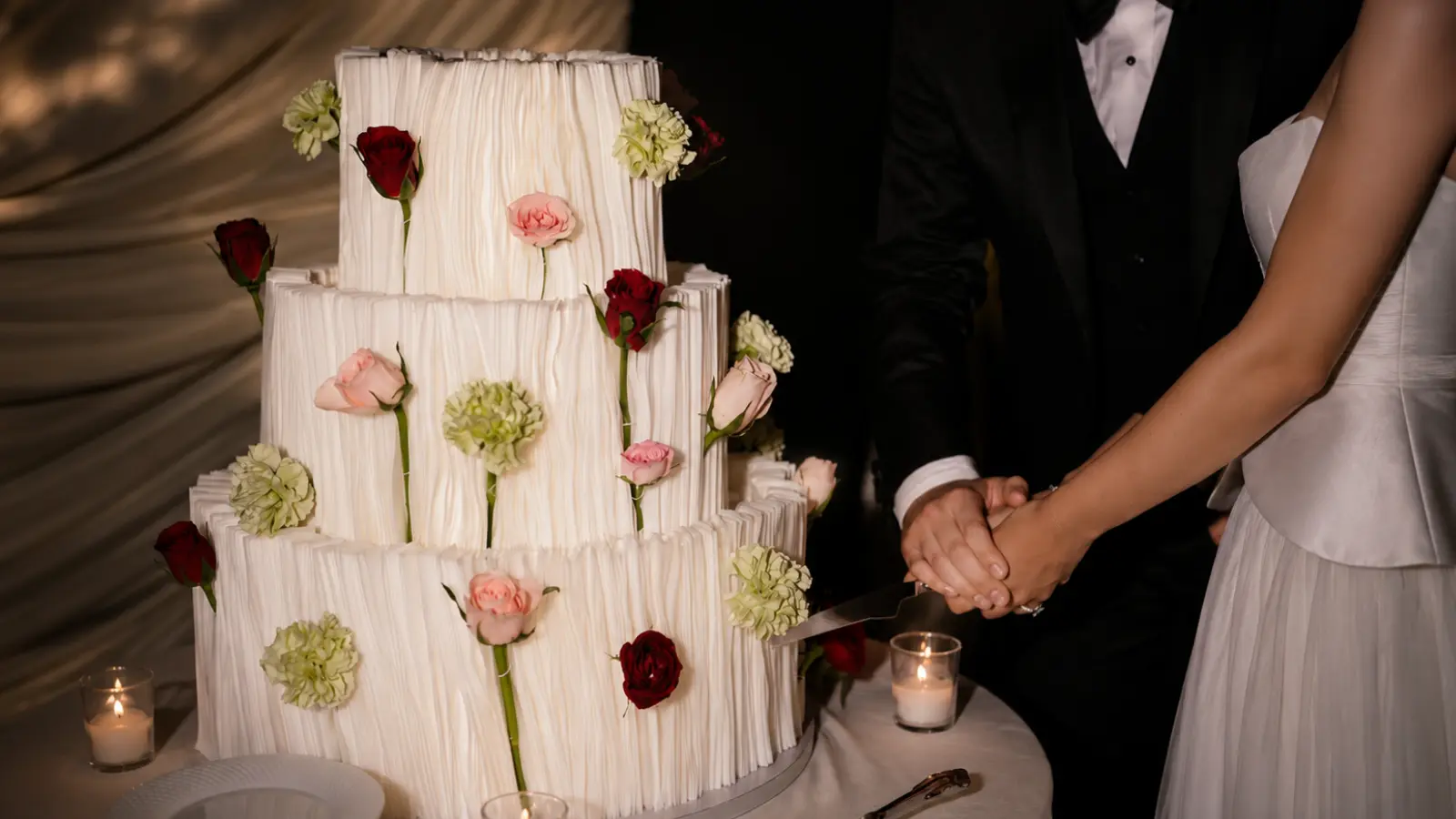
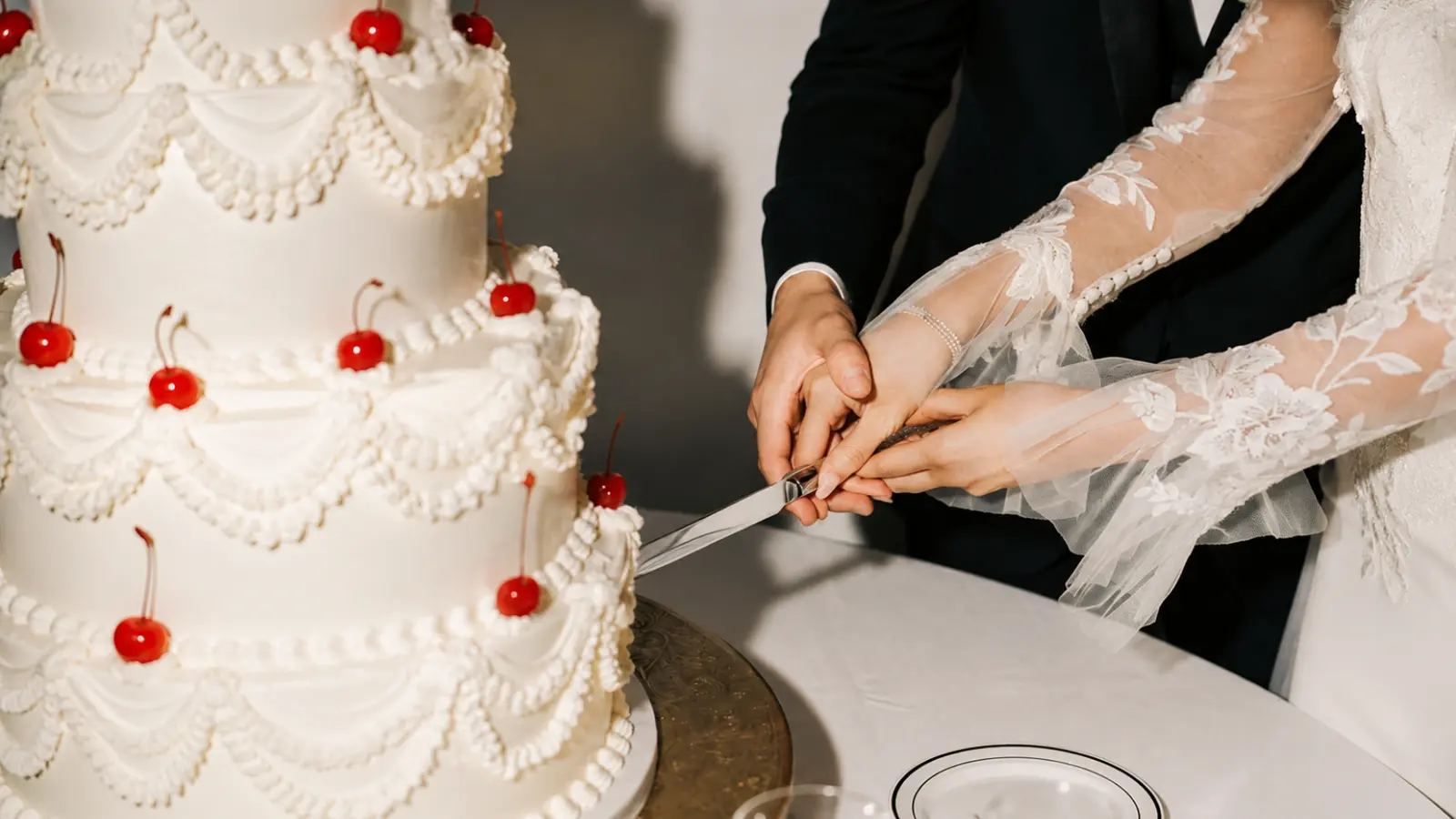
Wedding cake cutting is one of the most photographed moments of the American wedding reception — the first thing the couple does together that is purely for their own pleasure rather than for ceremony or logistics. For many couples, the moment matters even if the dessert does not. A couple who genuinely prefers donuts to wedding cake can still want the photograph of the two of them cutting something together, and they can have it.
The key insight: the cake cutting moment is a ceremony, not a requirement for a specific type of dessert. Almost any alternative can be adapted to preserve it — with intention and a small amount of advance planning.
How to preserve the cutting moment with each major alternative
| Alternative | How to Keep the Cutting Moment |
|---|---|
| Cupcake tower | Include a small cutting cake on the top tier — a single decorated mini cake the couple cuts while guests serve themselves from the tower below. The photos look identical to a traditional cake cutting. |
| Donut display | A small decorated cutting cake at the base of the tower. Alternatively, the couple “pulls the first donut” from the wall together — a casual but highly photographable alternative to cutting. |
| Cheesecake | A cheesecake cuts exactly like a traditional cake — the couple cuts together with a cake knife, the moment is photographed the same way. No adaptation required. |
| Macaron tower | A small cutting cake at the base of the display, or the couple removes the top macaron together in a symbolic gesture. A cutting cake alongside is the more photogenic option. |
| Dessert table | Include a small single-tier cutting cake as the visual anchor of the dessert table. The couple cuts it; guests then serve themselves from the full table. The cutting cake can be small — it exists for the moment, not for serving. |
| Cheese wheel cake | Cut the top tier of the cheese wheel together — a cheese knife used ceremonially, the couple cutting through the rind together. Visually distinctive and completely genuine to what is being served. |
| Bundt cake display | The couple cuts one of the display bundt cakes together. The visual is similar to a traditional cake cutting; the format is familiar enough that no explanation is required. |
| Ice cream bar | Include a small cutting cake at the ice cream station, or have the vendor serve the couple the first scoops together as a ceremonial moment. The small cutting cake is the more photographically clear option. |
The small cutting cake strategy — what to know
The small cutting cake approach — often inspired by one-tier wedding cakes and displayed alongside the alternative dessert — is by far the most versatile solution. It costs less than a full tiered wedding cake, produces the same photographs, and allows the couple to have any alternative they want for the reception’s actual dessert service without sacrificing the ritual moment they may still value.
When ordering a small cutting cake, confirm with the baker: the decoration should match or complement the alternative dessert’s styling — not look like a completely separate cake that happened to arrive at the same event. A small cutting cake topped with the same flowers used on the donut wall, or frosted in the same palette as the macaron tower colors, creates a visual coherence that makes the cutting moment feel intentional rather than compensatory.
Communicate the cutting cake approach to your wedding planner and your photographer in advance. The photographer needs to know it is happening and where the cutting cake will be positioned. The planner needs to know the timing so the cutting moment is coordinated with the DJ or band, the guests are in the room, and the lighting is appropriate for photographs.
Wedding Cake Alternatives Inspiration Board
Wedding cake alternatives can create some of the most memorable dessert displays, from elegant macaron towers and cupcake arrangements to donut walls, mini cakes, dessert tables, and unique non-traditional ideas. Explore our wedding cake alternatives inspiration board for creative displays, styling ideas, presentation details, and inspiration to design a dessert moment that feels personal and intentional.
Final thoughts
The best wedding cake alternatives work because they are chosen with intention, not because they are simply replacing something traditional. Whether the dessert is a cupcake tower, a macaron display, a donut wall, or something completely unexpected, the presentation, styling, and guest experience are what transform it into a true wedding moment.
A wedding dessert does not have to follow one specific format to feel meaningful. When the choice reflects the couple, fits the celebration, and is displayed thoughtfully, an alternative can feel just as elegant and memorable as a traditional wedding cake — and sometimes even more personal.
Frequently asked questions (FAQ)
Will guests be disappointed if there is no traditional wedding cake?
Usually not. Guests remember the overall experience much more than the specific dessert format. A beautifully styled dessert table, cupcake tower, or unique alternative often feels more memorable than a traditional cake chosen only because it was expected.
How do you make a wedding cake alternative feel elegant instead of casual?
Presentation matters more than the dessert itself. Height, symmetry, professional styling, coordinated colors, florals, signage, and the right display pieces can transform simple desserts into a true wedding centerpiece.
What is the biggest mistake couples make when skipping a wedding cake?
Choosing an alternative only because it is different. The strongest choices connect to the couple, the venue, or the guest experience. A unique dessert should still feel intentional rather than something added just to avoid tradition.
Do photographers prefer traditional cakes or creative alternatives?
Photographers usually care more about the visual moment than the dessert type. A dramatic macaron tower, styled dessert table, or beautifully designed cupcake display can create just as strong of an image as a classic tiered cake.
Should your wedding cake alternative match your wedding style?
Yes. The most successful alternatives feel like they belong naturally in the celebration. A donut wall may be perfect for a relaxed outdoor wedding, while a refined macaron tower or plated dessert may fit a more formal event better.
Will wedding cake alternatives become outdated?
The alternatives that age best are the ones chosen for personal reasons rather than trends. A dessert connected to the couple’s taste, culture, or wedding atmosphere will usually feel meaningful years later, even if specific trends change.
What is the best wedding cake alternative for a formal wedding?
For a formal wedding, the strongest cake alternatives are usually macaron towers, plated mini cakes, an elegant dessert table with a small cutting cake, or a refined cheesecake display. Donut walls, ice cream bars, and cookie displays can still work, but they need more careful styling to feel consistent with a formal setting.