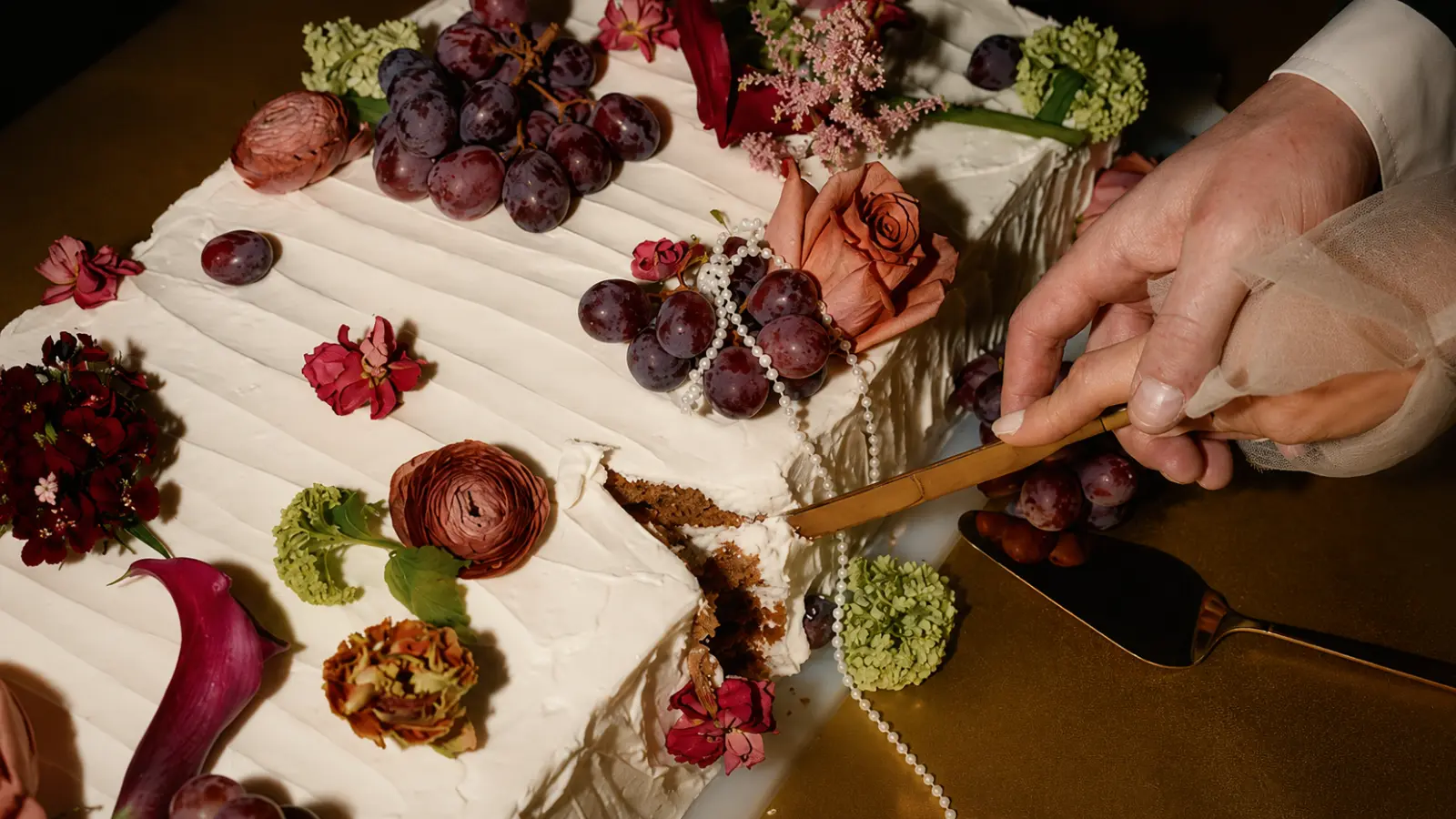
Fall wedding cakes are seasonal wedding cakes designed around autumn-inspired colors, flavors, flowers, and textures that reflect the warmth and atmosphere of the season. The best fall cake designs combine rich color palettes, seasonal ingredients, and intentional decoration without turning the wedding into a themed event.
From burgundy and terracotta buttercream cakes to elegant designs with dahlias, figs, dried botanicals, and warm seasonal flavors, fall wedding cakes offer a rich range of creative possibilities. The key is balancing autumn inspiration with a design that still feels timeless, romantic, and connected to the overall wedding style.
This guide covers everything couples need to know about fall wedding cakes, including the best autumn colors, cake flavors, rustic and elegant designs, floral ideas, seasonal decorations, cake table styling, and practical tips for choosing a fall cake that feels beautiful instead of overly themed.
Fall Wedding Cake Ideas
The best fall wedding cake ideas are not the ones with the most autumn details crammed onto wedding cakes — they are the ones where a single strong design choice does all the work. One color. One flower. One flavor. One texture. The season does the rest.
What follows is a curated set of specific, workable ideas organized by aesthetic and budget, so you can choose a design direction that fits your wedding instead of collecting inspiration without a clear plan.
Terracotta buttercream with dried botanicals
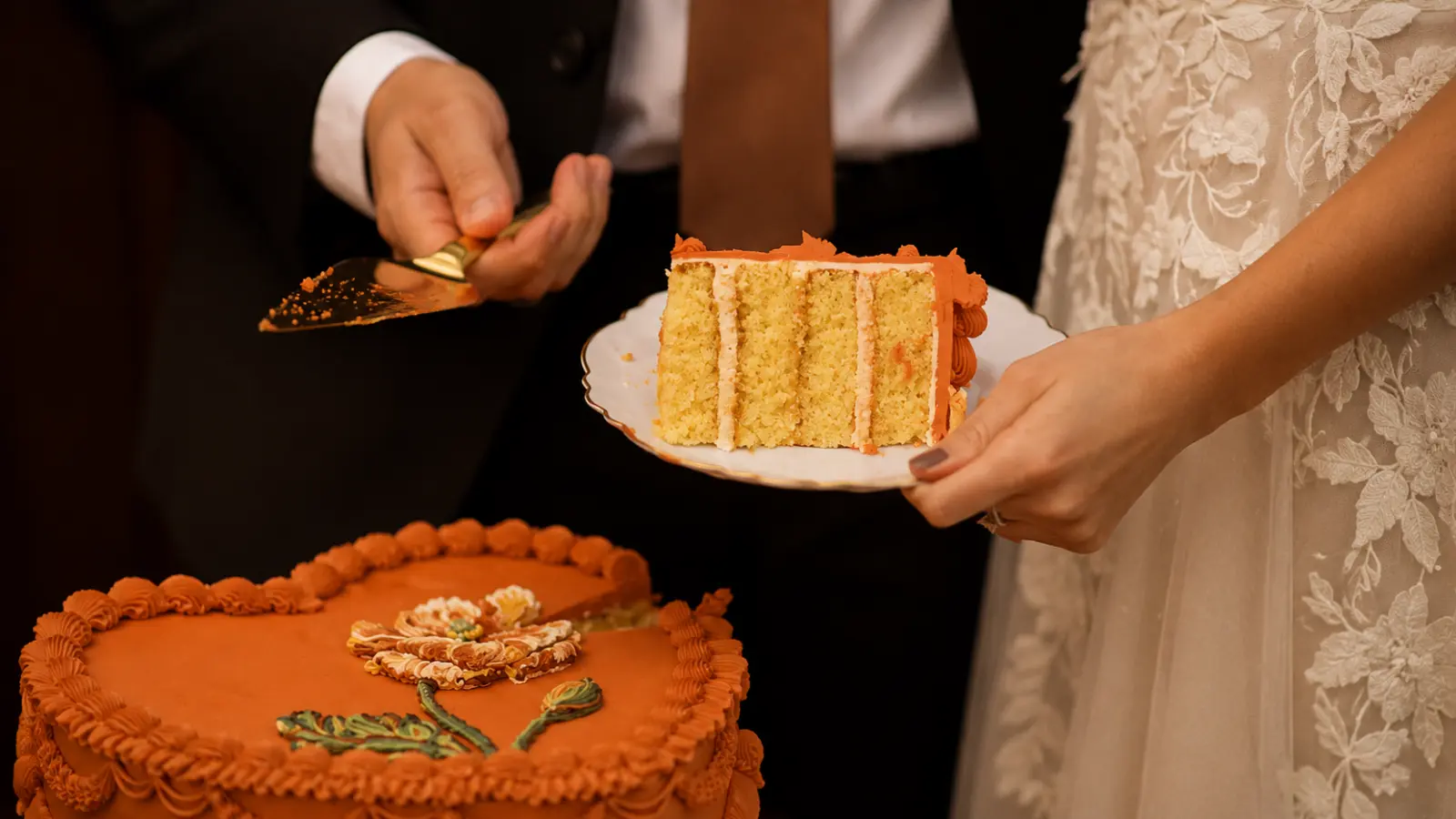
A two-tier wedding cake or three-tier design in a warm terracotta or burnt sienna buttercream — applied with a palette knife for texture — finished with dried pampas grass, preserved eucalyptus, dried orange slices, and a few fresh or dried dahlias. No fondant, no piping, no metallic details. The texture and the color palette do everything.
This can be one of the strongest fall cake designs because it photographs beautifully against both wood barn interiors and warm-toned estate settings, can be planned without heavy fresh-flower coordination, and avoids some of the wilting concerns that come with fresh florals. The terracotta palette reads as warm and earthy rather than themed — it never looks like a Halloween cake.
Burgundy and ivory with fresh dahlias
A smooth ivory buttercream cake — two or three tiers — with clusters of burgundy dahlias placed between tiers and at the base. No additional decoration. The contrast between the clean ivory surface and the deep, saturated burgundy of the dahlias is all the design this cake needs.
This is one of the most versatile fall designs because it can work across many formality levels. At a rustic barn wedding, it looks appropriately organic. At a formal estate reception, it looks like a conscious editorial choice. The only variable that changes is the finish: slightly textured buttercream for the rustic setting, smooth buttercream for the formal one.
Dark chocolate with gold leaf accents
A dark chocolate ganache-coated cake — tiers with a deep, near-black chocolate surface — with brushed 22K gold leaf in abstract patches, and one cluster of antique roses or dried botanicals at the base or between tiers. Dramatic, modern, and entirely appropriate for a formal autumn wedding.
What many couples do not realize: a chocolate ganache surface may not be dramatically more expensive than some buttercream finishes, but it photographs with a depth and richness that feels especially appropriate for fall. In fall wedding photography, where warm candlelight and wooden interiors are common, the dark chocolate surface reads as genuinely luxurious.
Painted watercolor autumn leaves done correctly
Watercolor autumn foliage is one of the fall wedding cake designs most likely to look either stunning or dated depending entirely on execution. Done correctly — as a soft, abstract wash of warm tones across a cream or white buttercream surface, suggesting leaves without depicting them literally — it is genuinely beautiful and distinctively fall without being themed. Done incorrectly — with sharp-edged orange and red maple leaf illustrations repeating across the surface — it looks like a seasonal paper plate.
If you want a painted fall cake, look specifically for a baker whose portfolio includes abstract watercolor work on cakes, not just a baker who says they can paint. Ask to see fall-specific examples. The quality range on this style is extreme.
Naked cake with figs, blackberries, and honey
A naked or semi-naked cake layered with fresh figs, blackberries, and a drizzle of honey at the tiers, finished with fresh rosemary sprigs and one cluster of antique roses. This is the fall version of the classic garden-party naked cake, and it is especially appropriate for September and October weddings when figs and blackberries are at peak season.
The fruit on a naked cake is partly decorative and partly structural — it is also what guests see when a slice is cut, which means the interior photograph is as beautiful as the exterior. Coordinate with your baker on timing: fresh figs and berries are usually best placed close to the event so they stay fresh, intact, and visually clean.
Small fall cutting cake with dramatic styling
For couples with small weddings, elopements, or those who prefer to serve another dessert to guests: a single-tier cutting cake in a deep autumn color — burgundy velvet, dark chocolate ganache, or terracotta buttercream — on a statement marble or dark slate cake stand, surrounded by scattered dahlias, small gourds (the elegant, non-carved kind), and taper candles. The styling context transforms a small cake into a reception centerpiece.
Autumn Wedding Cake Colors
Fall color is more nuanced than the Instagram version of it suggests. The Pinterest board version of a fall wedding cake palette — orange, brown, and red with leaf motifs — is not what the best fall cakes look like. The best fall cakes borrow from the season selectively: one or two saturated autumn tones against a neutral base, with a metallic accent that adds warmth without theatrics.
What makes a fall color palette read as sophisticated rather than seasonal is the same thing that makes any color palette work: restraint, a dominant neutral, and deliberate contrast. Here is how the most effective fall palettes are built.
Burgundy: A Versatile Fall Cake Color
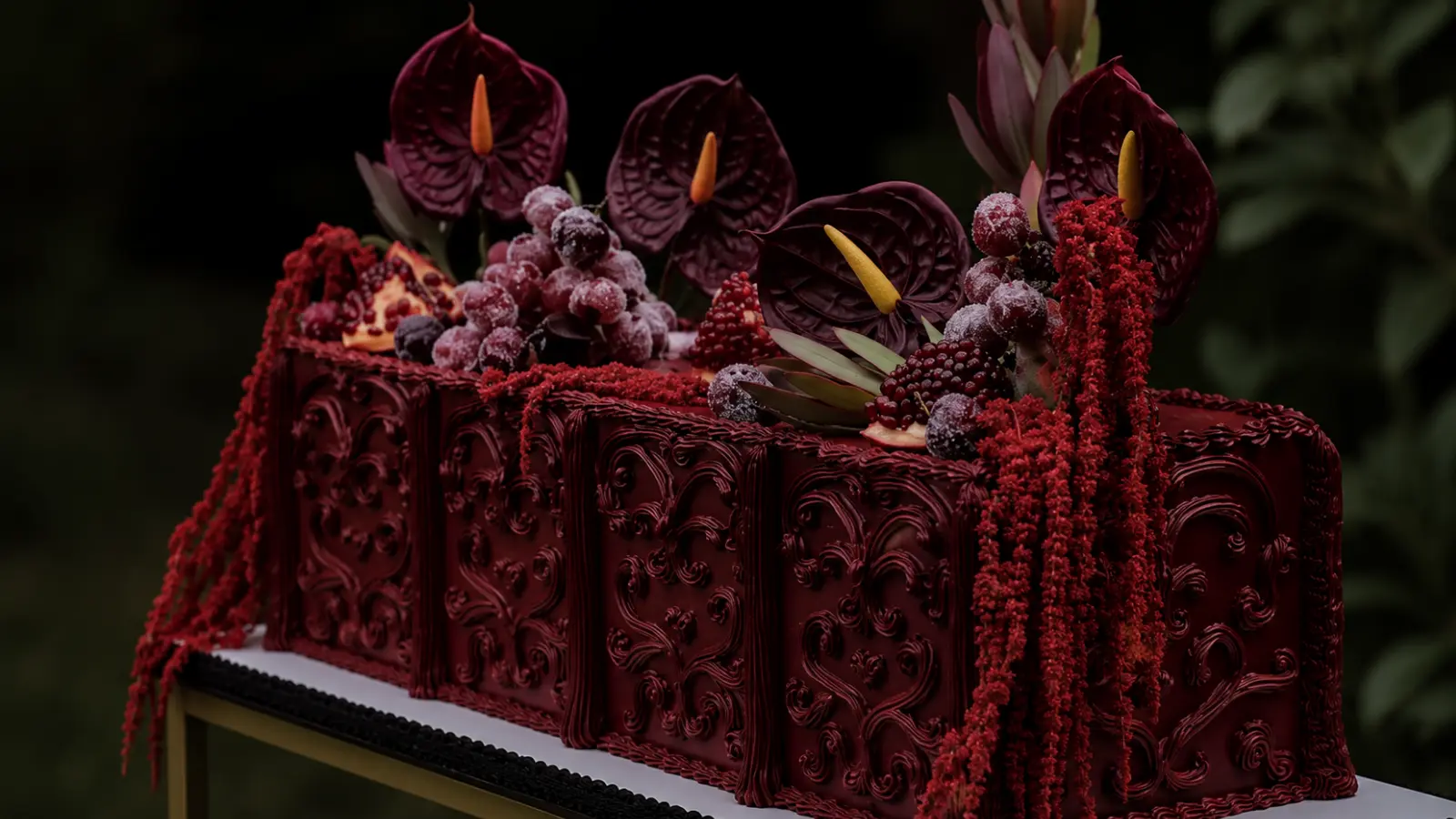
Burgundy is one of the most versatile fall wedding colors because it can work across many formality levels, from rustic receptions to black-tie settings, without feeling overly trendy. On a cake, burgundy works as the dominant tone (a full burgundy buttercream finish), as a floral accent (burgundy dahlias on an ivory cake), or as a detail element (burgundy ribbon, burgundy drip on a white cake).
The critical pairing decision: burgundy often feels warmer against ivory or cream than against true white. True white with burgundy reads as high-contrast and modern, while ivory with burgundy reads softer and more seasonal. For many fall weddings, the ivory version lets the burgundy feel rich rather than graphic.
Terracotta and burnt orange
Terracotta — a muted, dusty, clay-toned orange-brown — is the version of orange that works on fall wedding cakes. It is warm without being aggressive, recognizably autumnal without reading as Halloween, and pairs beautifully with cream, gold, and deep green.
Burnt orange is slightly more saturated than terracotta and works best as an accent rather than a base color — as a ganache drip on a neutral cake, as one tier in a multi-tone palette, or as the color of a single floral element. A full-cake burnt orange buttercream is a confident choice that works in the right aesthetic context (a bohemian or maximalist wedding where bold color is part of the overall design), but it requires everything else around it to be pulled back dramatically to avoid overwhelming the visual.
Deep plum and moody tones
Deep plum, eggplant, and midnight blue read as fall-appropriate without having any literal autumn reference. They work particularly well for late October and November weddings where the aesthetic is moody and dramatic rather than warm and harvest-inspired. A deep plum cake with gold accents and a cluster of dusty sage and dried botanicals creates a moody, formal effect that feels very different from orange or brown palettes.
Warm neutrals as the foundation
Warm ivory, cream, and latte tones are the foundation that makes every autumn accent color work. Many of the most beautiful fall wedding cakes are primarily neutral — the autumn character comes from the florals, the texture, the metallic accents, or the flavor, not from saturating every inch of the cake in fall color. A warm ivory three-tier cake with one cluster of terracotta dahlias is a fall cake. The same cake with every tier in a different autumn tone is a fall-themed cake. The distinction matters.
Fall color palette reference
| Palette | Best Paired With | Reads As | Best For |
|---|---|---|---|
| Burgundy + ivory + gold | Dahlias, antique roses, fig accents | Romantic, sophisticated fall | Many venues and formality levels |
| Terracotta + cream + copper | Dried botanicals, pampas, eucalyptus | Earthy, bohemian, warm | Barn, outdoor, vineyard |
| Burnt orange + chocolate + gold | Marigolds, dried citrus, rosemary | Bold, maximalist fall | Bohemian, rustic-chic |
| Deep plum + sage + gold | Dried botanicals, garden roses | Moody, dramatic, editorial | Late October/November, formal |
| Dark chocolate + black + gold leaf | Antique roses, one floral cluster | Luxurious, modern, dramatic | Ballroom, estate, formal reception |
| Ivory + dusty rose + warm taupe | Dried lavender, garden roses, dried citrus | Soft, romantic, understated fall | Any venue; season-adjacent, not literal |
Fall Wedding Cake Flavors
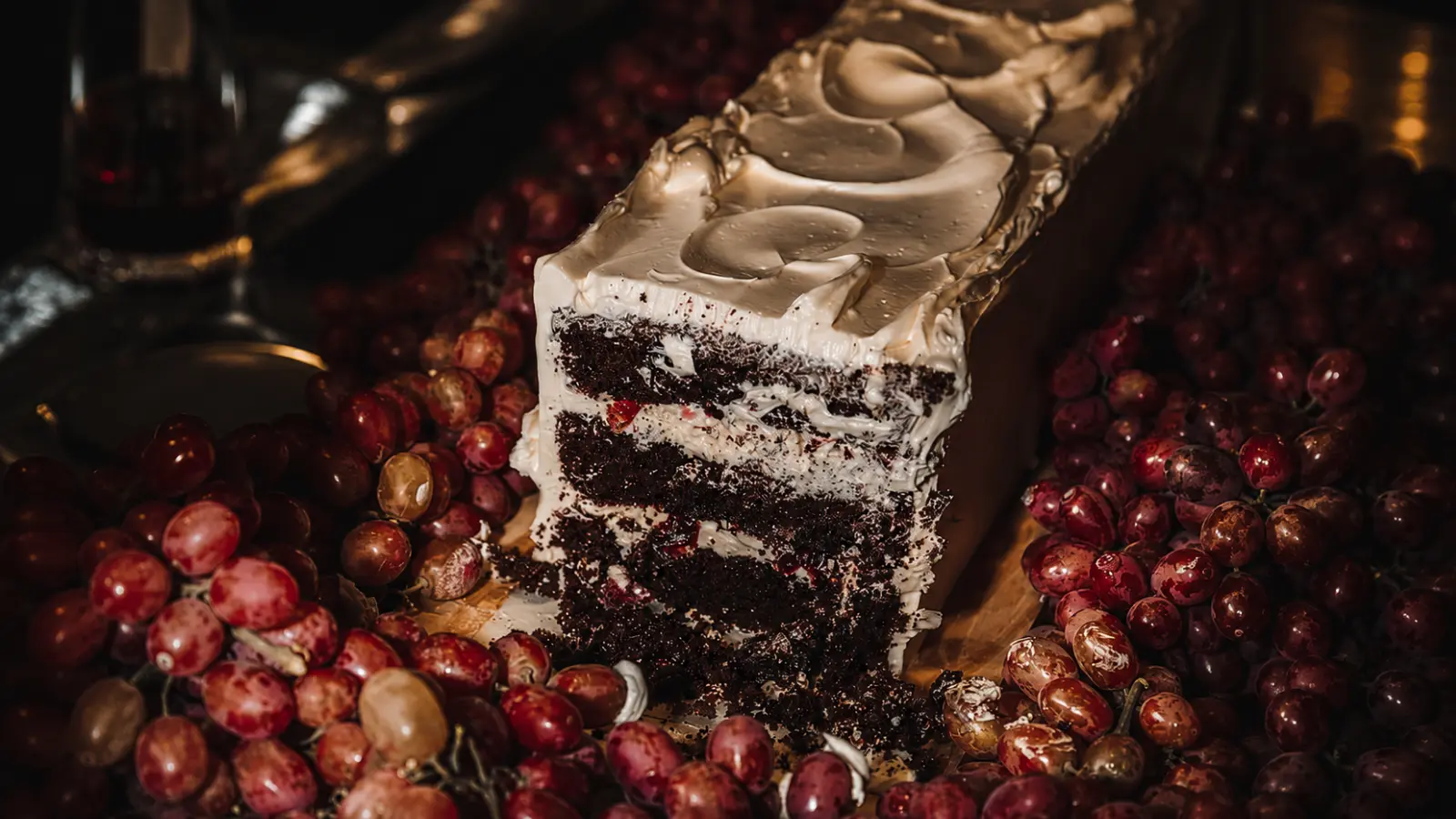
Fall gives wedding cake flavors a natural seasonal direction. Warm spice, dark chocolate, maple, and caramel often feel especially natural at autumn receptions. The challenge is choosing a fall flavor that genuinely tastes exceptional at the volume and context of a wedding dessert, rather than choosing a flavor because it sounds like fall and discovering during the tasting that it is more conceptually autumn than actually delicious.
A few things worth knowing before the tasting: fall flavors tend to be richer and more filling than spring and summer flavors. After a full wedding dinner, a dense pumpkin cake or a very heavy chocolate ganache can be more than guests want. The best fall wedding cake flavors tend to balance richness with lightness — a spiced cake with a mousse filling rather than a dense filling, for example, or a dark chocolate cake with a bright raspberry layer that cuts through the richness.
Spiced brown butter cake
Spiced brown butter cake is one of the strongest fall wedding cake flavors because it feels seasonal without being too literal. Brown butter adds a nutty, caramel depth to a vanilla sponge that is unmistakably autumnal without being specifically pumpkin, apple, or any other seasonal ingredient that guests might actively dislike. The spice in a well-made version comes from warm baking spices — cinnamon, cardamom, a hint of nutmeg — that enhance rather than dominate the flavor.
Pairing it well: spiced brown butter cake works beautifully with a salted caramel filling, an apple curd, or a bourbon buttercream. Salted caramel is a widely appealing pairing because it amplifies the warm, sweet depth of the brown butter without adding another dominant flavor. This combination works well for fall because it feels warm, familiar, and slightly more distinctive than plain vanilla.
Dark chocolate with salted caramel or spiced ganache
Dark chocolate is not exclusively a fall flavor, but it belongs in fall in a way it does not always fit in spring or summer. A dark chocolate sponge — not overly sweet, properly bitter — with a salted caramel filling and a dark chocolate ganache finish can feel sophisticated and appropriate for an autumn evening reception, and it is completely appropriate year-round while feeling particularly right at an autumn evening reception.
A variation worth knowing: a dark chocolate cake with a spiced ganache (ganache infused with cinnamon, star anise, and a small amount of cayenne) is genuinely distinctive and memorable. It is a bolder choice than plain chocolate, and not every guest will love the heat — which is exactly why it works best as one tier of a multi-flavor cake rather than the only option.
Apple cake with cinnamon buttercream
A fresh apple cake — not apple-flavored, but made with real grated or chunked apple baked into the sponge — with a cinnamon cream cheese or cinnamon meringue buttercream is a genuinely seasonal choice that tastes like the best version of fall rather than a vague impression of it. What distinguishes a good apple wedding cake from a mediocre one is the texture: real apple in the batter creates a moist, dense crumb that holds well over the hours of a reception, unlike some sponge cakes that dry out on the surface.
Pairing note: an apple cake with a brown sugar Swiss meringue buttercream and a salted caramel drip can be a strong mid-budget fall cake option. It looks beautiful, tastes exceptional, and is achievable at most quality bakeries without requiring specialty skills.
Maple cake with maple cream cheese frosting
Maple is an underused wedding cake flavor that most guests appreciate more than they expect to. A maple sponge — made with real maple syrup rather than extract — has a complex, slightly smoky sweetness that is completely distinct from vanilla or caramel, and it pairs particularly well with a cream cheese frosting lightened with meringue. The result is a cake that tastes unmistakably like the season without using any of the flavors that guests are most likely to be ambivalent about (pumpkin, heavy spice).
For September weddings in the Northeast or upper Midwest where maple is culturally familiar, this is one of the most personally meaningful choices a couple can make. For weddings in other regions, it may be less immediately resonant — worth discussing at the tasting.
Chai-spiced vanilla
A chai-spiced cake can be a crowd-friendly way to bring warm autumn spice into a wedding cake without making the flavor feel too heavy. Where pumpkin spice can feel aggressively specific and heavy spice blends can be too assertive, chai — cinnamon, ginger, cardamom, clove, and a hint of black pepper — adds complexity to a vanilla base without overwhelming it. Most guests who dislike heavy spice still enjoy chai-spiced vanilla, because the spice reads as warmth and depth rather than as a dominant flavor.
Pairing suggestion: chai-spiced vanilla with a honey buttercream and a fig jam filling can be a beautifully balanced autumn flavor combination — every element belongs in fall, the flavors balance without competing, and the fig jam gives the interior of the cake a visual and flavor accent that is genuinely beautiful when the slice is cut.
Pumpkin cake the careful version
Pumpkin spice wedding cakes exist in a spectrum from genuinely delicious to a cake that tastes like a candle. The difference is in the execution: a well-made pumpkin cake uses real pumpkin purée in the batter, a balanced spice blend that does not lean too hard on clove or nutmeg, and a cream cheese frosting that cuts through the sweetness. A poorly made pumpkin cake uses heavy spice extract, a spice blend where one note dominates, and a frosting that cannot stand up to the density of the cake.
If you want pumpkin at your fall wedding, ask to taste the baker’s specific version rather than agreeing to the concept before you know how they execute it. Pumpkin cake can vary widely from bakery to bakery. Request a tasting of the exact combination you are considering, not a representative sample of spice cake in general.
Fall flavor and pairing reference
| Cake Flavor | Filling | Frosting | Best For |
|---|---|---|---|
| Spiced brown butter | Salted caramel | Vanilla meringue buttercream | Any fall wedding; most versatile |
| Dark chocolate | Salted caramel or raspberry | Dark chocolate ganache | Formal, evening, dramatic |
| Apple cake | Brown sugar caramel | Cinnamon cream cheese | Rustic, barn, outdoor fall |
| Maple | Bourbon cream or pecan praline | Maple cream cheese buttercream | Early-to-mid fall, many venue styles |
| Chai-spiced vanilla | Fig jam or honey cream | Honey buttercream | Any fall wedding; crowd-friendly |
| Pumpkin | Cream cheese filling | Cream cheese frosting | October, rustic or casual weddings |
| Almond | Fig jam or blackberry | Almond meringue buttercream | Elegant fall; formal venue |
Mixing flavors by tier
For a three-tier fall cake, different flavors per tier is a particularly practical approach: it gives guests variety and allows the couple to include a more adventurous flavor without making it the only option. A common and well-balanced fall configuration: spiced brown butter on the bottom tier (the most serving count), vanilla bean or almond on the middle tier (for guests who prefer a lighter flavor), and dark chocolate on the top tier (saved for the couple’s first anniversary or served as the ceremonial cutting tier).
Rustic Fall Wedding Cakes
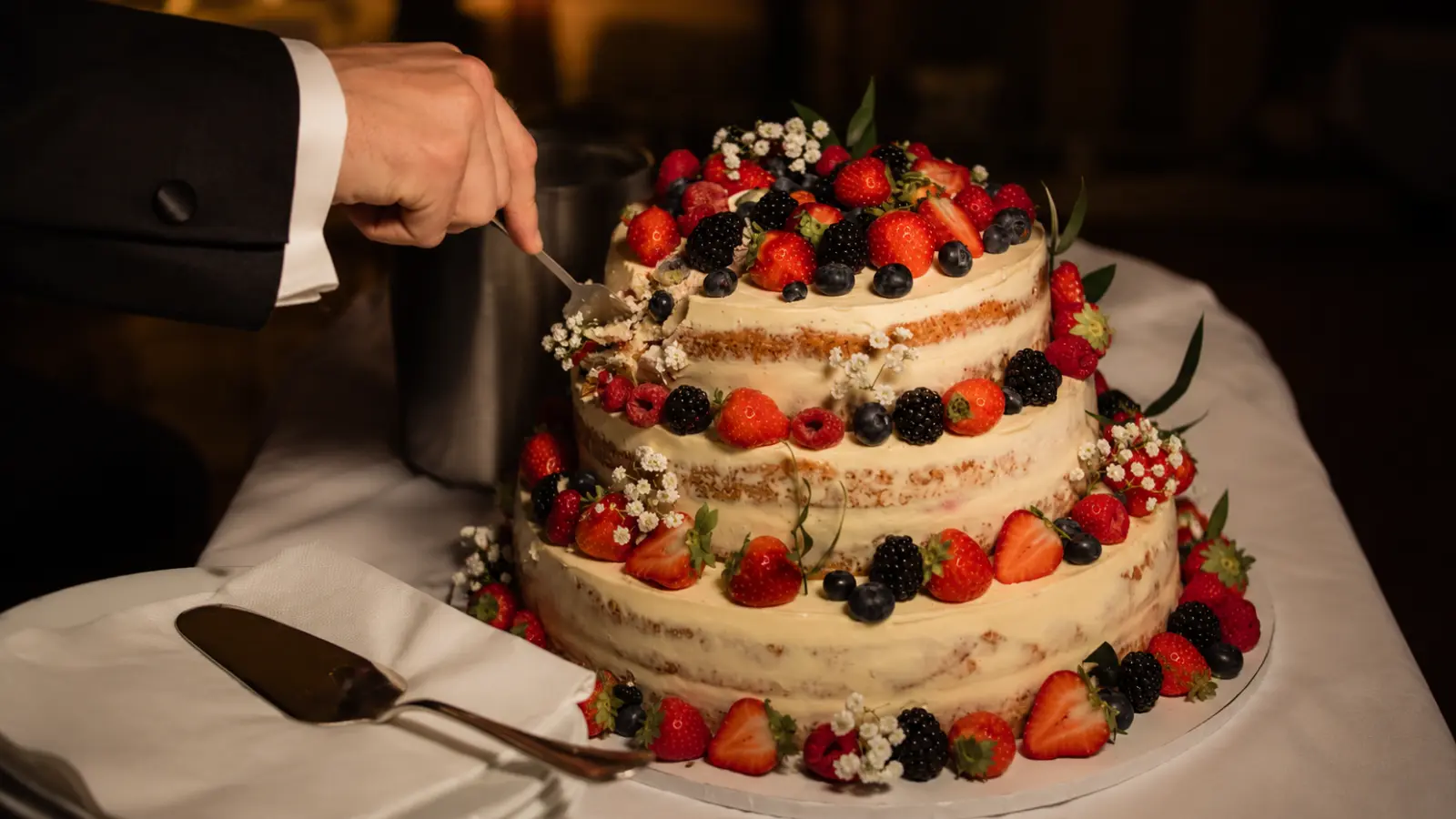
Rustic wedding cakes are especially strong in fall because organic texture, naked or semi-naked layers, fruit, and foliage already feel seasonal. The aesthetic — organic texture, naked or semi-naked layers, fruit and foliage accents — is inherently autumnal without requiring any specific fall color or decoration. A rustic cake in warm neutral tones with fresh seasonal elements reads as fall without ever looking themed.
What distinguishes a genuinely beautiful rustic fall cake from one that just looks unfinished is intentionality. Every element on the cake should be there because it was chosen, not because it was convenient. A cluster of fresh figs and blackberries at the base of a semi-naked cake looks curated. The same cake with random fruit scattered across every tier looks like an afterthought. Restraint is what makes rustic look intentional.
Semi-naked with seasonal fruit and foliage
A classic rustic fall wedding cake is a semi-naked three-tier, with the cake layers visible through a thin wash of buttercream, decorated with fresh figs (halved to show the interior), blackberries, small bunches of fresh or dried lavender, sprigs of rosemary, and one or two antique garden roses or dahlias. No fondant, no piping, no formal structure. The decoration is entirely botanical and edible.
What makes this design work at a fall wedding specifically: the fruit elements are often at their best during fall, which means the visual accuracy and the taste of the fruit are both at their best. A fig cake in August looks like an attempt; a fig cake in October looks like exactly the right seasonal choice.
Textured buttercream in autumn tones
A palette-knife textured buttercream in terracotta, warm taupe, or a soft rust — with no additional decoration beyond the texture itself, or with a single dried botanical cluster at the base — is one of the most elegant and low-maintenance rustic fall options. No fresh flowers to coordinate, no fruit to source at the last minute, no fondant. Just a beautifully executed textured surface in a color that feels like the season.
The texture is the design on this cake, which means the baker’s skill with a palette knife is the entire quality determinant. Ask to see portfolio examples of palette-knife textured cakes specifically — not all bakers who can execute a smooth finish can produce a palette-knife texture that reads as intentional rather than messy.
Naked cake with caramel drip and pecans
A naked cake — fully exposed layers — with a salted caramel drip running down the sides, crushed toasted pecans pressed onto the caramel, and a few dried orange slices and cinnamon sticks at the tiers can become a strong statement piece for a rustic fall reception. It looks like the best version of fall baking made into a wedding cake, and it tastes exactly as good as it looks if the caramel is made properly and the nuts are fresh-roasted.
One note on execution: the caramel drip and nut application should be done the morning of the wedding, not the day before. Caramel weeps and nuts soften overnight, particularly in refrigeration. A baker who plans to decorate a naked caramel cake far in advance should be able to explain how they will protect the texture and appearance before service.
Rustic fall cakes and venue temperature
Rustic fall cakes — especially naked and semi-naked styles, and cakes with fresh fruit — are more temperature-sensitive than fondant-covered or fully buttercreamed cakes. For outdoor fall weddings where the reception area is not climate-controlled, this matters: a naked cake in mild, shaded fall weather may hold well, while the same cake in a sun-exposed tent can become more vulnerable by the time it is cut.
Tell your baker the venue type, whether the reception is indoor or outdoor, and the expected temperature range. A good baker will either adjust the frosting ratio to better withstand the conditions or advise on a finish that is more appropriate for the environment. This conversation is much easier to have before the design is finalized than after it is baked.
Elegant Fall Wedding Cakes
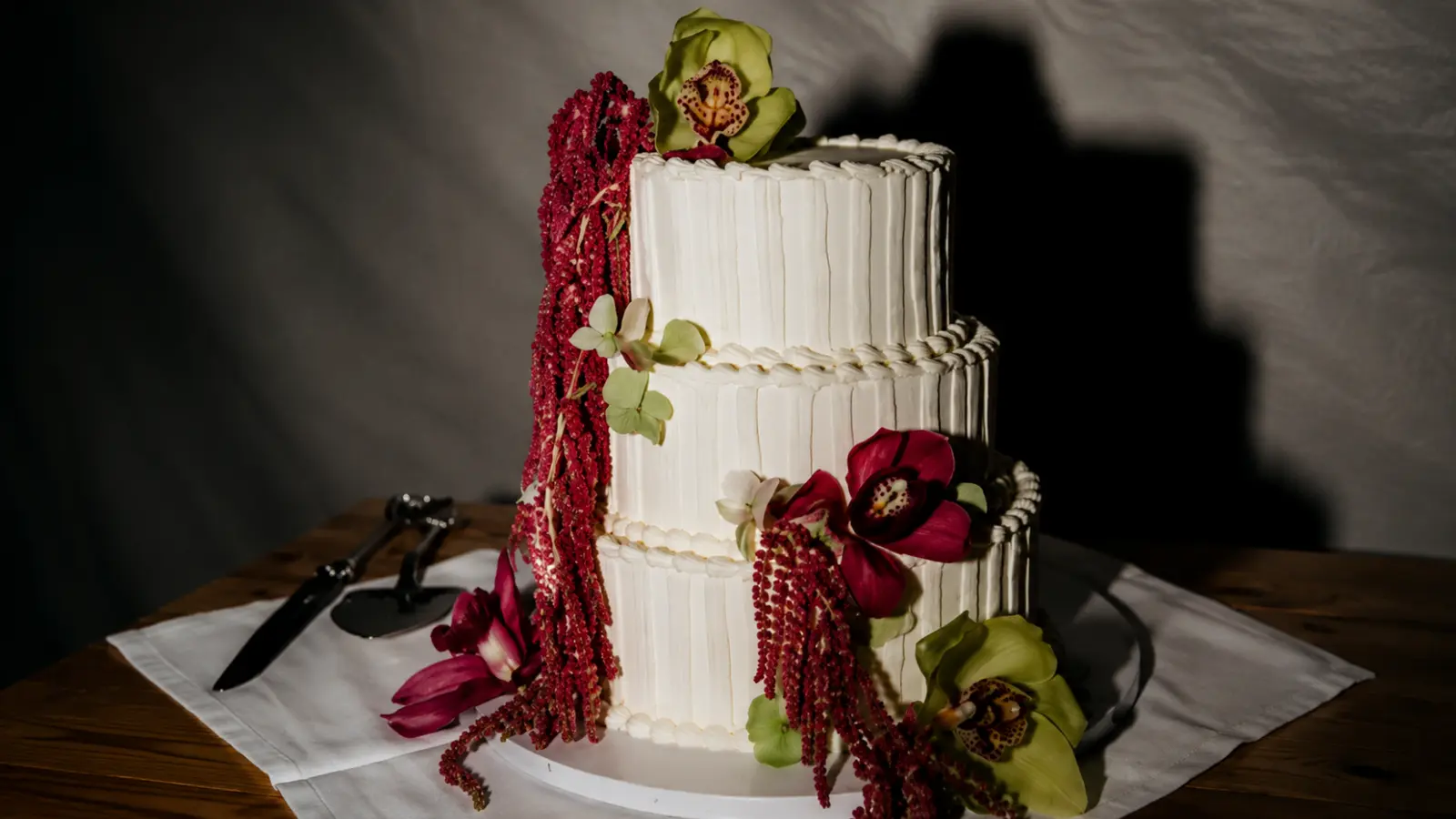
Elegant wedding cakes can still feel seasonal, but the distinction is not the color palette or even the price — it is the technique. Elegant fall wedding cakes apply autumn tones through refined methods: smooth finishes, sugar flowers, gold leaf, precise piping, hand-painted detail. The season is present in the palette and the florals, but the execution is formal.
What many couples do not realize when planning an elegant fall cake: the formality of the technique does not require the cake to be beige or white. A burgundy smooth buttercream cake is elegant. A deep plum fondant cake with gold-dusted sugar dahlias is elegant. Autumn color and formal technique are not mutually exclusive — the fall palette can be applied with the same precision as any other color scheme.
Smooth ivory with burgundy sugar flowers
The most classic elegant fall wedding cake: a smooth ivory buttercream three-tier — surfaces near-perfect, edges clean — with a cascade of handcrafted sugar dahlias in deep burgundy, antique rose, and dusty mauve descending from the top tier. Gold leaf accents between the flowers. Nothing else.
This design works at any formal venue. It reads as intentionally seasonal without any literal fall reference — the palette suggests autumn without depicting it. The sugar flowers are the labor-intensive element. A full cascade from a skilled baker can add a significant amount to the base cake price, while a partial arrangement — flowers clustered on one side of the cake rather than cascading down — can create a similar feeling with less handcrafting.
Fondant with hand-painted autumn motifs — the tasteful version
A smooth fondant cake with hand-painted watercolor autumn foliage — executed as a loose, abstract wash rather than a detailed illustration — can be an elegant way to reference the season. The key word is abstract: a watercolor wash of warm amber, rust, and deep red that suggests the season rather than depicting individual leaves is elegant. Individual maple leaf illustrations painted in orange and red across a white fondant surface is seasonal décor.
For this design, look specifically for bakers who have painted wedding cakes before — not just cake decorators who say they can paint. Watercolor painting on fondant requires a fundamentally different skill set than piping or fondant work, and the portfolio will make the quality difference obvious.
Metallic and dramatic
For a late-fall evening wedding in a formal venue, a metallic fall cake can be one of the most striking options available. The approach: a dark base — deep eggplant, near-black navy, or very deep green — with bronze or copper leaf applied in abstract patches across the surface, finished with one cluster of deep burgundy or antique gold sugar flowers at the base. The autumn character is entirely in the palette; the design language is editorial and formal.
Metallic finishes on cakes require food-safe edible metals — copper leaf and bronze leaf both exist in food-safe versions. Confirm with your baker that the specific metallic elements they use are edible and food-safe, not decorative-only.
The monochromatic elegant fall cake
One strong choice that does not get enough attention: a monochromatic fall cake — all tiers in the same deep autumn tone, finished in the same buttercream or fondant, with minimal decoration. A three-tier cake entirely in a deep dusty rose. An all-burgundy cake with a single gold detail at each tier. An all-terracotta cake with a smooth finish and nothing else.
The monochromatic approach reads as highly intentional and modern. It requires a confident aesthetic vision and a baker who can execute the finish at a consistently high level across all tiers — color inconsistency between tiers is the main failure mode on monochromatic cakes. When it works, it produces a strong, modern cake design that photographs beautifully.
Fall Wedding Cakes with Flowers
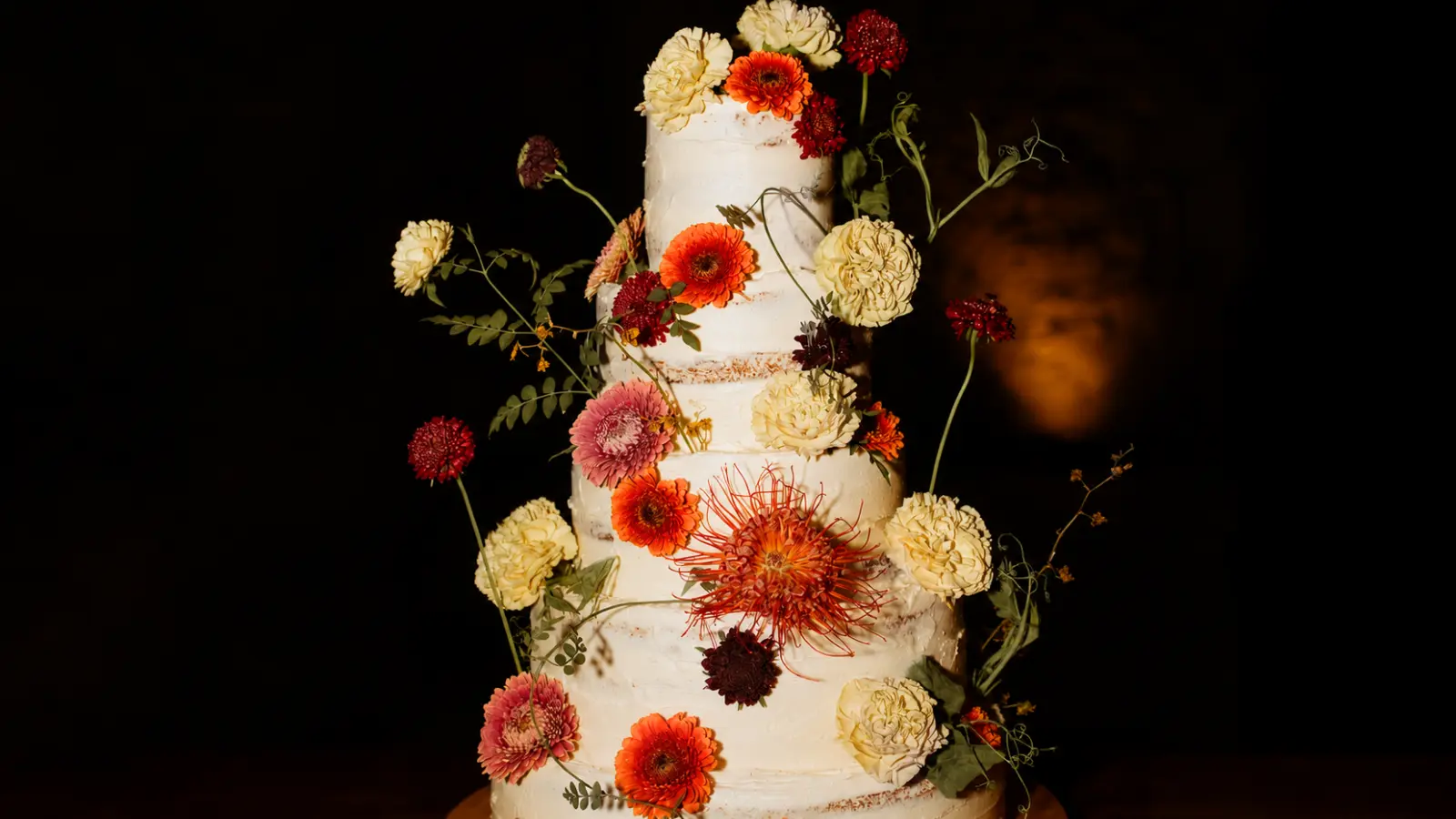
Floral wedding cakes often become specifically autumnal through the right fall flowers, palette, and placement. The right fall florals — chosen for the specific palette, the venue, and the overall aesthetic — are what put the season into the design without making the cake look like it belongs in a harvest display rather than at a wedding reception.
Dahlias: A Signature Fall Wedding Flower
Dahlias are one of the signature flowers for fall wedding cakes. Available in every size from petite pompons to dinner-plate varieties spanning eight inches across, and in every autumn tone from deep burgundy to terracotta to warm peach to golden yellow, dahlias are often available in strong autumn tones during fall. They photograph beautifully, but availability, durability, and cost depend on the region, florist, variety, and timing.
What many couples do not know: dahlias are ornamental flowers, not edible cake decorations, and they should not touch the cake surface directly. A skilled baker will use food-safe picks or wraps to place dahlias on the cake — this is standard practice, but confirm it explicitly when booking. And coordinate between the florist and baker about who is sourcing the cake flowers — the most reliable approach is to have the florist include the cake dahlias in the overall flower order, so the varieties and tones are consistent across the reception.
Dried botanicals the low-maintenance fall alternative
Because dried botanicals may be dyed, preserved, brittle, or non-edible, they should be placed with a food-safe barrier and handled by the baker or florist so they do not shed directly onto the cake.
Dried botanicals — pampas grass, dried lavender, dried orange slices, preserved eucalyptus, lunaria (money plant), dried ruscus, and pressed autumn leaves — are one of the strongest arguments for fall wedding cake decoration. They do not wilt the way fresh flowers do, can reduce day-of floral coordination, and often cost less than elaborate fresh-flower arrangements. They also create a warm, earthy look that feels naturally seasonal.
The aesthetic they produce is warm, earthy, and specifically autumnal in a way that is hard to replicate with fresh flowers. A terracotta buttercream cake decorated with pampas grass and dried orange slices looks like something from an editorial fall shoot — intentional and curated rather than temporary. For outdoor or tent fall weddings where fresh flowers might wilt, dried botanicals can be a practical and beautiful alternative.
Antique and garden roses in autumn tones
Garden roses in antique tones — dusty mauve, warm peach, burgundy, antique ivory with pink edges — are one of the most versatile fall cake flowers because they work across many formality levels. On a rustic semi-naked cake, they look organic and natural. On a smooth elegant cake, they look refined and curated. A single rose variety, chosen in the right autumn tone, is all the floral decoration many fall cakes need.
Garden roses are available in autumn tones year-round, which means they are not as specifically seasonal as dahlias — but they are also more reliable in terms of availability and consistency. For couples who book a baker well in advance and then discover their wedding date coincides with a short dahlia availability window, garden roses in the same autumn palette are a reliable fallback.
Fruit accents figs, blackberries, pears, and pomegranate
Fresh fruit as a cake decoration is one of the most specifically seasonal choices available for fall weddings. Figs, blackberries, small Bosc pears, pomegranate seeds, and clusters of red grapes can all feel especially appropriate for fall weddings, and they add a dimension of color and texture that no flower can quite replicate — particularly in cross-section, where a halved fig reveals its jewel-like interior.
A few things to know about fresh fruit on cakes: it should be placed the morning of the wedding, not the day before. Fruit cut in advance oxidizes and discolors. Berries placed the night before will have leaked juice onto the frosting by the time the cake is cut. In a warm venue, fruit can soften or release moisture if it sits out too long. Discuss timing specifically with your baker; the best ones have a protocol for fruit placement that protects the visual quality.
Marigolds the underused fall cake flower
Some marigold varieties are edible or used decoratively in food contexts, but they still need to be sourced and handled properly for cake use. Their vivid amber, burnt orange, and golden yellow tones can be beautiful on fall wedding cakes in a way that is more distinctive than the more common dahlia or rose approach. A semi-naked cake decorated with clusters of marigold heads — tucked between tiers alongside dried botanicals and fresh herbs — looks like a Day of the Dead-inspired fall design in the best possible sense: warm, abundant, and specific.
Marigolds work best on rustic and bohemian fall cakes rather than formal ones — the visual density and the warm orange tones suit organic aesthetics more than refined ones. But for the right wedding, they can create a cake that feels more distinctive than the usual fall floral approach.
How to Keep a Fall Cake from Looking Seasonal in a Cheesy Way
This is often what couples mean when they say they want an “elevated” fall aesthetic. What they mean is: they want their cake to look like a thoughtful fall design rather than a seasonal display. They want autumn without Halloween. Harvest without Thanksgiving. The season without the theme.
The line between these two outcomes is closer than it looks, and the decisions that determine which side you land on are all made before the baker starts work. Here is a specific, practical framework for staying on the right side.
Rule 1: Let the flavor carry the season, not the decoration
The most reliable way to prevent a fall cake from looking cheesy is to put the seasonal specificity in the flavor, not the decoration. A cake that looks like an elegant ivory buttercream with dahlias — and tastes like spiced brown butter with salted caramel — is a fall cake. A cake that looks like a decorated autumn display — with orange fondant, leaf motifs, and pumpkin details — is a seasonal cake. Same season, completely different effect.
When you choose a specific, genuinely autumnal flavor and pair it with a visually restrained design, the cake feels like fall without looking like it. The guests who cut into it will experience the season; the guests across the room will see an elegant wedding cake.
Rule 2: Avoid literal autumn imagery
The list of specific autumn images to avoid: cartoon pumpkins, leaf motifs as the primary decoration, acorns, candy corn (obviously), plastic or silk autumn leaves, gourds on the cake itself (next to the cake is different), orange as the dominant or only color, and any topper that specifically references harvest or Thanksgiving iconography.
The abstraction principle: the more literally a decoration depicts a fall element, the closer it is to seasonal themed décor. A watercolor wash in warm amber and rust tones is abstract — it suggests the season. A painted maple leaf is literal — it depicts it. Abstract details usually feel more sophisticated than literal seasonal motifs in wedding design.
Rule 3: Use autumn colors as accents, not the full palette
A cake entirely in orange, brown, and red will read as themed no matter how well it is executed. A cake in warm ivory with one element — one cluster of burgundy dahlias, or one terracotta textured tier, or one gold leaf detail — reads as a fall wedding cake with a sophisticated touch of the season. The ratio of neutral to seasonal color is the primary determinant of whether the result feels editorial or decorative.
A useful practical test: photograph the cake inspiration image in black and white. If the design still reads as elegant without the color, the structure is strong enough to carry the seasonal palette without depending on it. If the design depends entirely on the autumn color to look intentional, it is too themed.
Rule 4: Match the decoration to the venue’s formality
A naked cake with figs and herbs may feel out of place at a black-tie ballroom reception. A smooth fondant cake with a decorative pumpkin motif at a rustic barn wedding looks like it came from a different event. The fall aesthetic needs to match the formality of the venue, not just the season.
Rustic venues — barn, vineyard, outdoor — support organic fall decoration: naked layers, fresh fruit, dried botanicals, rough-textured buttercream. Formal venues — ballroom, estate, hotel — support refined fall decoration: smooth finishes, sugar flowers in autumn tones, gold leaf, hand-painted abstract motifs. The color can be the same; the technique needs to match the space.
Rule 5: Limit the number of seasonal elements to two or three
The most common mistake on fall wedding cakes is accumulation: a couple chooses a terracotta color, and dried leaves, and fresh figs, and cinnamon sticks, and a pumpkin topper, and a caramel drip, and gold leaf, because they love all of these elements individually. The result is a cake that cannot decide what it is trying to say and ends up reading as a harvest display rather than a wedding cake.
Choose two or three elements and commit to them. Terracotta color with dried botanicals. Burgundy dahlias on ivory. Dark chocolate with one cluster of antique roses. The restraint is what makes each chosen element visible and meaningful rather than lost in a crowd of seasonal references.
A quick self-test
Before finalizing any fall wedding cake design, ask: if you covered the color in black and white, would this still look like a wedding cake or would it look like a seasonal display? If the answer is seasonal display, add more neutral, remove one autumn element, or simplify the decoration. If the answer is wedding cake — with a strong structural design that stands on its own regardless of the color — the autumn palette will enhance it rather than overwhelm it.
Tiers, Sizing, and Fall-Specific Logistics
Fall weddings have a few logistics considerations that do not apply to other seasons, and they are worth knowing before the final design is confirmed.
Temperature and outdoor venue considerations
Fall in the U.S. varies dramatically by region. A September wedding in the Southeast can have reception temperatures above 80°F. A late October wedding in the Northeast can have temperatures in the 40s. Both are fall weddings, and both require completely different conversations with the baker about frosting stability and cake structure.
For warm fall receptions: buttercream softens in high humidity and heat. A smooth Swiss or Italian meringue buttercream is more vulnerable than a stabilized American buttercream. When comparing buttercream vs fondant wedding cakes, fondant generally handles heat better than most buttercream finishes. If the reception is outdoors and warm, tell the baker — the frosting formula may need to be adjusted, or the design may need to move away from an extremely smooth buttercream finish toward something more textured and structurally stable.
For cold fall receptions: fondant and buttercream both handle cool temperatures well, but ganache-covered cakes can become very firm in cold air, which affects sliceability. Fresh fruit accents on a cold outdoor cake will be fine. And a naked or semi-naked cake in cold weather actually holds up better than it would in summer, with less risk of the exposed layers drying out.
Booking timeline for fall dates
Fall is a high-demand wedding season in many U.S. markets, and popular boutique cake designers can book far in advance for prime Saturday dates. For a fall wedding date, it is smart to schedule tastings early and secure your baker once you know the date, venue, and general cake direction. Couples who wait too long to choose a wedding cake baker for an October wedding frequently find their first-choice professional is unavailable.
This is particularly true for the decorative elements specific to fall: a baker who needs to craft sugar dahlias or source specific dried botanicals for a fall design may need more lead time than a baker doing a standard buttercream cake. Ask specifically about any materials that need to be sourced or prepared in advance.
Tier count and fall serving considerations
Fall wedding cake flavors tend to be richer and more filling than spring and summer options. If you are choosing a dense spiced cake, a pumpkin cake, or a dark chocolate ganache cake, it is worth discussing with your baker whether the per-serving size should be slightly smaller than the standard to account for the richness — or whether you want to order a slightly larger serving count to ensure guests who want more have the option. This is not a standard conversation at most tastings, but it is worth initiating.
Fall Wedding Cake Table Styling
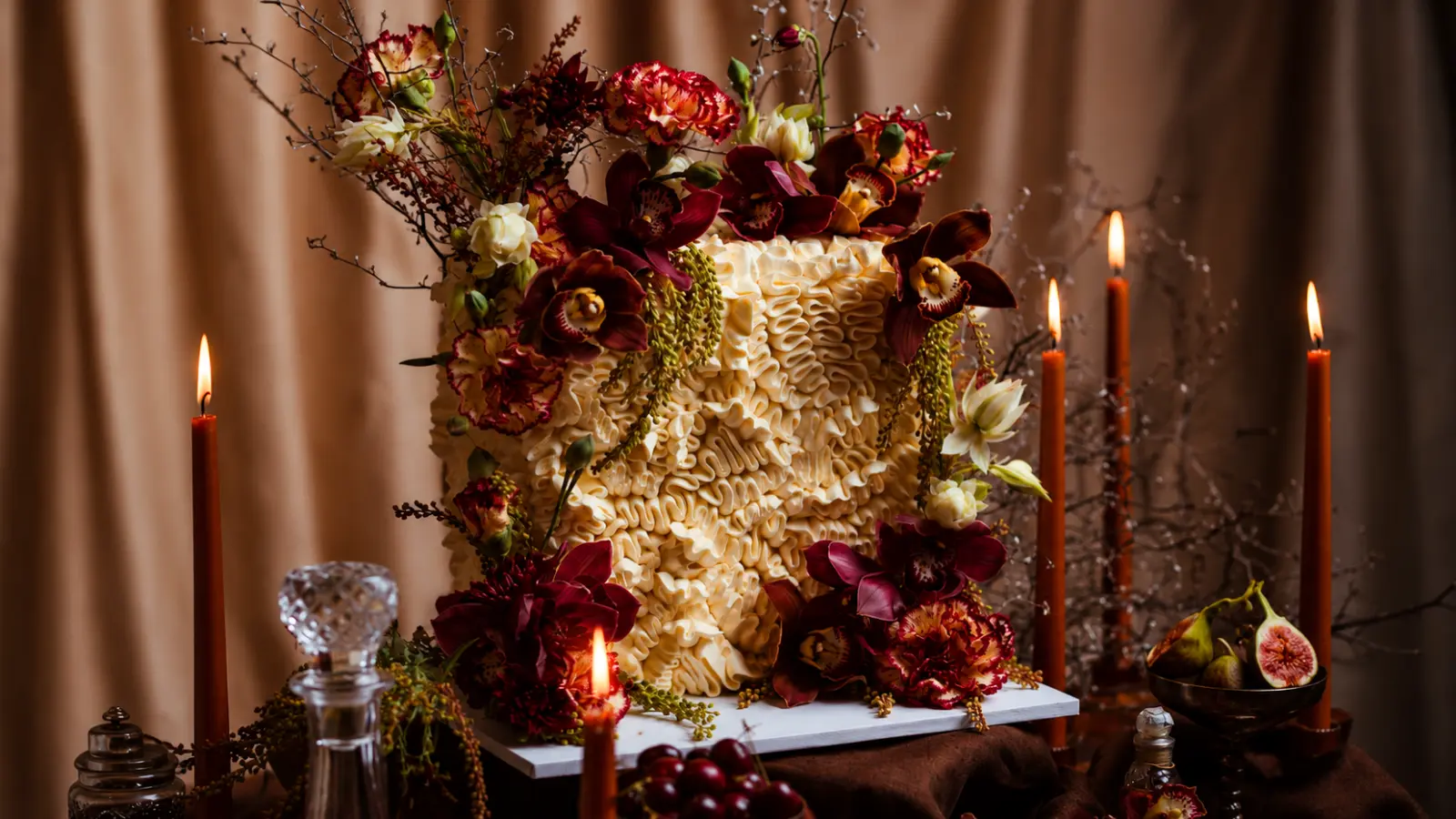
A fall wedding cake on a plain table is a missed opportunity. The cake table is a vignette — a composed still-life that will be photographed across the entire reception — and fall gives you more styling material than any other season.
Surfaces and stands
For a rustic fall wedding, wedding cake stands like raw wood, distressed wood, or dark slate give the cake a grounding that feels immediately seasonal and appropriate. For a formal fall wedding, a marble stand in warm white or veined gold marble, or a dark hammered brass pedestal, reads as elegant and season-adjacent without being explicitly autumnal.
Height matters more in fall than in other seasons because the styling elements around the cake are more substantial. A low stand surrounded by substantial pumpkins, gourds, and foliage creates a vignette where the styling competes with the cake. A taller stand — 8 to 12 inches — gives the cake visual priority over the surrounding décor.
Surrounding elements
- Candles. Taper candles in dark holders, pillar candles in warm amber, or tealights scattered across the table surface create the warm, low candlelight that makes fall wedding photography beautiful. Fall evening receptions photographed by candlelight can produce especially beautiful cake table photographs.
- Decorative gourds and mini pumpkins. The elegant, understated kind — small bumpy gourds in cream, pale green, and dusty orange, not carved or painted orange Jack-o-lantern types — arranged at the base of the cake stand add seasonal character without looking like Halloween props. Use them in odd-number clusters (three or five) and keep them below the height of the cake stand base.
- Scattered botanicals. Dried oak leaves pressed flat, small dried flower heads, a few cinnamon sticks, or dried rose petals in autumn tones scattered across the tablecloth connect the cake table to the overall botanical styling of the reception.
- A cake flavor card. For any fall cake with a non-standard flavor — spiced brown butter, apple-cinnamon, chai vanilla — a small custom card naming the flavor and filling adds a thoughtful touch that guests genuinely appreciate and that photographs as a considered detail rather than an afterthought.
Table covering
For a rustic fall cake table: natural linen in warm oatmeal or dusty sage, or raw wood table surface with no covering. For an elegant fall cake table: velvet in deep burgundy, warm ivory, or dusty mauve — velvet often photographs with a rich, luxurious texture, and it is perfectly seasonal for fall.
How to Choose Your Fall Wedding Cake
The framework for choosing a fall wedding cake is the same as for any wedding cake — match the venue, set the budget, taste before you design, put everything in writing — with three additional considerations specific to the season.
Start with one anchor element
The most focused fall cake design decisions start with one anchor element and build from there. Choose the color, or the flavor, or the flower — not all three simultaneously. If you start with burgundy, the flavor and floral choices that work with burgundy will become obvious. If you start with spiced brown butter cake, the colors and decorations that enhance a warm, spiced flavor will narrow the options naturally. The couples who start with an open brief — “something fall-themed, we love everything fall” — are the ones who end up with ten competing elements on a cake that cannot decide what it wants to be.
Taste the specific fall flavors, not approximations
For fall-specific flavors like spiced brown butter, apple cake, or pumpkin, taste the baker’s specific version rather than a general spice cake. A baker who makes an extraordinary vanilla cake and a merely adequate spiced cake has the skill set to execute the visual design you want — but the flavor will disappoint guests. If the tasting version of a fall flavor does not impress you, choose the flavor this baker does best and add the seasonal character through the decoration instead.
Confirm availability of seasonal decoration elements
If your design depends on fresh dahlias, fresh figs, or other specific seasonal elements, confirm with the baker that they can reliably source these for your specific date. A baker who confirms availability in January for an October wedding based on general knowledge may discover in September that specific dahlia varieties are not available from their usual supplier. Build in a contingency — an agreed backup decoration if the first-choice element is unavailable — before the design is finalized.
The final test
Before confirming the design, ask: does this look like a wedding cake that happens to be for a fall wedding, or does it look like a fall decoration that has been turned into a wedding cake? The first is the goal. The second is the risk. Every design decision — the color restraint, the decoration choices, the flavor selection — should be working toward the first outcome.
Fall Wedding Cake Inspiration Board
Fall wedding cakes can be styled in endless ways depending on the colors, venue, flowers, and overall wedding aesthetic. Explore our fall wedding cake inspiration board for burgundy cakes, terracotta designs, autumn florals, rustic cake ideas, elegant seasonal styles, and beautiful details to help you find the perfect inspiration for your celebration.
Final thoughts
A beautiful fall wedding cake is not about adding every autumn detail possible. The strongest designs usually come from choosing a few intentional elements — a rich seasonal flavor, a warm color palette, a meaningful flower, or a texture that naturally reflects the atmosphere of the wedding.
Whether your style is rustic, elegant, modern, or romantic, the best fall wedding cakes feel connected to the season without being controlled by it. When the design, flavor, and setting work together, the cake becomes more than a seasonal detail — it becomes a memorable part of the entire celebration.
Frequently asked questions (FAQ)
What makes a fall wedding cake look elegant instead of seasonal?
An elegant fall wedding cake usually suggests the season instead of showing it literally. Warm colors, rich textures, seasonal flavors, and carefully chosen flowers often create a stronger autumn feeling than obvious decorations like pumpkins or leaves. The goal is for guests to notice a beautiful wedding cake first and the fall inspiration second.
What is the biggest mistake couples make with fall wedding cakes?
The biggest mistake is adding too many autumn elements at once. Burgundy flowers, orange tones, dried leaves, pumpkins, fruit, caramel, and rustic textures can all be beautiful individually, but combining everything can make the design feel like seasonal decor instead of a wedding cake.
Should a fall wedding cake focus more on flavor or design?
The strongest fall wedding cakes usually let flavor carry part of the season. A simple ivory cake with an autumn-inspired flavor can feel more sophisticated than a heavily decorated cake. Seasonal ingredients create the experience, while the design keeps the wedding aesthetic timeless.
How do you choose a fall wedding cake that will not look dated years later?
Choose elements connected to natural beauty rather than short-term trends. Classic flowers, balanced colors, quality textures, and flavors you genuinely love usually age better than designs based only on what is popular online during one wedding season.
Can a fall wedding cake still work with a light or neutral wedding palette?
Yes. A fall cake does not need dark colors to feel seasonal. Ivory, champagne, taupe, soft blush, and warm neutrals can all create an autumn feeling when paired with the right textures, flowers, lighting, and flavors.
What do wedding designers consider when styling a fall cake?
Designers usually think about the entire environment, not just the cake. The venue, lighting, table styling, flowers, linens, and surrounding decor all influence whether a fall cake feels intentional. A simple cake in the right setting often creates more impact than a highly decorated cake without a clear design direction.
What colors are best for fall wedding cakes?
The best fall wedding cake colors are usually warm, rich, and slightly muted rather than overly bright. Burgundy, terracotta, deep plum, chocolate brown, ivory, champagne, dusty rose, sage green, and warm taupe all work beautifully for autumn cakes. For the most elegant result, use one or two seasonal colors against a neutral base instead of covering the entire cake in fall tones.
What flavors are best for fall wedding cakes?
The best fall wedding cake flavors are warm and seasonal without feeling too heavy. Spiced brown butter, apple cinnamon, dark chocolate with salted caramel, maple, chai vanilla, almond with fig jam, and carefully balanced pumpkin cake can all work well. The safest choice is usually a flavor that feels autumnal but still has broad guest appeal.
Related Guides
- Italian Wedding Cake: Millefoglie, Traditions and Elegant Ideas
- Beach Wedding Cakes: Coastal, Tropical & Elegant Ideas
- Wedding Cake Toppers: Classic, Custom, Vintage & Unique Ideas
- How to Freeze Wedding Cake: Save the Top Tier the Right Way
- Grocery Store Wedding Cakes: Publix, Costco, Walmart & Sam’s Club Guide