Choosing the right wedding hairstyles with veil is about more than finding a beautiful hairstyle. Your hair affects where the veil sits, how it moves, how secure it feels, and how your entire bridal look comes together.
From elegant updos and romantic low buns to soft waves, curly hairstyles, and short hair, every hairstyle changes the way a veil is worn and photographed.
This guide explains how to pair wedding hairstyles with every veil style, helping you choose the best combination for your dress, hairstyle, venue, and wedding day.
Hairstyle and Veil Pairing at a Glance
This table gives you a starting point for each hair type and style. The details in each section below go further — but if you’re early in the process and just want a directional answer, this is where to begin.
| Hairstyle | Best Veil Placement | Best Veil Types |
|---|---|---|
| High updo / high bun | Base of the bun or just below it | Most lengths; chapel and cathedral work beautifully |
| Low bun / chignon | Base of the bun, low on the head | Fingertip through cathedral; single-tier and drop veils |
| Half-up, half-down | Crown area or just behind the top section | Elbow through chapel; two-tier works well here |
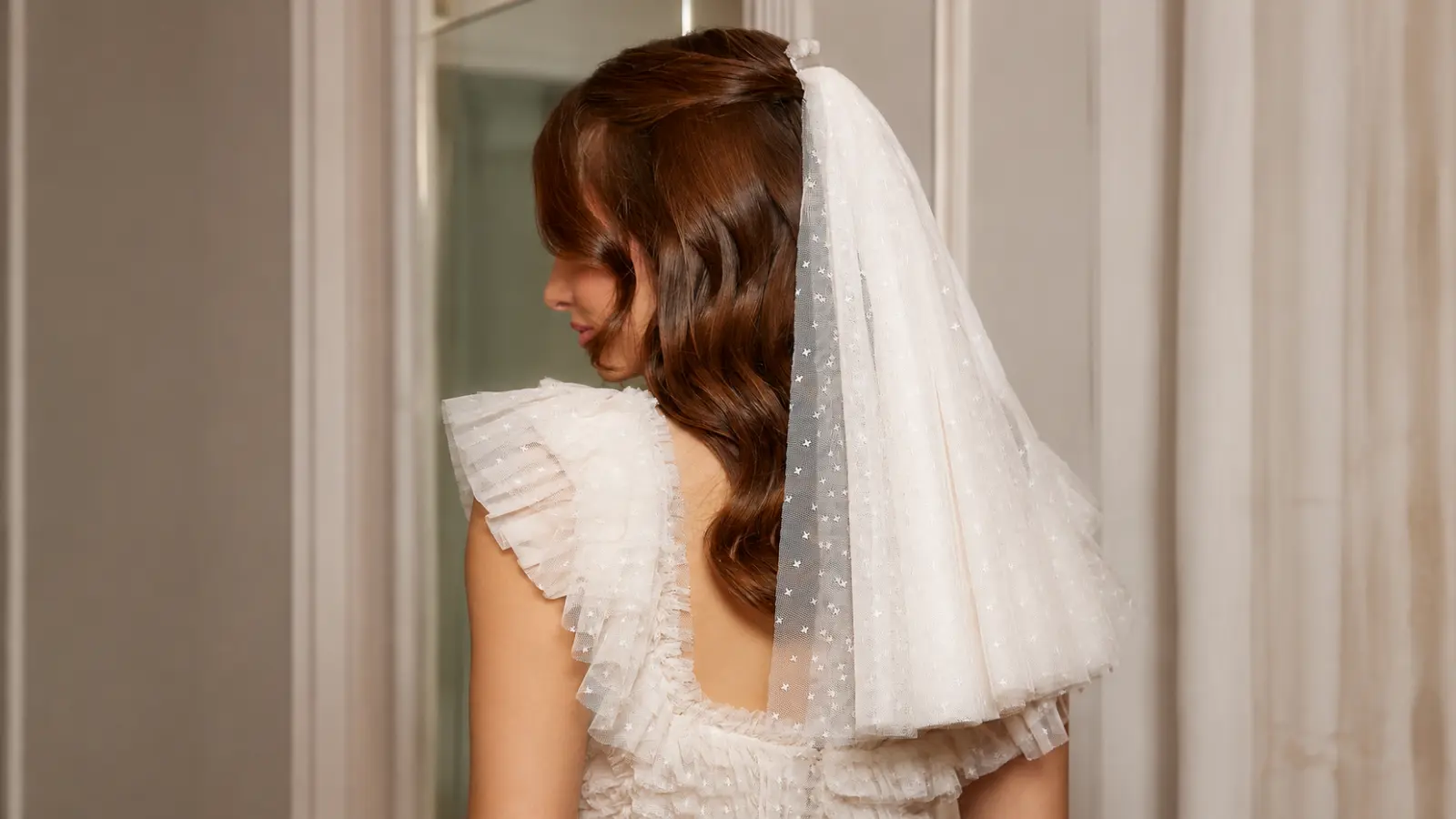
| Hair down (straight or wavy) | Crown or slightly behind it | Shorter veils (shoulder through fingertip); drop styles |
| Short hair | Crown or upper back, secured with extra pins | Elbow through fingertip most proportional; cathedral for drama |
| Curly hair (updo) | Base of the updo, into a secured section | Most lengths; comb needs a dense attachment point |
| Curly hair (down) | Crown, inserted into a flat section | Shorter lengths; stability varies |
| With tiara | Veil first at the back of the crown, tiara over it | Single-tier; chapel or cathedral lengths |
| With mantilla veil | Flat over the crown, secured with pins | Mantilla only; not compatible with most tiaras |
These are starting points, not rules. The placement that photographs best on one bride may sit differently on another depending on head shape, hair density, and the specific weight of the veil. Use this as your first filter, then test in person.
Updo and High Bun
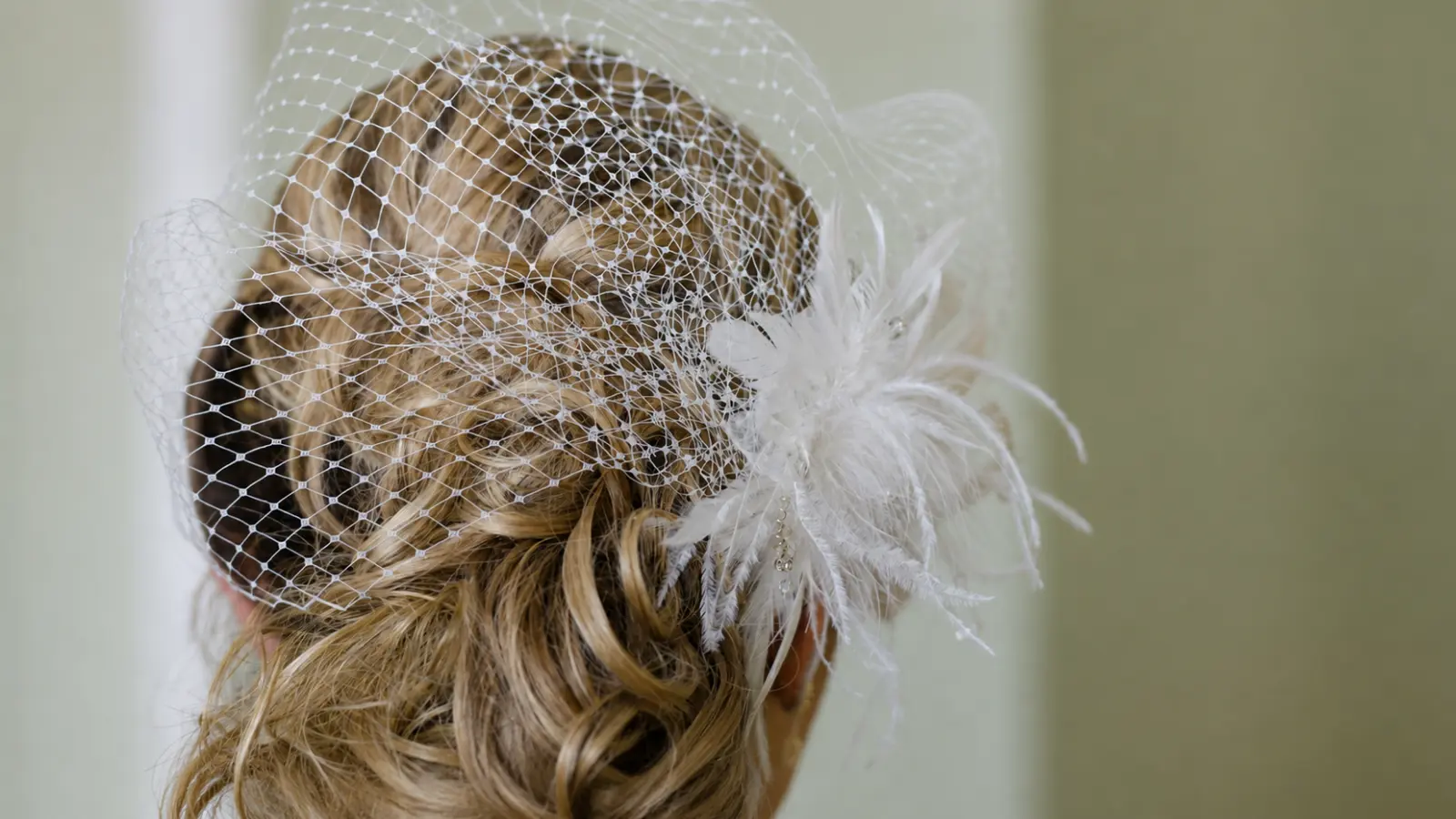
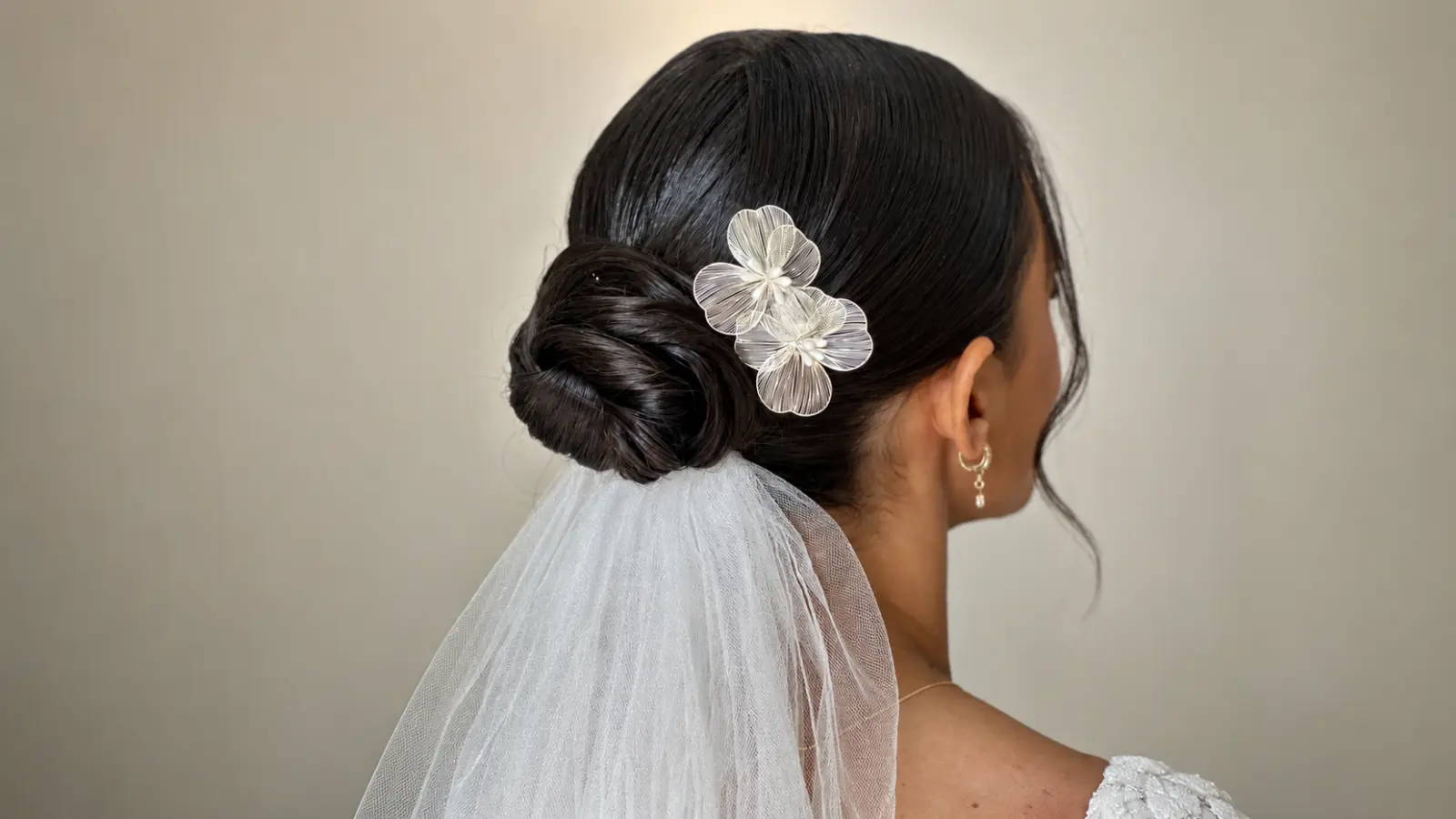
The updo is the most versatile hairstyle for veil wearing, and there’s a practical reason for that: it creates a defined, elevated attachment point that works with nearly every veil length, from elbow to cathedral. The comb sits cleanly at the base of the bun or just below the twist, and the veil hangs from a single focal point that the eye reads clearly in photographs.
High updos — including ballerina buns, twisted chignons, and braided crowns — also have the advantage of keeping the hair away from the veil fabric. At longer lengths, a veil resting against loose hair can shift, tangle, or read as visually busy. A clean updo eliminates that problem entirely. The veil falls freely without competing with the texture of the hair.
From a photographic standpoint, a high updo with a chapel or cathedral veil is one of the most classically elegant bridal combinations. The length of the veil is fully visible, the nape of the neck reads clearly, and the silhouette from behind — the shot that appears in nearly every wedding gallery — is unobstructed. If you are considering a very long veil and are unsure which hairstyle to commit to, an updo is the lowest-risk pairing.
Low Bun and Chignon
The low bun and chignon are among the most popular bridal hairstyles in the United States, and they work exceptionally well with veils — with one consideration worth understanding. Because the attachment point sits low on the head, the veil hangs from a lower position and the angle of fall is different from what a high updo creates. This changes how the veil reads behind the bride during the processional.
At fingertip and chapel lengths, the difference is minimal. The veil drapes cleanly from the low bun and flows behind without issue. At cathedral lengths, a low bun placement means the veil falls from a lower point on the back, which can reduce the visual height and drama of the length. Some brides prefer this softer, more relaxed line; others find they want the comb higher to get the full effect of a cathedral sweep. This is exactly the kind of thing a hair trial with the actual veil will clarify.
Drop veils — single-layer veils with no gather at the comb — pair particularly well with low chignons because the clean, flat fall of the fabric complements the smooth, structured shape of the bun. A gathered or full two-tier veil can work here too, but wedding updos with veil placement need deliberate styling so the veil and bun look intentional together rather than accidental.
Half-Up, Half-Down
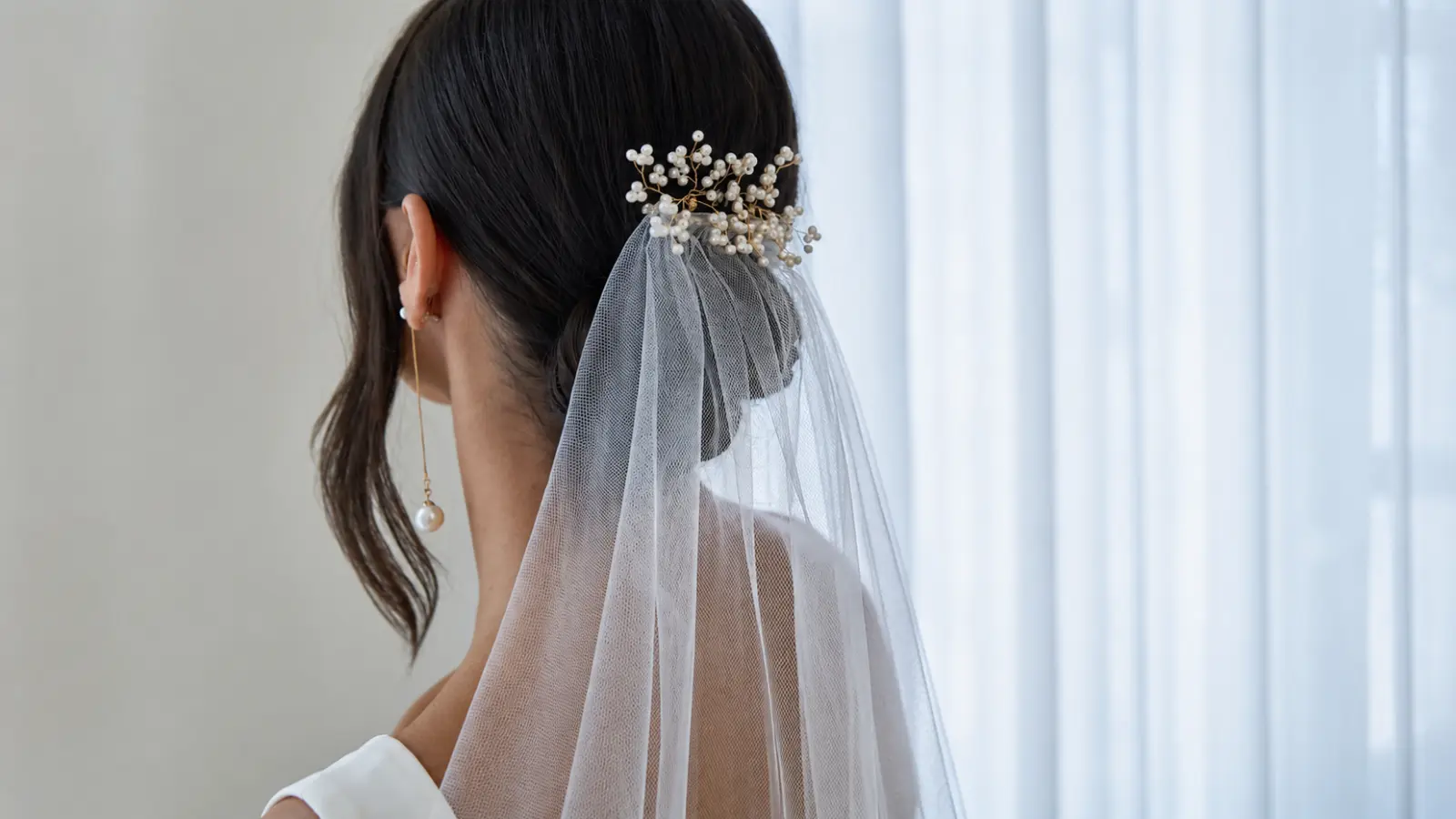
The half-up, half-down style is the choice for brides who want their hair’s length and texture to read in photos without giving up a clean attachment point for the veil. The top section is gathered or pinned, which creates a surface for the comb, while the rest of the hair falls freely. It photographs as a softer, more romantic look than a full updo while being more practical for veil wearing than hair entirely down.
The main consideration with this style is veil length. Because the hair falls down past the shoulders, very long veils — chapel and cathedral lengths — will rest against the loose lower hair for much of the processional. This creates visual layering that can look beautiful or busy depending on the texture and color contrast between hair and veil. Brides with lighter, finer hair tend to find that the veil reads cleanly against it; brides with very dark, thick, or highly textured hair may find that a shorter veil creates a cleaner line.
The comb typically sits just behind the crown section, where the two-tier look transitions from pinned to loose. A two-tier veil with a blusher works naturally here: the back layer falls behind the loose hair, and the blusher creates a clear ceremony moment without requiring the hair to be fully swept up. For more on placement, length, and styling, see our complete guide to half up half down wedding hair with veil.
Hair Down
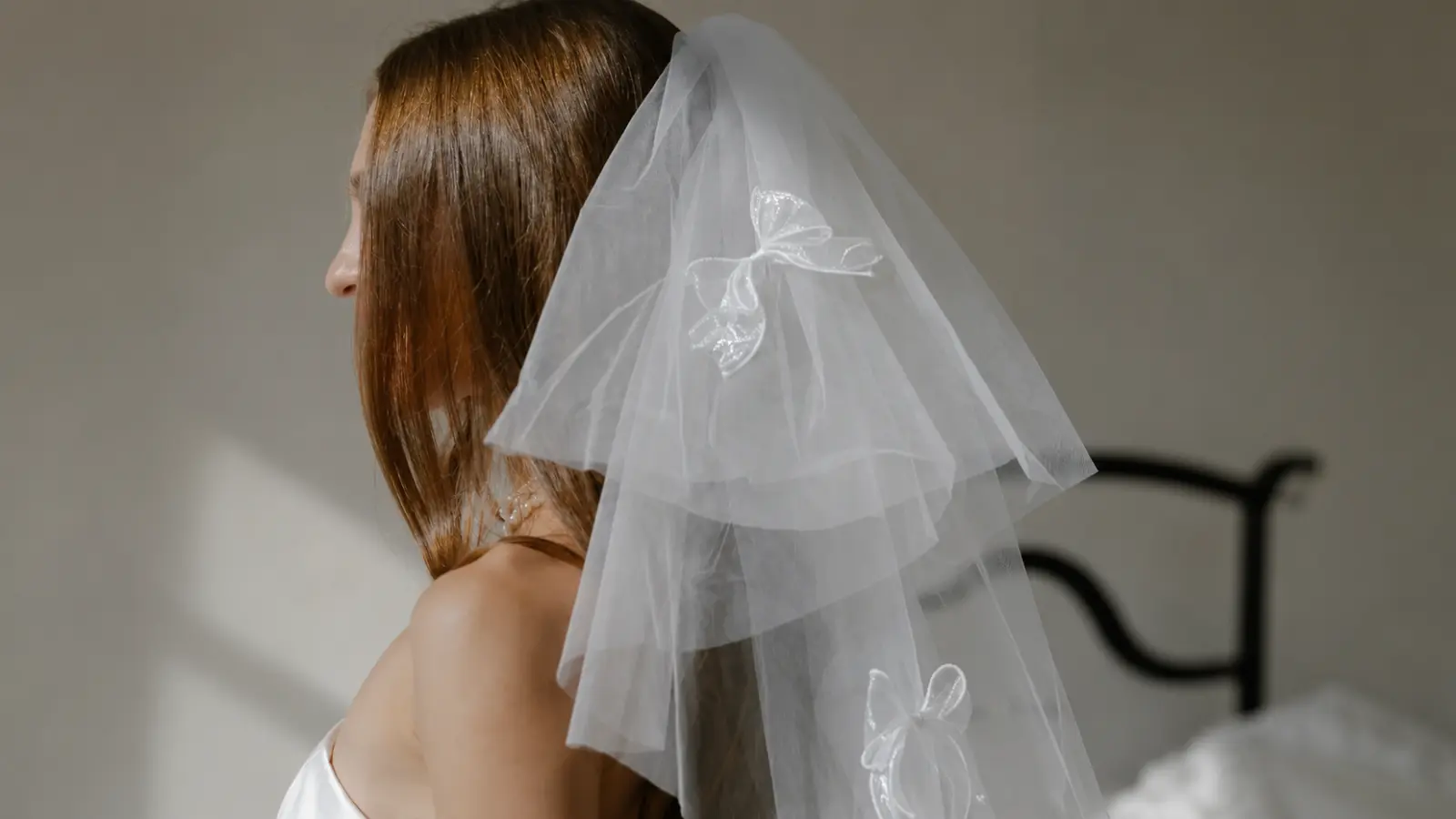
Hair worn fully down is a natural, relaxed bridal choice, and it absolutely works with a veil — but it asks the most of the bride in terms of planning the right pairing. The issue isn’t aesthetic; it’s practical. When hair is down, the veil fabric rests against it constantly, which means longer veils can tangle, shift, or get visually lost in the volume of the hair.
For this reason, shorter veil lengths tend to work most reliably when wearing wedding hair down with veil styles. Shoulder, elbow, and fingertip lengths all read clearly and proportionally against loose hair without the management issues that longer veils create. Drop-style veils — which have minimal volume — also pair naturally here because the flat fall doesn’t add bulk to hair that is already creating visual weight.
If you have your heart set on hair down and a long veil, a waltz or chapel length is a workable middle ground. The veil extends past the hair’s ends without requiring management throughout the ceremony. Cathedral length with hair fully down is possible and some brides choose it deliberately for the dramatic contrast, but it is the combination that most benefits from a thorough hair trial and a plan for managing the veil during the reception.
Short Hair
Short hair and veils work together more reliably than many brides expect. The veil comb doesn’t need a thick section of hair to sit securely — it needs a well-placed section, which short hair can provide. The visual dynamic is also part of the appeal: a veil emerging from cropped or short hair creates an unexpected contrast that photographs in a distinctly modern way.
The practical considerations are slightly different from long hair. With less hair to absorb the comb’s movement, placement needs to be deliberate and tested in advance. Extra pins — placed parallel to the comb on either side — are standard for short-hair veil attachment and will be recommended by most experienced stylists. The weight of the veil matters more at shorter lengths of hair, so if you’re choosing a heavily embellished veil, ask about reinforced attachment during your hair trial.
For length, elbow and fingertip veils are the most naturally proportionate with short hair. They sit in a clear visual relationship with the hair and the dress. Some brides wear cathedral veils with short hair as a deliberate style choice, and when the rest of the look supports it — a very formal dress, a grand venue — the effect can be arresting. This is a choice that benefits from testing rather than assuming.
Curly Hair
Curly hair is a beautiful pairing for veils, but it does come with specific placement considerations. The main challenge is finding a section of hair dense and stable enough for the comb to sit in without shifting over time. Loose, airy curls offer less resistance than smooth hair, so the comb can move if it isn’t properly secured.
The most reliable approach for curly hair is styling the hair into an updo or a defined low bun — the gathered, pinned sections create a stable surface that holds the comb securely. Hair trials are especially valuable for curly hair because curl behavior changes throughout the day, and a comb that felt secure at 11 a.m. in the stylist’s chair may sit differently by mid-afternoon. Testing early and testing with the actual veil weight is the right approach.
For curly hair worn down, a crown placement with additional pin support tends to work best. Shorter veil lengths are generally more manageable because they don’t rest as heavily on the curls throughout the ceremony. If you’re wearing hair fully down and curly and want the drama of a longer veil, discuss the attachment plan explicitly with your stylist in the trial — there are techniques for this, but they require planning.
With a Tiara or Headpiece
Adding a tiara or headpiece to a veil look is one of the most searched bridal combinations, and it is also one of the most misunderstood. The two elements can coexist beautifully, but they need to be chosen and placed together — not decided separately and assembled on the wedding day.
The standard approach is to place the veil first, then position the tiara over the veil fabric. This creates the classic layered effect where the crown appears to float above a soft background of fabric. The tiara presses the veil lightly against the hair, which also helps with security. Reversing the order — tiara first, veil underneath — creates a different silhouette that some brides prefer, but it typically means the veil cannot be removed without disturbing the tiara.
The veil style matters as much as the placement. A single-tier veil attached at the back of the crown is the most natural combination with most tiaras and headbands. A two-tier veil can work if the blusher layer doesn’t extend so far forward that it interferes with the tiara’s placement. Mantilla veils are the most difficult to combine with a tiara because the all-lace fabric lies flat against the crown, leaving very little space for a structured headpiece.
For a full breakdown of how to combine these two elements across different veil styles and hair looks, see our guide to wearing a wedding veil with a tiara.
With a Cathedral Veil
Cathedral veils are the length that most changes the practical relationship between hair and veil. At 108 to 120 inches, the veil extends well beyond the dress hem and requires deliberate styling choices to wear well. The hairstyle you choose affects not just how the veil attaches, but how the entire back of the look reads during the processional — and that is the angle most of your guests will see for the longest time.
Updos perform best with cathedral veils. They lift the attachment point and give the full length of the veil unobstructed space to flow. A low bun can work, but it lowers the visual starting point, which can reduce the impact of the full length. Hair worn fully down with a cathedral veil creates significant management challenges and is best tested extensively before committing.
For placement, most stylists attach a cathedral veil at the mid-crown to crown area — high enough to let the length fall cleanly, low enough that the comb sits securely in a substantial section of hair. If the dress has back detail — buttons, a low cut, or embellishment — the veil placement should account for whether those details will be visible during the ceremony or covered by the veil. Some brides choose to have the veil cover the back of the dress entirely; others want it positioned to reveal it. Both are intentional choices, but they need to be made before the wedding day. For a full breakdown of this length, see our cathedral wedding veil.
With a Mantilla Veil
The mantilla is the veil that changes the hairstyle conversation the most. Because it lies flat over the crown and drapes around the face rather than falling behind the head, it shapes the entire look from the hairline outward — and the hairstyle beneath it needs to support that.
Low updos and loose chignons work best with mantillas. They keep the crown relatively flat, which allows the mantilla’s lace border to frame the face evenly. High, voluminous buns can push the mantilla up and forward in a way that disrupts the framing. Hair worn fully down under a mantilla creates an uneven, layered effect along the sides that most brides find requires significant pinning to manage.
Mantillas attach with pins distributed across the crown, not with a single comb, which means the attachment method is fundamentally different from other veil styles. The hair needs to provide a stable base across a broader surface area. This is another style where the hair trial with the actual mantilla is not optional — the placement and security of a mantilla depend on the specific weight and size of the lace, and that cannot be accurately judged without it. For everything about this style, see our mantilla wedding veil.
Veil Placement by Hairstyle
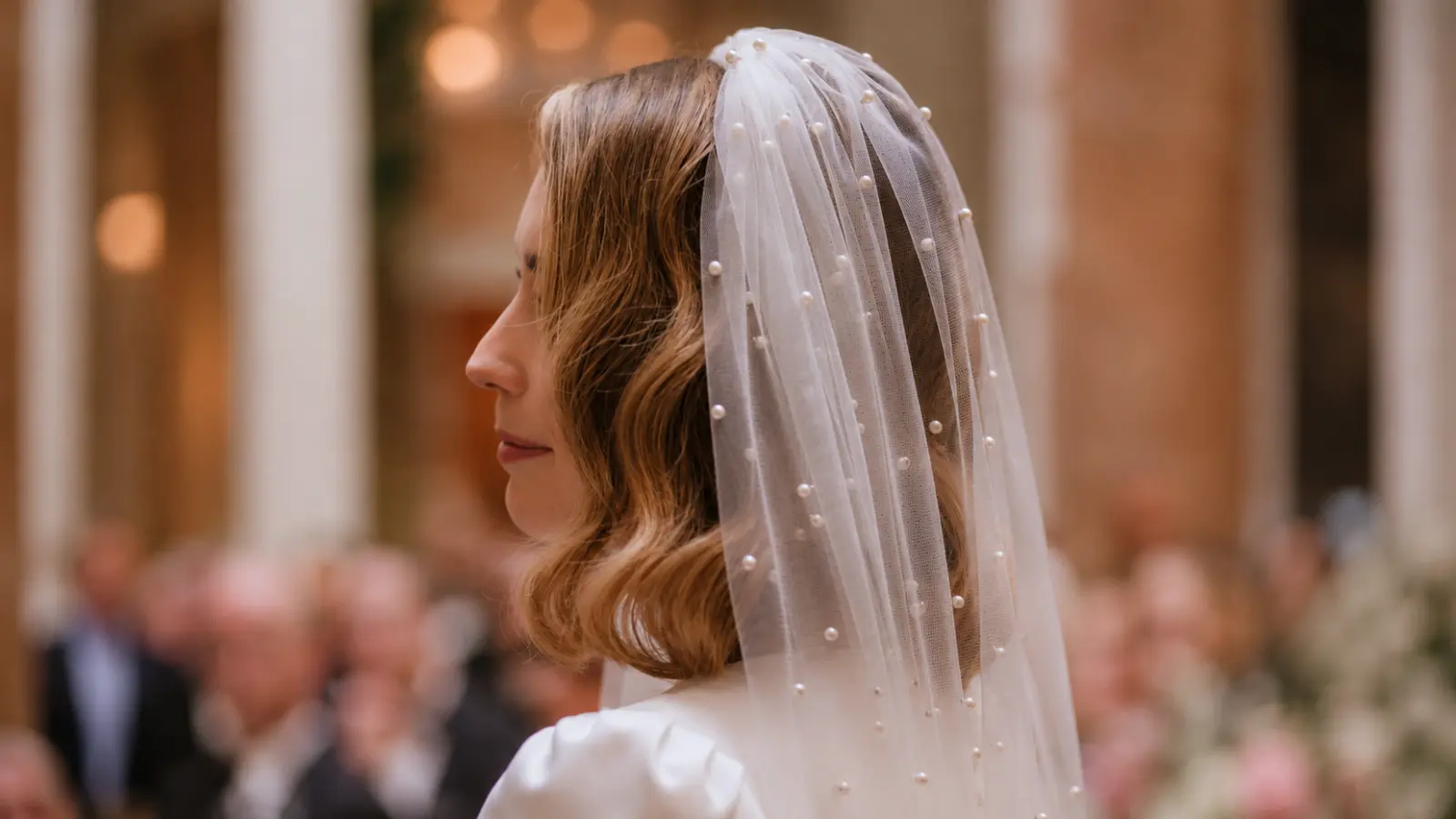
Placement is the variable that most brides underestimate. Where the comb sits affects the angle of the veil, how it falls against the dress, whether it photographs as intended, and how secure it stays through a long ceremony. There is no universally correct position — placement is a function of hairstyle, veil weight, and the specific look you’re going for.
A few placement principles that hold across most hairstyles:
- Higher placement creates more drama. A comb set at the crown lifts the veil’s starting point and maximizes how much of the length is visible and in motion. This works especially well with cathedral and chapel veils, where the full sweep is the point.
- Lower placement creates a softer look. A comb at the nape of the neck or the base of a low bun positions the veil closer to where the dress begins, creating a more seamless transition. This reads as less traditional and works well with drop veils and minimalist looks.
- The comb should sit in dense hair, not sparse sections. Regardless of where on the head the comb is placed, it needs a substantial section of hair to grip. Placing it in a thin or unsecured section is one of the most common causes of veil slippage during the ceremony.
- Placement affects whether back dress details show. If your dress has significant back embellishment, a low-placed veil may cover it during the ceremony. If you want the back of the dress to be visible, place the comb higher.
Testing placement during a hair trial is the only way to see how all of these factors interact with your specific hair, dress, and veil. For the full guide on how to wear and position a veil on the wedding day, see our guide to how to wear a wedding veil.
The Hair Trial and What to Bring
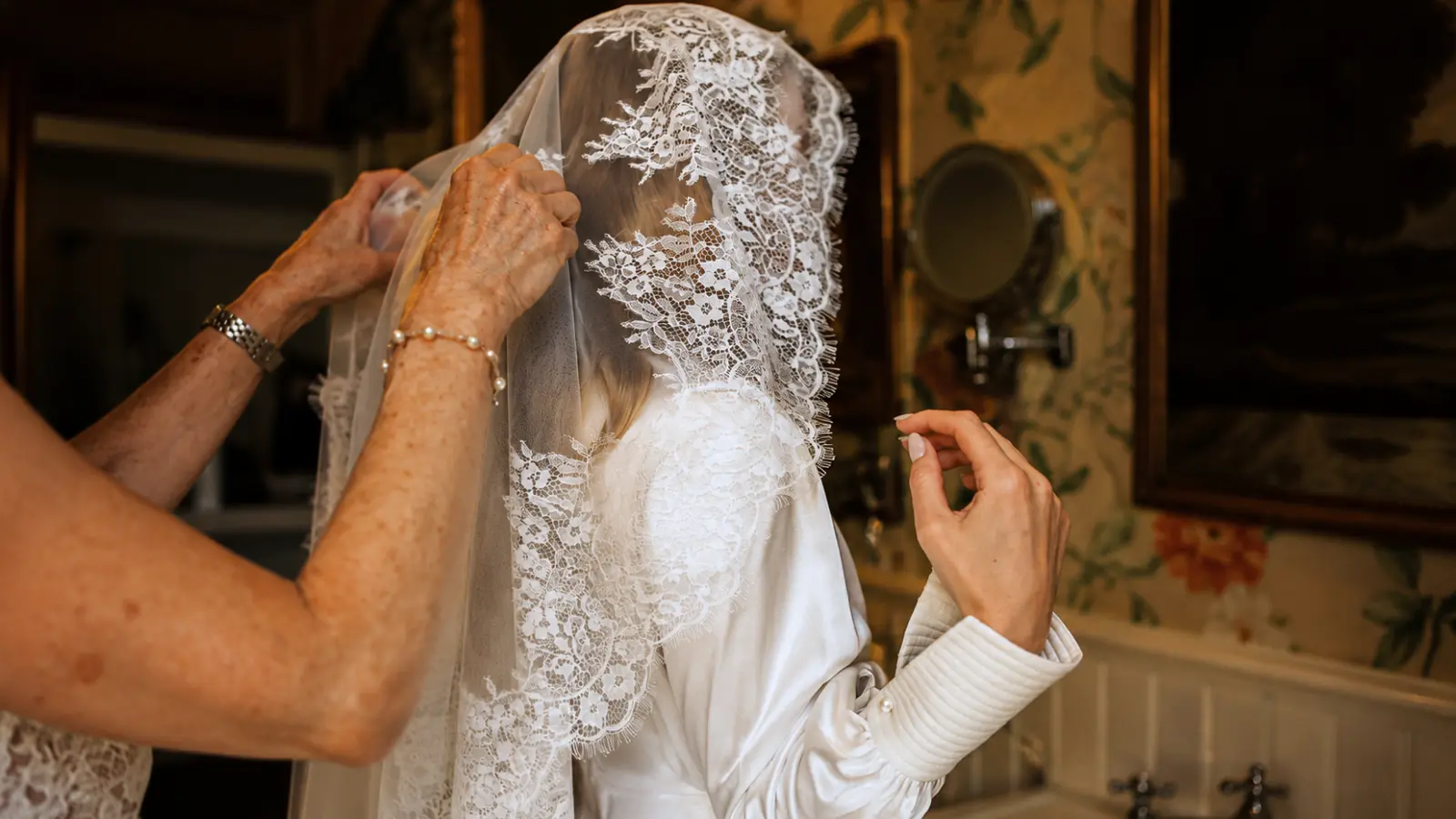
The hair trial is the most underused tool in veil planning. Most brides use it to decide on the hairstyle, but don’t bring the veil — which means they leave the appointment without ever seeing how the two elements actually work together. This is worth correcting.
Bringing the actual veil to at least one hair trial appointment gives your stylist the information she needs to make placement decisions that are specific to the veil’s weight, length, and comb style. It also gives you a much more accurate preview of the full look. A hairstyle that photographs beautifully on its own can change significantly when a 90-inch chapel veil is added to it.
If the veil isn’t available yet — you haven’t purchased it, or it is being made — bring the most specific description you can: the length, the weight, whether it is gathered or flat, whether it has embellishment. Some stylists can work with a stand-in of similar weight. That is better than nothing, but not as reliable as the real thing.
A few other things worth bringing or confirming before the hair trial:
- A photo of the dress back, so the stylist knows whether there are details that the veil placement should reveal or can cover
- Any headpiece — tiara, headband, floral piece — that you plan to wear alongside the veil, so both can be tested together
- A clear sense of how long you plan to wear the veil: if you’re removing it before the reception, the stylist can plan the hairstyle to look complete both with and without it
A hair trial that includes the veil is a fundamentally different appointment than one that doesn’t. It takes slightly more preparation, but it removes the most common source of day-of surprises.
What to Avoid
A handful of pairing mistakes come up consistently when hair and veil don’t work together as planned. Most are preventable with information.
Choosing the hairstyle and veil in completely separate appointments. This is the most common setup, and it is also the most likely to produce a result that doesn’t fully work. The veil changes the look of the hairstyle, and the hairstyle changes the way the veil sits. Treating them as independent decisions and hoping they’ll come together on the wedding day is the version of this process that causes last-minute adjustments.
Placing the comb in a thin or recently touched-up section. Fresh blowouts and smoothed sections can look flawless but offer the comb less grip than slightly textured hair. If your stylist is working with very smooth, fine hair, extra pins parallel to the comb are standard protocol — not a sign that something has gone wrong.
Relying on a blusher with hair fully down. The blusher moment — lifting the front layer at the altar — works best when the hair is swept back or up. With hair fully down, the blusher can tangle in the loose hair when it is lifted, and the two-tier veil can shift. If you want a blusher and prefer your hair down, test the removal movement explicitly in the hair trial.
Assuming the veil will look the same at the end of the day as at the beginning. Veils shift over time, especially at longer lengths and with active hairstyles. Designate someone — your maid of honor or a bridesmaid — to do a quick check of the veil’s position after the ceremony and before portraits. A veil that has shifted two inches reads very differently in photos than one sitting at the intended placement.
Wedding Hairstyles With Veil Inspiration
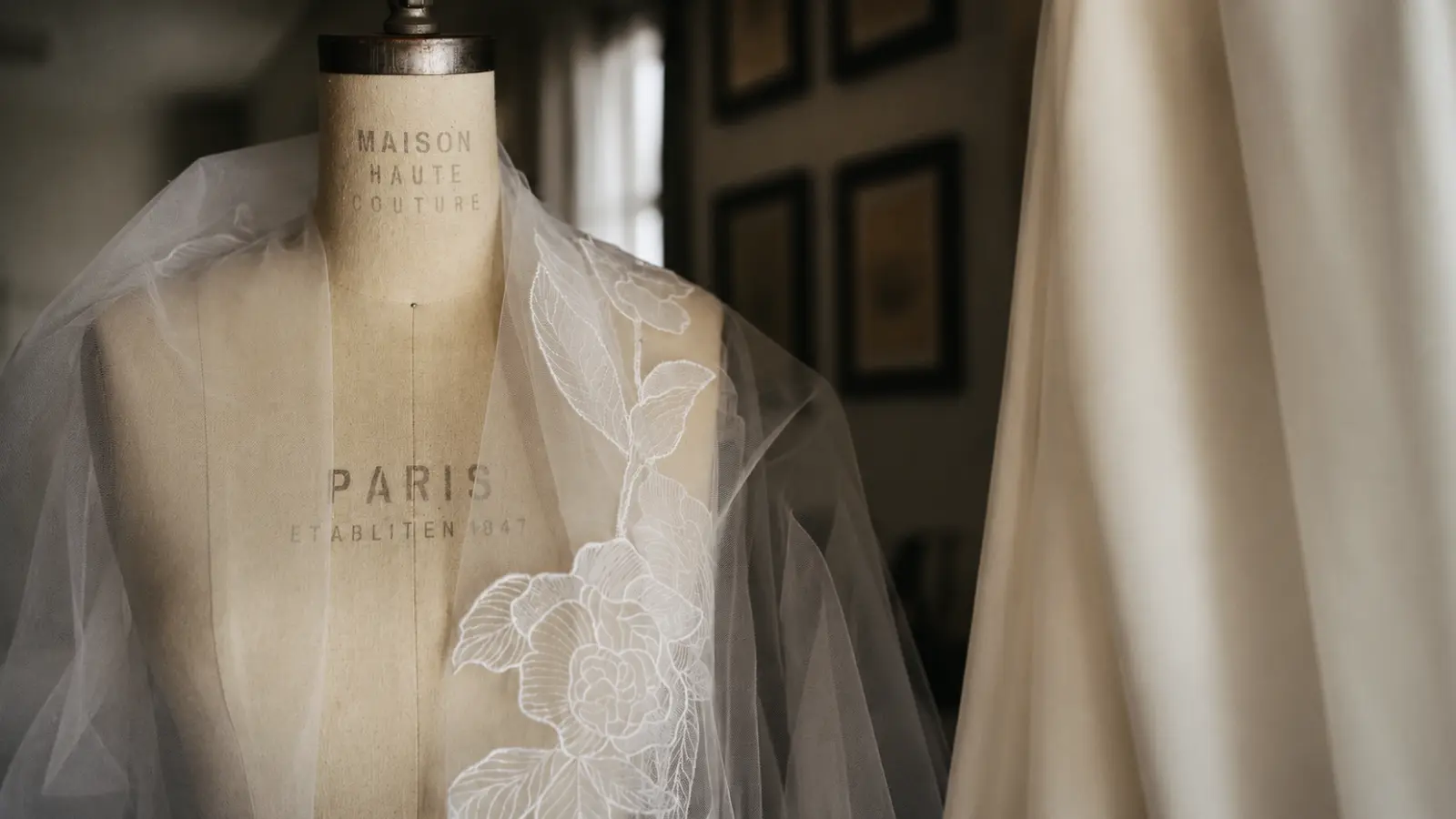
Discover beautiful wedding hairstyles with veil inspiration featuring elegant updos, romantic low buns, soft waves, half-up styles, curly hairstyles, and timeless bridal looks. Explore gorgeous veil placement ideas, hairstyle combinations, and real bridal inspiration to create the perfect wedding day look.
Choosing the Perfect Hairstyle for Your Veil
Your hairstyle and veil should always be planned as one complete bridal look—not as two separate decisions. When the placement, hairstyle, and veil work together, the result feels effortless, secure, and beautifully balanced from every angle.
Whether you choose an elegant updo, a romantic low bun, soft curls, or your hair worn down, testing everything together during your hair trial is the best way to ensure your bridal look feels exactly as you imagined on your wedding day.
Frequently asked questions (FAQ)
What is the best hairstyle to wear with a wedding veil?
There is no single best hairstyle, but updos and low buns are the most versatile because they create a defined, secure attachment point. Half-up styles offer a softer look while still supporting the comb. Hair worn fully down can work beautifully, especially with shorter or less voluminous veils, but it usually requires more testing to prevent shifting or tangling.
Where should a wedding veil comb be placed?
The ideal placement depends on the hairstyle and the effect you want. At the crown, the veil creates more height and drama. At the base of a bun or chignon, it falls more softly and blends into the hairstyle. For half-up hair, the comb usually sits behind the secured crown section. The comb should always be anchored in a dense, structured area of hair.
Can you wear your hair down with a wedding veil?
Yes. Hair worn down works particularly well with shoulder, elbow, fingertip, and drop veils. Longer or fuller veils may rest against the hair, become tangled, or lose visual definition. A hidden braid, textured anchor section, or additional pins can improve security. Test the actual veil with the finished hairstyle before the wedding.
Can you wear a veil with short hair?
Yes. Short hair can support a veil securely when the comb or pins are placed correctly. Extra pins or a concealed anchor may be needed because there is less hair available for grip. Elbow and fingertip veils often create the easiest proportions, while cathedral veils can produce a deliberate dramatic contrast.
Can you wear a veil with curly hair?
Yes. Curly hair works well with veils, particularly when part of the hair is pinned into a stable section. Updos and low buns offer the most secure attachment. When curls are worn fully down, the comb may require additional support and the veil should be tested for movement, tangling, and stability.
How do you wear a veil with a tiara?
A common approach is to place the veil at the back of the crown and position the tiara above or slightly in front of it. The two accessories should be tested together because their combs and pins can interfere with each other. Mantilla veils are more difficult to combine with structured tiaras because they lie flat across the crown.
Should you bring the actual veil to your hair trial?
Yes. The actual veil reveals whether the comb holds, whether its weight changes the hairstyle, how the fabric falls, and whether the intended placement works with the dress. A substitute of similar weight is useful when the veil is unavailable, but the real veil gives the most reliable result.