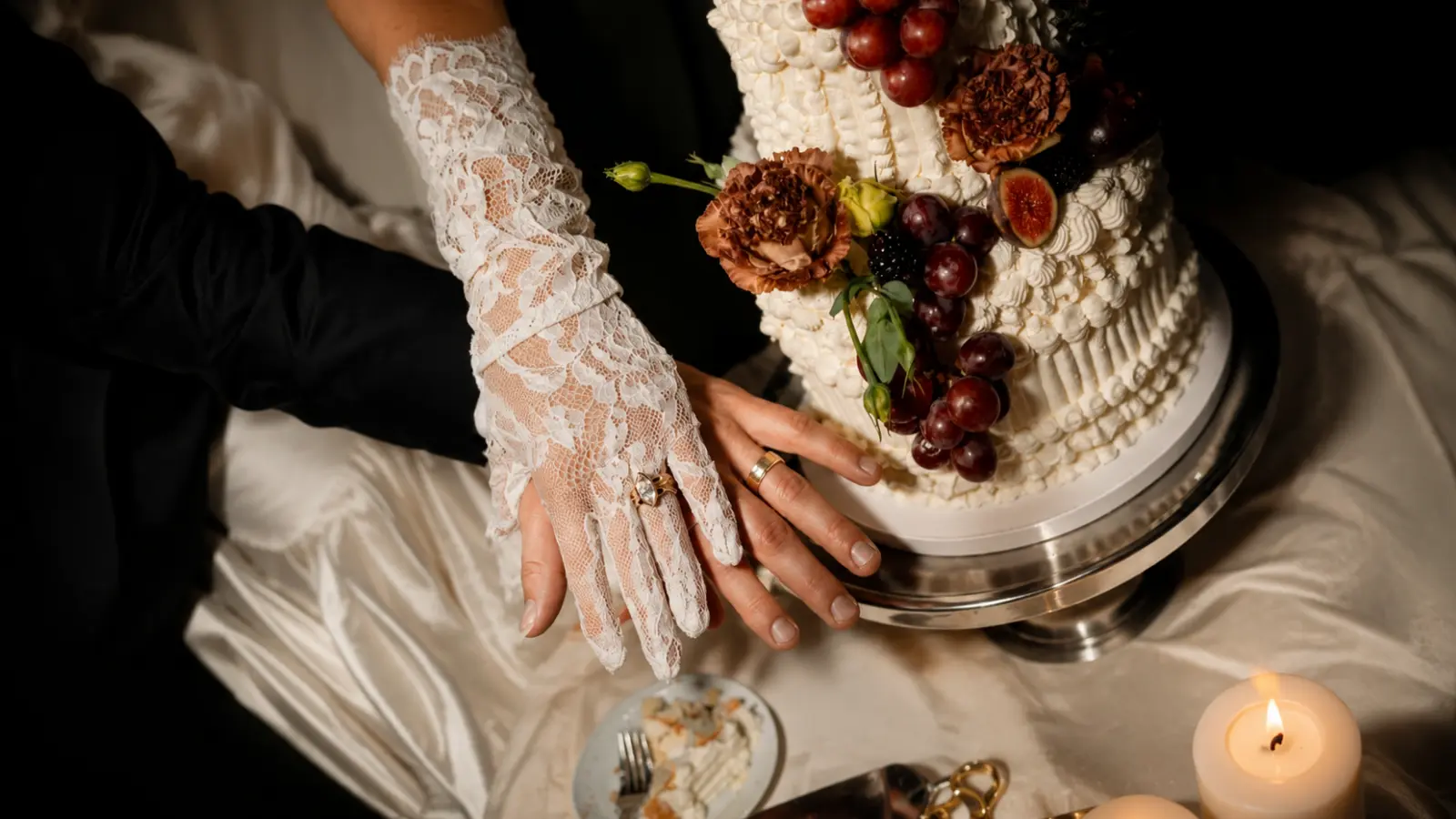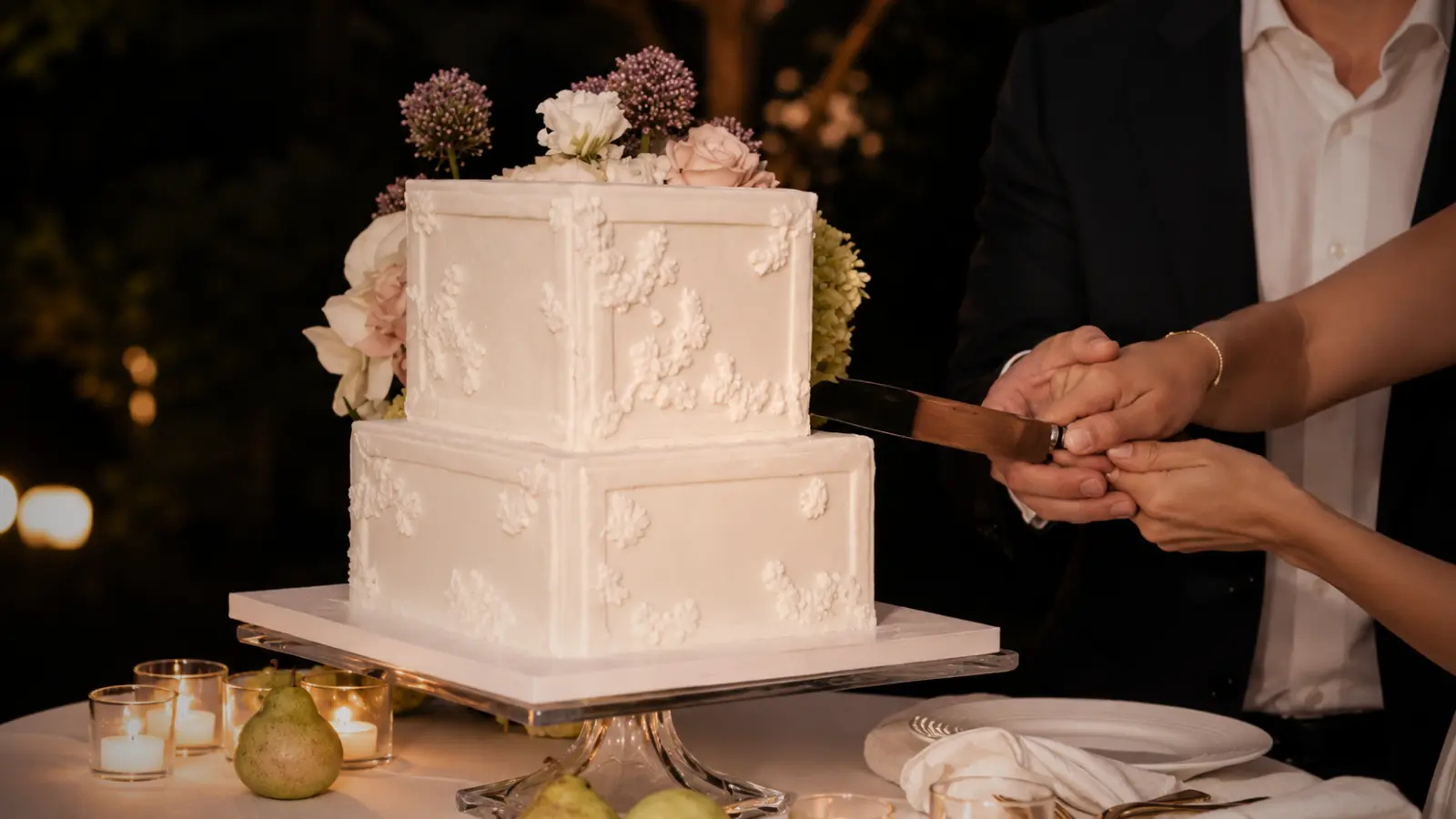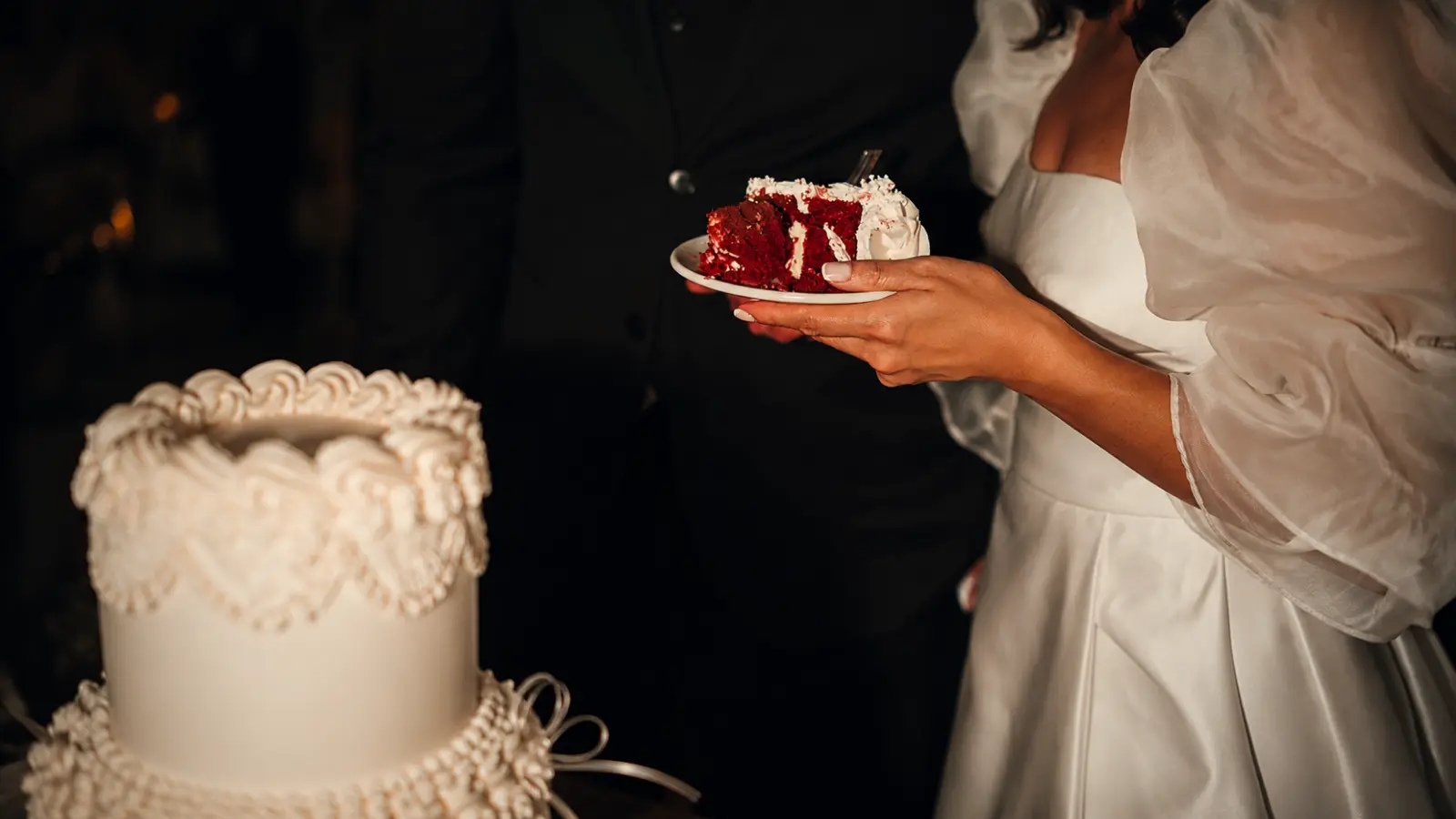
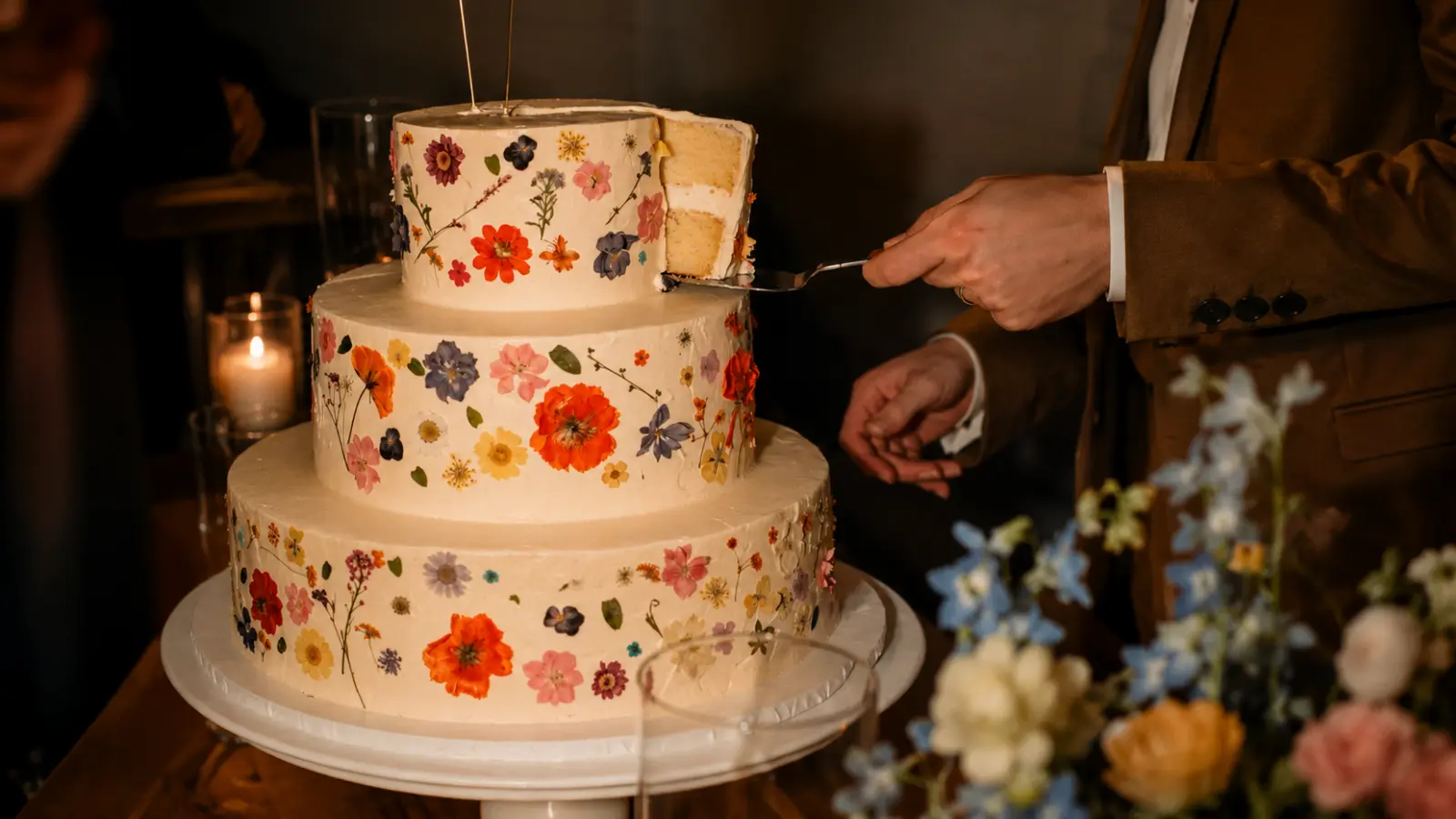
Three-tier wedding cakes are wedding cakes built with three stacked tiers, offering a strong balance of serving capacity, visual presence, and design flexibility. For many couples, they represent the classic wedding cake silhouette — large enough to feel like a centerpiece, yet practical enough for many medium-to-large wedding guest counts without requiring an oversized design.
The popularity of three-tier wedding cakes is not simply about tradition. Three tiers create a natural sense of proportion that works beautifully in photographs, adds height to the reception space, and gives bakers enough surface area to incorporate florals, textures, piping, or modern design details without making the cake feel crowded. For weddings between roughly 80 and 150 guests, it is often the most balanced choice available.
In this guide, you’ll learn how many guests a three-tier wedding cake can serve, the most common size configurations, average costs, popular design styles, floral decoration options, flavor combinations, and how to determine whether a three-tier cake is the right fit for your venue, guest count, and overall wedding vision.
What Is a Three-Tier Wedding Cake?
A three-tier wedding cake is one of the most recognizable wedding cakes styles, composed of three separate round or square tiers of decreasing size, each supported by internal dowels or a structural support system and separated by a thin board. The graduated sizes create the classic pyramid silhouette that has been the visual shorthand for “wedding cake” in American culture since the early twentieth century.
The structure is more engineered than it looks. Each tier is not simply placed on top of the one below — that would cause the lower tiers to compress and collapse under the weight above. Instead, food-safe wooden or plastic dowels are inserted vertically through the lower tiers, bearing the weight of the tier above and distributing the load evenly. A three-tier cake assembled by a skilled baker is remarkably stable; a three-tier cake assembled incorrectly is a liability waiting for the wrong moment to reveal itself.
Three tiers remain a natural choice for many U.S. weddings because this format can serve a common medium-to-large guest range in a single elegant structure, at a price point that is higher than a two-tier cake but still more practical than many four-tier designs. For couples who want a visually significant cake without the cost of four or five tiers, three is the natural solution.
Three-tier vs. two-tier vs. four-tier — how to decide
The tier decision is primarily a function of guest count and visual goals, in that order.
- Two tiers serve 50 to 80 guests. They look proportionally correct at intimate weddings and smaller venue spaces. At a large ballroom with 150 guests, a two-tier cake looks undersized for the room regardless of how beautifully it is decorated.
- Three tiers can serve many medium-to-large weddings and achieve a visual height and presence that reads as a genuine centerpiece from across a reception floor. For many couples, this is the most balanced tier count.
- Four tiers serve 180 to 250 guests and are typically chosen either for large guest counts or for couples who specifically want a dramatic visual statement regardless of how many people they are feeding. Four tiers begins to require a specific venue context to look proportional — a very tall four-tier cake can look top-heavy or unstable if the tier sizes are not carefully calibrated.
One thing many couples do not know: a three-tier display cake can be supplemented with a wedding sheet cake in the kitchen to serve a guest count larger than the display cake’s serving capacity. The display cake provides the visual centerpiece and the cutting moment; guests are served from kitchen sheet cakes that are identical in flavor. This is the standard approach at high-end caterers and allows a couple to have the three-tier silhouette they want without paying for the full serving count in the display cake.
How Many Servings Does a Three-Tier Cake Have?
Serving counts for wedding cakes are one of the most consistently misunderstood parts of cake planning — and the misunderstanding tends to go in the same direction: couples assume a larger cake feeds more people than it actually does when properly sliced. Understanding the math before the consultation prevents the surprise of discovering the three-tier cake you envisioned is either too large or too small for your guest list.
Standard three-tier serving counts by configuration
| Configuration (round tiers) | Approximate Servings | Best Guest Count |
|---|---|---|
| 8″ + 6″ + 4″ | 60 – 75 servings | 50 – 70 guests (three-tier visual for smaller weddings) |
| 10″ + 8″ + 6″ | 100 – 120 servings | 80 – 120 guests — the most common U.S. configuration |
| 12″ + 10″ + 8″ | 130 – 160 servings | 120 – 150 guests |
| 14″ + 12″ + 10″ | 190 – 230 servings | 180 – 220 guests (large three-tier for big receptions) |
| Square 10″ + 8″ + 6″ | 115 – 140 servings | 100 – 130 guests (square serves slightly more than round) |
The variables that change these numbers
Serving counts for wedding cakes are not universal — they depend on how a specific bakery defines a “serving.” Most professional wedding bakeries cut to a 1×2-inch slice at 4 inches tall, which produces the counts above. Some cut more generously (1×2.5 inches), some cut smaller (1×1.5 inches). The difference between cutting standards can be 15 to 20 servings on a standard three-tier cake — enough to matter for a tight guest count.
When you ask your baker “how many servings does this cake have?” follow up with: “How large is a standard slice?” This question is not pedantic. It is the question that determines whether you have enough cake.
Other factors that affect how far a three-tier cake stretches:
- The top tier. Many couples save the top tier to freeze and eat on their first anniversary. If you plan to do this, remove the top tier from the serving count — a 10–8–6 configuration without the top tier serves roughly 75 to 85 guests rather than 100 to 120.
- Time of service. Cake served late in the evening — after guests have danced and are beginning to leave — tends to have 15 to 25 percent of guests skip dessert. Cake served immediately after dinner sees nearly every guest eat a slice. If your reception timeline puts the cake cutting late, you likely need fewer servings than a strict headcount would suggest.
- Other desserts. If you are running a dessert bar, cupcake table, or cookie display alongside the wedding cake, reduce your cake serving count by 20 to 30 percent. Guests choose between options rather than all eating the same thing.
- Groom’s cake. If a separate groom’s cake is part of the reception, a proportion of guests will eat from that rather than the wedding cake. Plan accordingly.
Three-Tier Wedding Cake Designs
Three tiers gives the baker more surface area to work with than one or two, creating more possibilities for different wedding cake designs — and more ways for the visual to go wrong if the design does not have a clear concept driving it. The most beautiful three-tier cakes are not always the most decorated ones. They are the ones where every element — finish, decoration, topper, color — serves a single coherent visual idea.
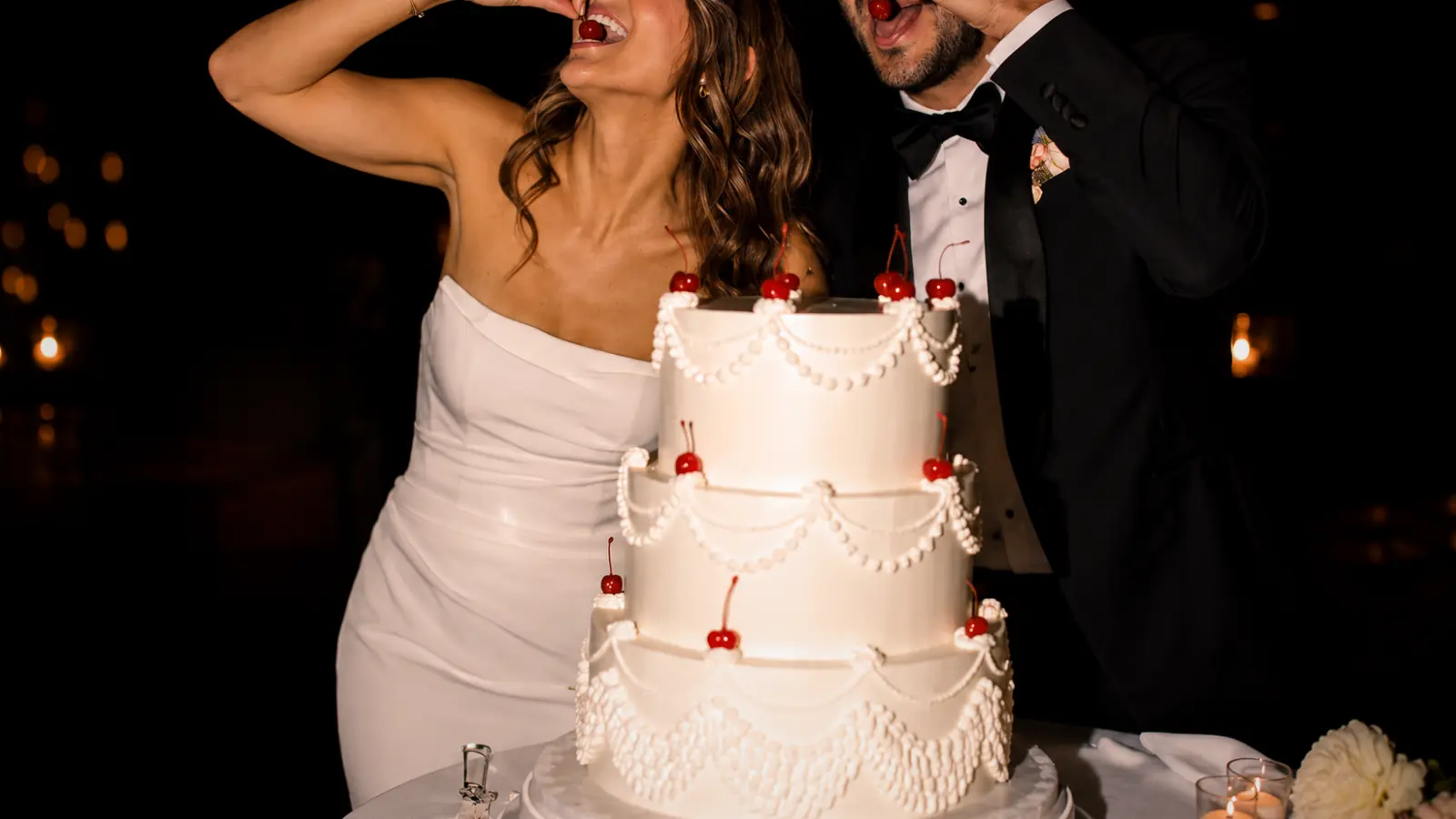
Textured buttercream
One of the strongest three-tier design styles at American weddings. Buttercream applied with a palette knife in loose, overlapping strokes — or combed with a textured comb, or left with the natural marks of a bench scraper — creates a warm, dimensional surface that photographs beautifully in both natural and artificial light. The texture eliminates the need for additional decoration on many cakes; the surface itself is the design.
Variations within the textured buttercream category:
- Palette knife swipe: Loose, overlapping strokes in the same color — the most organic and artistic-looking finish. Works in white, blush, sage, warm terracotta, or any muted wedding palette color.
- Brushstroke cake: Colored buttercream strokes applied over a white or nude base, creating a painterly effect. Each brushstroke is a deliberate design element. Often incorporates the wedding color palette into the strokes.
- Raked or combed texture: A comb or serrated scraper drawn around the cake surface to create horizontal lines. More structured than the palette knife finish; looks particularly clean on tall tiers.
- Smooth with texture contrast: Two or more tiers in a smooth finish, one tier in a heavy texture, creating visual rhythm across the stack. A common and effective design decision for three-tier cakes specifically.
Semi-naked and naked three-tier
A three-tier naked or semi-naked cake is the most visually distinctive version of the style — the graduated sizes and the visible cake layers combine to create something that reads as architectural. At its best, it looks like a cross section of something beautiful rather than a cake that is missing its frosting.
The semi-naked version (a thin scrape of buttercream over the outside, leaving cake visible through a gauze-like layer) is the more practical choice for a three-tier configuration: it protects the exposed layers from drying out across the hours between setup and service, handles venue temperature better, and photographs with the same organic quality as the fully naked version.
Modern minimalist
Modern wedding cakes often include a smooth-finish three-tier cake in a monochromatic palette — pure white, warm ivory, dusty rose, sage, slate blue — with no additional decoration. The design statement is made entirely through the silhouette and the finish quality. These cakes require the highest technical execution: a smooth finish that is not perfectly smooth is simply a flaw. For couples who choose the minimalist approach, the baker’s portfolio should demonstrate consistently flawless smooth work before the booking is placed.
Vintage and piped
Vintage wedding cakes often use three tiers as the natural canvas for piped decoration — ruffles, lambeth piping, lace patterns, and raised borders have more surface area to breathe and more visual rhythm across three tiers than two. A vintage three-tier cake with intricate piping on the lower tier and progressively simpler decoration on the upper tiers is a classic design approach that photographs beautifully at formal venues.
Design ideas by wedding aesthetic
| Wedding Aesthetic | Three-Tier Design That Works |
|---|---|
| Garden / romantic outdoor | Textured buttercream, fresh floral cascade, soft blush or white palette |
| Barn / rustic | Semi-naked with dried botanicals, fruit, or wildflowers; rough palette-knife finish |
| Formal ballroom | Smooth fondant or buttercream; sugar flower cascade; metallic detail; vintage piping |
| Modern / contemporary venue | Monochromatic smooth finish; geometric detail; gold leaf; no floral |
| Vineyard / estate | Semi-naked with fresh fruit and herbs; warm palette; Italian meringue buttercream |
| Beach / destination | Smooth white or sand-tone buttercream; minimal decoration; fresh tropical flowers or greenery |
| Bohemian | Textured finish with dried pampas, lavender, dried citrus; earthy palette |
Simple Three-Tier Wedding Cakes
Simple three-tier wedding cakes are not the budget fallback. They are a deliberate aesthetic choice — and one that ages far better in photographs than a heavily decorated cake designed to impress in the moment. Couples are often more likely to love their wedding cake photos years later when the design feels coherent and well-executed rather than overly elaborate or busy.
Simple also has a practical advantage that is often underestimated: fewer decorative elements means fewer things that can go wrong between the bakery and the reception. Sugar flowers can crack in transit. Intricate piping can soften in a warm venue. Fresh fruit on a naked cake can oxidize in the hours before service. A smooth buttercream three-tier cake with a handful of fresh flowers and nothing else has almost no failure points.
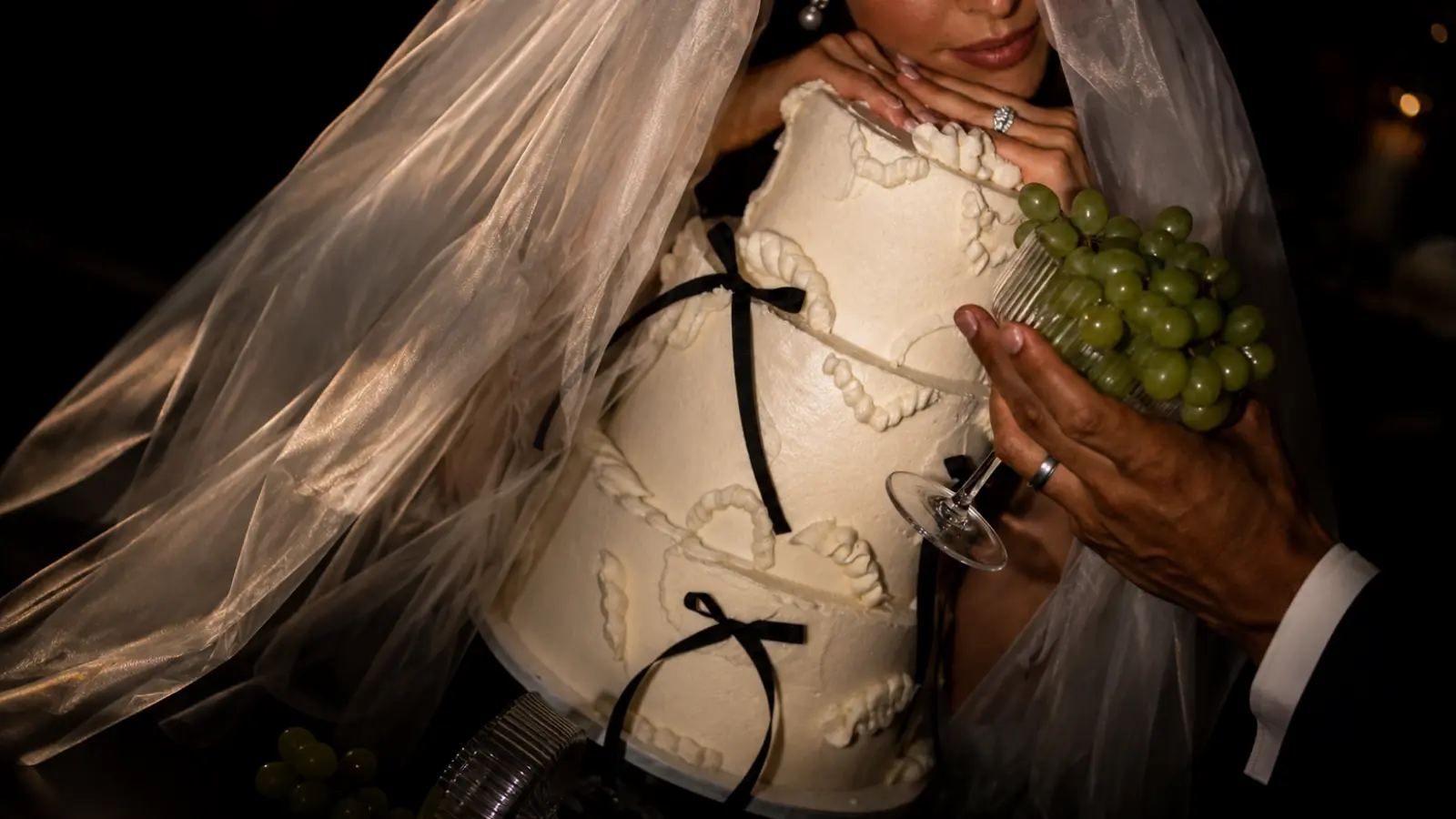
Simple three-tier designs that never look cheap
- White buttercream with scattered fresh flowers. One of the most timeless simple three-tier options. A smooth or lightly textured white buttercream surface, flowers tucked between tiers and placed loosely at the base. Two elements — cake and flowers — and nothing else. It photographs beautifully in many settings and tends to age better than designs built around very specific trends.
- Single-tone textured buttercream, no decoration. A three-tier cake in a single color — ivory, blush, sage, dusty blue — with a palette-knife or brushstroke texture. The finish is the design. No flowers, no topper, no additional elements. Particularly effective at modern venues where the cake needs to feel like a design object rather than a traditional centerpiece.
- Smooth buttercream with one metallic detail. A clean white or ivory three-tier cake with a thin line of gold leaf between each tier. The minimum possible luxury detail — enough to catch the light in photographs, subtle enough that guests at the reception may not notice until the cake is in front of them.
- Semi-naked with greenery only. A semi-naked three-tier cake decorated only with eucalyptus, olive branches, or other greenery — no flowers. The green against the exposed cake creates a warm, organic look that works exceptionally well at garden, vineyard, and estate weddings.
- Monogram on smooth white. A perfectly smooth white three-tier cake with a single centered monogram — a laser-cut acrylic letter or a hand-piped initial in a slightly darker shade than the base. One element, clearly intentional, impossible to misread as underdone.
One consideration that many couples overlook with simple three-tier designs: the quality of the buttercream and the precision of the surface work become more visible, not less, when there is nothing else to look at. A simple cake executed with mediocre technique reads as unfinished. A simple cake executed with genuine skill reads as architectural. Look specifically at the quality of the smooth or textured work in the baker’s portfolio before choosing a simple design — it requires a higher baseline of technical competence than a heavily decorated cake, where the decoration covers imperfections in the base.
Floral Three-Tier Wedding Cakes
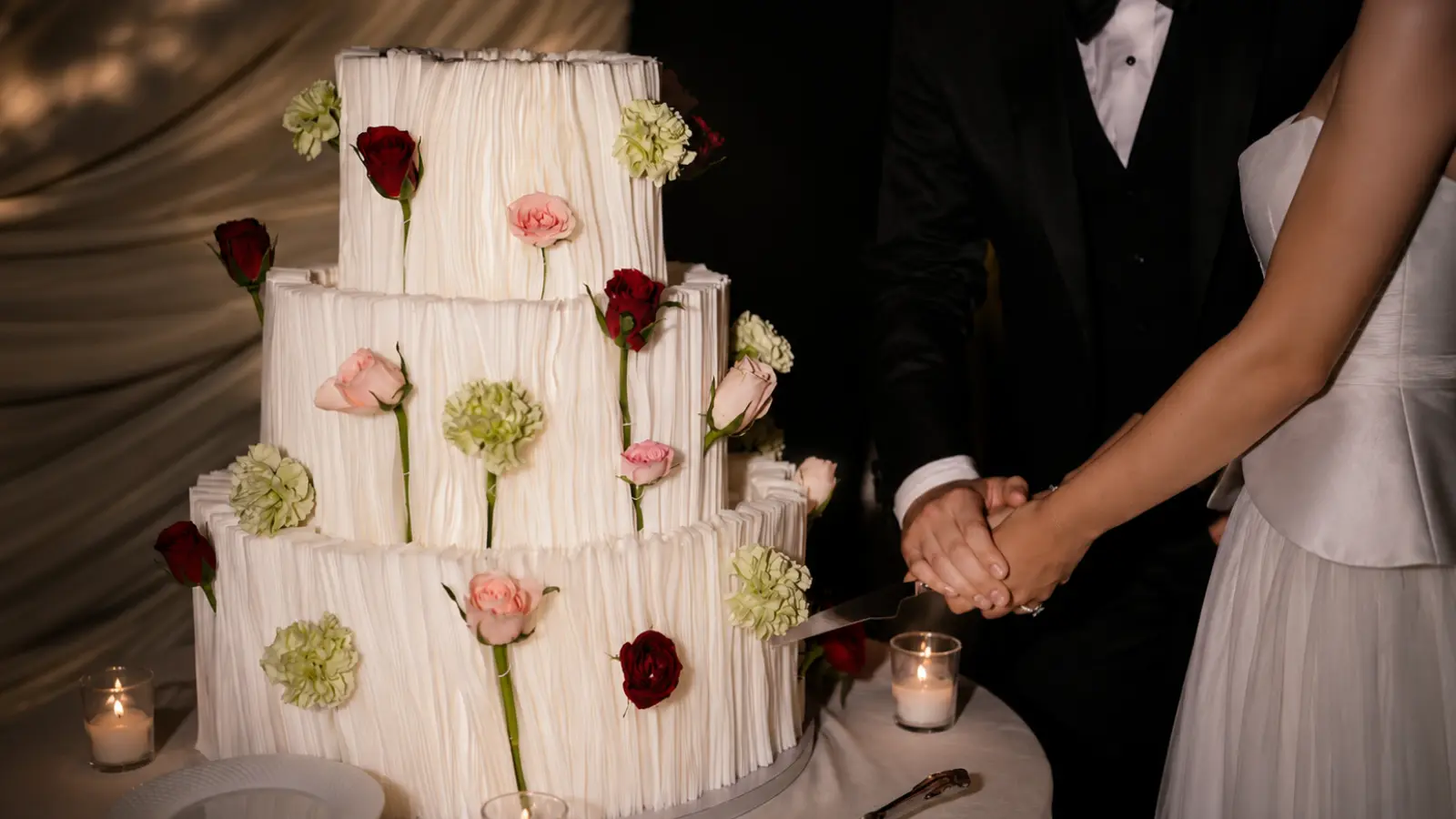
Floral wedding cakes are one of the most natural choices for three-tier designs at American weddings because flowers and tiered cakes work so well together visually. The reason is not sentimentality — it is that flowers and cake are visually compatible in a way that almost nothing else is. The organic shapes of florals work against the structured geometry of a tiered cake to create exactly the kind of contrast that photographs well. The flowers look more natural against the cake backdrop; the cake looks more romantic with flowers on it.
Three tiers gives the floral decoration a canvas that two tiers cannot: three junction points between tiers, a base that can support a ground-level arrangement, and enough vertical surface to run a cascade from top to bottom. The scale of a three-tier floral cake is dramatically more impressive than a two-tier equivalent with the same flowers.
Fresh flowers on three-tier cakes
Fresh flowers coordinated with the wedding florals are the most popular and most cost-effective way to create a beautiful floral three-tier cake. The process: the couple’s florist and the cake baker communicate directly about which flowers will be used, and either the florist provides the cake flowers as part of the overall order, or the baker sources them independently. Both approaches work; what matters is that someone is clearly assigned the responsibility.
Placement styles for fresh flowers on three-tier cakes:
- Cascade. Flowers placed starting from the top tier and flowing diagonally down across all three tiers to the base. The most dramatic fresh flower arrangement on a three-tier cake. Requires the most flowers and the most coordination with the baker during setup.
- Between-tier clusters. Small arrangements of flowers tucked into the space between each tier, creating three distinct focal points. The flowers read as intentional placements rather than a continuous design — a slightly more structured approach than the cascade.
- Base ring. Flowers arranged in a ring around the base of the bottom tier only, with the upper tiers left clean. Creates a strong visual foundation and lets the cake’s own surface decoration carry the upper tiers. Particularly effective for textured buttercream cakes where the surface is already doing visual work.
- Top crown. A small, tight arrangement of flowers on top of the uppermost tier. Elegant and understated — the flowers provide a finishing point without dominating the design. Often combined with between-tier clusters for a fuller look.
Food safety with fresh flowers: Not all fresh flowers are food-safe, and this matters when they are placed directly on a cake. Roses, pansies, lavender, chamomile, viola, and marigolds are edible and food-safe. Some popular wedding flowers — including ranunculus, lily of the valley, hydrangea, and sweet pea — are not edible and should not touch the cake surface directly. If they are used decoratively, your baker should use food-safe picks, wrapped stems, or another barrier so the flowers do not contact the cake.
For flowers that are not food-safe, a skilled baker will use food-safe picks or floral tape to wrap stems and create a barrier. Ask specifically about this at the consultation if your chosen flowers are not on the short list of known food-safe varieties.
Sugar flowers on three-tier cakes
A three-tier wedding cake with a sugar flower cascade is among the most photographed wedding images in the American market — and for good reason. Sugar flowers on a three-tier canvas have room to breathe in a way they do not on a two-tier cake. The cascade can be designed with genuine depth and variety: large open roses on the lower tier, smaller buds on the middle tier, scattered petals on the top tier, creating a design that feels naturalistic rather than formulaic.
The cost reflects the labor involved. A single detailed sugar flower can require hours of skilled hand work, and a full cascade across three tiers may involve many individual flowers, buds, leaves, and smaller elements before the cake is even baked. Sugar flower additions can add a significant amount to the base cake price, depending on the flower types, scale, complexity, and baker’s level of specialization. For couples with the budget, the result is genuinely extraordinary — photographs that could not be mistaken for any other wedding. For couples managing budget, fresh flowers achieve 80 percent of the visual effect at a small fraction of the cost.
Dried floral decoration
Dried botanicals — pampas grass, dried lavender, dried citrus rounds, preserved roses, dried cotton — have become an increasingly popular alternative to fresh and sugar flowers on three-tier cakes. The advantages are practical: dried botanicals do not wilt in a warm venue, require no refrigeration, need no day-of coordination with a florist, and can be placed on the cake days before the wedding without any degradation. They also have a distinctive warm, earthy aesthetic that suits bohemian, rustic, and autumn weddings exceptionally well.
Three-Tier Wedding Cake Cost
Wedding cake cost can vary widely, and three-tier wedding cake pricing in the U.S. has a wider range than most couples expect — wide enough that two three-tier cakes of the same size and the same serving count can cost $700 or $4,000 depending on the baker and the design. Understanding what drives the price within a specific tier configuration makes the tasting appointment and budget conversation much more productive.
Three-tier wedding cake cost breakdown
| Design Level | Typical Cost (100–120 servings) | What’s Included |
|---|---|---|
| Simple / minimal | $700 – $1,000 | Buttercream finish (smooth or textured); fresh flowers or simple piping; standard flavors |
| Mid-range / floral | $1,000 – $1,800 | Professional buttercream finish; fresh flower cascade or between-tier clusters; quality flavors and fillings |
| Premium / detailed | $1,800 – $3,000 | Smooth or fondant finish; sugar flowers; metallic details; hand-painted elements; premium flavors |
| Designer / luxury | $3,000 – $6,000+ | Full sugar flower cascade; bespoke design; designer bakery; major metropolitan market; complex hand-painting |
What drives the price up on a three-tier cake
- Sugar flowers. The single biggest cost driver. A sugar flower cascade can add a substantial labor charge to the base price of a three-tier cake, and individual sugar flowers are usually priced based on complexity, size, and the level of detail required. If the design requires sugar flowers, get a detailed quote that specifies the number and type of flowers rather than just a total price.
- Hand-painting. Edible paint applied by hand — watercolor washes, botanical illustrations, custom imagery — is an artistic service charged by complexity and time. A simple watercolor wash may add less than a detailed scene, but the final price depends on the level of artistry, coverage, and time required.
- Gold leaf. Genuine 22K edible gold leaf is both a material and a labor cost. Gold leafed tiers or gold drip details can add to the base price depending on coverage, material cost, and application time.
- Multiple flavor combinations. Different flavors per tier may add a modest cost because they require separate preparation, labeling, and batch tracking.
- Delivery distance and complexity. Most bakeries charge a delivery fee based on mileage from the bakery to the venue. Multi-tier cakes often require on-site assembly, which may include a separate setup fee. Confirm both costs at the consultation — not the day of delivery.
- Bakery market and reputation. A three-tier cake from a highly regarded boutique bakery in New York, Los Angeles, or Chicago will cost significantly more than the same cake from a quality regional bakery in a smaller market, even with comparable skill and ingredients. This is not a commentary on quality — it reflects the higher overhead and demand in major markets.
How to get the best three-tier cake within your budget
- Choose fresh flowers over sugar flowers. The visual impact difference is real but smaller than the price difference. Fresh flowers from your florist achieve a genuinely beautiful result at a fraction of the sugar flower cost.
- Use a kitchen sheet cake to supplement serving count. If your guest count requires the larger 12–10–8 configuration, consider the standard 10–8–6 display cake supplemented with kitchen sheet cakes in the same flavor. The display cake costs less; the serving count is identical.
- Choose textured buttercream over smooth. A smooth buttercream or fondant finish requires more labor to achieve than a textured one. A palette-knife texture is faster to apply and produces a result that is equally beautiful and more contemporary.
- Be specific about budget at the first conversation. Telling a baker “our budget for the cake is $1,200” at the start of the consultation produces a completely different set of design options than arriving without a stated budget. Bakers who know the budget can work within it and will not pitch designs that exceed it.
- Book early and ask about lower-demand dates. Some bakeries offer more flexibility for off-season, weekday, or lower-demand wedding dates. Asking specifically about timing and booking flexibility is worth the conversation.
Height, Cake Stands and Table Setup
The height of a three-tier wedding cake is one of the details that affects photographs far more than couples expect when they are making decisions at the bakery. A cake that is tall enough to have genuine visual presence in a full room shot — not just in a close-up — needs to clear a certain threshold. Understanding how height is built across the cake, the stand, and the table helps the couple make decisions that produce the result they actually want.
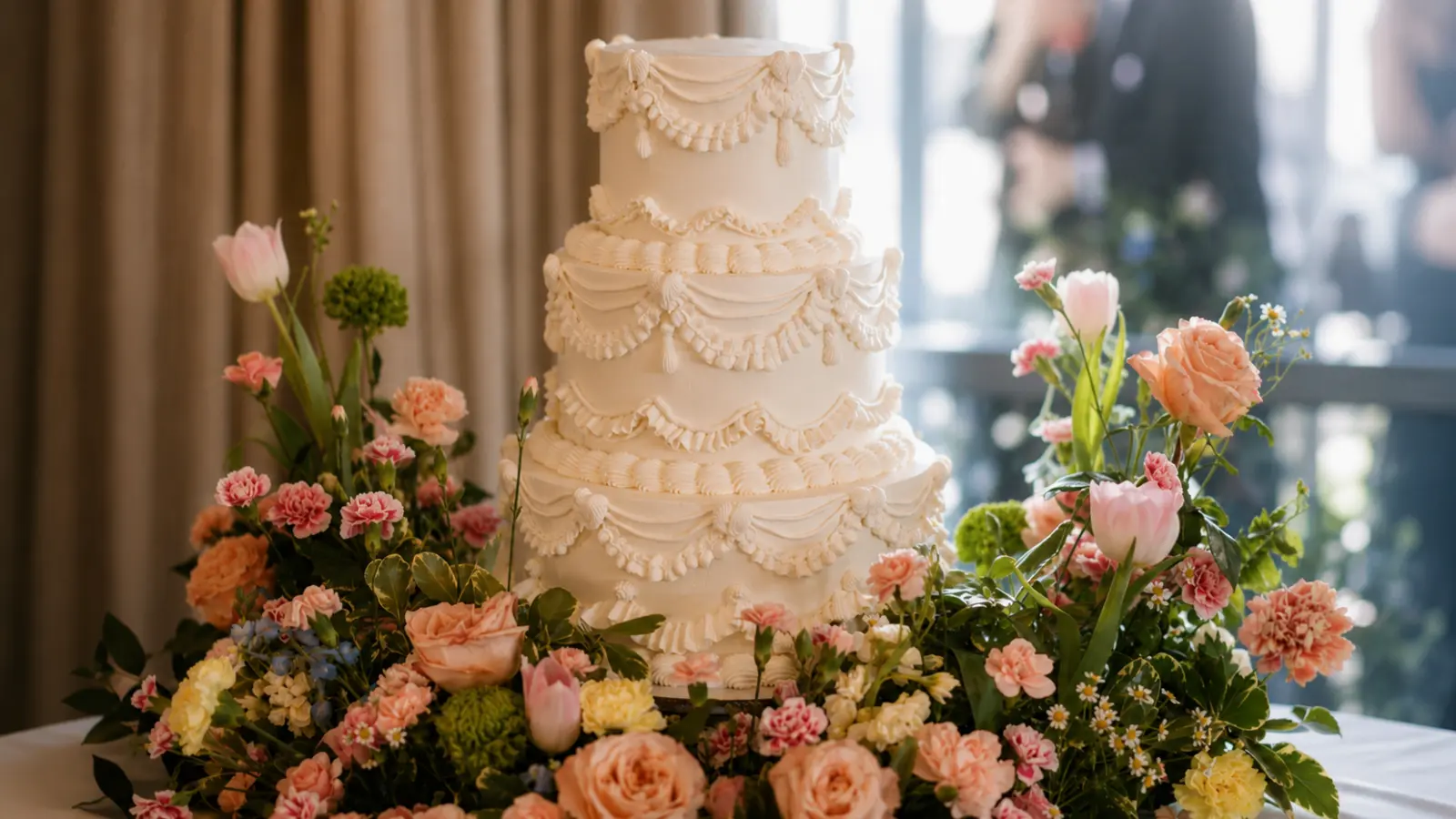
How tall is a three-tier wedding cake?
Each standard wedding cake tier is typically 4 to 5 inches tall, baked in two 2-inch layers filled and stacked. Three standard tiers produce an assembled cake of 12 to 15 inches. Some bakers offer extended tiers — 6 inches tall instead of 4 to 5 — which brings a three-tier cake to 16 to 20 inches. Extended tiers cost slightly more (more cake per tier), but they produce a dramatically more impressive silhouette, particularly on the middle and bottom tiers where the height is most visible.
The cake stand adds to the effective height. A 4-inch stand brings a 14-inch cake to 18 inches total. An 8-inch stand brings it to 22 inches. A 12-inch stand — which begins to feel genuinely architectural — brings the total to 26 inches. At that height, a three-tier cake with an 8-inch stand reads as a major visual presence from anywhere in a standard reception room.
Choosing a cake stand
The cake stand is not a minor decision — it is part of the visual composition of the cake table, and it is the element that determines how high the cake sits in every photograph taken from across the room.
- Marble stands. One of the most elegant and versatile cake stand materials for American weddings. A white or grey marble stand looks equally appropriate at formal and garden weddings, photographs beautifully, and adds a luxury quality to even a simple cake. Available for purchase at $60 to $150; sometimes available as a rental from the bakery or venue.
- Gold or brass metal stands. Particularly effective at glamorous and formal weddings where the warm metal tone coordinates with the overall wedding palette. A brass pedestal with a slight flare at the top edge creates a distinctly editorial look.
- Rustic wood stands. A round wood slice or a turned wood pedestal for barn, vineyard, and bohemian weddings. The natural grain coordinates with dried floral decoration and the organic textures of a semi-naked or rustic cake.
- White ceramic or porcelain. The most neutral stand — works at every wedding aesthetic without adding a specific material statement. The right choice when the cake and the table styling are doing enough visual work without a stand that competes.
- Acrylic and lucite stands. Transparent acrylic stands create the visual effect of a floating cake — the cake appears to sit with no support beneath it. A contemporary and slightly unexpected choice that photographs very cleanly in modern venue contexts.
Cake table setup and positioning
Where the cake table is positioned within the reception space affects both its visual impact and its structural safety.
- Away from direct heat and sunlight. A buttercream cake that sits in direct afternoon sunlight for two hours before service can begin to soften and slide. Position the cake table away from south-facing windows, outdoor doorways in warm weather, and near heat lamps or fireplaces.
- Away from high foot traffic. A three-tier cake on a stand is not stable against a bumped table. Guests reaching past the cake for something, caterers working near it, or children running through the space create risk. The cake table should be positioned so that it is visible but not in a through-path.
- Where it reads from the room, not just up close. The cake table should be positioned so the full three-tier silhouette is visible from the room’s main sightlines — the head table, the bar area, the dance floor. A cake hidden in a corner is not serving its function as a centerpiece.
- On a level surface. This is not optional. A cake on a slightly unlevel table will lean over time as the buttercream softens. The venue should confirm that the designated cake table location is level, or shim the table legs if necessary.
Transport and Delivery
The transport of a three-tier wedding cake is where things go wrong more often than at any other point in the cake process. Most damage to wedding cakes happens not in the bakery, not during decoration, and not during setup — it happens during the drive between the bakery and the venue. A cake that took 30 hours to create and $1,200 to commission can be damaged beyond repair by a single hard brake or a sharp turn on the highway.
This is why the universal recommendation from every professional baker is the same: professional bakery delivery only. Not a personal vehicle driven by a well-meaning family member. Not a rental van driven by the groom’s brother. The baker’s vehicle, the baker’s delivery method, and ideally the baker’s own hands on the cake at the venue.
How professional bakers transport three-tier cakes
Most experienced wedding cake bakers transport multi-tier cakes in tiers — the three tiers packed separately in boxes, assembled on-site at the venue immediately before service. This is safer than transporting an assembled three-tier cake because it eliminates the structural risk of the upper tiers sliding during transit. The on-site assembly takes 15 to 30 minutes and is included in the delivery fee at most bakeries.
Some bakers transport fully assembled cakes using specialized non-slip mats, a level vehicle floor, and a very slow, careful drive — this is more common for shorter distances and simpler designs. If your baker transports assembled, ask specifically what happens if there is a problem in transit. A baker who has a contingency plan (extra frosting carried, ability to repair on-site) is more reliable than one who does not acknowledge the possibility.
Delivery fee expectations
Wedding cake delivery fees in the U.S. vary by distance, venue access, setup complexity, and whether the cake requires on-site assembly. Longer distances, difficult loading areas, multi-story setups, and venues with strict delivery windows can all increase the fee. Some bakeries include delivery in the cake price up to a certain distance; others charge it separately.
Clarify the delivery fee at the initial consultation — not after you have signed the contract. Also confirm: the delivery time window, who specifically will deliver (the baker, a staff member, or a contractor), whether the baker remains on-site during setup or leaves after placing the cake, and what happens if something is damaged during delivery. These questions are not aggressive or suspicious. They are the questions that experienced couples ask.
Flavors for a Three-Tier Cake
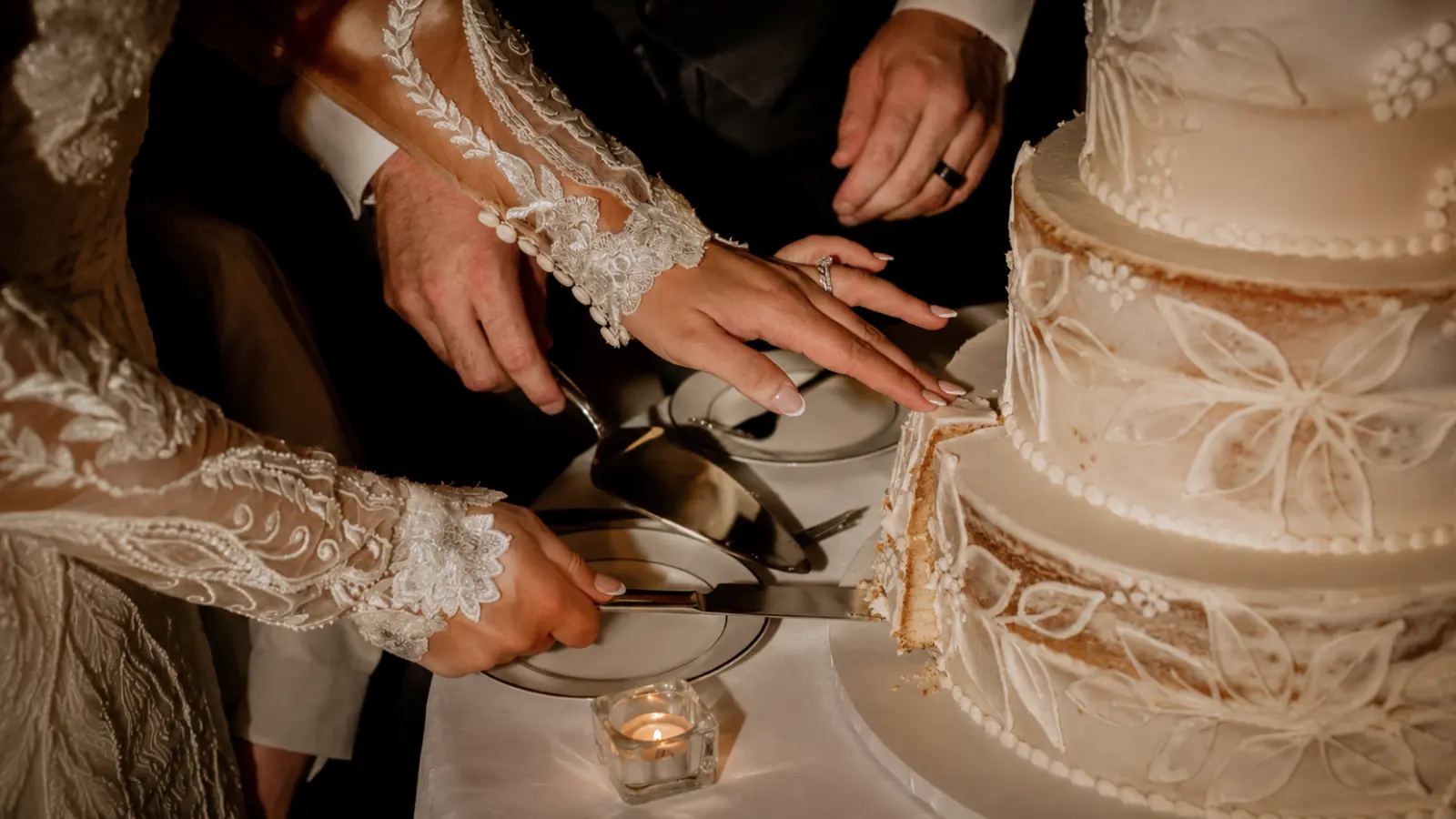
One of the advantages of choosing wedding cake flavors for a three-tier configuration is that each tier can be a different flavor. For a wedding of 100 or more guests — the typical range for a three-tier cake — different flavors per tier gives guests a genuine choice and creates a more interesting dessert experience than a single flavor replicated across all three.
Popular three-tier flavor combinations
- The classic American combination: Vanilla bean (top), lemon with lemon curd (middle), chocolate with salted caramel (bottom). Covers the three most popular wedding cake flavor categories; something for every guest preference.
- The elegant combination: Champagne with passionfruit curd (top), almond with raspberry jam (middle), vanilla bean with vanilla bean buttercream (bottom). A more sophisticated flavor profile for formal or European-influenced weddings.
- The seasonal combination (autumn): Spiced apple or carrot (top), red velvet with cream cheese (middle), dark chocolate with espresso buttercream (bottom). Warm, rich, season-appropriate.
- The crowd-pleasing combination: Vanilla bean (top), strawberry with fresh strawberry filling (middle), red velvet with cream cheese (bottom). High recognition factor; guests are excited about all three.
One practical note about multi-flavor three-tier cakes: the labels at the cake table matter. A small, elegant card identifying the flavor of each tier is not pedantic — it is what allows guests to make a deliberate choice rather than simply taking whatever slice is handed to them. Work with your stationer or use a simple printed card.
Is a Three-Tier Cake Right for Your Wedding?
Three tiers can be the right choice for many American weddings — but not all of them. There are specific scenarios where a different configuration makes more sense, and choosing three tiers in those scenarios means either producing a cake that is the wrong scale for the event or spending more than necessary to serve a guest count that a simpler configuration would cover just as well.
Three tiers is clearly the right choice when:
- Your guest count falls between 80 and 150 and you want the cake to serve as the primary dessert without supplementing from a dessert table
- You want a visually significant cake that reads as a centerpiece from across the reception floor
- You want different flavors per tier and have enough guests to make the full serving count of each tier practical
- Your venue is a formal, ballroom, or estate space where the scale of a three-tier cake is proportional to the room
Three tiers may not be the right choice when:
- Your guest count is under 60 — at this size, a three-tier cake either produces significant waste or requires ordering the smallest three-tier configuration (8–6–4 inch), which is proportionally narrow and can look slightly top-heavy
- You are supplementing with a significant dessert table or cupcake tower, and the wedding cake is primarily a cutting cake rather than the primary dessert — a single-tier or two-tier cutting cake serves this function at a lower cost
- Your venue has a very intimate scale — a three-tier cake in a small reception room of 30 guests can visually overwhelm the space in a way that reads as disproportionate rather than impressive
- Your budget is better used elsewhere — if the three-tier budget is producing financial stress in an already tight overall wedding budget, a beautifully executed two-tier cake with a kitchen sheet cake supplement achieves every practical goal at a lower price
The couples who get the most value from a three-tier wedding cake are the ones who chose it deliberately — because the guest count, the venue, and the visual goals aligned with what three tiers actually delivers. Couples are more likely to question the choice later when they chose three tiers only because it felt like what a wedding cake was supposed to look like, rather than because it fit their guest count, venue, and budget.
Three-Tier Wedding Cake Inspiration Board
Before choosing your final design, it helps to see how three-tier wedding cakes can feel elegant, balanced, and visually significant across different styles, venues, and guest counts. Explore our three-tier wedding cake inspiration board for floral cascades, textured buttercream finishes, modern minimalist styles, classic white wedding cakes, luxury designs, and beautifully proportioned cakes for weddings of every size.
Final thoughts
The best three-tier wedding cakes succeed because they balance beauty, practicality, and proportion. When the serving count, venue size, decoration style, and budget all work together, three tiers create the visual presence many couples want without becoming unnecessarily large or complicated.
Whether your design is floral, minimalist, textured buttercream, vintage-inspired, or completely custom, the goal remains the same. A three-tier wedding cake should feel connected to the celebration around it, serve guests comfortably, and create a centerpiece that looks just as appropriate in photographs years from now as it does on the wedding day.
Frequently asked questions (FAQ)
Do guests actually notice the difference between a two-tier and three-tier wedding cake?
They notice the overall presence more than the tier count itself. A three-tier cake naturally draws attention because of its height and scale, especially in larger venues. Most guests could not tell you how many tiers the cake had later, but they often remember whether it felt like a centerpiece.
What is the biggest mistake couples make when ordering a three-tier cake?
Choosing the cake based on tradition rather than venue size. A three-tier cake should feel proportional to the room. In an intimate venue, it can sometimes look oversized, while in a large ballroom it often feels perfectly balanced.
Can a three-tier wedding cake still look modern?
Absolutely. Modern three-tier cakes often rely on clean lines, monochromatic color palettes, subtle textures, and minimal decoration. The tier count itself is traditional, but the design language can be entirely contemporary.
Why do professional photographers love three-tier cakes?
Height creates dimension. A three-tier cake naturally stands out in wide reception photographs and gives photographers more opportunities to capture detail, texture, and floral styling from multiple angles.
Is a larger three-tier cake always more impressive?
Not necessarily. A well-proportioned three-tier cake often creates a stronger visual impact than an oversized cake that feels out of scale with the venue. Proportion is usually more important than size alone.
What do professional cake designers notice first about a three-tier cake?
The silhouette. Before they notice flowers, flavors, or decorative details, designers look at the relationship between the tiers, the height-to-width ratio, and whether the overall structure feels balanced and intentional.
How many guests does a three-tier wedding cake serve?
A three-tier wedding cake can serve roughly 60 to 160 guests depending on the tier sizes, tier height, and slice size. A common 10-inch, 8-inch, and 6-inch round cake often works for a medium-to-large wedding, but your baker’s serving chart should be the final guide.