Floral wedding rings are wedding rings inspired by flowers, leaves, vines, and natural elements, using botanical details through engraving, gemstones, sculptural designs, or nature-inspired patterns. These rings can range from delicate floral accents to detailed designs that turn the entire band into a meaningful piece of wearable art.
Choosing a floral wedding ring is about more than finding a beautiful design. Couples need to consider how the details are created, which metals and stones work best, how delicate elements hold up over time, and whether the style fits everyday life beyond the wedding day.
This guide explains everything about floral wedding rings, including popular flower designs, leaf and vine bands, nature-inspired styles, gemstones, symbolism, durability, and how botanical designs fit within different wedding rings and wedding bands.
Floral Wedding Ring Designs
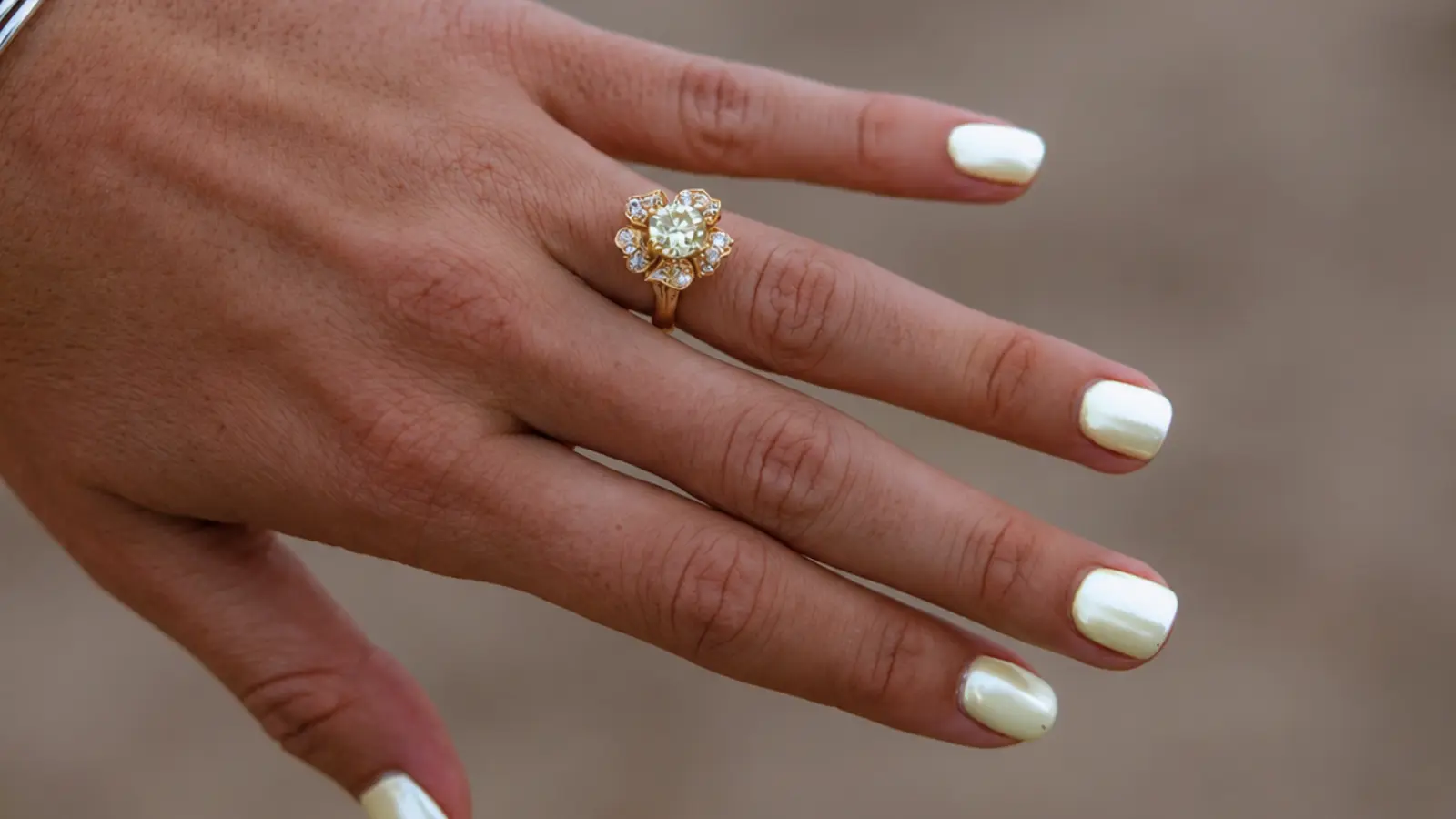
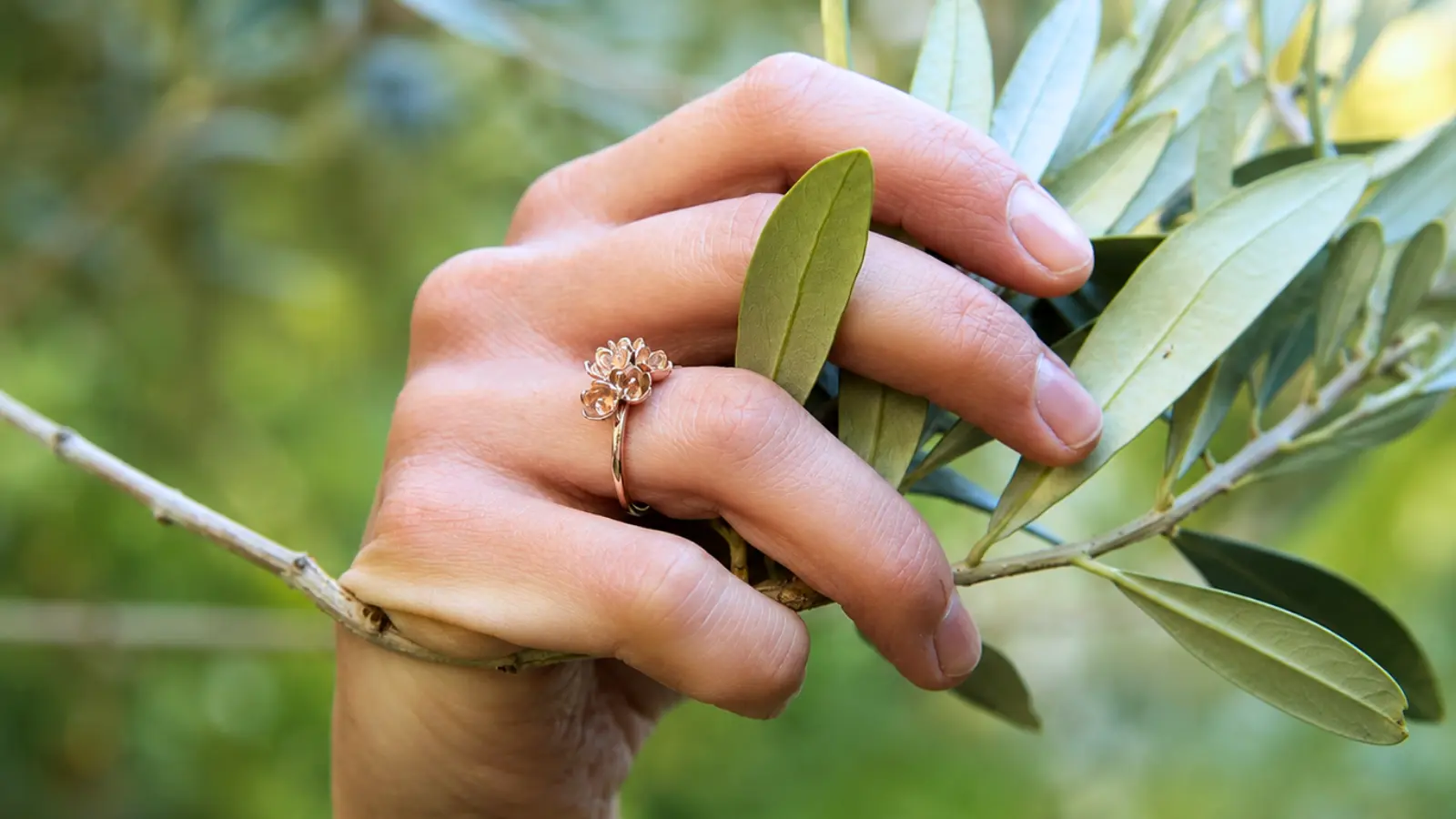
The floral wedding ring category is wider than most people realize before they start shopping. It covers everything from a ring with a single engraved rose on the interior of the shank, invisible when worn, visible only to the wearer, to a fully sculptural band where each millimeter of metal has been worked into petals, stamens, and stems that wrap around the finger. Between those extremes is an enormous range of designs, each with different aesthetic outcomes and different practical implications for daily wear.
Understanding how floral designs fit among different wedding ring styles makes it much easier to know what you are looking at and what to expect over time.
Engraved floral designs
Engraving is the oldest technique in decorative metalwork and still one of the most effective for botanical ring design. A skilled engraver working on a gold band surface can produce designs of extraordinary delicacy: petals that overlap and curl at their edges, vine stems that wrap around the full circumference of the band, leaf veining that is visible to the naked eye but would require magnification to fully appreciate. The result is a ring that presents as relatively simple from a distance and reveals its complexity on closer inspection, a quality that many wearers find more satisfying than immediate visual impact.
Engraved floral designs are also among the most durable in the category. The design is recessed into the metal surface rather than raised above it, which means it does not catch on fabrics, does not have exposed elements that can bend or break, and does not create the vulnerability to impact that three-dimensional detail does. A gold band with engraved botanical detail will hold that detail for decades of daily wear with normal care.
Variations within engraved floral design:
- Surface engraving on a polished band. The most readable version, the contrast between the polished metal surface and the recessed engraving lines creates clear visibility of the design. Works well in yellow gold, where the engraved lines catch light differently than the surrounding metal, and in white gold or platinum, where the depth of the engraving creates a shadow effect.
- Engraving with oxidized recesses. A technique where the engraved lines are deliberately darkened through oxidization, the dark lines contrast with the bright metal surface to make the botanical design dramatically more visible. Particularly effective for fine vine and leaf patterns where the design would otherwise require close inspection to see. Borrowed directly from Victorian botanical jewelry techniques.
- Inner band engraving. A secret detail visible only to the wearer when the ring is removed. Often a single significant motif, a flower with personal meaning, a vine that circles the inner circumference, a date rendered as leaves rather than numerals. For couples who want botanical symbolism in the ring without visible surface design, inner engraving is the cleanest solution.
Three-dimensional botanical metalwork
Three-dimensional floral rings, where petals, leaves, and stems are formed in metal and extend above the surface of the band, are the most visually dramatic version of the category and the most photographed. A ring where a gold rose sits at the center of the band, petals folding back from a central point with individual stamens worked in fine wire, is a genuinely remarkable piece of craftsmanship. It is also a ring that will catch on a cashmere sweater, accumulate debris in the spaces between the petals, and require more attentive care than any other wedding ring style.
This is not a reason to avoid three-dimensional botanical rings. It is context for making the choice with accurate expectations. The wearers who are happiest with high-relief sculptural botanical rings tend to be people who are accustomed to wearing decorative fine jewelry in daily life and have already developed the habits, removing rings before certain activities, cleaning fine detail regularly, being slightly more present about where the hand goes, that keep this kind of ring in good condition.
Set stone floral designs
A third design approach uses gemstones arranged in floral patterns, small diamonds set in a flower cluster, a sapphire at the center of a petal arrangement of smaller stones, an emerald-set leaf motif. These designs read as botanical through the arrangement and shapes of the stone settings rather than through metalwork alone. They often combine both: a gold setting shaped like petals cradling a central stone, with engraved vein detail on the petal surface.
Stone-set floral designs photograph particularly well because the stones add light and color to the already visually rich surface detail. They also introduce the maintenance considerations of any stone-set ring, periodic checking of prongs, cleaning of stone surfaces, alongside those of the botanical metalwork itself.
Leaf and Vine Wedding Rings
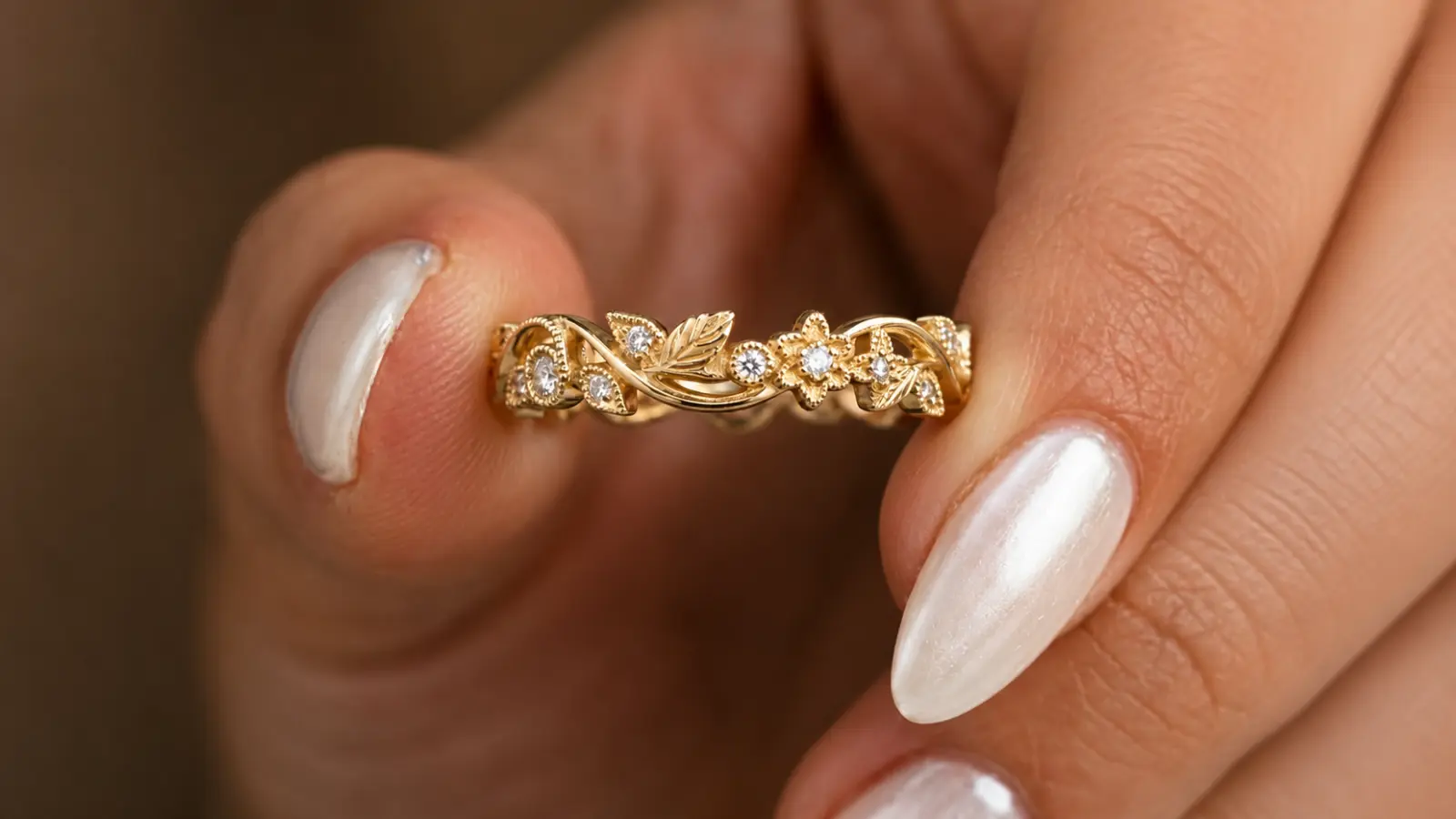
Leaf and vine designs occupy a specific and highly popular corner of the botanical ring category, one that lends itself to more elongated, wrap-around compositions than circular flower motifs do. A vine that spirals around the full circumference of a band creates a sense of continuous organic movement that few other ring designs match. A single leaf worked in gold at the setting of a stone creates an anchor point for the design that frames the stone as naturally as a real leaf might frame a flower.
Vine wedding rings
The vine is the most naturally ring-shaped of all botanical motifs. It is a continuous, growing, directional form, exactly what a band that encircles a finger is. A vine motif worked around the band surface does not need to be forced into a circular shape; it inhabits one naturally. This is part of why vine designs have appeared in ring jewelry across cultures and centuries: the motif and the object are formally compatible in a way that most other botanical forms are not.
In practical terms, vine wedding rings range from a thin gold band with a delicate engraved vine that appears to grow across the surface, subtle, visible only in good light, to a wide band with a heavily worked three-dimensional vine in high relief, leaves overlapping, with small diamond or sapphire accents in the recesses between stem sections. Both are vine rings. The practical implications of each are very different.
The most wearable version of the vine ring is typically a mid-width band (between 3mm and 5mm) with a moderately raised vine design in yellow or rose gold, enough three-dimensional quality to read clearly as a botanical piece, not so much elevation that the detail becomes fragile. This configuration handles daily wear well, photographs with distinctive shadow and depth, and does not require the level of careful handling that the highest-relief designs do.
Leaf wedding rings
Leaf designs in wedding rings range from a simple leaf silhouette worked as an engraved motif on a band to a ring whose entire shank is formed from overlapping leaf shapes, as if the finger were being cradled by foliage. Between those extremes: leaf-tipped prongs on a solitaire setting, a band with alternating leaf and blossom engraving, a three-stone ring where the center stone is flanked by marquise-cut side stones oriented to suggest leaf shapes.
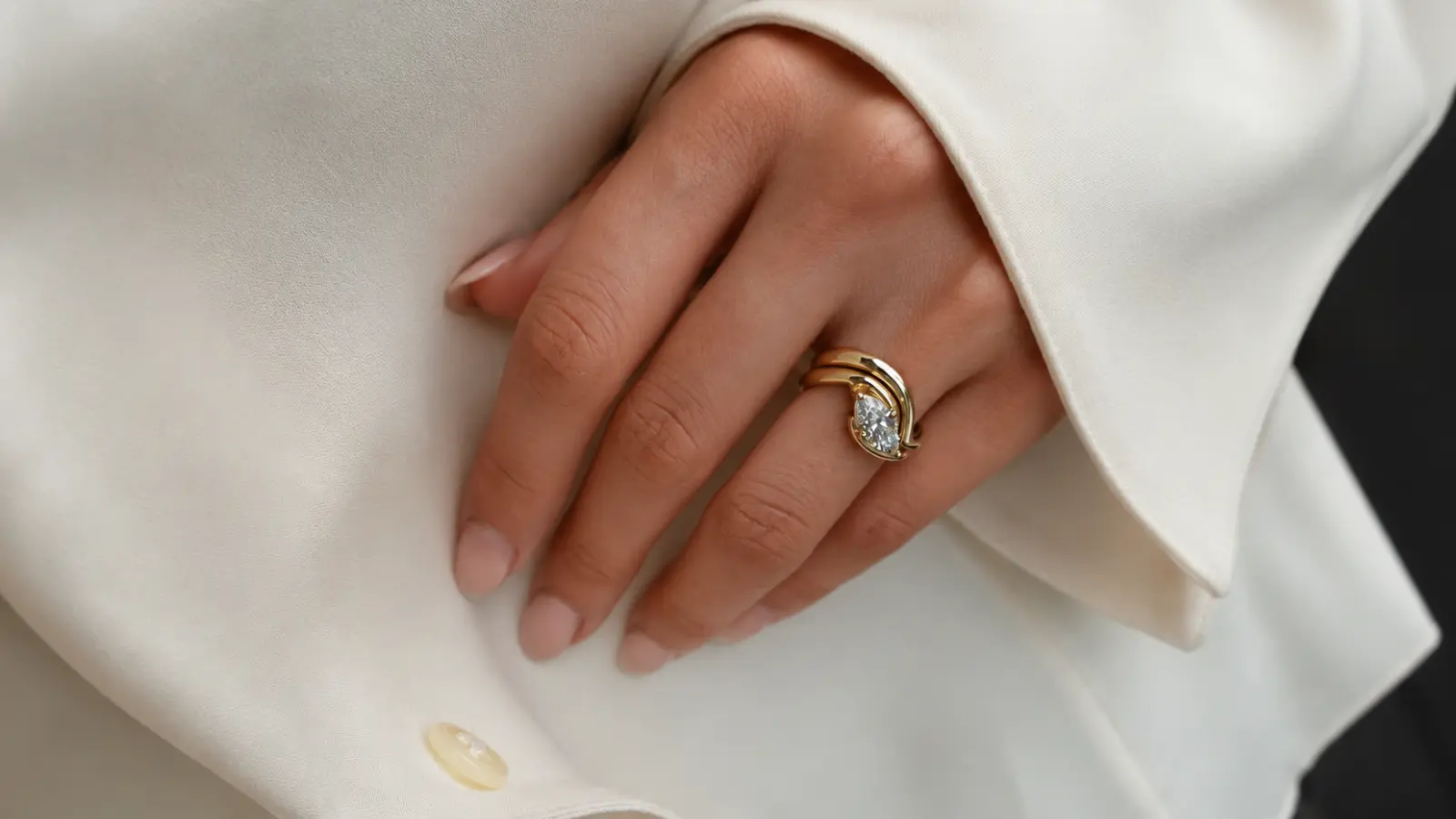
The marquise cut deserves specific mention in the context of botanical rings. Its elongated, pointed oval shape has a strong visual affinity with leaves and petals, a marquise diamond set sideways reads unmistakably as a leaf. A trio of marquise stones set at angles to suggest a spray of petals creates a flower motif through stone placement alone, without requiring any additional metalwork. For couples who want a botanical visual language in a stone-set ring without extensive engraving or three-dimensional detail, marquise stone arrangements are one of the most effective approaches.
Leaf prong settings, where the prongs holding a center stone are extended and shaped to suggest leaves curling up around the stone, are one of the most popular botanical ring details in the current market. They add visual complexity to a setting without requiring separate decorative elements and photograph beautifully from above, where the prong tips frame the stone as naturally as calyx leaves frame a flower bud.
Nature-Inspired Wedding Bands
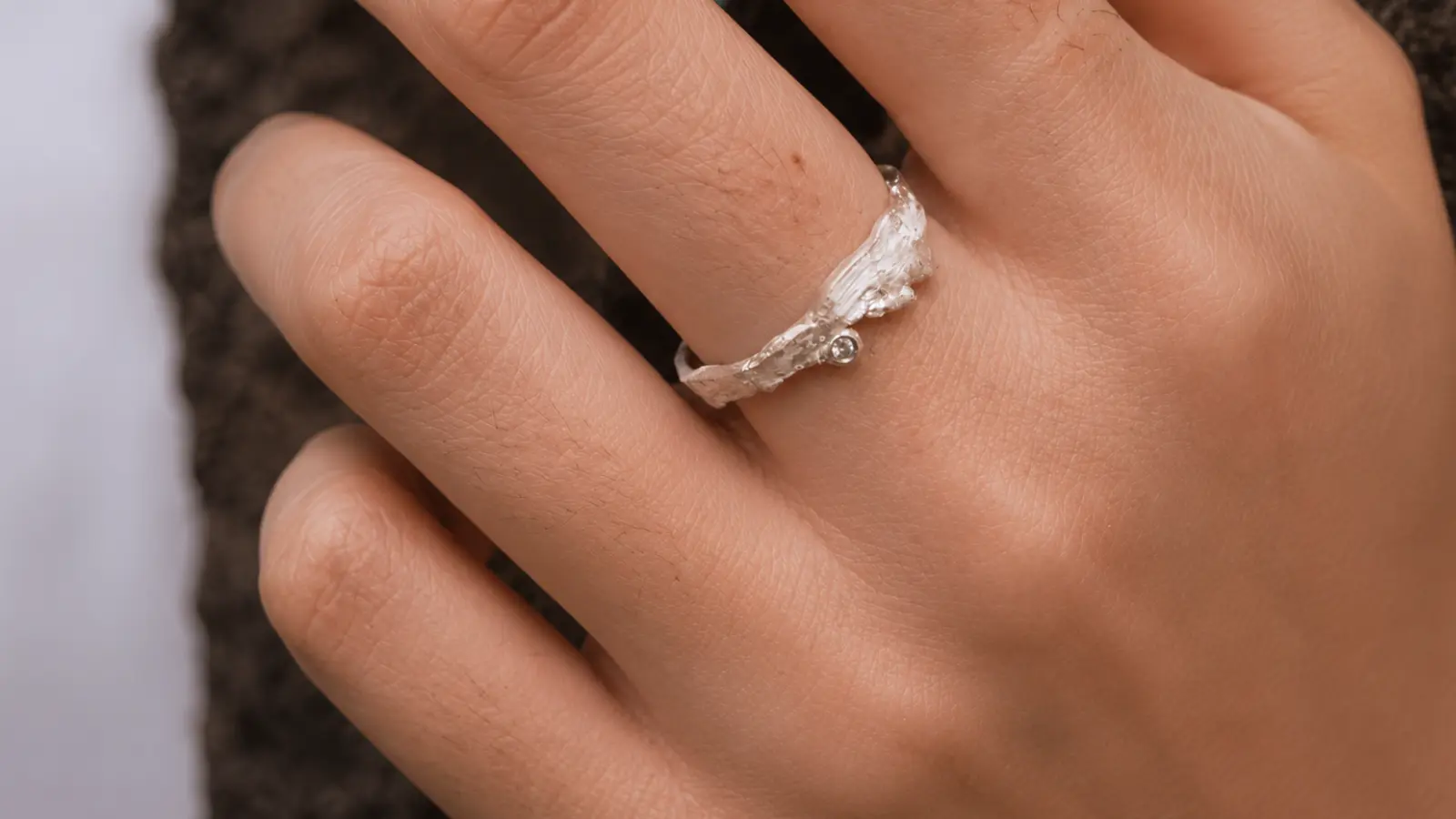
Nature-inspired wedding bands is the broader category that contains floral rings, leaf rings, and vine rings but extends beyond them to include every design approach that draws from the natural world as its primary aesthetic reference. Some of the most compelling rings in this category do not look particularly botanical at first glance, they look organic, textured, and alive, without depicting any specific plant or flower.
Bark and wood grain textures
One of the most distinctive nature-inspired band styles uses textures drawn from tree bark or wood grain worked into the metal surface. A gold band with a deeply textured bark surface has an organic quality that reads as connected to the natural world without being literally botanical. These rings work particularly well for men’s wedding bands and for couples who want a nature reference that does not involve flowers, the texture is masculine, distinctive, and unusual in a field where most non-conventional bands trend toward minimalist.
Hammered and organic surfaces
A hammered metal surface, produced by striking the band with small ball-peen or planishing hammers to create an irregular, faceted texture, has an organic quality that many people associate with natural materials: river stones, weathered metal, the surface of water in motion. It is not literally botanical, but it reads as connected to the natural world in the same way that a raw linen tablecloth reads as connected to it. Hammered gold and hammered platinum are both popular choices for nature-inspired wedding bands that want the organic quality without the floral motif.
Pebble and branch designs
Some nature-inspired rings depict specific natural objects rather than plants: a branch segment worked in gold, a ring whose exterior surface suggests a collection of smooth river pebbles pressed together, a band that references the cross-section of a tree trunk through circular grain lines. These designs can give wedding ring meaning to a particular place or experience with nature rather than referencing “nature” only as a general category.
For couples who have a specific natural place that is meaningful to their relationship, a particular mountain, a specific coastline, a forest they return to, a ring that references that specific natural context can become one of the most personal unique wedding rings, rather than simply a generically beautiful botanical design.
Celestial nature designs
Celestial motifs, stars, moons, sun rays, sit at the boundary between nature-inspired and symbolic ring design. They are natural phenomena rather than organic forms, which gives them a different visual register from botanical rings while still drawing from the natural world as a source. Celestial nature rings have grown significantly in popularity over the past several years and pair well with botanical elements: a ring with a crescent moon on one side of the band and a small engraved fern on the other creates a composition that feels both natural and cosmic.
Floral Rings with Gemstones
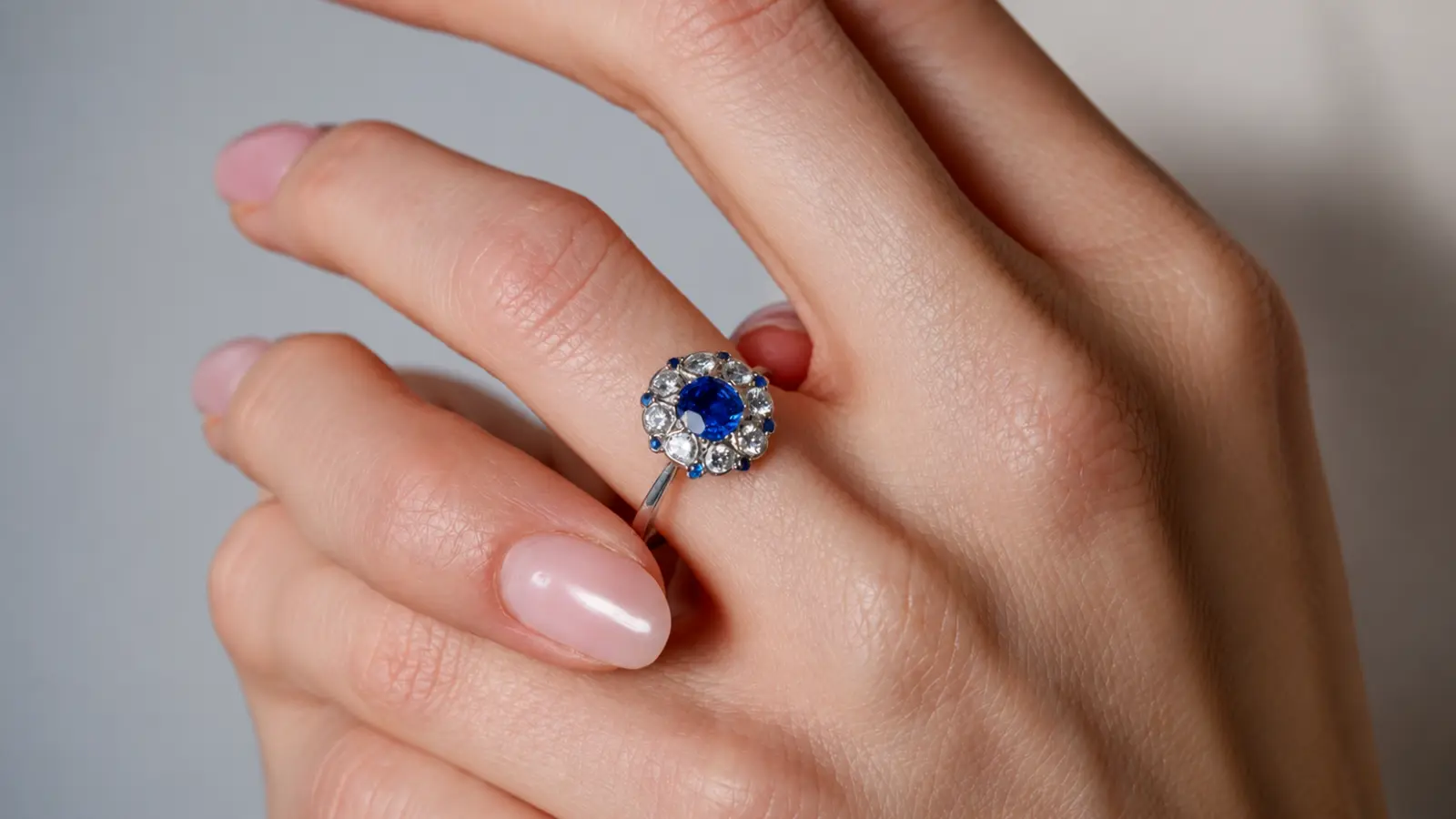
Gemstones in botanical ring designs serve two different functions simultaneously: they are decorative elements that add color and light to the design, and they are the point around which the botanical metalwork is organized. The flower petals of a floral ring design are most often petals around a stone. The leaves of a leaf-and-vine band are most often arranged to point toward a stone at the center. The stone is the focus; the botanical elements are the frame.
Choosing among gemstone wedding rings is both a stone decision and a design decision, especially in botanical settings. The color, cut, and size of the stone affects what the botanical elements around it are doing, a large round brilliant diamond at the center of a petal cluster plays a different visual role from a small, flush-set emerald within a vine band. Both are gemstones in botanical settings. They produce completely different rings.
The best stones for floral wedding rings, and why
A handful of stones show up again and again in botanical ring design, not by accident, but because their color, durability, or history pairs naturally with the floral aesthetic. Here is how each one performs and where it fits best.
- Sapphire. The most historically significant and most versatile choice for botanical fine jewelry. Blue sapphire in a leaf or petal setting has appeared in fine jewelry since the Renaissance, giving it a natural affinity with outdoor and botanical aesthetics that diamonds, for all their beauty, do not quite carry. Pale blue sapphire in a vine setting reads as quietly extraordinary; deep blue in a gold leaf setting reads richer and more formal. Pink and peach sapphire are increasingly popular in rose gold, where stone and metal create a warm tonal harmony.
- Emerald. The most directly botanical of all gemstones, green, the color of growth and leaves. An emerald set in a yellow gold vine creates a design where the stone and the metalwork tell the same story. Emeralds are softer than sapphire and diamond (Mohs 7.5 to 8) and can be prone to inclusions, so a bezel or partial bezel setting offers better daily-wear protection than open prongs.
- Morganite. A peach-pink variety of beryl that has become one of the most popular stones for romantic, nature-inspired designs over the past decade. Its soft color, warmer than pink sapphire and more peachy than rose quartz, suits botanical settings particularly well. It is similarly durable to sapphire (Mohs 7.5 to 8), though the color can fade with prolonged direct sunlight, worth knowing for a ring that will be worn outdoors often.
- Diamond. The most durable and versatile choice for decades of daily wear. Small diamonds work beautifully as accents in a floral ring: pavé along vine stems, dewdrop details on leaf surfaces, or stamens within a flower cluster. A center diamond is also the most neutral choice, since its character comes from cut and quality rather than color, leaving the botanical metalwork to carry the design’s personality.
- Moissanite. Worth considering for any position where a diamond would normally go. It is nearly as hard, visually similar to diamond in most lighting conditions, and significantly less expensive at equivalent carat sizes, which can free up budget for more elaborate botanical metalwork.
None of these stones is the universally “correct” choice. The right one is the one whose color and durability match both the metal you choose and the life the ring will actually live.
| Stone | Visual Character | Best Metal Pairing | Durability (Mohs) |
|---|---|---|---|
| Blue sapphire | Deep to pale blue; sky and water associations | Yellow gold · white gold · platinum | 9, excellent |
| Pink / peach sapphire | Soft warm pink; romantic and delicate | Rose gold · yellow gold | 9, excellent |
| Emerald | Rich green; directly botanical in character | Yellow gold | 7.5–8, moderate; use protective setting |
| Morganite | Peach-pink; gentle, romantic | Rose gold · yellow gold | 7.5–8, moderate; avoid extended direct sun |
| Diamond | Clear, brilliant; lets metalwork carry design | All metals | 10, excellent |
| Moissanite | Similar to diamond; slightly more rainbow fire | All metals | 9.25, excellent |
Are Delicate Designs Practical?
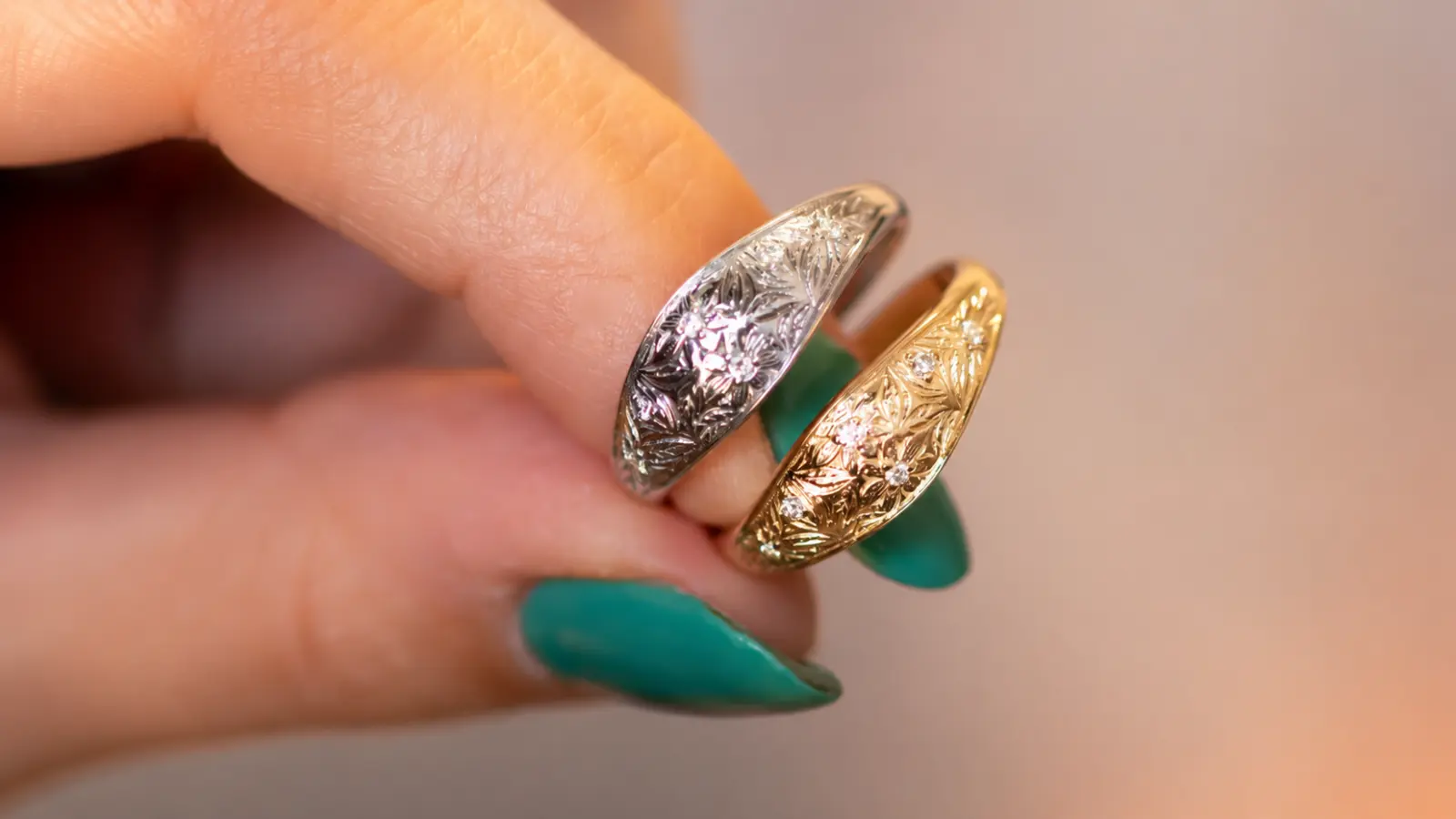
This is the question most people mean to ask when they say they love the look of a floral ring but worry it is not practical. And it is the right question, though the answer is more specific than “delicate rings are fragile” and more useful than “it depends.”
The practical durability of a floral ring is determined primarily by one factor: how much of the design extends above the surface of the band. A recessed design, engraving, flush-set stones, low-relief detail, is as durable as the metal it is worked into. A raised design, three-dimensional petals, fine wire elements, high-set stones with open prongs, is vulnerable in proportion to how far it extends from the band surface and how much it can flex under impact or pressure.
What holds up without special handling
- Engraved floral and vine patterns on solid gold or platinum bands. The design is in the metal, not on top of it. Normal daily wear, washing hands, typing, cooking, has essentially no effect on a well-executed engraving. The metal itself will develop a slight patina over years, which most wearers of engraved rings find adds rather than detracts from the design.
- Pavé or flush-set small stones on a botanical band. Stones set close to the metal surface, surrounded by metal on most sides, handle daily wear well. The small size of pavé stones and the security of the flush setting reduce the risk of loss. The main maintenance is periodic checking to confirm the stones are still secure, a standard recommendation for any stone-set ring.
- Low-relief cast botanical designs. A ring where the botanical detail is formed through casting, the metal poured into a mold that captures the three-dimensional design, tends to be sturdier than a ring where the detail has been hand-worked in fine wire. Cast botanical bands often look nearly as intricate as hand-worked ones and are more resistant to the casual impacts of daily life.
What requires more attentive care
- High-relief three-dimensional botanical elements, raised petals, fine wire stamens, extended leaf tips. These can catch on fabrics, bend under impact, and accumulate debris in the spaces between elements. They are not unwearable in daily life, but they reward the kind of attentive wearer who removes their rings for manual work, exercise, and housework, and who cleans detailed jewelry regularly with a soft brush.
- Very fine filigree botanical work. Filigree produced in fine wire can be vulnerable to bending under pressure, particularly if the wire gauge is very fine and the openwork spans a significant distance. A filigree vine ring worn in environments with frequent hand pressure, a grip-intensive job, heavy lifting, sports, may show distortion over time.
- High-set prong settings on botanical designs. The standard vulnerability of any high prong setting, the prongs can catch on things and bend, potentially releasing the stone, applies here. Botanical rings with claw prongs styled as leaf tips are particularly prone to this because the prong shape makes it harder to check visually whether the prong has bent.
The honest framework
The practical question is not “is this ring too delicate?”, it is “is my daily life compatible with this ring?” A person who works at a desk, exercises without their rings, cooks casually, and is generally attentive about their jewelry can wear a high-relief botanical ring for decades without significant wear. A person who works with their hands, rarely thinks about where their rings are, and does not want any ring that requires attention is better served by a low-profile engraved band than by a sculptural botanical piece, however beautiful the sculptural version is.
Neither type of life is wrong. The practical choice is the one that is honest about which type of life you actually live, not which type you would like to live if the ring were involved.
Who Should Choose a Floral Wedding Ring?
The floral wedding ring is not a universally applicable choice, which is precisely what makes it meaningful for the people it suits. A plain band is for anyone. A botanical ring is for someone specific, and that specificity is the point.
The couples and individuals who tend to feel most settled in their choice of a floral wedding ring share certain qualities, not all of them, and not exclusively, but enough that the pattern is worth describing.
A genuine connection to the natural world
Not a general appreciation of nature, most people have that. A specific, active relationship with it. The person who gardens with intention. Who plans vacations around natural landscapes. Who has a particular tree or a specific coastline or a season they genuinely love rather than simply enjoy. For this person, a botanical ring is not a design trend, it is a natural (in the most literal sense) extension of who they are into the jewelry they wear permanently. The ring participates in a real part of their identity rather than decorating it from the outside.
A wedding aesthetic that includes the natural world
Garden weddings, outdoor ceremonies, botanical venues, wedding florals that feel like they were cut from a genuine garden rather than arranged by a florist, a floral wedding ring sits within a coherent aesthetic universe in these contexts. It is part of a visual language the couple has already established rather than a standalone choice that has nothing to connect to. This is not a requirement, a botanical ring can be chosen purely for its own qualities regardless of the wedding context, but the ring tends to feel most right when the wedding itself is also engaged with the natural world in some meaningful way.
An aesthetic that favors the romantic and the ornate
Botanical ring designs are, by nature, more visually complex than a plain band. They suit people whose personal aesthetic already includes decorative detail, who wear other jewelry with design character, whose home has texture and pattern rather than strict minimalism, who are drawn to things that reward close attention. For someone whose aesthetic runs toward the stark and architectural, a heavily engraved botanical band will feel like an aesthetic collision with the rest of how they present themselves.
A willingness to think slightly more about the ring in daily life
Not a great deal more. But slightly more than a plain band requires. Removing the ring before activities that might damage fine detail, cleaning botanical detail with a soft brush every few weeks, having the ring checked by a jeweler once a year if it has set stones, these are modest but real requirements of owning a fine botanical ring. The person who does not want to think about their ring at all after the wedding ceremony is better served by the most durable, low-maintenance option available. The person who does not mind a small amount of ongoing engagement with their ring, who might even enjoy it, will find the botanical ring rewarding in ways that a plain band cannot replicate.
Floral and Botanical Rings for Men
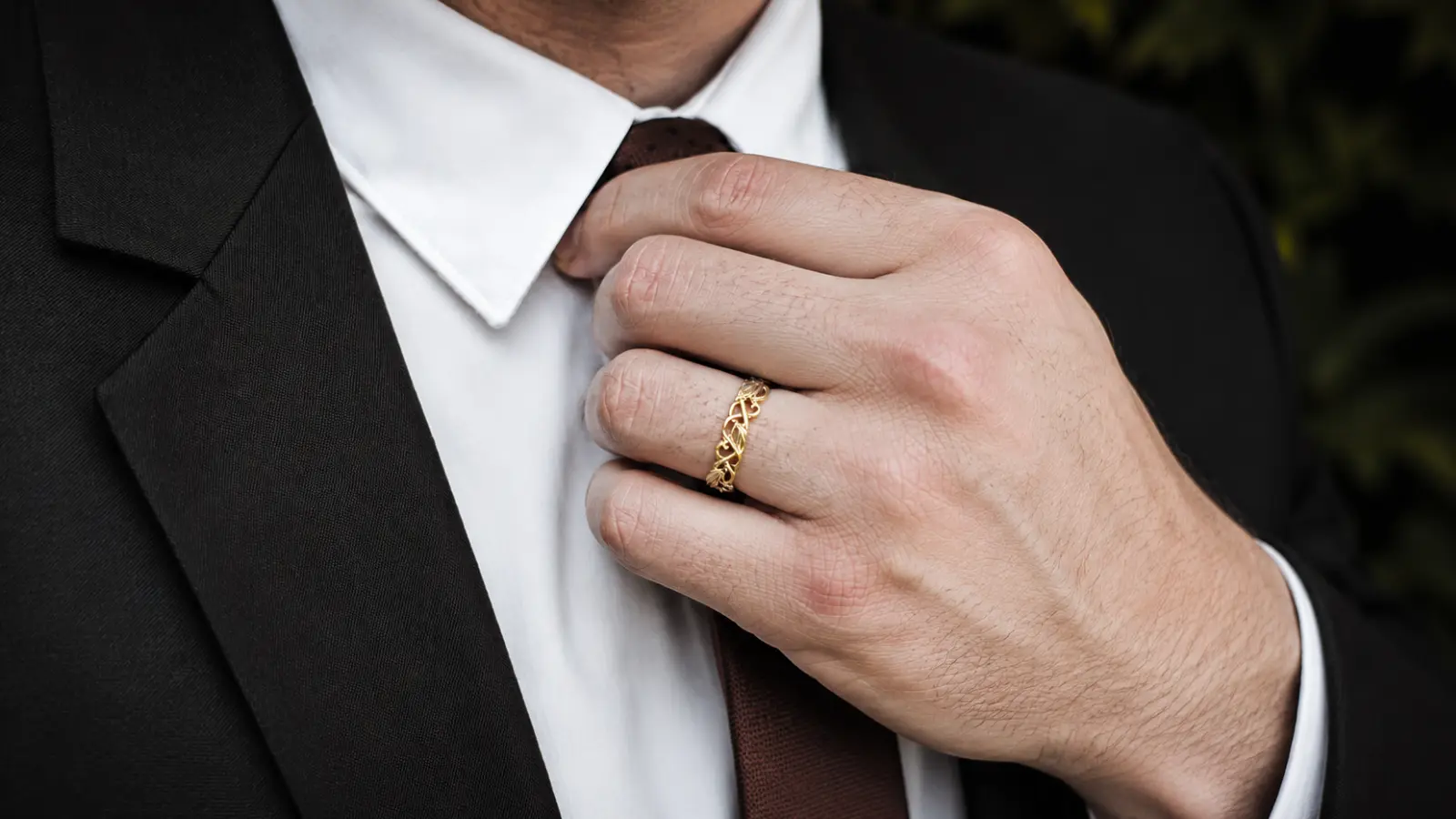
Many men who are drawn to the natural world as part of their identity do not immediately consider a botanical ring, the category is marketed primarily to women and the visual references tend toward delicate and small-scale. But the botanical aesthetic translates to men’s ring proportions effectively, with adjustments to the design vocabulary that suit both the wider band and the conventions of men’s jewelry.
The key adjustment for men’s wedding bands is that botanical detail works best through texture and engraving rather than three-dimensional sculptural elements. A wide yellow gold band (7mm to 9mm) with a deeply engraved botanical pattern, a vine that wraps the full circumference, a series of overlapping leaves worked in relief across the surface, a bark texture applied through hand chasing, reads as a nature-inspired fine jewelry piece that is unmistakably masculine. The detail is there for close inspection; the overall impression is of a substantial, well-made ring rather than a delicate one.
Specific approaches that work well in men’s botanical bands:
- Hammered or bark-textured gold. The organic surface quality reads as nature-inspired without any specific botanical reference. Works in yellow gold, platinum, or two-tone combinations. The hammered surface also partially conceals the normal surface scratches that accumulate on a daily-wear ring, which is a practical advantage.
- Wide-band engraved vine or leaf pattern. A vine designed to use the full width of a 7mm to 8mm band creates a composition that is proportionally very different from a delicate women’s vine ring, bolder, more architectural in its use of the motif, more immediately visible from across the room.
- Single flush-set dark stone in a botanical-motif setting. A black diamond or black sapphire set flush with the surface of the band, surrounded by an engraved leaf or vine frame, creates a subtle botanical detail that reads as intentional without being elaborate. Practical for daily wear because the stone sits level with the metal surface.
How Floral Rings Photograph
This section exists because floral rings are among the most photographed wedding ring styles in the American market: they appear disproportionately often on Pinterest, Instagram, and in wedding editorial photography relative to their market share, and understanding why helps explain both their appeal and their limitations.
Botanical rings photograph well because their surface detail creates shadow and depth that flat bands cannot. In natural light, the recessed lines of an engraved vine or the raised petals of a botanical cluster catch shadow in a way that makes the design visible from photographing distance, not just under magnification. In close-up ring shots, the kind that wedding photographers produce as standard and that couples share most widely on social media, the detail reads as distinctive and personal in a way that a plain band, however beautifully made, rarely does at the same scale.
This photographic quality is genuinely part of why many people are drawn to botanical rings, and it is a legitimate consideration: a ring that photographs beautifully will be the ring in photographs for the rest of its wearer’s life. The visual character of a ring in images is not a superficial concern.
What photographs best within the botanical category
Designs with a clear hierarchy tend to photograph best: one dominant botanical element, supported by secondary detail, rather than equal amounts of several competing elements.
- Single focal point. A ring with a single large engraved rose and surrounding leaf detail photographs with more visual clarity than a ring covered uniformly in equal-sized botanical motifs.
- Visible depth. Designs with real recessed lines or raised elements catch shadow even in casual phone photography, not only under professional lighting.
- A clear path for the eye. The best botanical ring photographs are the ones where the design guides the eye toward one place rather than spreading attention evenly across the band.
For more on how ring style affects wedding photography, the wedding rings for women guide covers ring photography considerations across styles.
Floral Wedding Ring Inspiration
Floral wedding rings can range from delicate engraved details to romantic botanical designs filled with meaning. Explore our inspiration board for flower rings, leaf bands, vine designs, gemstone styles, and nature-inspired wedding ring ideas.
Choosing a Floral Wedding Ring That Feels Meaningful
A floral wedding ring is more than a beautiful design inspired by nature. Flowers, leaves, and botanical details have carried meaning for generations, representing love, growth, connection, and the moments in life that continue to evolve over time.
Whether you choose a delicate engraved band, a vine-inspired design, a gemstone floral ring, or a simple nature-inspired detail, the right ring is the one that feels connected to your story. A wedding ring is worn every day, and the most meaningful designs are the ones that continue to feel personal long after the wedding day has passed.
Frequently asked questions (FAQ)
Are floral wedding rings durable enough for everyday wear?
Yes, floral wedding rings can be durable enough for everyday wear, but the construction matters more than the floral design itself. Engraved flowers, vines, and leaves on solid gold or platinum bands usually hold up very well because the details are part of the metal. Raised petals, delicate wire elements, and high-profile designs may require more care because they can catch, bend, or wear more easily over time.
Do floral wedding rings go out of style?
Floral wedding rings are not simply a temporary trend because nature-inspired jewelry has existed for centuries. Flowers, leaves, vines, and botanical patterns have appeared in fine jewelry across many historical periods. A well-designed floral ring usually feels timeless when it focuses on craftsmanship and natural forms rather than a very specific fashion trend.
What flower or nature design should you choose for a wedding ring?
The best floral design depends on the meaning and style you want the ring to represent. Roses are traditionally connected with romantic love, forget-me-nots with remembrance and devotion, ivy with lasting attachment, and leaves or vines with growth and connection. Some people choose a specific plant because of personal memories rather than traditional symbolism.
What gemstones look best in floral wedding rings?
Diamonds, sapphires, emeralds, morganite, and moissanite are popular choices for floral wedding rings. Diamonds and sapphires offer excellent durability, emeralds create a natural garden-inspired look, and softer romantic colors like morganite pair beautifully with floral designs. The best gemstone should match both the appearance of the ring and the amount of daily wear it will receive.
Can floral wedding rings look modern instead of vintage?
Yes. Although many floral wedding rings are inspired by antique and romantic jewelry styles, botanical designs can also look modern. Clean engraving, simple leaf patterns, minimalist vines, and subtle nature details can create a contemporary look. The difference comes from the overall design, not the floral inspiration itself.
What should you know before choosing a floral wedding ring?
Before choosing a floral wedding ring, think about how the design will fit your everyday life. Consider whether the details are engraved or raised, how much maintenance the ring requires, whether the gemstone suits daily wear, and whether the botanical style reflects your personal taste beyond the wedding day. The best floral rings feel meaningful for decades, not just beautiful in photos.